
Development — History & Facts
A sun, impossibly large and radiant, dominates the right half of the canvas, its orange disc sending out a wedge of pink and yellow light that slices through the geometric darkness. The eye is drawn to the sharp, black mountain forms—almost like a row of teeth—standing at the threshold between shadow and illumination. To the right, a curious construction of lines and colored shapes stands like a signal or a figure, its arcs echoing the sun’s energy.
The palette is deliberate: deep greens and blues press against the left, while the right is charged with warmth and the sense of something dawning or erupting. Every element seems placed to suggest a moment of emergence, a crossing from one state to another. Painted in 1926, Development belongs to the world of Wassily Kandinsky, a pioneer of abstraction whose work at this time was shaped by his teaching at the Bauhaus and his fascination with the spiritual in art. The 1920s saw artists like Kandinsky exploring the power of pure shape and color to communicate feeling and transformation, often in the language of science, music, and mysticism.
The Centre Georges Pompidou, where this work now resides, holds it as a record of that restless search for new visual vocabularies. History has kept few traces of the painting’s early journey, but its energy remains undimmed—inviting viewers to trace the rays, cross the divide, and imagine what lies beyond the horizon Kandinsky has drawn.
More Artworks by Wassily Kandinsky

Improvisation 35
Wassily Kandinsky
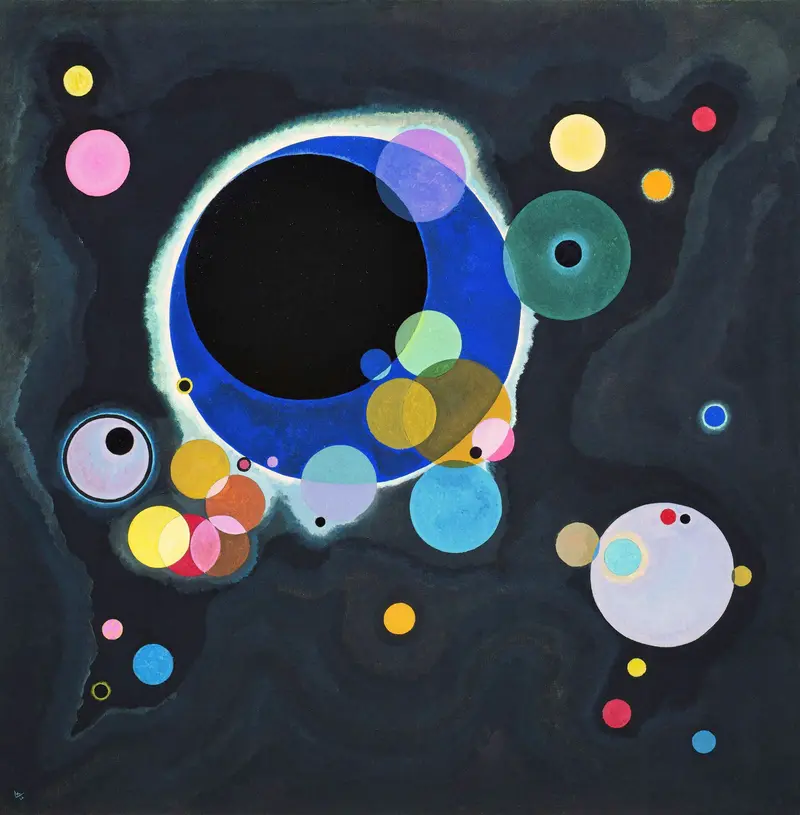
Several Circles
Wassily Kandinsky
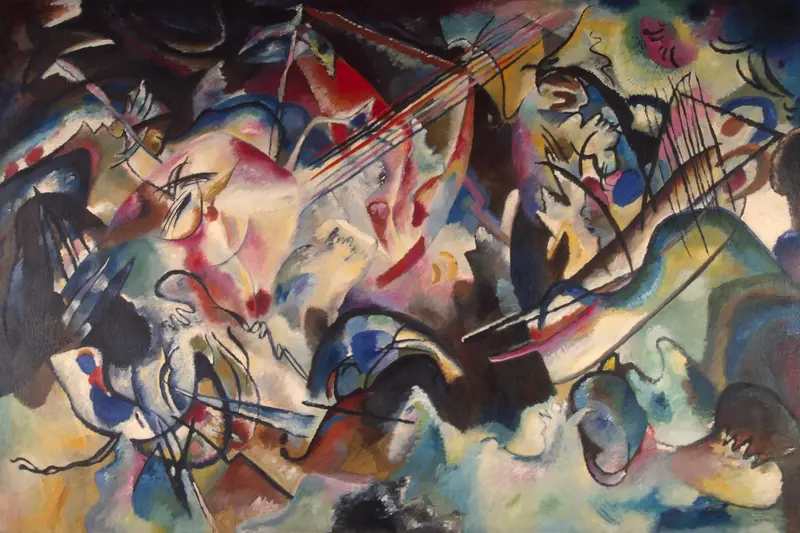
Composition VI
Wassily Kandinsky
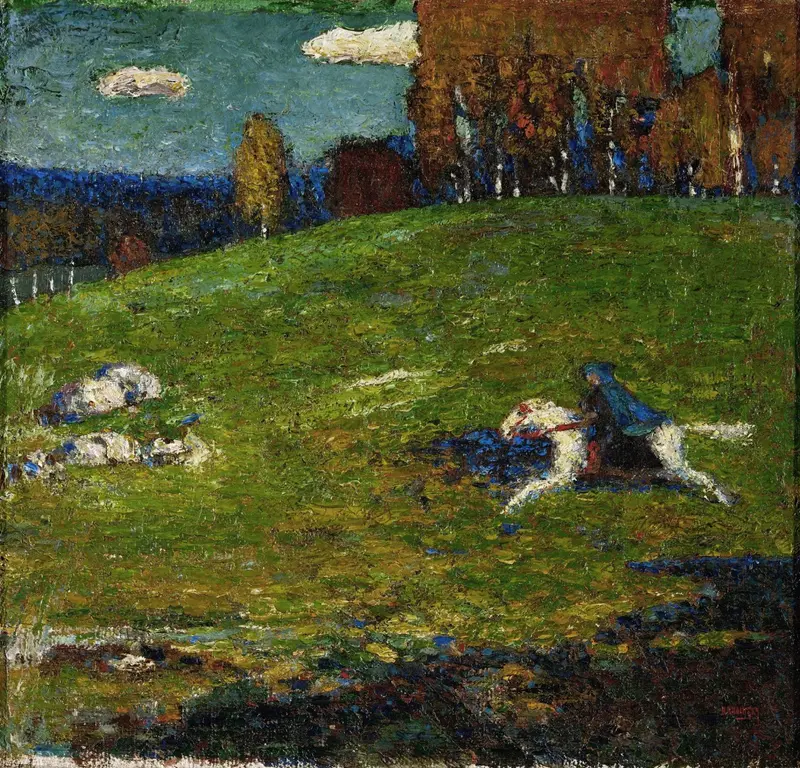
The Blue Rider
Wassily Kandinsky

Murnau
Wassily Kandinsky
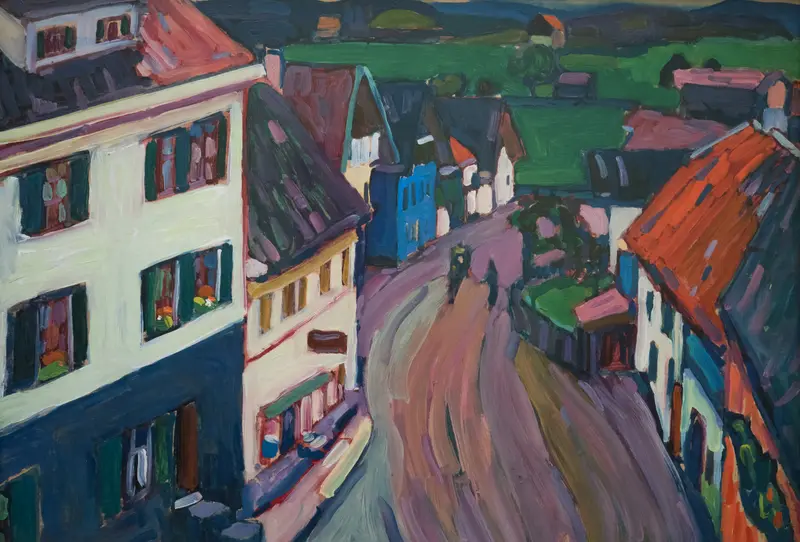
Murnau – View from the window of the Griesbräu
Wassily Kandinsky
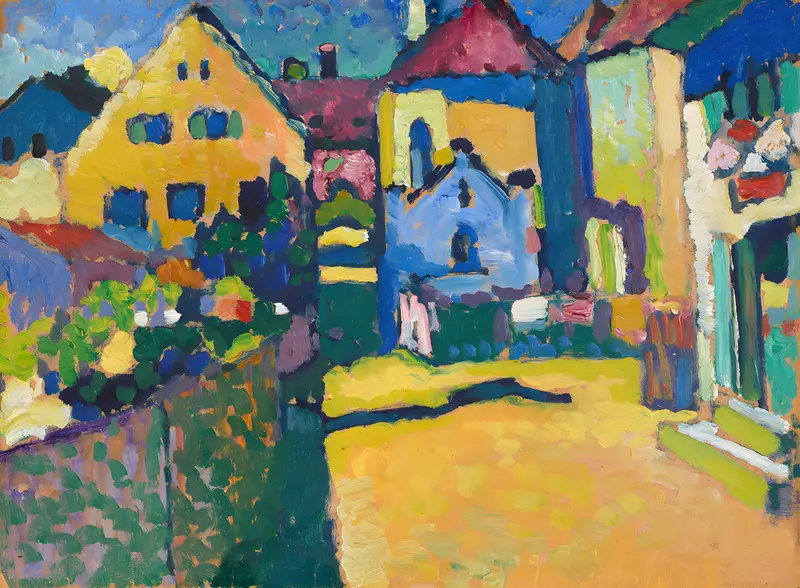
Green Lane in Murnau
Wassily Kandinsky
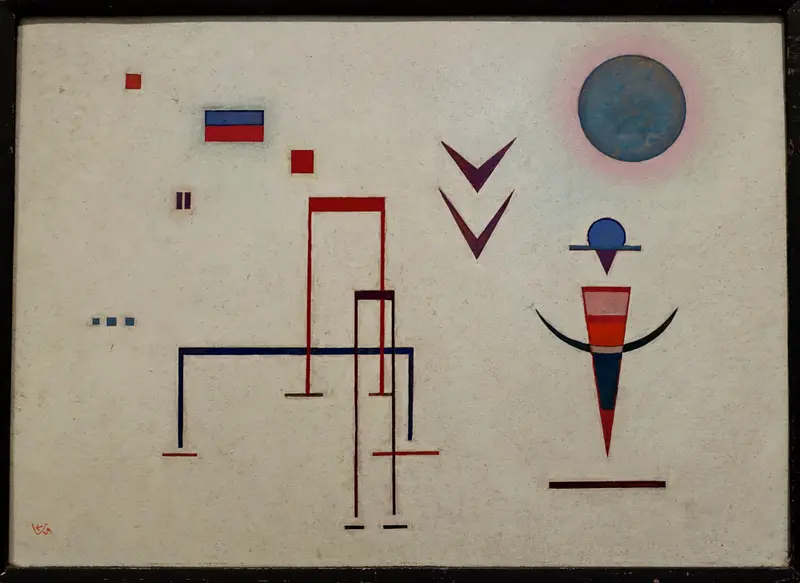
Jocular Sounds
Wassily Kandinsky

Zubovsky Platz
Wassily Kandinsky

Landscape with a yellow field
Wassily Kandinsky




