
Dicing, Drabbing and Drinking Bring Man to Destruction — History & Facts
A man lurches forward in the center, his wild eyes shielded from a harsh, unseen glare, as if he’s stumbled into the judgment of the world itself. Around him, a tangle of ragged figures surge and falter, their faces contorted in fear, anger, or drunken confusion. The painter, Adriaen Pietersz van de Venne, has chosen a moment of chaos—limbs flail, sticks are raised, and the whole scene teeters on the edge of violence or collapse.
The palette is almost monochrome, the figures emerging from the brown ground as if conjured from earth and shadow, their tattered clothes and haunted expressions telling a story of ruin without a single word. The light falls most sharply on the central figure’s brow and hand, drawing the viewer into his desperate gesture, while the rest dissolve into a smoky tumult. This is the world of early seventeenth-century moral painting, where artists like van de Venne gave visual form to the warnings and proverbs of their time. In the Dutch Republic, such scenes were not just entertainment but instruction: the dangers of vice, the folly of drink and dice, the ruin awaiting those who stray.
The date of this work, placed between 1604 and 1662, situates it in a period when painters delighted in moral allegory and social satire, often for a broad public rather than a single patron. Now in the Museum of Fine Arts Ghent, this painting stands as a sharp reminder of how art once sought to steer its viewers as much as to delight them—inviting us to look closely at every grimace and gesture, and to wonder what warnings we might read there today.
More Artworks by Adriaen Pietersz van de Venne
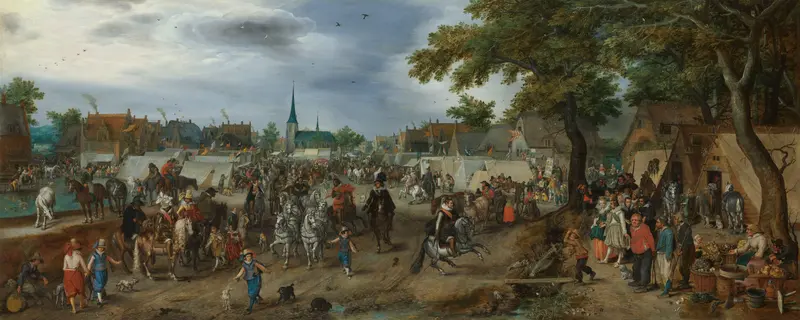
Princes Maurice and Frederick Henry at the Valkenburg Horse Fair
Adriaen Pietersz van de Venne
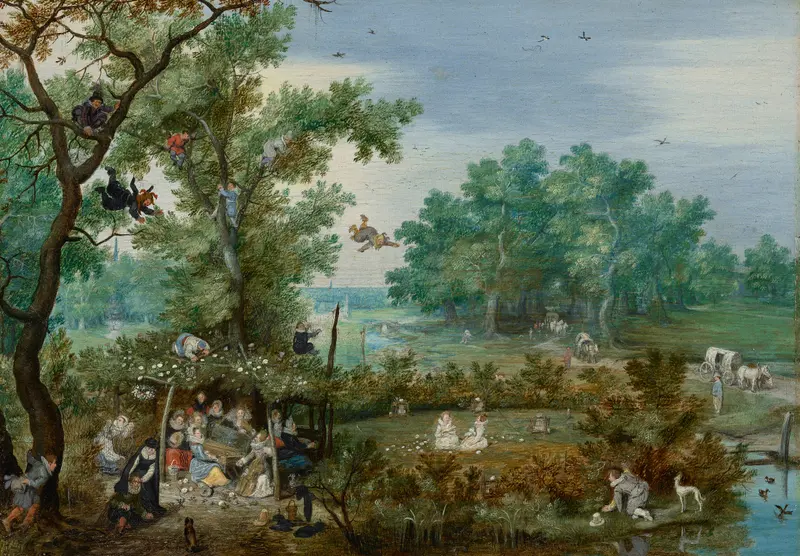
Merry Company in an Arbor
Adriaen Pietersz van de Venne
Princes Maurice and Frederick Henry at the Valkenburg Horse Fair
Adriaen Pietersz van de Venne
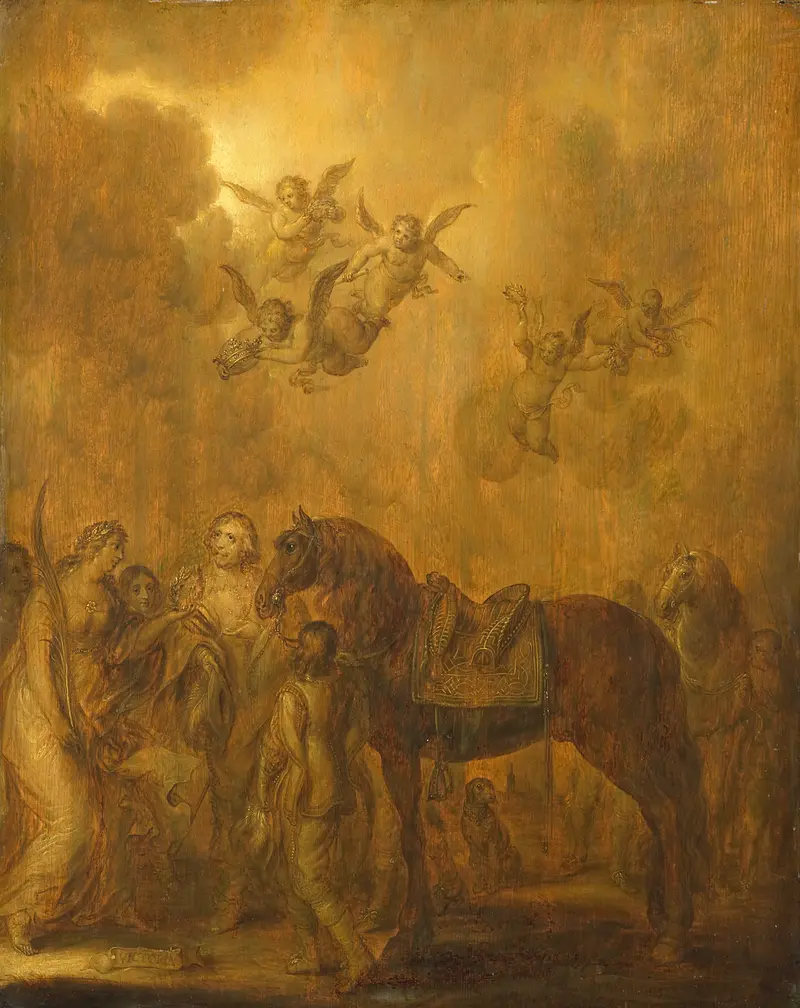
Allegory of the Stadtholdership of Prince Frederick Henry
Adriaen Pietersz van de Venne
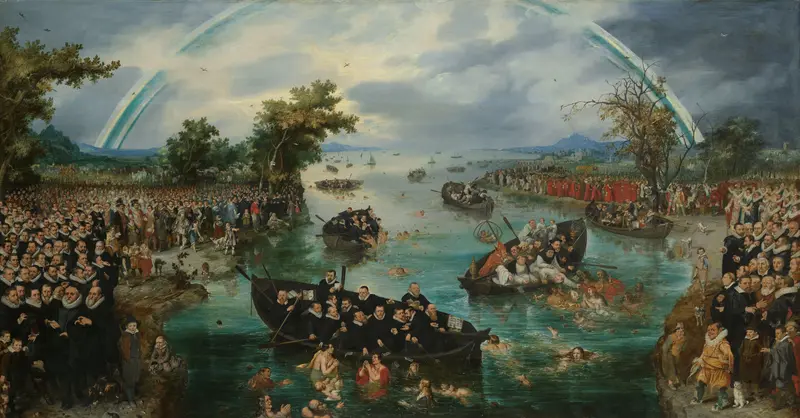
Fishing for Souls
Adriaen Pietersz van de Venne
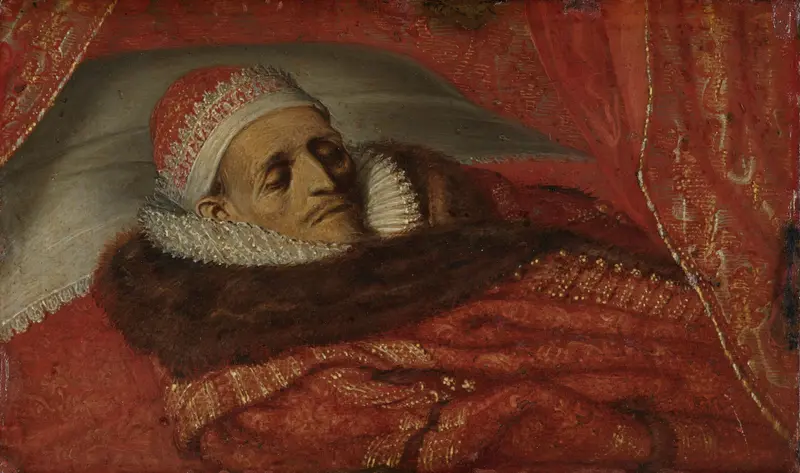
Stadtholder Prince Maurice Lying in State
Adriaen Pietersz van de Venne
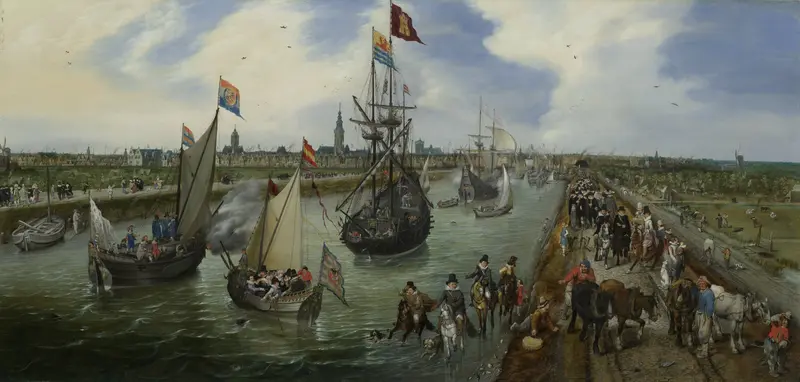
The Departure of a Dignitary from Middelburg
Adriaen Pietersz van de Venne
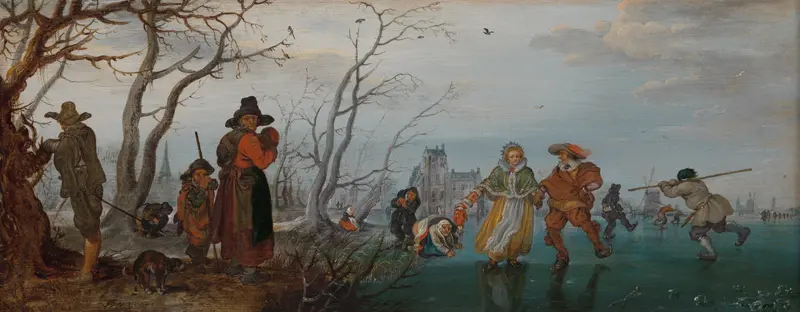
Winter
Adriaen Pietersz van de Venne

A Jeu de Paume Before a Country Palace
Adriaen Pietersz van de Venne
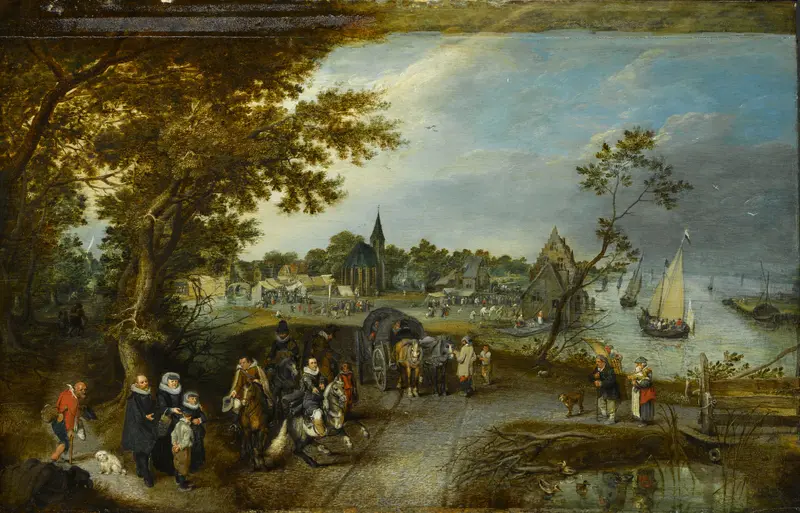
Landscape with Figures and a Village Fair (Village Kermesse)
Adriaen Pietersz van de Venne
More Genre Scene Art

Banquet of the Officers of the St George Civic Guard
Frans Hals

Rembrandt and Saskia in the Scene of the Prodigal Son
Rembrandt van Rijn

Bal du moulin de la Galette
Pierre-Auguste Renoir

Quadrille at the Moulin Rouge
Henri de Toulouse-Lautrec

A Burial at Ornans
Gustave Courbet

When Will You Marry?
Paul Gauguin