
Die ‘Casina di Raffaello’ im Park der Villa Borghese — History & Facts
Did the painter know this moment would outlive them? In the quiet embrace of nature, where chaos and serenity intertwine, art captures fleeting time—reminding us of beauty's transience. Look to the left, where the delicate arch of the Casina di Raffaello stands, framed by lush greenery. The painter's deft brushwork creates a vivid interplay of light and shadow, breathing life into the structure. Notice how the soft blues and greens harmoniously blend, evoking a sense of tranquility amid the surrounding tumult of nature.
The architecture seems to whisper secrets of the past, inviting the viewer to explore the calm within the chaos. Yet, upon closer inspection, the emotional tension emerges. The vibrant flora that flourishes around the villa is a stark contrast to the understated elegance of the building, symbolizing the wildness of nature juxtaposed with human creation. The brushstrokes reveal a subtle unease; the trees sway as if caught in an unseen storm, suggesting that chaos lingers just beneath the surface of this idyllic scene.
This duality reflects the struggle between order and disorder, a reminder that beauty often coexists with turmoil. In 1840, Johann Wilhelm Schirmer painted this scene while residing in Rome, at a time when Romanticism was flourishing. The artist sought to capture the essence of landscape and architecture, influenced by the burgeoning interest in nature among European artists. As political upheaval and societal changes swept through Europe, his work emerged as a testament to the enduring power of art in preserving moments that speak to the human experience, echoing through the ages.
More Artworks by Johann Wilhelm Schirmer
Browse all →
Waldlandschaft mit Blick auf Olevano und den Monte Cavo
Johann Wilhelm Schirmer
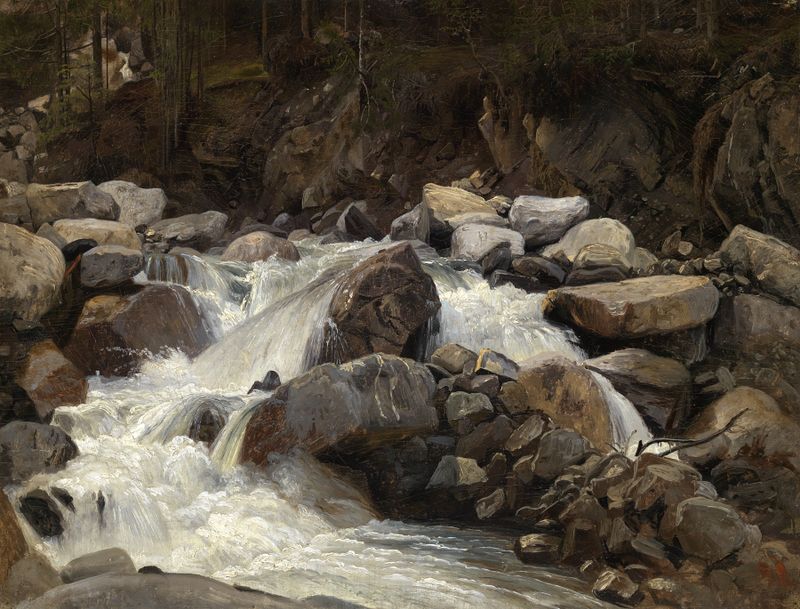
Schweizer Gebirgsbach
Johann Wilhelm Schirmer
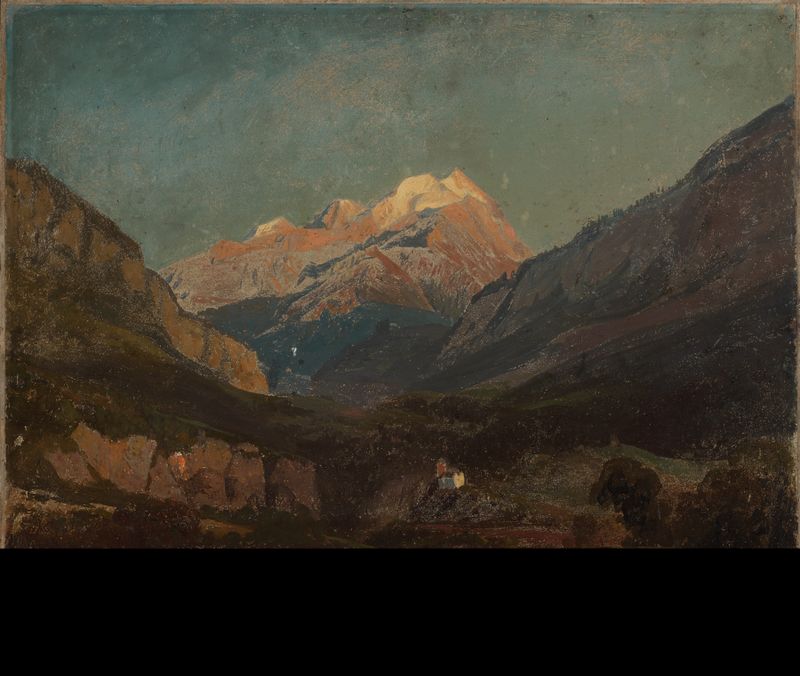
Schweizer Gebirgslandschaft mit Kapelle und fernem Schneegipfel
Johann Wilhelm Schirmer

Schweizer Gebirgslandschaft mit dem Piz Beverin im Hintergrund
Johann Wilhelm Schirmer

Waldinneres mit Hirschen am Wasser
Johann Wilhelm Schirmer

The Wetterhorn
Johann Wilhelm Schirmer

Partie aus der Römischen Campagna
Johann Wilhelm Schirmer

Felsabhang in der Schweiz
Johann Wilhelm Schirmer
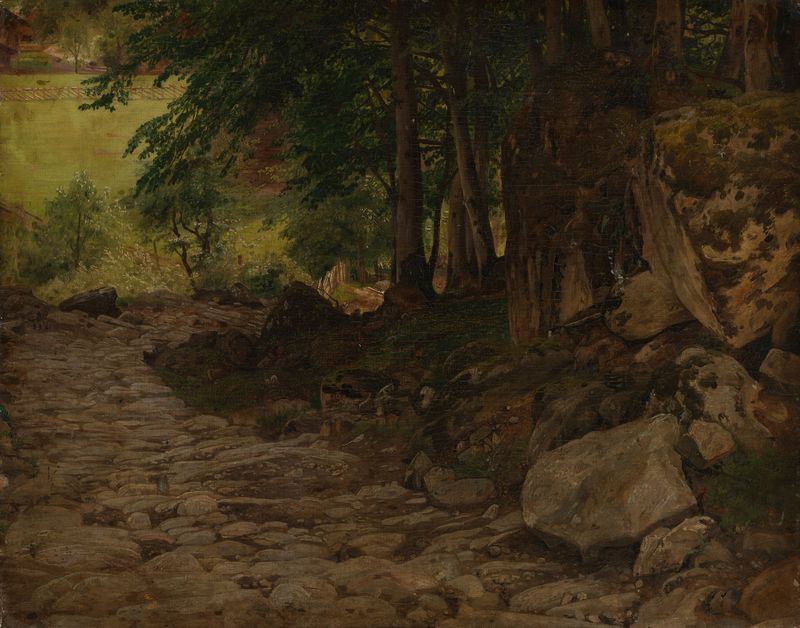
Felsweg in der Schweiz
Johann Wilhelm Schirmer
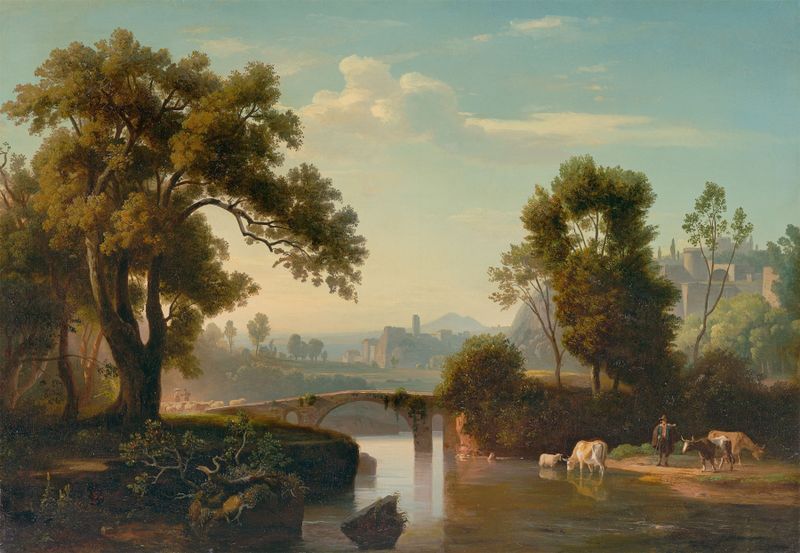
Italienische Landschaft mit Hirten
Johann Wilhelm Schirmer
More Architecture Art
Browse all →
The statue of Liberty
Frédéric Auguste Bartholdi

View of Houses in Delft, Known as ‘The Little Street’
Johannes Vermeer

View of Houses in Delft, Known as ‘The Little Street’
Johannes Vermeer

The Cathedral in Rouen. The portal, Grey Weather
Claude Monet

The yellow house
Vincent van Gogh

The Church in Auvers-sur-Oise, View from the Chevet
Vincent van Gogh