
Die Gute-Nacht-Geschichte — History & Facts
No other painting by Felix Schlesinger is as frequently reproduced in children’s books as Die Gute-Nacht-Geschichte. The work’s popularity endures despite its uncertain date and medium, and it has become an emblem of nineteenth-century German domesticity. Its title, meaning “The Bedtime Story,” hints at a universal ritual, but the painting’s fame rests on its gentle, intimate portrayal of family life.
While the exact circumstances of its commission remain unknown, the image has circulated widely in prints and postcards, suggesting a resonance that outgrew its original context. A mother sits at the bedside of her child, book in hand, caught at the moment when the story’s magic holds the room in stillness. The child, tucked beneath a heavy quilt, gazes up in rapt attention, while a soft lamplight pools around them, isolating the pair from the darkened room beyond. The mother’s gentle posture, the child’s wide eyes, and the scattered toys at the foot of the bed all speak to the daily rhythms of affection and care.
Schlesinger’s attention to the glow of the lamp and the textures of fabric recalls the quiet interiors of Carl Spitzweg, though here the focus is on familial warmth rather than solitary reverie. The painting’s details—the worn slippers, the dog curled at the bedside—invite the viewer into an ordinary world made special by the ritual of storytelling. The physical history of Die Gute-Nacht-Geschichte remains partly obscure. Like many works by Felix Schlesinger, it is often reproduced in prints, and its original canvas is held in a private collection, rarely exhibited publicly.
Schlesinger, active in the late nineteenth century, was known for his genre scenes depicting everyday life, and this painting is considered among his most beloved. Though not as widely recognized as contemporaries like Ludwig Knaus, Schlesinger’s works have found a lasting place in the visual memory of German domestic art. Today, reproductions of Die Gute-Nacht-Geschichte continue to circulate, a testament to the enduring appeal of its quiet, familiar scene.
More Artworks by Felix Schlesinger

Fleißige Helfer in der Küche
Felix Schlesinger

Die Zeitungslektüre
Felix Schlesinger
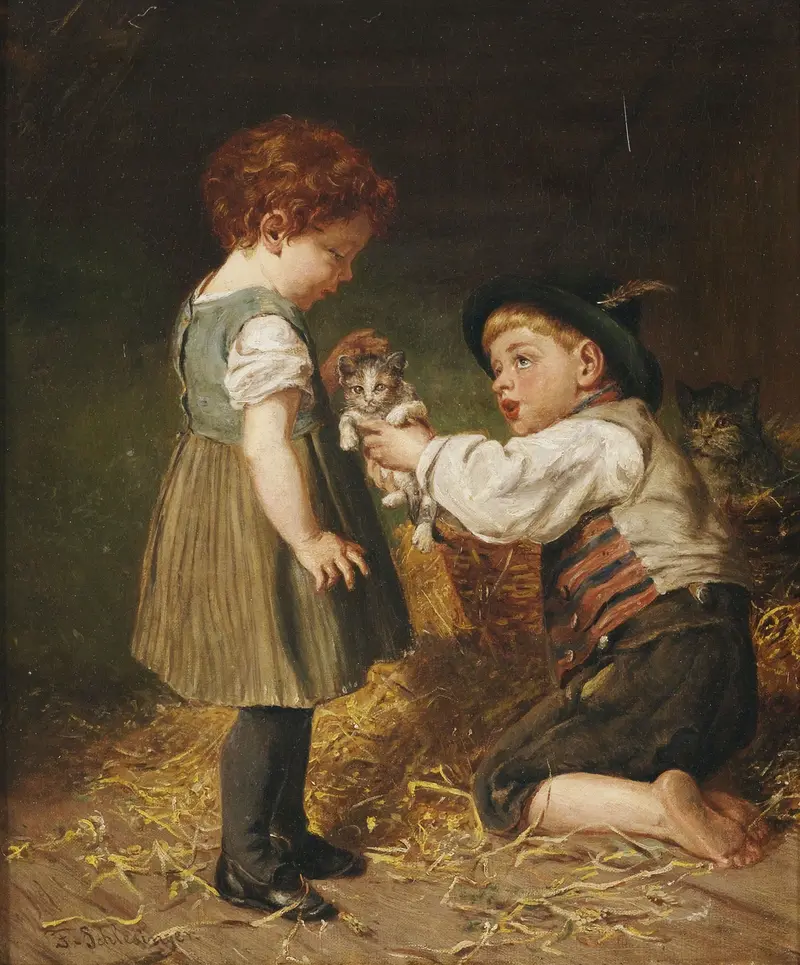
Zwei Kinder mit Kätzchen im Stall
Felix Schlesinger
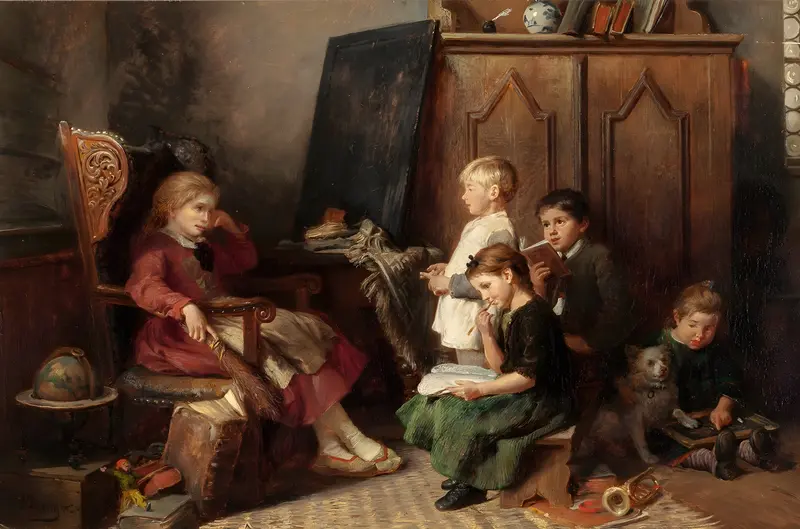
Children Reading
Felix Schlesinger
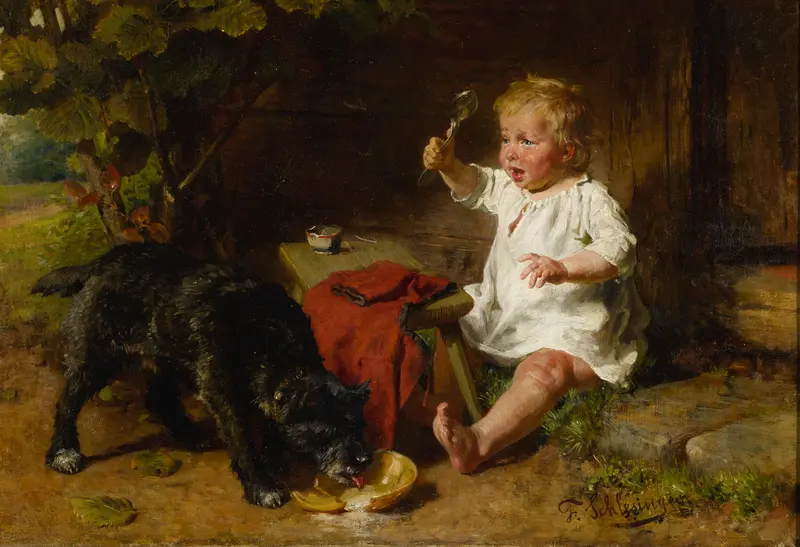
A Shared Meal
Felix Schlesinger
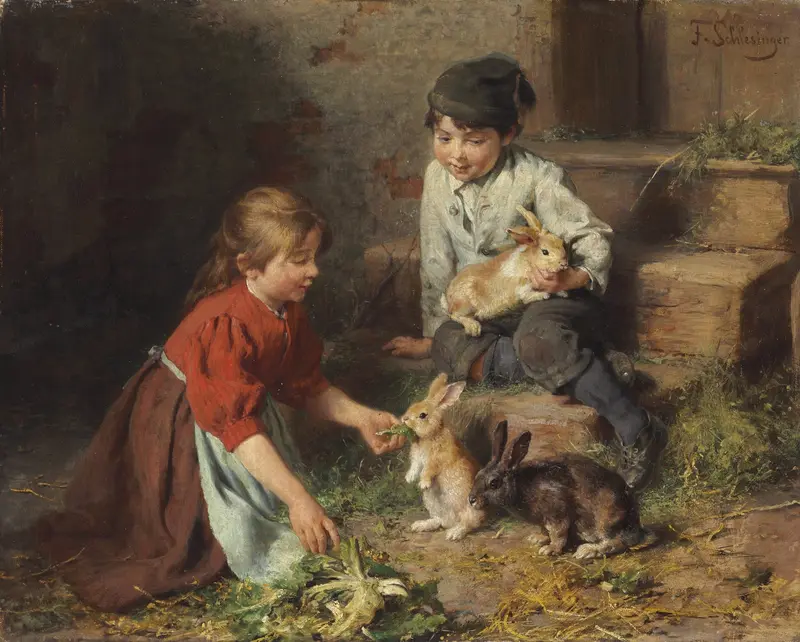
Fütterung Der Kaninchen
Felix Schlesinger
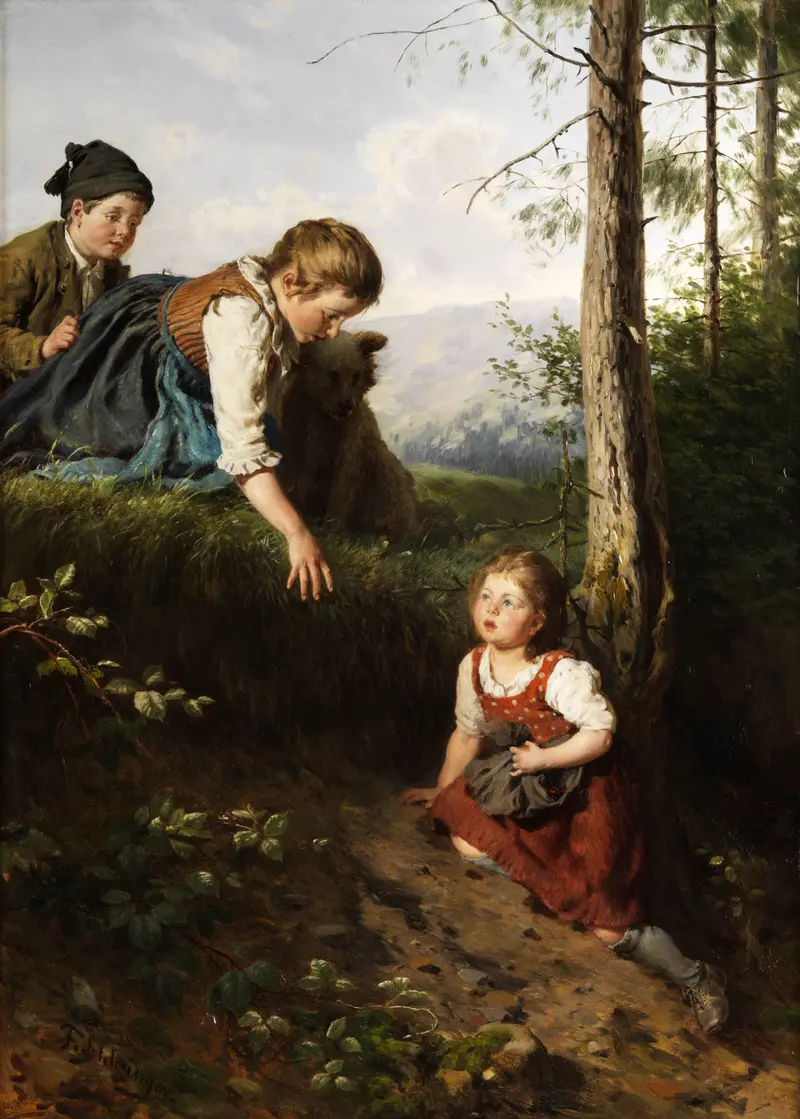
Drei Kinder im Wald beim Beerenpflücken
Felix Schlesinger
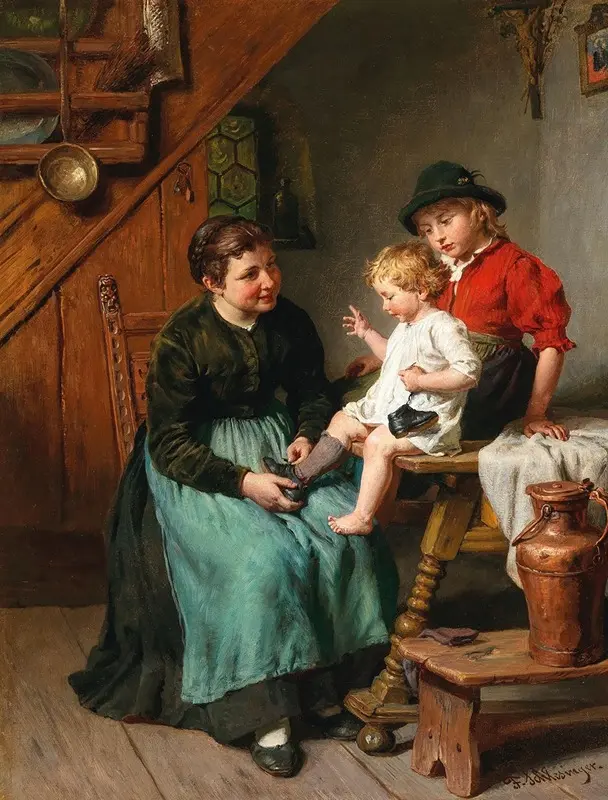
The First Shoe
Felix Schlesinger
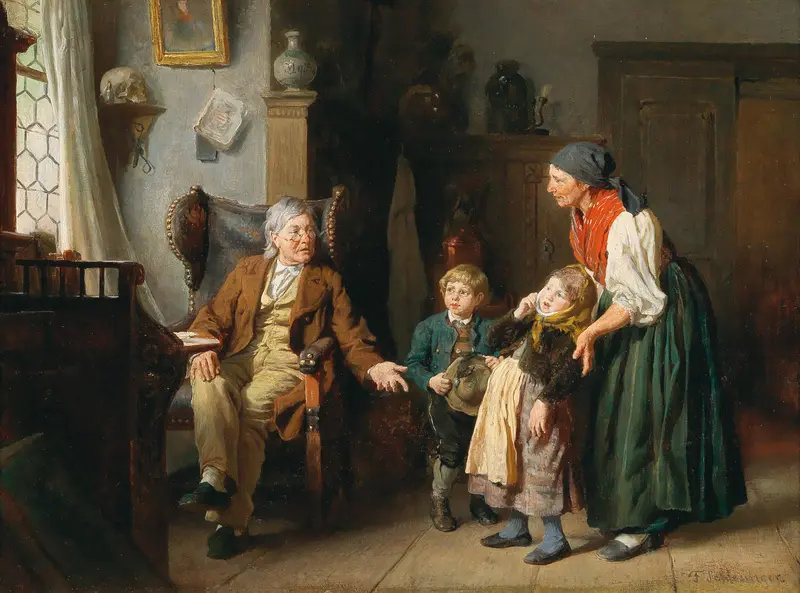
The village doctor
Felix Schlesinger
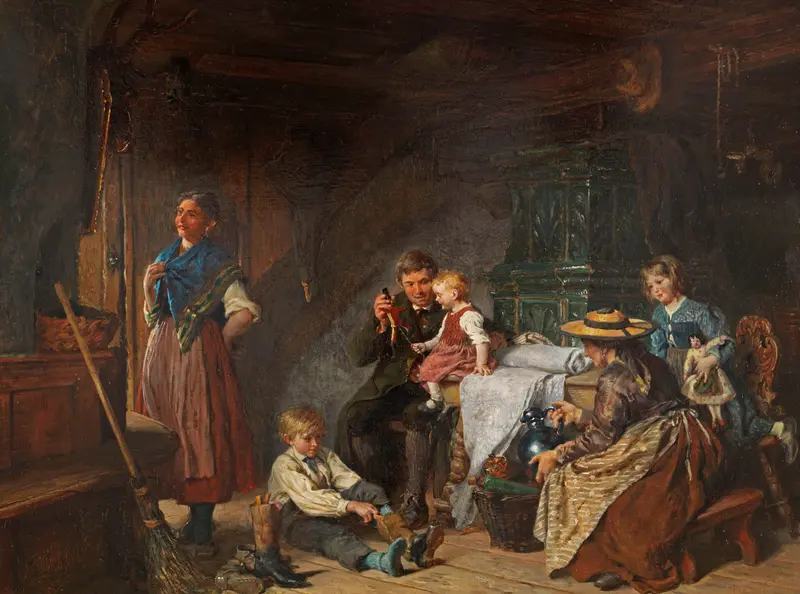
Familienszene
Felix Schlesinger
More Genre Scene Art

Banquet of the Officers of the St George Civic Guard
Frans Hals

Rembrandt and Saskia in the Scene of the Prodigal Son
Rembrandt van Rijn

Bal du moulin de la Galette
Pierre-Auguste Renoir

Quadrille at the Moulin Rouge
Henri de Toulouse-Lautrec

A Burial at Ornans
Gustave Courbet

When Will You Marry?
Paul Gauguin