
Die Spielgefährten — History & Facts
No one knows for certain when Felix Schlesinger painted Die Spielgefährten, nor does any record tell us who first owned it—yet for over a century, this work has quietly charmed viewers with its gentle vision of childhood. The painting has become a minor icon of late nineteenth-century German genre painting, often reproduced in prints and postcards, though the original’s whereabouts have sometimes been uncertain. Its enduring popularity lies in the warmth and sincerity with which Schlesinger captures a fleeting moment of domestic life, a hallmark of his career. At the heart of Die Spielgefährten is a simple, universal scene: children and their animal companion lost in play.
The artist chooses a moment of laughter and curiosity—a young girl, perhaps the elder sibling, leans forward with a toy or treat, while her younger companion and a small dog watch with rapt attention. The soft, diffused light falls across their faces and the clutter of toys on the floor, highlighting the innocence and intimacy of the scene. Unlike the moralizing undertones in Adolf von Menzel’s depictions of bourgeois interiors, Schlesinger focuses on the unguarded joy of childhood, letting the viewer linger in a world untouched by adult concerns. The exact journey of this painting remains unclear, as is often the case with works by Felix Schlesinger, who painted many similar scenes for a growing middle-class market in Germany.
While some of his works entered public collections, many remained in private hands, cherished for their sentimental value. Die Spielgefährten stands as a representative example of the genre paintings that defined Schlesinger’s career—intimate, carefully observed, and deeply rooted in the domestic sphere. Today, the painting’s gentle spirit continues to speak to audiences, even as its full history remains partly in shadow.
More Artworks by Felix Schlesinger

Fleißige Helfer in der Küche
Felix Schlesinger

Die Zeitungslektüre
Felix Schlesinger
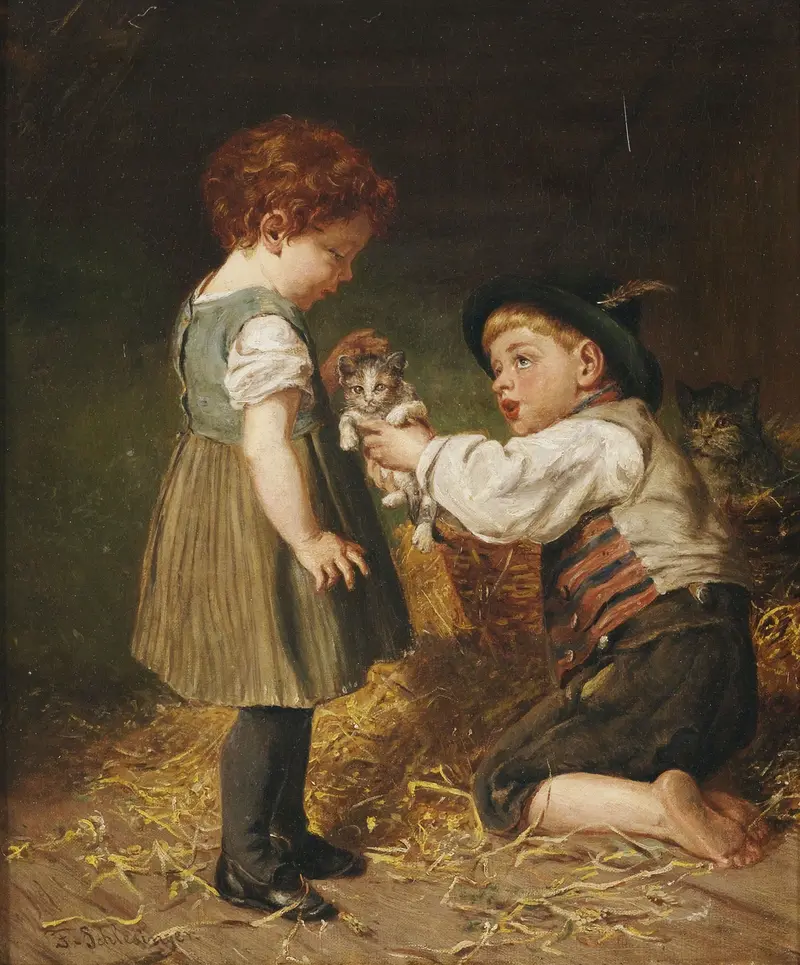
Zwei Kinder mit Kätzchen im Stall
Felix Schlesinger
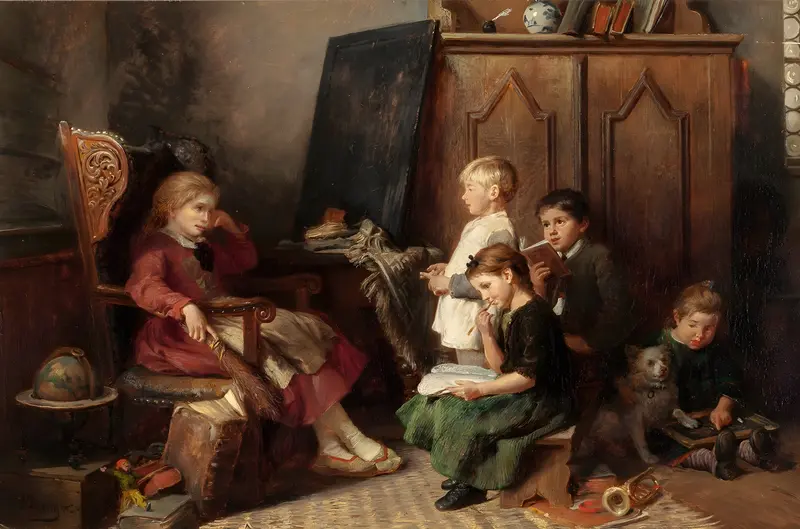
Children Reading
Felix Schlesinger
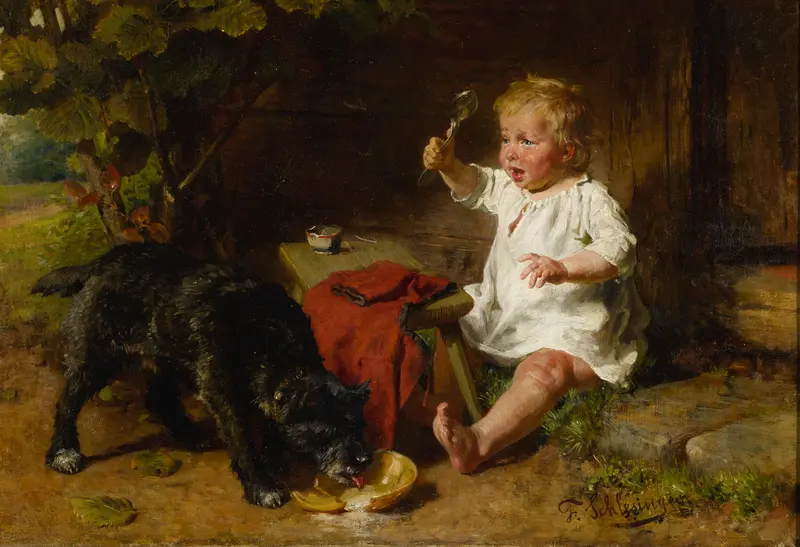
A Shared Meal
Felix Schlesinger
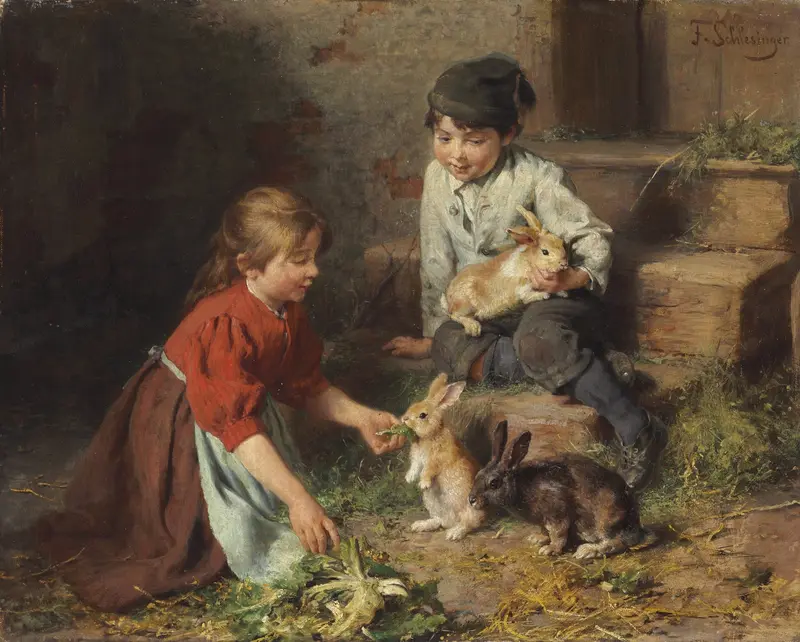
Fütterung Der Kaninchen
Felix Schlesinger
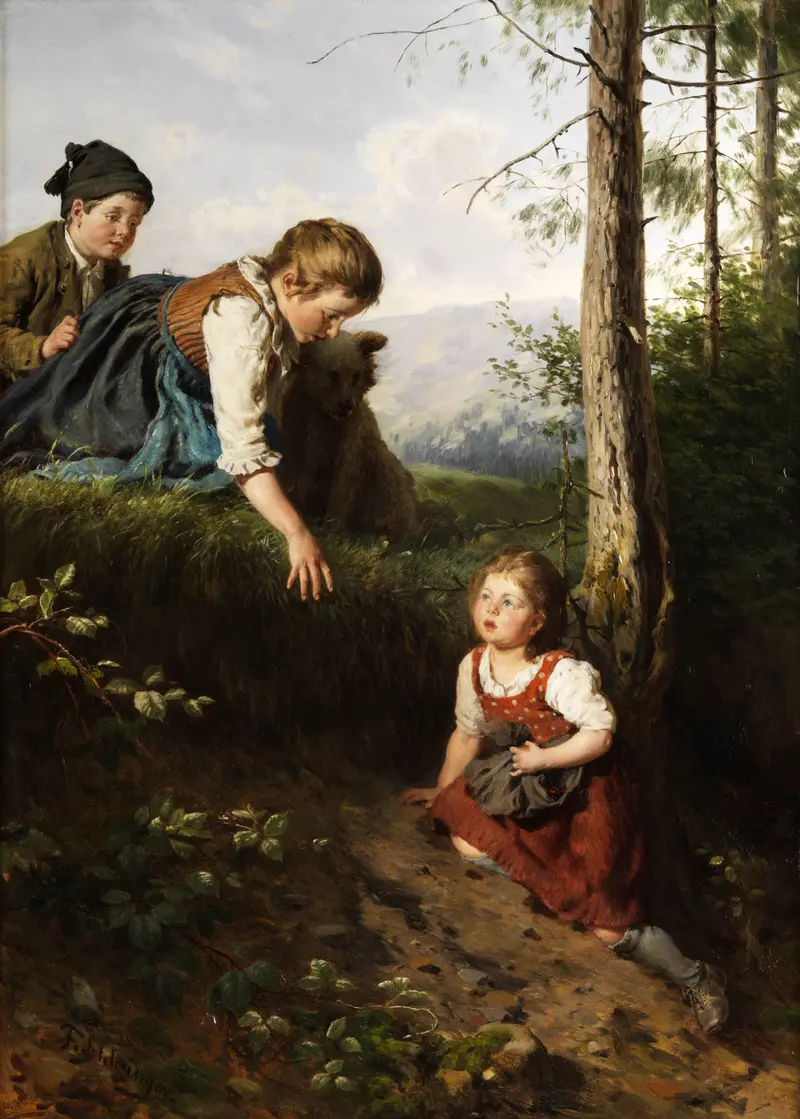
Drei Kinder im Wald beim Beerenpflücken
Felix Schlesinger
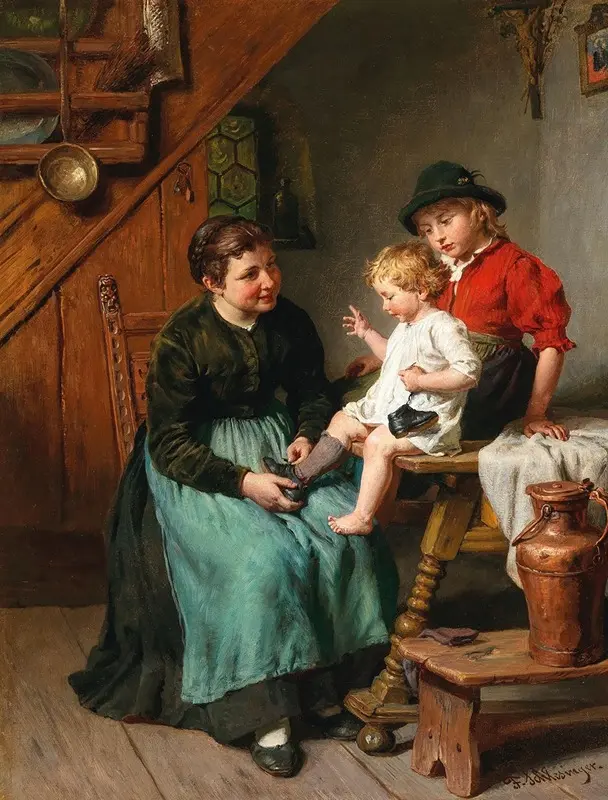
The First Shoe
Felix Schlesinger
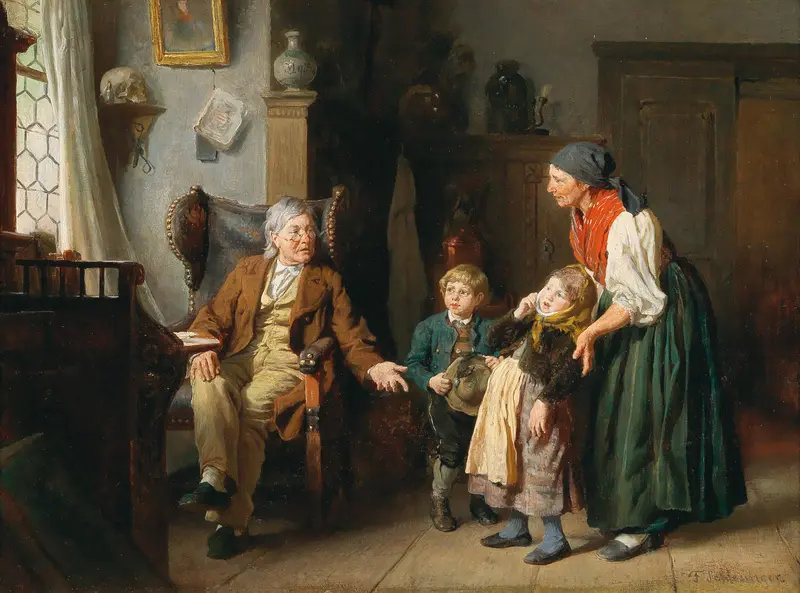
The village doctor
Felix Schlesinger
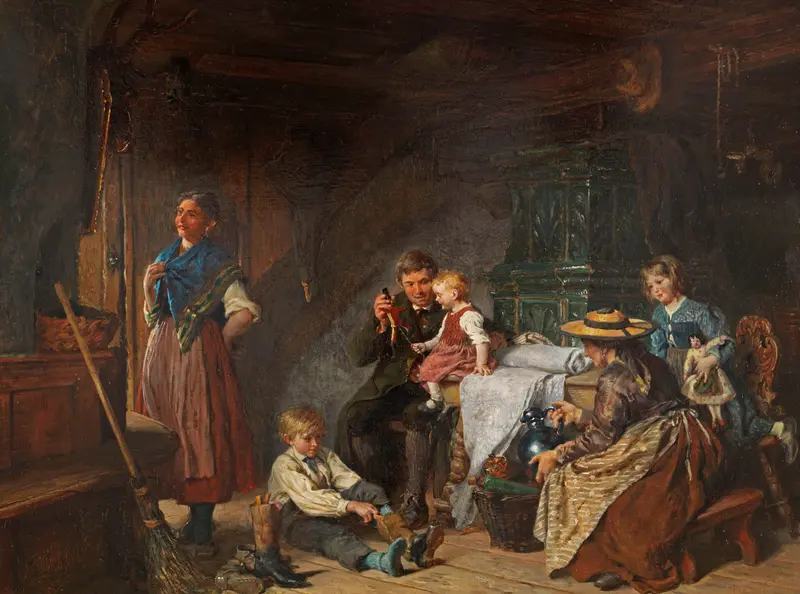
Familienszene
Felix Schlesinger
More Genre Scene Art

Banquet of the Officers of the St George Civic Guard
Frans Hals

Rembrandt and Saskia in the Scene of the Prodigal Son
Rembrandt van Rijn

Bal du moulin de la Galette
Pierre-Auguste Renoir

Quadrille at the Moulin Rouge
Henri de Toulouse-Lautrec

A Burial at Ornans
Gustave Courbet

When Will You Marry?
Paul Gauguin