
Dordrecht. Un quai du port — History & Facts
In the quietude of life, emotions often swirl beneath the surface, hidden in the gentle brushstrokes of everyday scenes. Look closely at the harmonious blend of blues and ochres that washes over the canvas. The viewer's gaze is drawn first to the shimmering water, where the reflections of nearby boats ripple softly against the tide. Notice how Boudin captures the fleeting moments of time with his deft application of pigment, creating an ethereal quality that conjures an almost palpable serenity.
The figures that populate the quay, though small and somewhat distant, lend a sense of scale and presence, grounding the tranquil chaos of the port. Yet beneath this serene façade lies a subtle tension, a whisper of loss that haunts the corners of the scene. The muted palette evokes a sense of nostalgia, suggesting the passage of time and the inevitable changes that accompany it. The boats, still yet poised, seem to hold the weight of unspoken stories and emotions, echoing the artist’s own sense of grief.
Each brushstroke conveys a longing, as if the very act of painting was an attempt to freeze a moment that is both beautiful and fleeting. In 1884, Eugène Boudin was residing in the tranquil coastal town of Trouville, France, a place that inspired much of his work. This was a period when he was emerging as a pivotal figure in the Impressionist movement, often celebrating the interplay of light and natural landscapes. His exploration of maritime life would pave the way for future artists, but it was also marked by personal loss, a theme that often seeped into his depictions of everyday scenes, reflecting both the beauty and the heartache of existence.
More Artworks by Eugène Boudin
Browse all →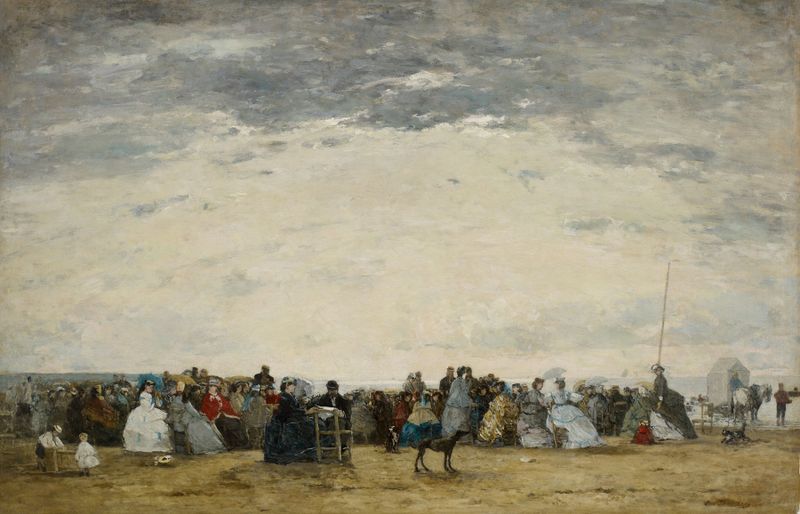
Vacationers on the Beach at Trouville
Eugène Boudin

Washerwoman near Trouville
Eugène Boudin
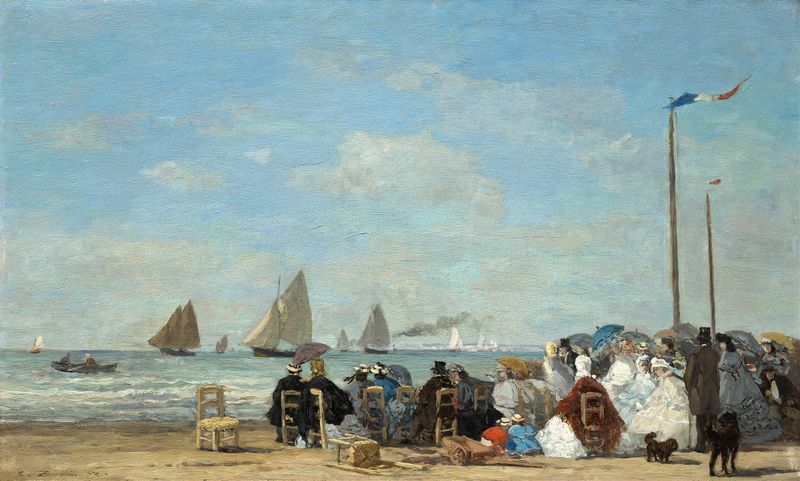
Beach Scene at Trouville
Eugène Boudin

Port aux environs d’Honfleur
Eugène Boudin

Le Faou, un coin du village
Eugène Boudin
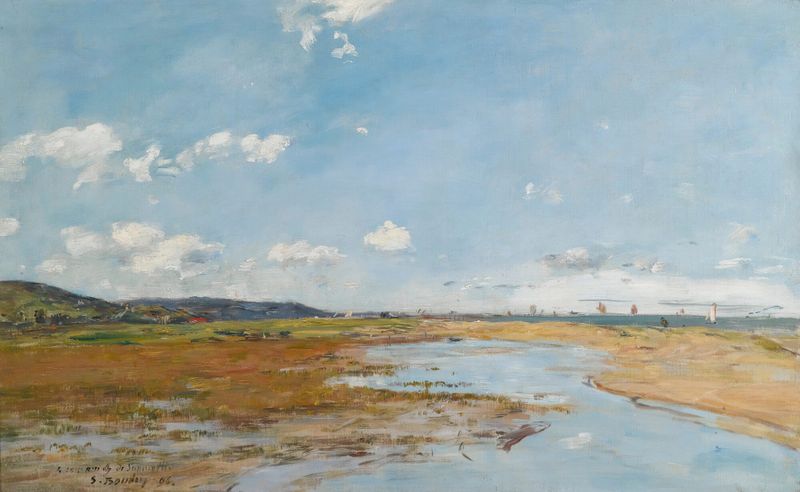
Deauville. Le Rivage
Eugène Boudin
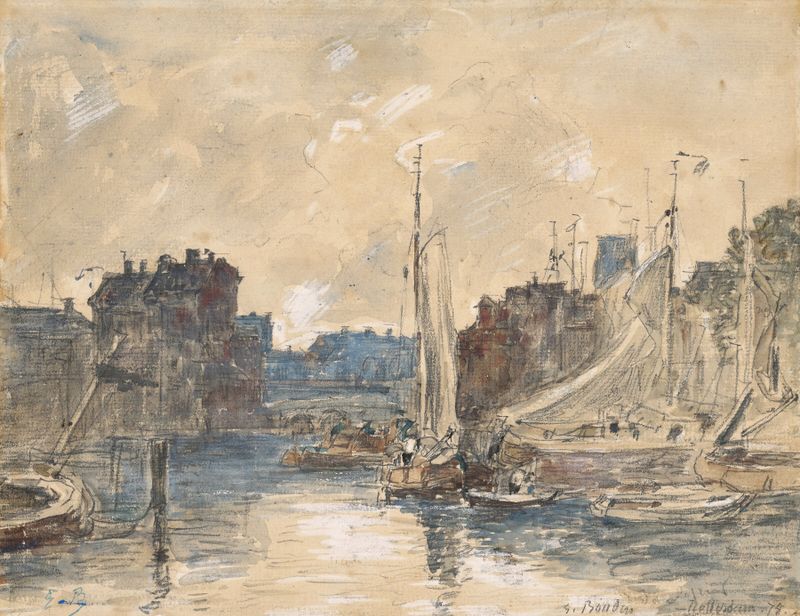
Port de Rotterdam
Eugène Boudin

View of Bordeaux, from the Quai des Chartrons
Eugène Boudin

Trouville, Scène De Plage
Eugène Boudin

Trouville, Le Port
Eugène Boudin





