
Dormice (see Muscardinus avellanarius). — History & Facts
What draws the eye first in Dormice (see Muscardinus avellanarius) is not just the delicate fur or the bright, attentive eyes of the two creatures, but the sense of quiet activity in the undergrowth. The artist leads us in close, almost at ground level, where the world is ruled by small, quick movements and the subtle drama of survival. The dormice perch on slender branches, their tiny paws gripping the wood, tails curling for balance.
One looks down, nose twitching toward a patch of wild strawberry and bramble, while a bumblebee forages below—each detail painted with a precision that makes the scene feel both intimate and alive. The light is gentle, filtered through grasses and leaves, setting off the golden-brown fur and the cool blue-green of the foliage, inviting the viewer to linger and notice every nuance. Painted in 1903, this work belongs to a moment when British natural history illustration was at its height, driven by both scientific curiosity and a growing public affection for the countryside. Artists like Archibald Thorburn were celebrated for their ability to capture not only the appearance but the habits and habitats of native species, their works often commissioned for books, private collections, or scientific societies.
While little is recorded about the specific journey of this painting before its appearance at Bonhams, its attention to both accuracy and atmosphere is typical of the era’s best wildlife art. In a world increasingly shaped by industrial change, such images offered a window onto the quieter lives unfolding just beyond the hedgerow—an invitation, still, to look again at the overlooked wonders of the natural world.
More Artworks by Archibald Thorburn

The Watchful Hinds
Archibald Thorburn
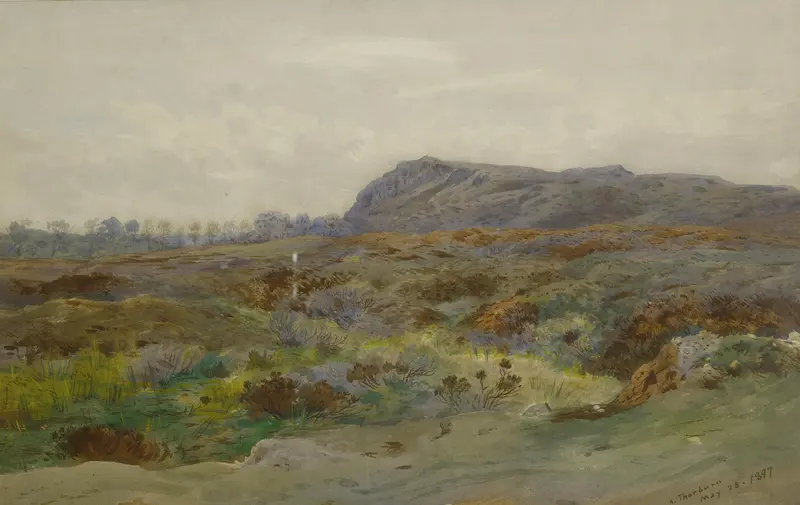
Moorland Landscape
Archibald Thorburn
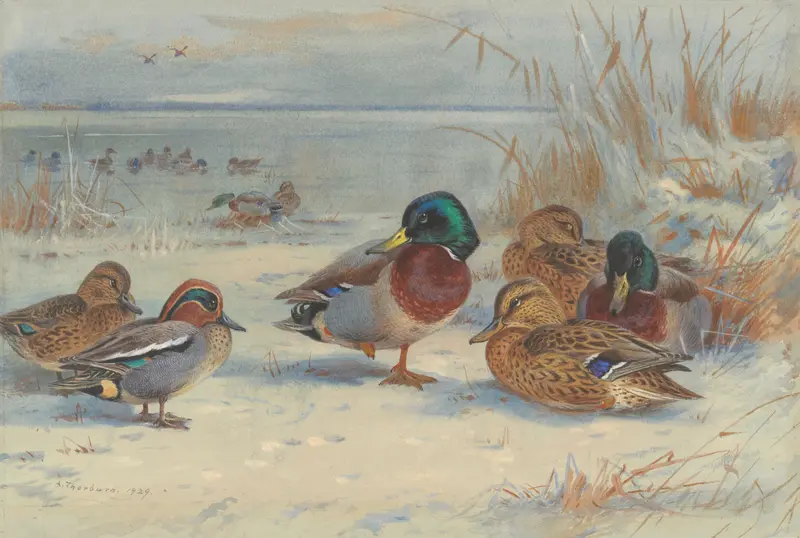
Mallard and teal in the snow
Archibald Thorburn
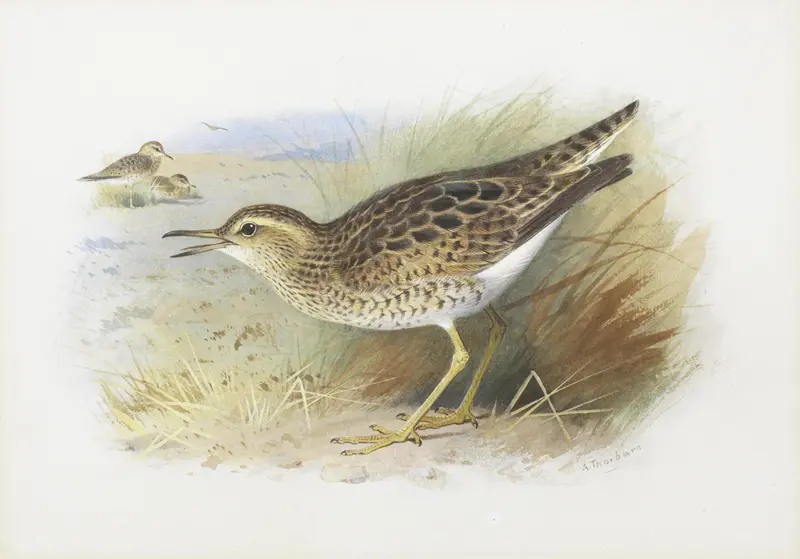
Bartram's Plover
Archibald Thorburn
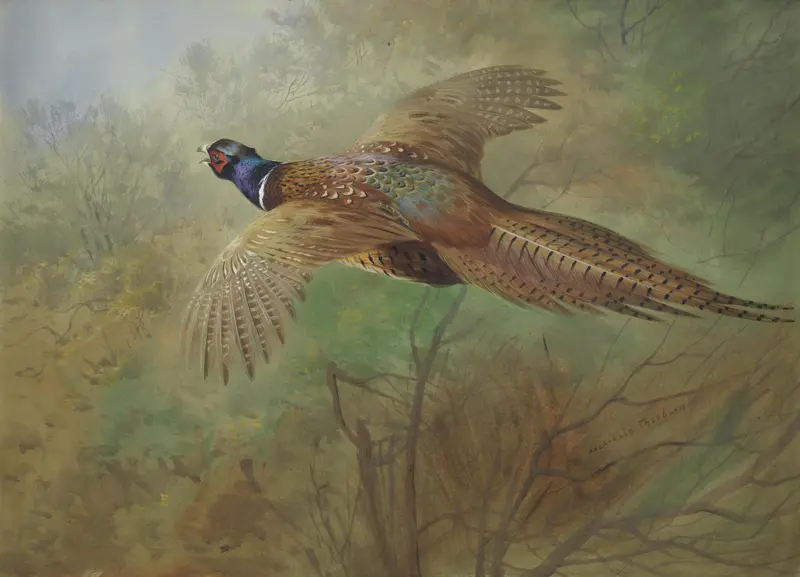
Pheasant in flight
Archibald Thorburn
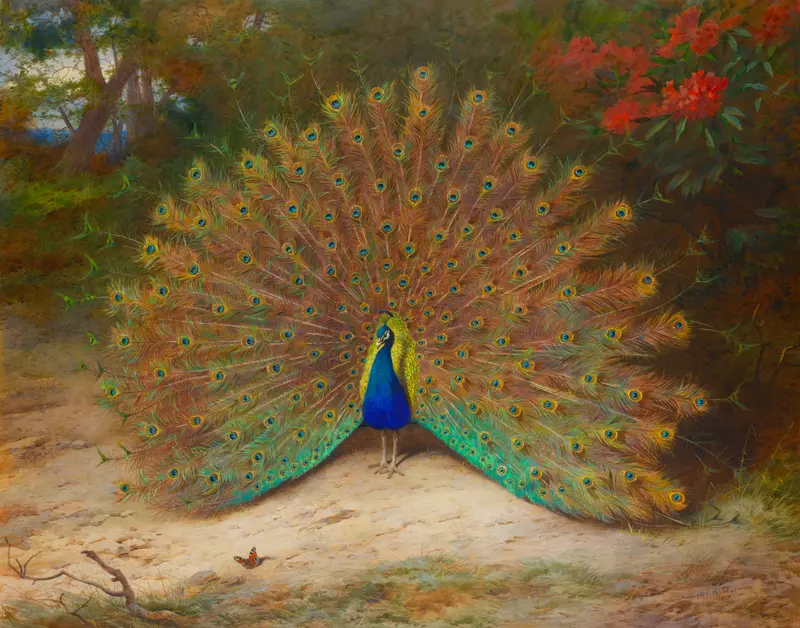
Peacock and Peacock Butterfly
Archibald Thorburn
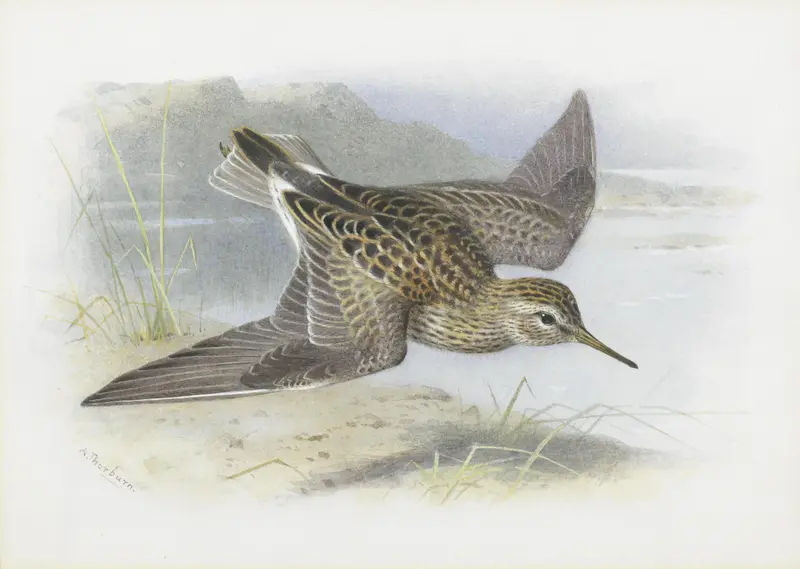
Pectoral Sandpiper
Archibald Thorburn
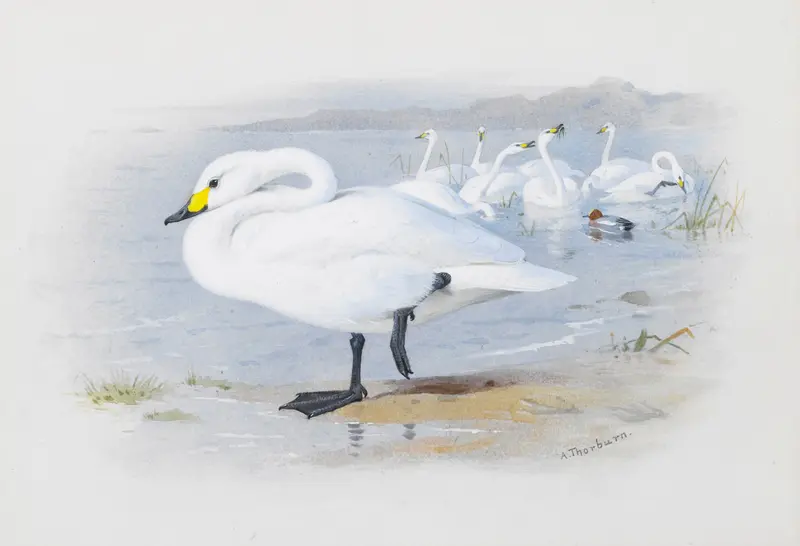
Bewick's swan.
Archibald Thorburn
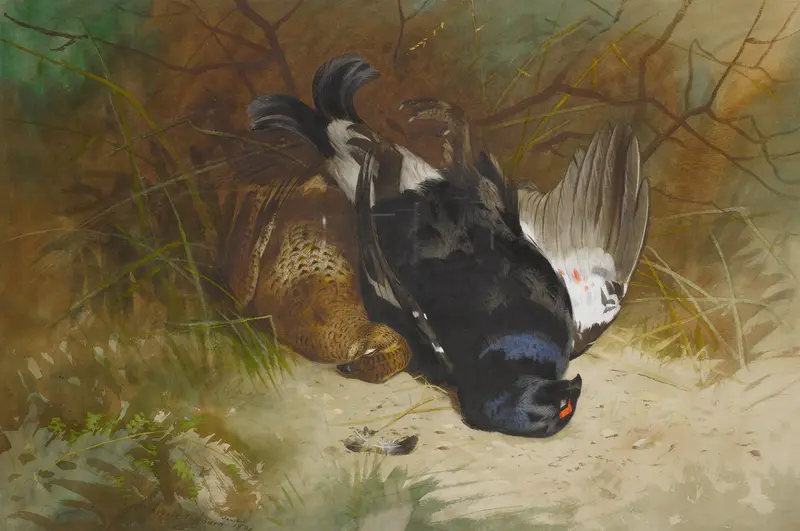
Still life of a pair of Blackgame.
Archibald Thorburn
Blackgame
Archibald Thorburn





