
Douarnenez, la baie, vue de l’Île Tristan — History & Facts
This thought invites an exploration of the quiet yet tumultuous emotions that a landscape can evoke, particularly in the hands of a master. In the soft embrace of twilight, the scene reveals a hidden narrative—one punctuated by the silent betrayals of nature and the fleeting human experience. Look to the left at the gentle curve of the coastline, where the water meets the land. Notice how the various hues of blue blend seamlessly, capturing the essence of a tranquil bay while hinting at underlying currents.
The delicate brushwork suggests movement in the clouds, drawing your gaze towards the horizon, where light dances upon the water's surface. The contrasting darks and lights give depth, inviting contemplation of the ephemeral beauty of dusk. Yet, within this serene landscape lies an unspoken tension. The juxtaposition of the calm bay with the heavy clouds overhead evokes a sense of impending change—an invisible turmoil that parallels human emotions.
The distant boats, almost ghostly in their stillness, symbolize fleeting moments or perhaps lost opportunities, stirring a reflection on the nature of betrayal, whether within ourselves or our surroundings. The quiet is profound, suggesting that silence can be as telling as sound. In 1897, during a period of artistic exploration in France, the painter found inspiration in the coastal beauty of Brittany. Working en plein air, he captured the essence of the landscape at a time when Impressionism was gaining prominence.
Boudin, who often painted alongside other influential artists, sought to encapsulate the pure light and atmosphere of his surroundings, blending emotional depth with technical mastery in this evocative work.
More Artworks by Eugène Boudin
Browse all →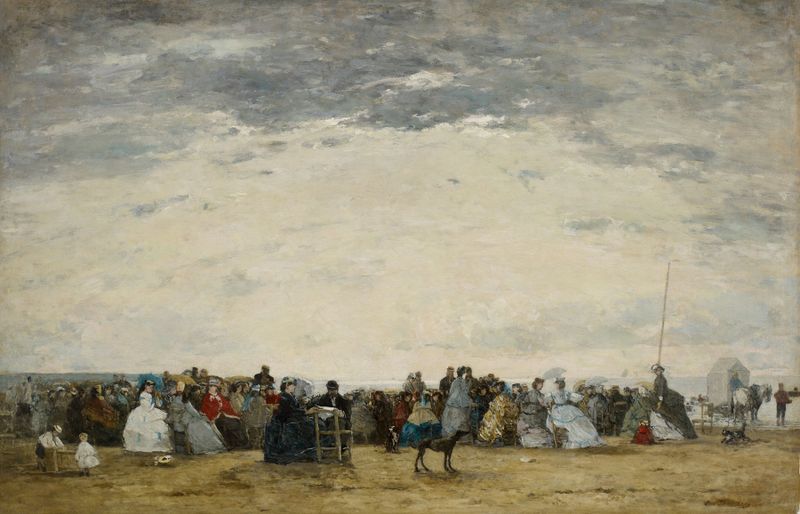
Vacationers on the Beach at Trouville
Eugène Boudin

Washerwoman near Trouville
Eugène Boudin
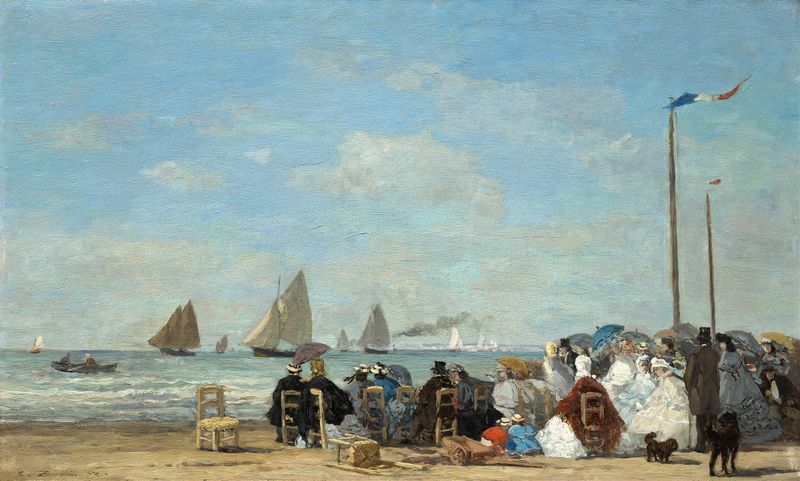
Beach Scene at Trouville
Eugène Boudin

Port aux environs d’Honfleur
Eugène Boudin

Le Faou, un coin du village
Eugène Boudin
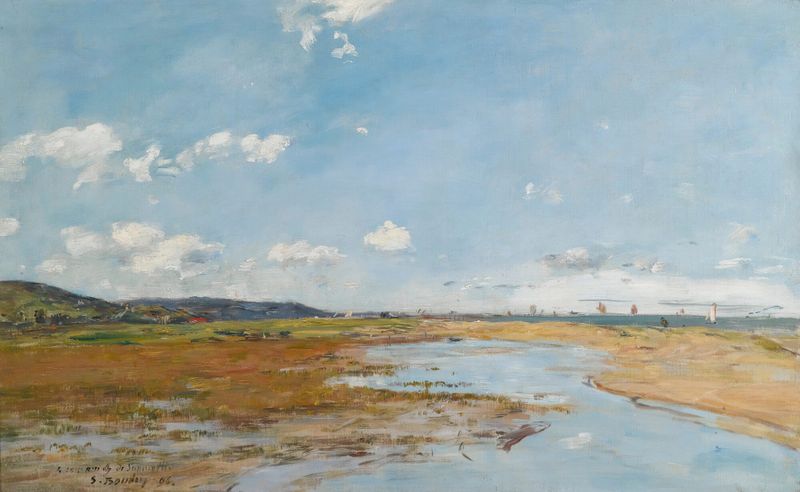
Deauville. Le Rivage
Eugène Boudin
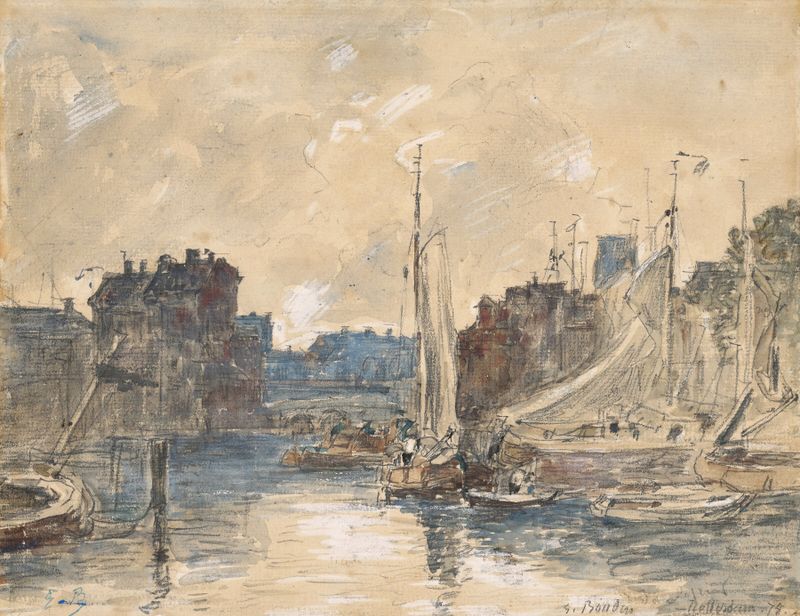
Port de Rotterdam
Eugène Boudin

View of Bordeaux, from the Quai des Chartrons
Eugène Boudin

Trouville, Scène De Plage
Eugène Boudin

Trouville, Le Port
Eugène Boudin





