
Drie drinkende mannen — History & Facts
Could a single brushstroke hold eternity? In the hands of Cornelis Pietersz. Bega, the answer is a resounding yes, as light dances upon the canvas, weaving stories of time and presence. Look closely at the figures clustered together, each man lost in his own reverie amid a warm, inviting glow. Direct your gaze to the way the light caresses their faces, illuminating the subtle nuances of their expressions.
The rich, earthy palette of ochres and deep browns creates a sense of intimacy, while the soft highlights bring a tactile quality to their clothing, inviting you to reach out and feel the fabric. The composition draws you in, as the men’s gestures and postures create a sense of camaraderie but also hint at individual inner worlds, each caught in a moment of private thought. Beneath the surface, the scene captures more than mere revelry. The juxtaposition of light and shadow speaks to the contrasts of life: joy intertwined with solitude, community alongside introspection.
Their stillness amidst the animated gestures of conversation evokes a poignant tension, suggesting that even in fellowship, one can feel profoundly alone. Each detail, from the glint in a glass to the hesitant smile of a man lost in thought, invites reflection on the complexity of human connection. Bega painted this work during the 1640s, a time of evolving genres in Dutch art, where interior scenes began to gain prominence. Living in Haarlem, amidst a flourishing artistic community, he navigated the transition from traditional genres to more intimate portrayals of everyday life.
This painting captures the essence of that shift, revealing the artist's keen observation of human nature amid the changing tides of his time.
More Artworks by Cornelis Pietersz. Bega
Browse all →
Mannen en jonge vrouw in herberg
Cornelis Pietersz. Bega

Twee mannen en vrouw met kind zittend in herberg
Cornelis Pietersz. Bega
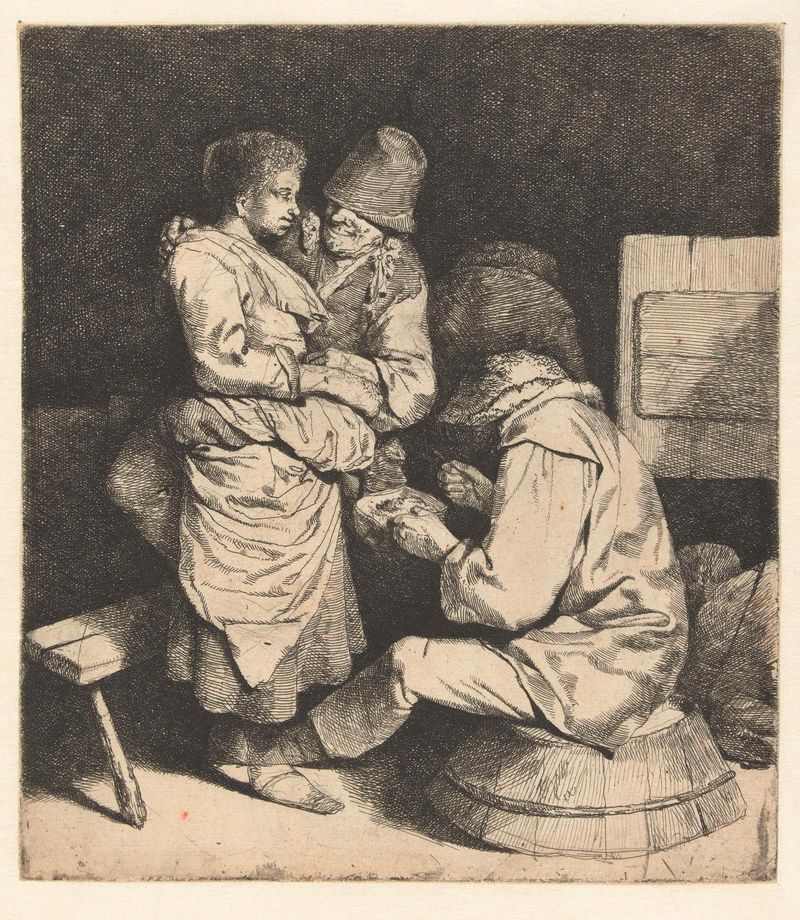
Vrouw vastgepakt door man, andere man zit te eten in herberg
Cornelis Pietersz. Bega

Jonge vrouw zittend met een pijp
Cornelis Pietersz. Bega

Staande vrouw vastgepakt door man, andere man kijkt toe in herberg
Cornelis Pietersz. Bega
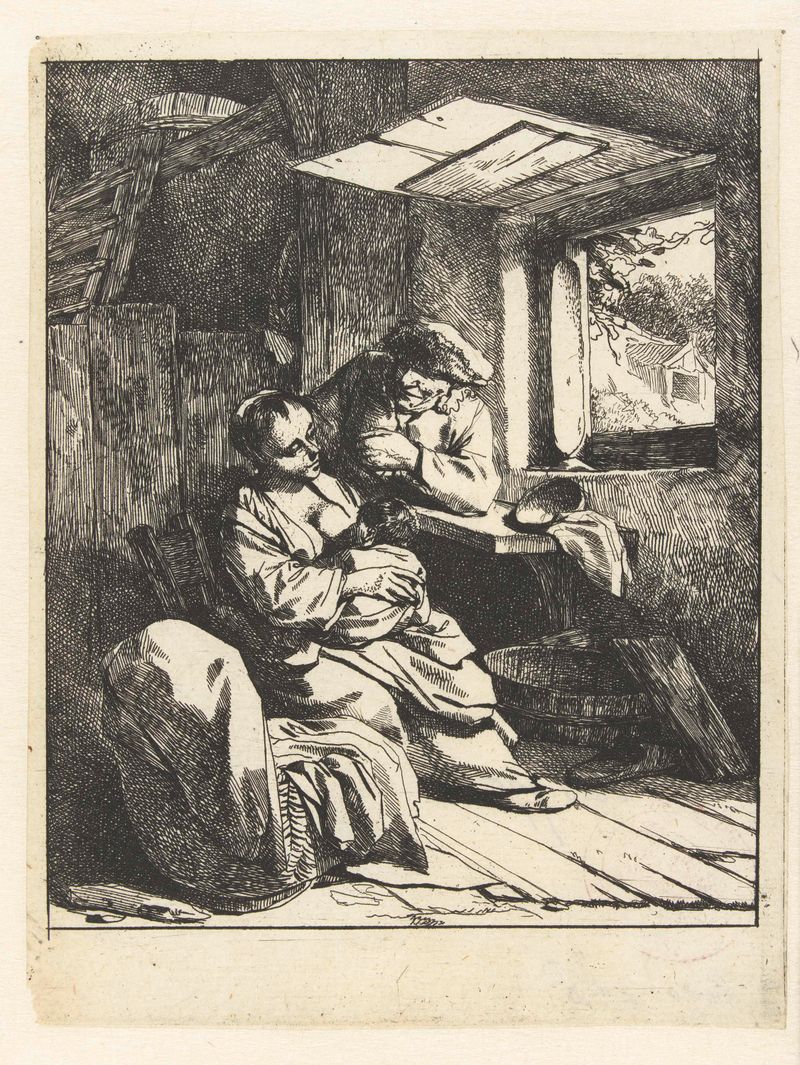
Vrouw met kind en man bij wieg in interieur met open raam
Cornelis Pietersz. Bega
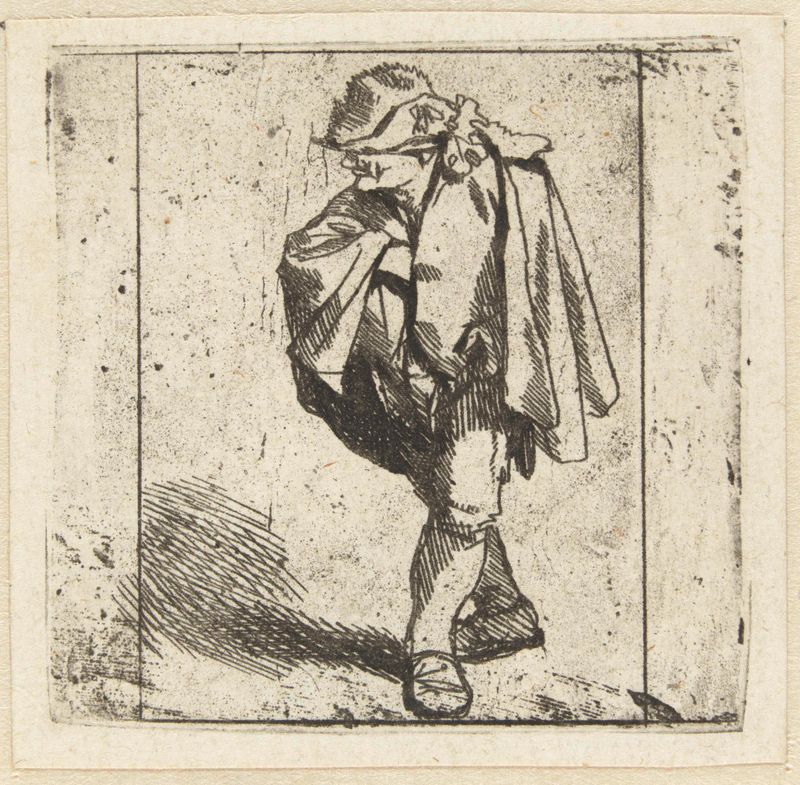
Staande man met de rechterhand op de borst in zijn mantel gestoken
Cornelis Pietersz. Bega
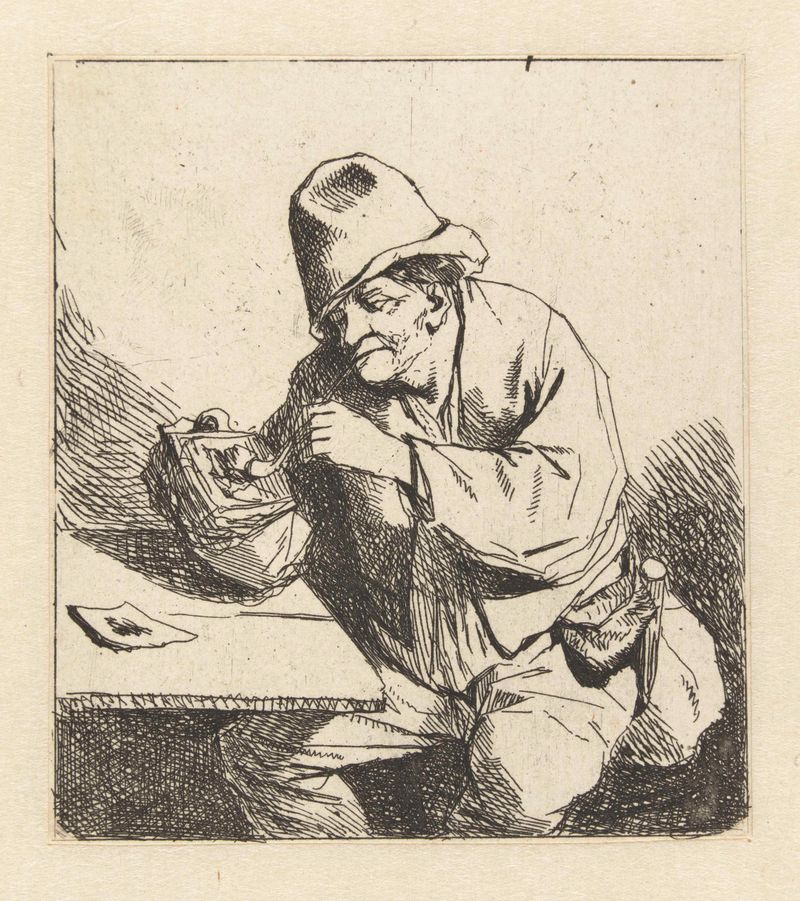
Zittende man steekt pijp aan
Cornelis Pietersz. Bega

Man zittend op ton met kruik in handen
Cornelis Pietersz. Bega

Liefdespaar
Cornelis Pietersz. Bega





