
Dunedin — History & Facts
Could a single brushstroke hold eternity? In Dunedin, the essence of a place unfolds through the delicate dance of colors and reflections, suggesting that landscapes can speak volumes beyond their physical forms. Look to the center of the canvas, where the shimmering waters mirror the sky’s soft hues. Notice how the subtle gradations of blue and green evoke a sense of serenity, while the strokes of white capture the fleeting light of day. The composition balances the natural elements, guiding the viewer’s eye from the tranquil water to the distant hills, emphasizing the unity of land and sky.
Each brushstroke is deliberate, creating a harmonious blend that draws you into the scene. Yet beneath the surface, emotional tensions emerge. The contrast between the vibrant landscape and the muted tones of the foreground hints at a deeper narrative, perhaps reflecting the transient nature of time and memory. The reflections in the water invite contemplation, suggesting that what we see is only part of the truth, encouraging the viewer to ponder what lies beneath the surface.
Each element seems to hold its own story, contributing to the overall harmony yet evoking a sense of longing. In 1866, James Crowe Richmond painted Dunedin during a period of significant change in New Zealand, where he had settled. Richmond was part of the early colonial art movement, capturing the landscapes of his adopted home. His works often reflected a growing sense of identity and connection to the land, as he sought to portray not just the physical beauty of his surroundings but also the emotional resonance they held for those who experienced them.
More Artworks by James Crowe Richmond
Browse all →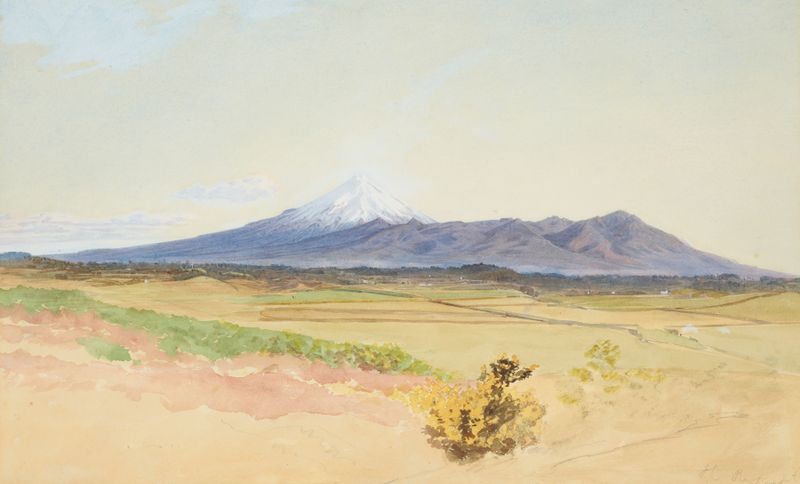
Mount Egmont and Pouakai, from New Plymouth
James Crowe Richmond
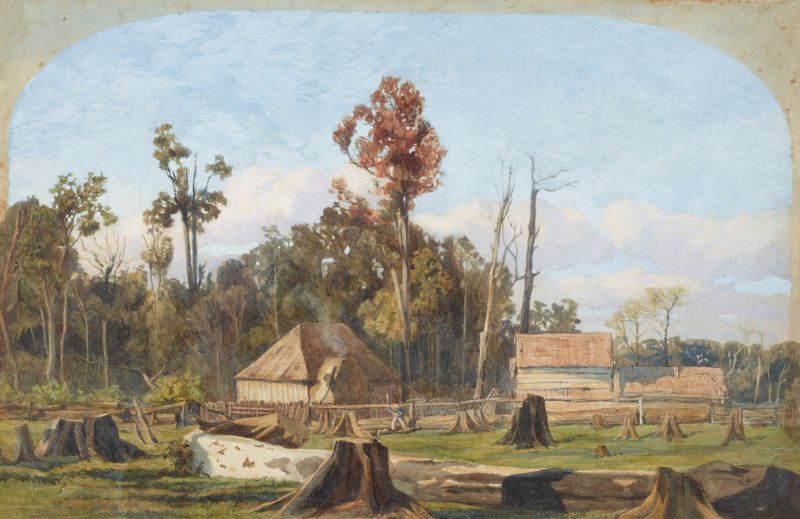
Settler’s home, Merton, near New Plymouth
James Crowe Richmond
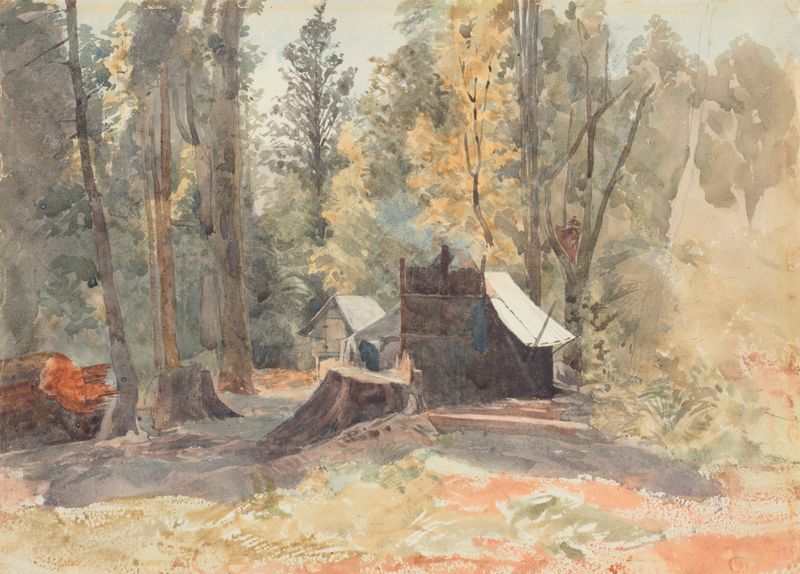
Hut of the ‘Italian party’, old diggings on Buller
James Crowe Richmond

Mosque at Tlemcen
James Crowe Richmond

Ngatapa, Te Kooti’s Pa
James Crowe Richmond

Dividing Range, Riwaka and Takaka
James Crowe Richmond
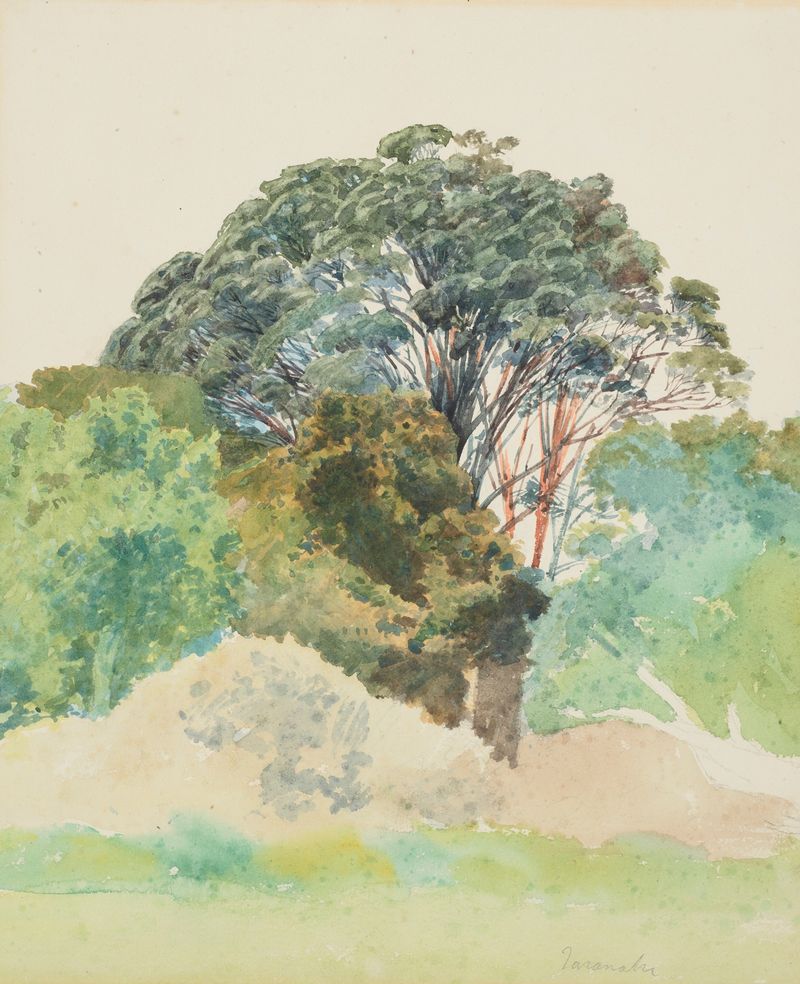
Rata, Taranaki
James Crowe Richmond

Grey River, on the beach
James Crowe Richmond
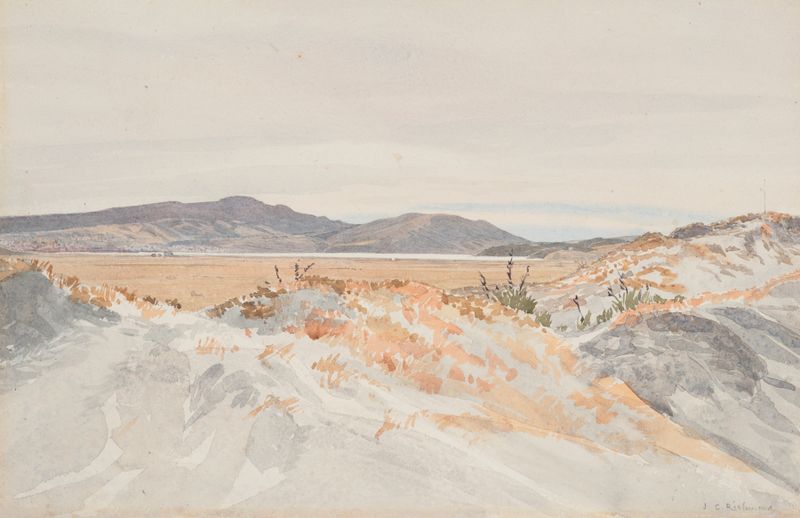
Dunedin from the Ocean Beach
James Crowe Richmond

On Collingwood Goldfields
James Crowe Richmond





