
Dunkerque, voiliers à quai — History & Facts
When did color learn to lie? In Dunkerque, voiliers à quai, a world of dreams unfurls, blurring the lines between imagination and reality. Look to the left, where the lush blues of the sea blend seamlessly with the pastel-hued sails, creating an ethereal haze that invites you into the scene. The gentle strokes of the brush convey a sense of movement, as if the boats themselves are breathing in the tranquility of the harbor. Notice how the light dances upon the water's surface, flickering like scattered thoughts while the soft clouds overhead lend a dreamlike quality to the atmosphere. Yet beneath this tranquil surface lies an intricate interplay of contrasts.
The vibrant sails, bright against the muted tones of the boats, symbolize the juxtaposition of life and stillness, action and repose. The composition invites contemplation, evoking a sense of longing that transcends the mere representation of the boats and harbor. Each element serves as a reminder of fleeting moments, where the dreamer intertwines with the dream. Painted in 1891, this work emerged during a pivotal phase for its creator, who was recognized as a precursor to Impressionism.
Working primarily in the coastal towns of France, he sought to capture the ephemeral beauty of nature. At this time, the art world was shifting, embracing the expressive use of color and light, which boldly reflected the rapidly changing society around him.
More Artworks by Eugène Boudin
Browse all →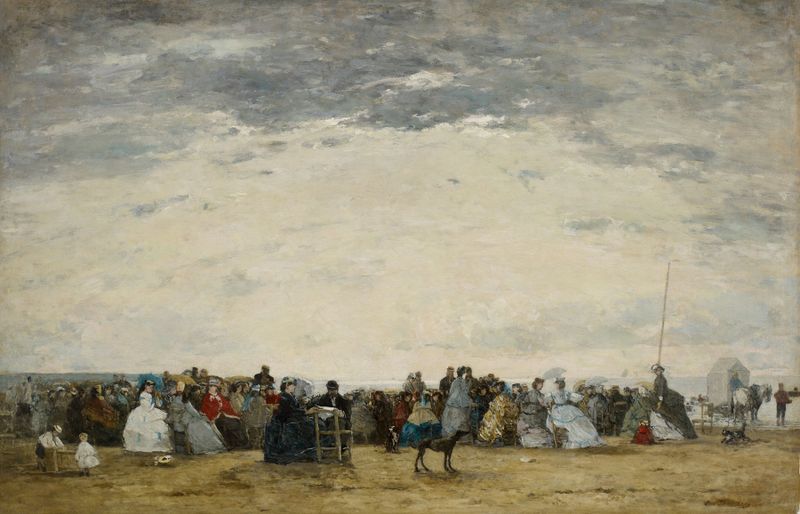
Vacationers on the Beach at Trouville
Eugène Boudin

Washerwoman near Trouville
Eugène Boudin
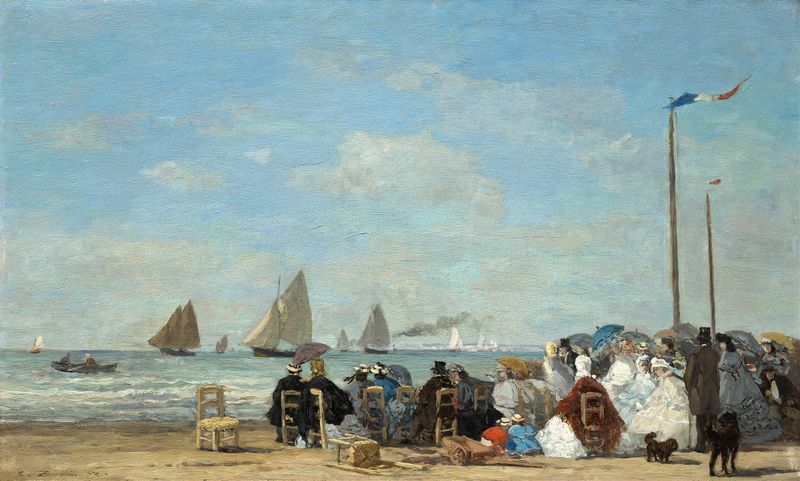
Beach Scene at Trouville
Eugène Boudin

Port aux environs d’Honfleur
Eugène Boudin

Le Faou, un coin du village
Eugène Boudin
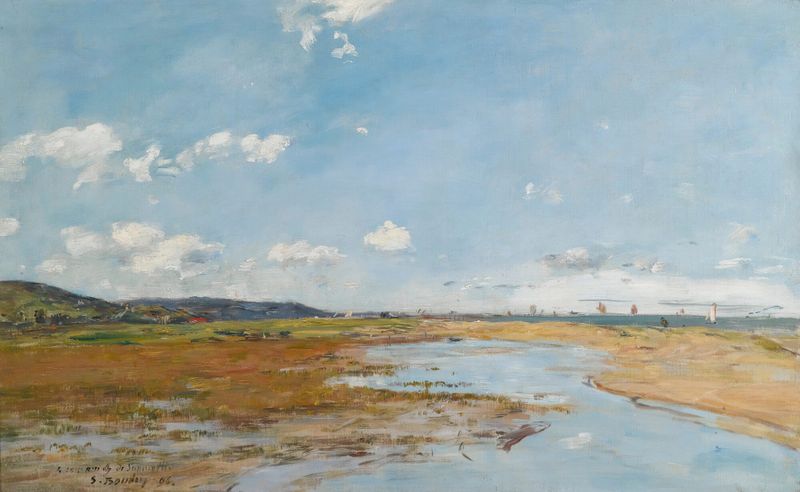
Deauville. Le Rivage
Eugène Boudin
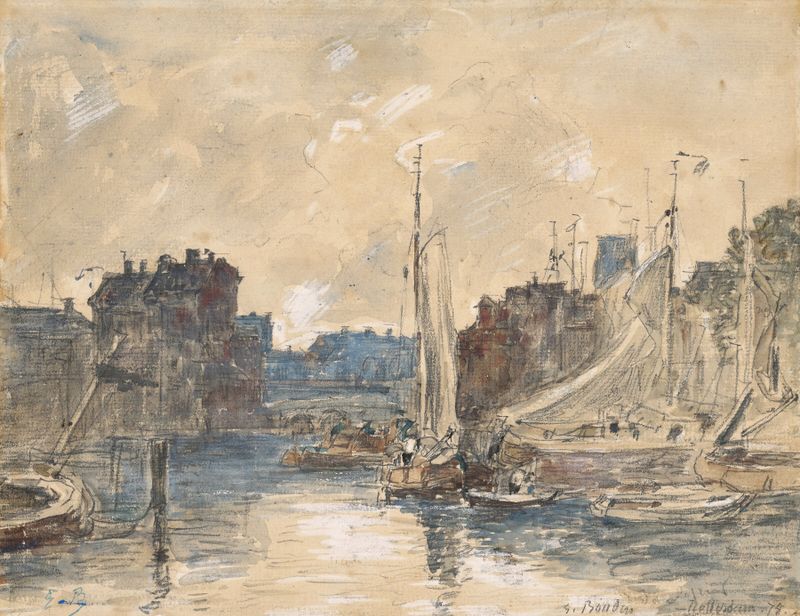
Port de Rotterdam
Eugène Boudin

View of Bordeaux, from the Quai des Chartrons
Eugène Boudin

Trouville, Scène De Plage
Eugène Boudin

Trouville, Le Port
Eugène Boudin





