
Dutch inn — History & Facts
A shaft of dusty afternoon light slices through the small window, catching on the raised glass of a man mid-toast and leading the eye into the smoky warmth of a Dutch inn. The painter, Adriaen van Ostade, has gathered a cast of everyday figures—hunched drinkers, a pipe-smoker, a dog nosing at the floor—into a scene that feels both raucous and intimate. The cluttered table, the battered jug, the rough beams overhead: each detail roots the viewer in a world of laughter, gossip, and the slow passage of hours.
The palette is all earth and ochre, the light soft but insistent, picking out faces and hands in a room otherwise thick with shadow. There is no grand narrative here, only the small dramas and pleasures of ordinary life, rendered with a sympathy that invites us to linger. Works like this, painted in 1663, belong to a tradition that flourished in the Dutch Republic, where scenes of tavern life were prized by a new class of urban collectors. In an age when the Dutch economy was booming and the middle class was eager to decorate their homes, artists such as van Ostade specialized in genre scenes that balanced humor with a keen observation of social types.
These pictures, sometimes moralizing, often simply affectionate, offered their viewers a mirror of daily existence—one that could gently poke fun at human folly while celebrating the pleasures of community. Though history has kept few traces of this particular painting’s journey, its survival in a private collection today lets us step into a seventeenth-century inn and share, for a moment, in its noisy, golden world.
More Artworks by Adriaen van Ostade

Dans in de herberg
Adriaen van Ostade
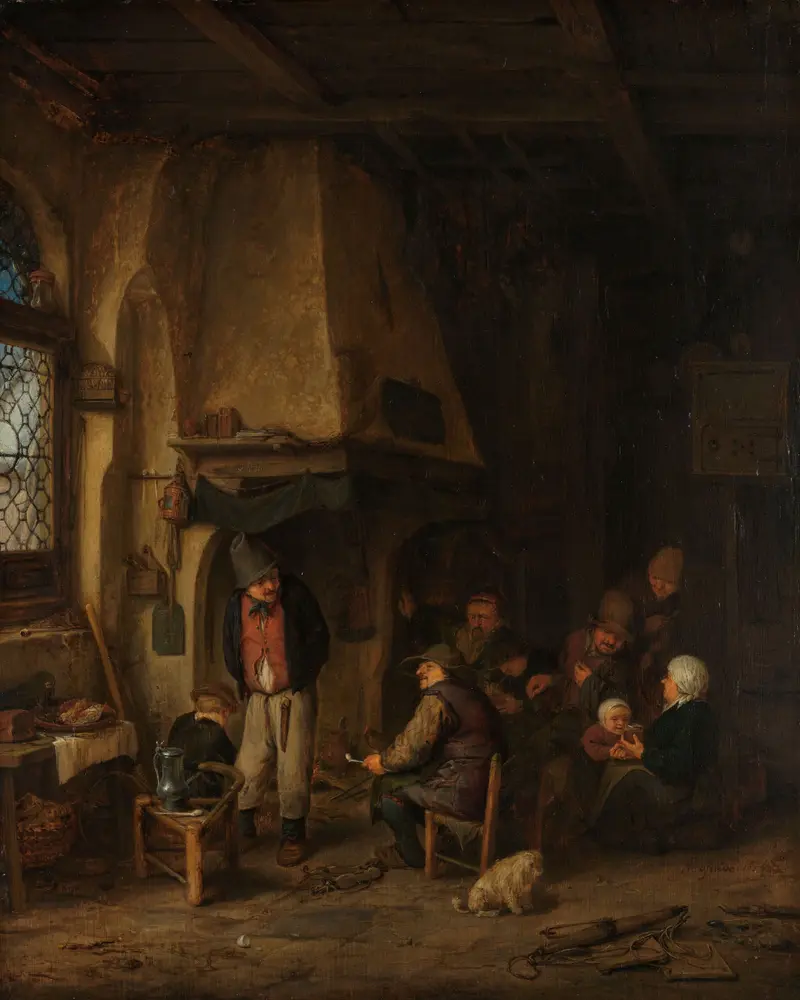
‘The Skaters’: Peasants in an Interior
Adriaen van Ostade
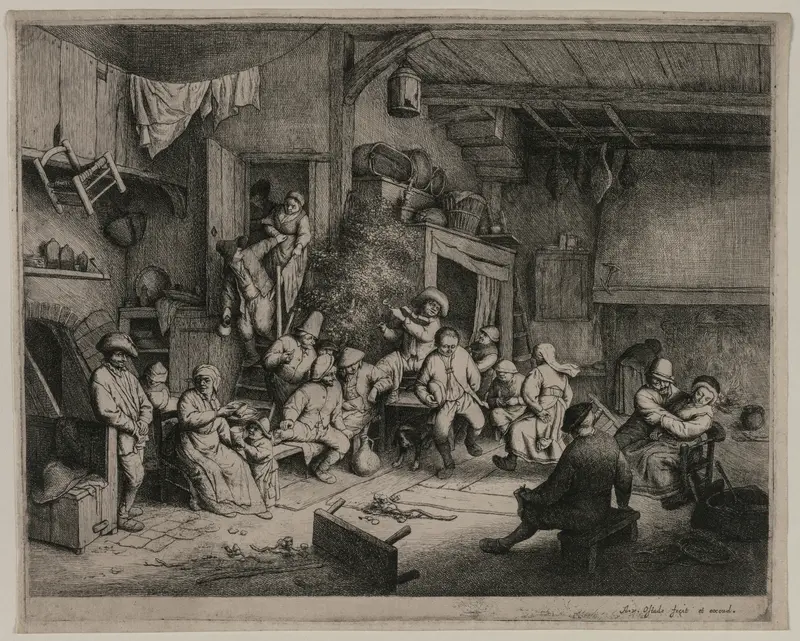
Dance at the Inn
Adriaen van Ostade
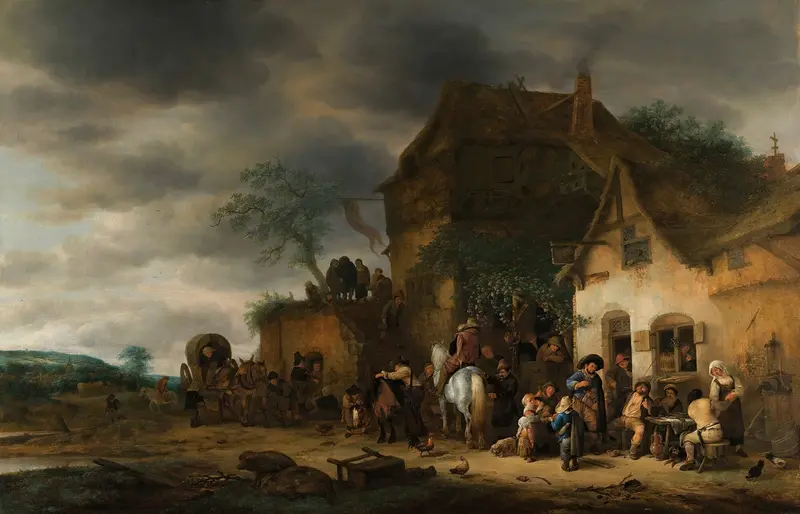
Travellers Halted At A Country Inn
Adriaen van Ostade
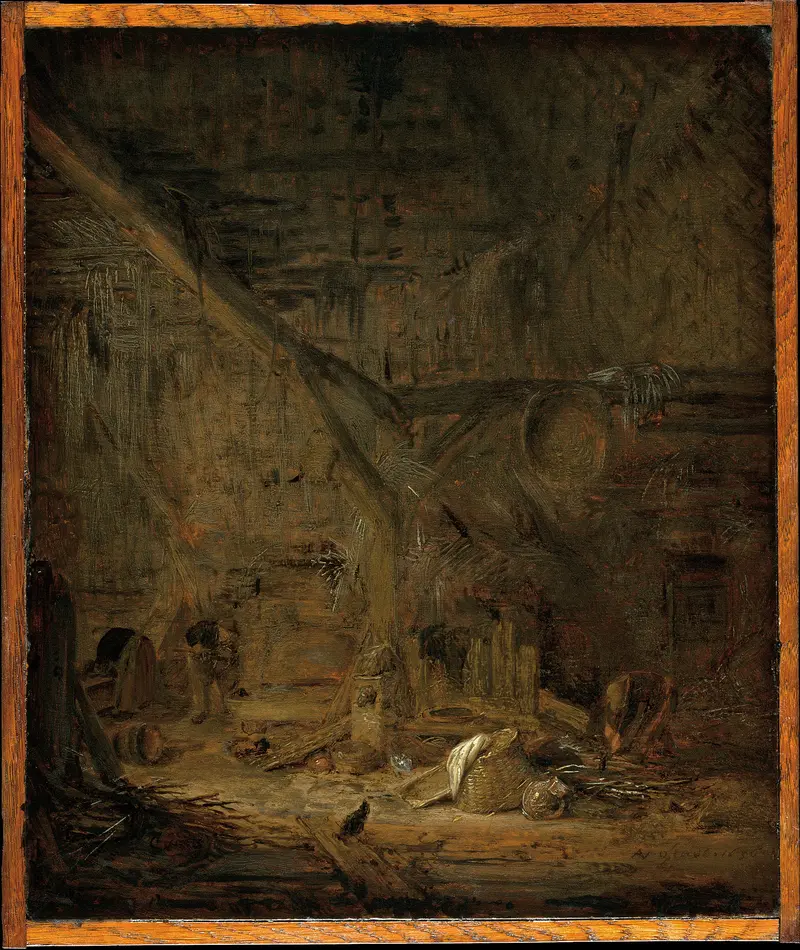
Interior of a Barn
Adriaen van Ostade
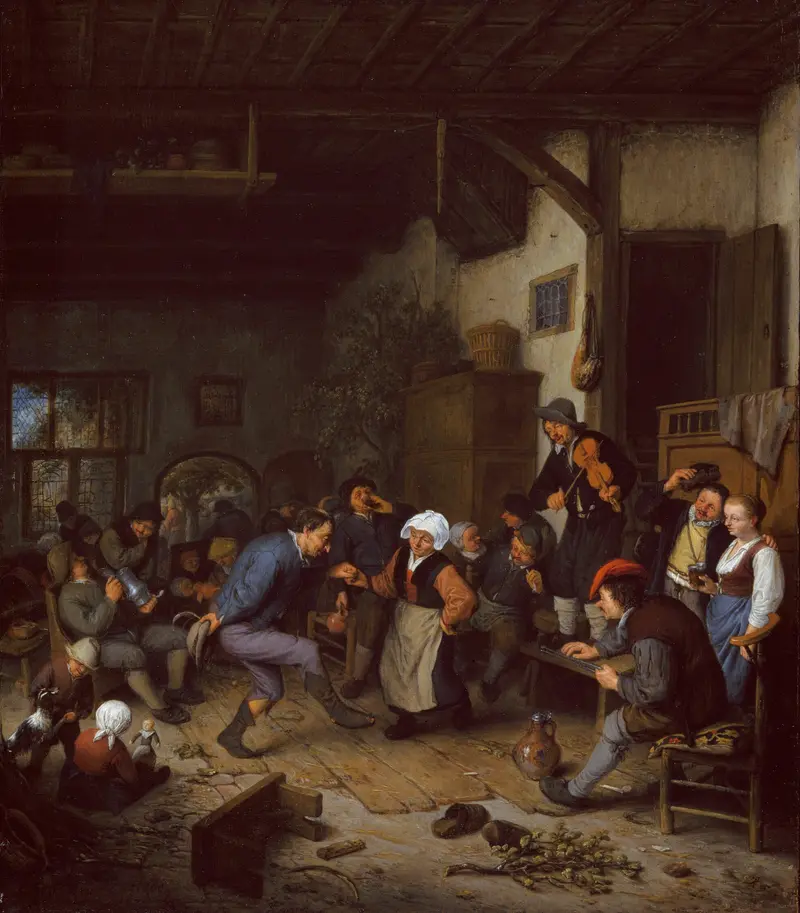
Merrymakers in an Inn
Adriaen van Ostade
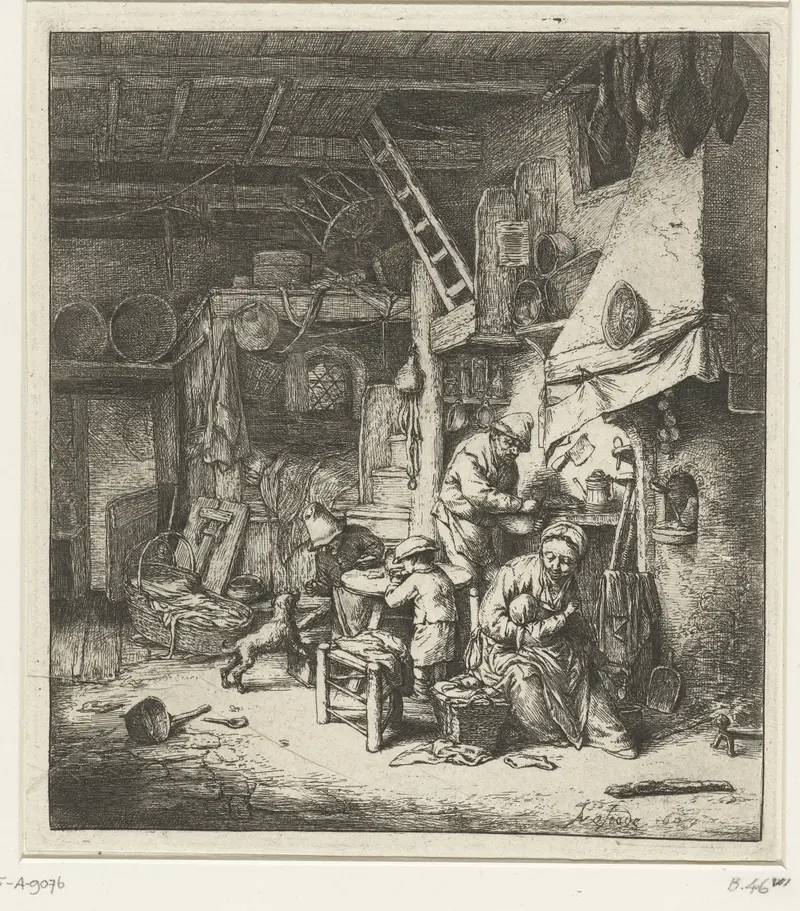
Boerengezin in interieur
Adriaen van Ostade
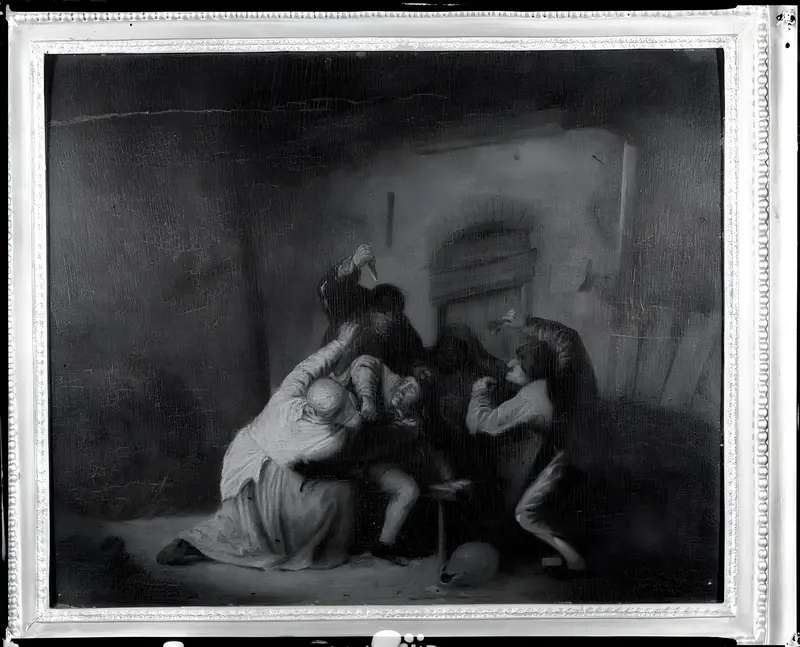
Peasants Brawling in a Tavern
Adriaen van Ostade
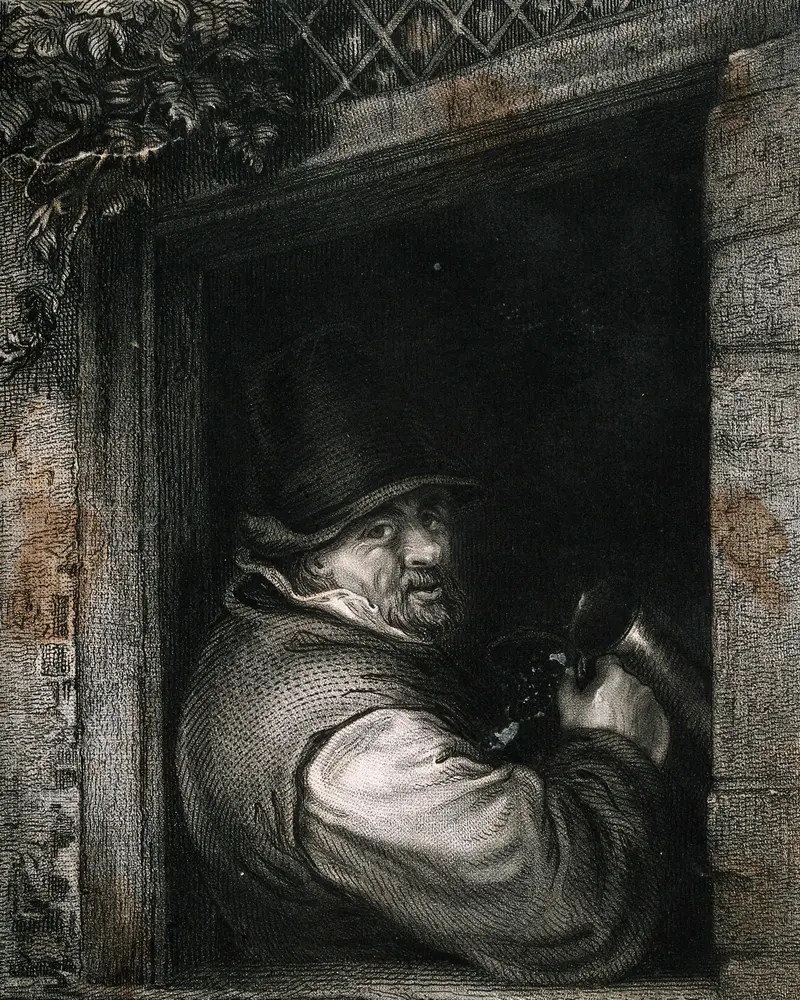
Man with a Tankard at a Window
Adriaen van Ostade
Dans in de herberg
Adriaen van Ostade
More Genre Scene Art

Banquet of the Officers of the St George Civic Guard
Frans Hals

Rembrandt and Saskia in the Scene of the Prodigal Son
Rembrandt van Rijn

Bal du moulin de la Galette
Pierre-Auguste Renoir

Quadrille at the Moulin Rouge
Henri de Toulouse-Lautrec

A Burial at Ornans
Gustave Courbet

When Will You Marry?
Paul Gauguin