
Effets de nuages – Pleine mer — History & Facts
What if silence could speak through light? In Effets de nuages – Pleine mer, the artist captures a moment where the ocean meets the sky, inviting viewers into a dreamlike dialogue between the two realms. Look to the heart of the canvas where a spectrum of blues unfolds, blending seamlessly from deep cerulean to ethereal azure. Notice how the clouds, brushed with gentle strokes of white and gray, hover above the undulating waves. The delicate interplay of light and shadow creates a shimmering effect on the water, drawing the eye across the surface as if tracing the whispers of a restless sea.
The composition is masterfully balanced, with the horizon line positioned low, granting the sky an expansive grandeur. There is a profound tranquility juxtaposed with an underlying restlessness in the painting. The clouds, though soft and inviting, suggest an impending shift, an emotional tension that mirrors the unpredictability of nature. This duality—the serene beauty of the scene and the subtle unease of what lies ahead—invites contemplation on the transient nature of existence.
Each brushstroke feels alive with the promise of change, urging the viewer to engage with the fleeting moment. During the years 1888 to 1895, Boudin painted this piece along the French coast, a time when he was deeply influenced by the Impressionist movement. As he explored the effects of light on landscapes, he sought to capture the ephemeral qualities of nature, reflecting both personal introspection and the artistic evolution occurring around him. His dedication to plein air painting marked a significant moment in his career, solidifying his role as a precursor to the modern explorations of light and atmosphere.
More Artworks by Eugène Boudin
Browse all →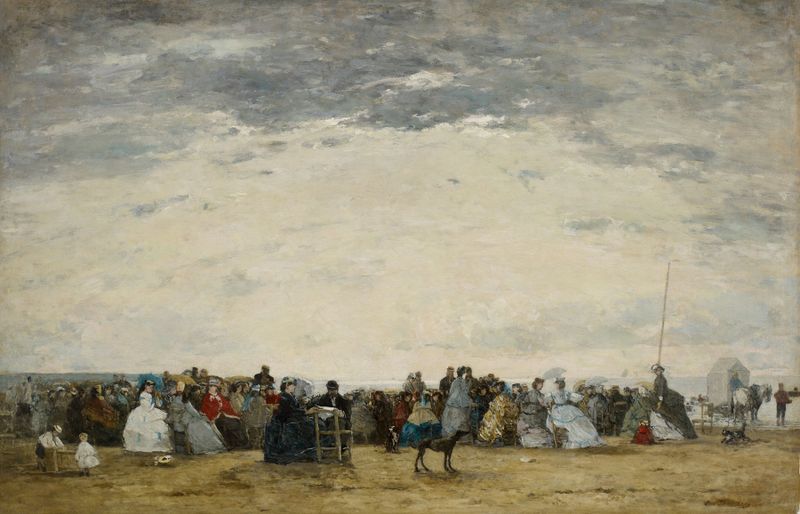
Vacationers on the Beach at Trouville
Eugène Boudin

Washerwoman near Trouville
Eugène Boudin
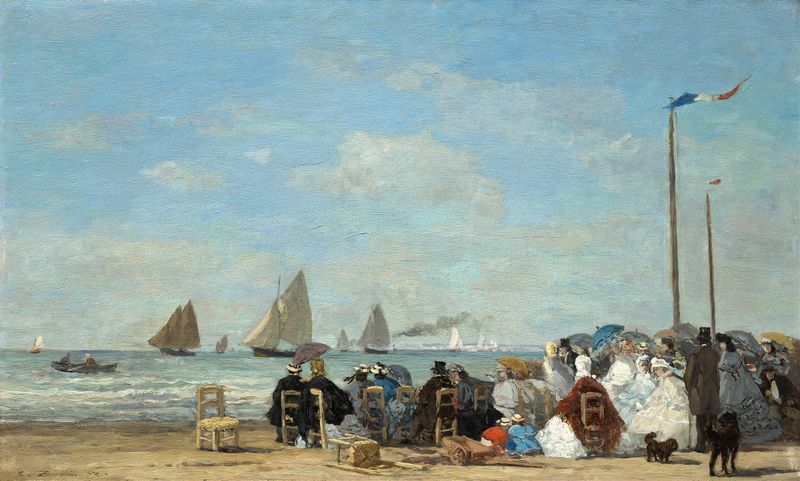
Beach Scene at Trouville
Eugène Boudin

Port aux environs d’Honfleur
Eugène Boudin

Le Faou, un coin du village
Eugène Boudin
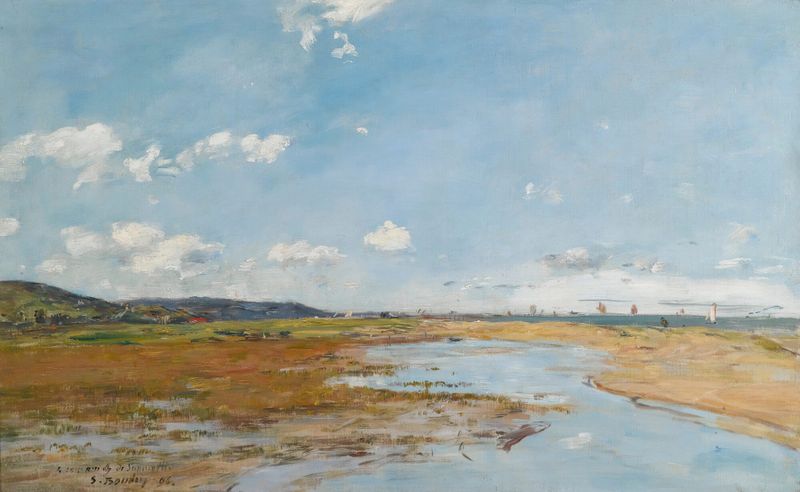
Deauville. Le Rivage
Eugène Boudin
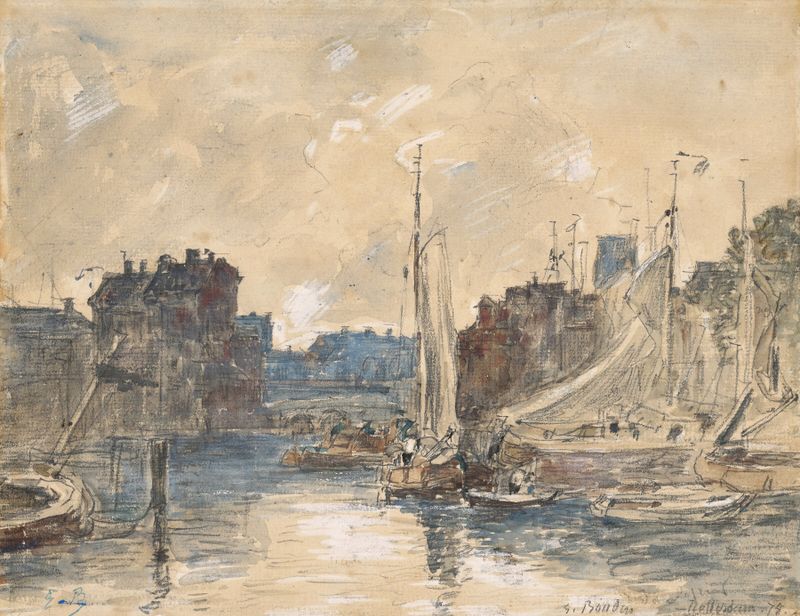
Port de Rotterdam
Eugène Boudin

View of Bordeaux, from the Quai des Chartrons
Eugène Boudin

Trouville, Scène De Plage
Eugène Boudin

Trouville, Le Port
Eugène Boudin





