
Eglise Saint-Séverin — History & Facts
Could a single brushstroke hold eternity? In Henri Jean Baptiste Levis's Eglise Saint-Séverin, the artist captures not just a moment, but a revolution in perception, inviting us to see beyond the ordinary. Look to the left at the bold lines that delineate the gothic architecture, each stroke meticulously crafted to convey both strength and fragility. Notice how the light spills through the stained glass, casting vibrant hues that dance upon the stone surfaces. The cool blues and rich reds create a contrast that speaks to the weight of history while hinting at the ephemerality of the moment.
The composition is both symmetrical and dynamic, leading the eye upward to the soaring ceilings, evoking a sense of transcendence amidst the earthly realm. Delve deeper into the interplay of light and shadow; it reveals a duality between sacredness and vulnerability. The vibrant colors whisper of the vibrancy of life while the somber architecture anchors us in the weight of time. Each detail, from the intricate carvings to the serene figures, holds layers of meaning—perhaps a reflection on the turmoil of the early 20th century or a quiet call for spiritual awakening amid chaos. Levis painted Eglise Saint-Séverin during a tumultuous period between 1915 and 1945, amidst the backdrop of two World Wars.
The artist was deeply influenced by the changes in society and the art world, as modernism began to challenge traditional forms. This painting embodies his response to the upheaval, using the historic church as a vessel for expressing both reverence and resilience in the face of transformation.
More Artworks by Henri Jean Baptiste Levis
Browse all →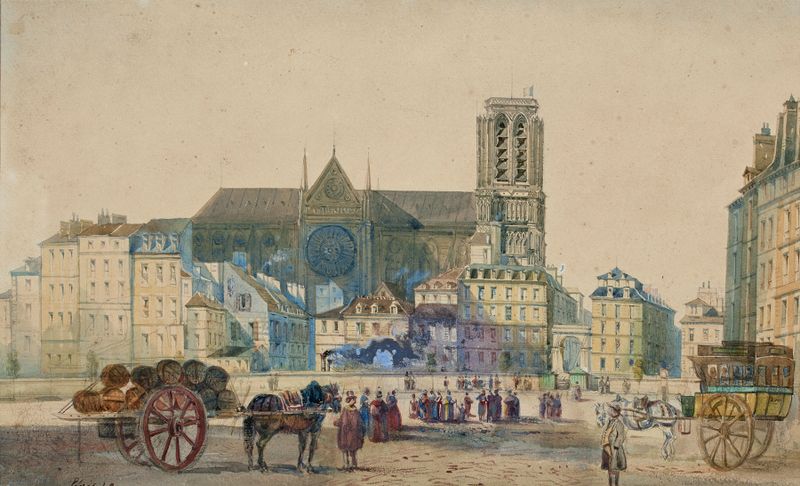
Notre-Dame et le pont d’Arcole vus de la place de l’Hôtel de Ville en 1845
Henri Jean Baptiste Levis

Le Pont-Neuf et la berge du quai de Conti
Henri Jean Baptiste Levis
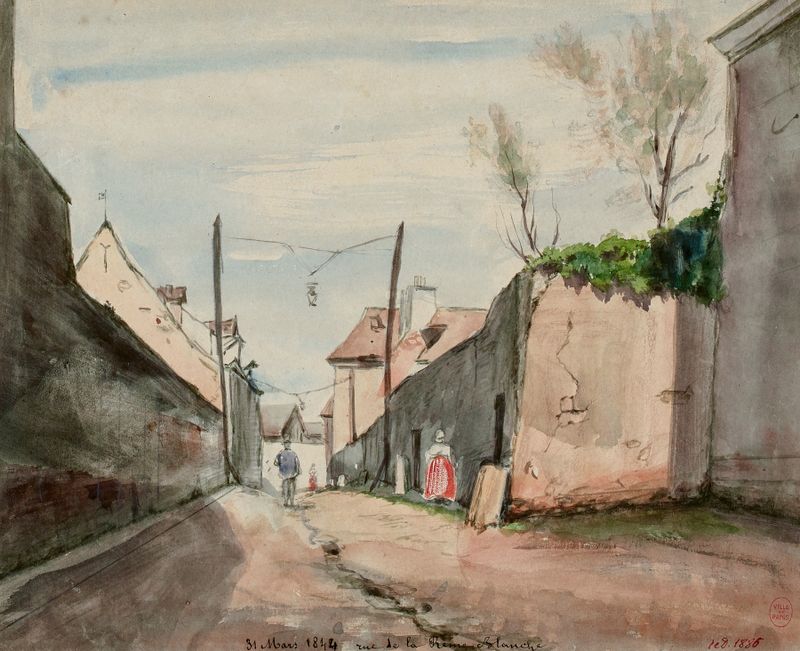
Rue de la Reine Blanche
Henri Jean Baptiste Levis

Pont Neuf et la Cité vue prise devant l’Institut de France
Henri Jean Baptiste Levis
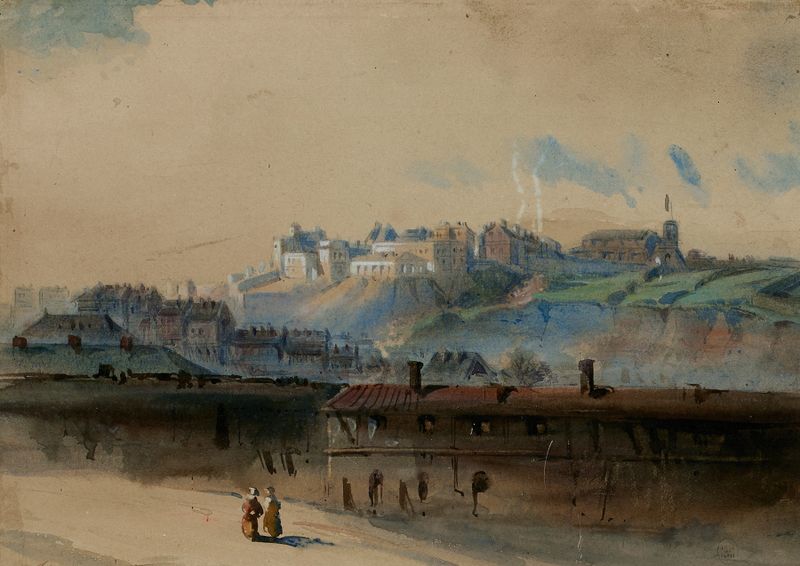
Vue générale des buttes Montmartre et de la tour du télégraphe
Henri Jean Baptiste Levis
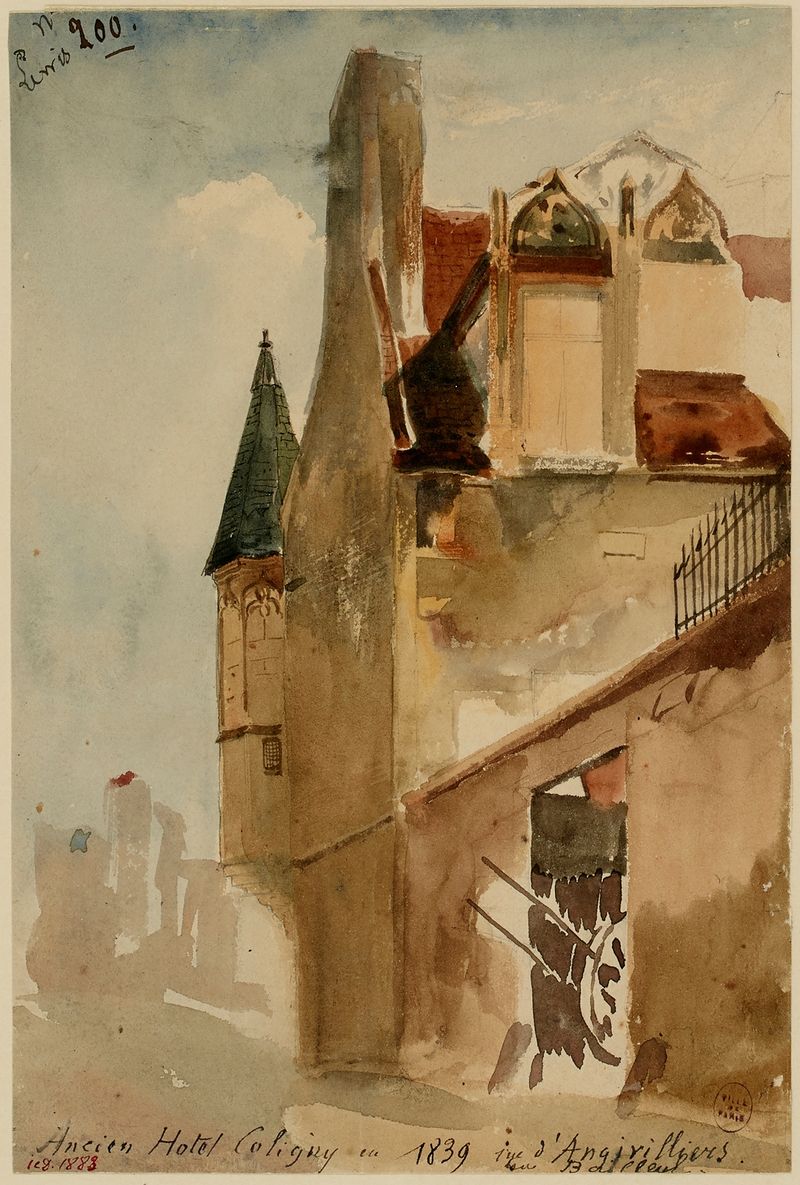
Ancien hôtel Coligny, rue d’Angivilliers en 1839
Henri Jean Baptiste Levis
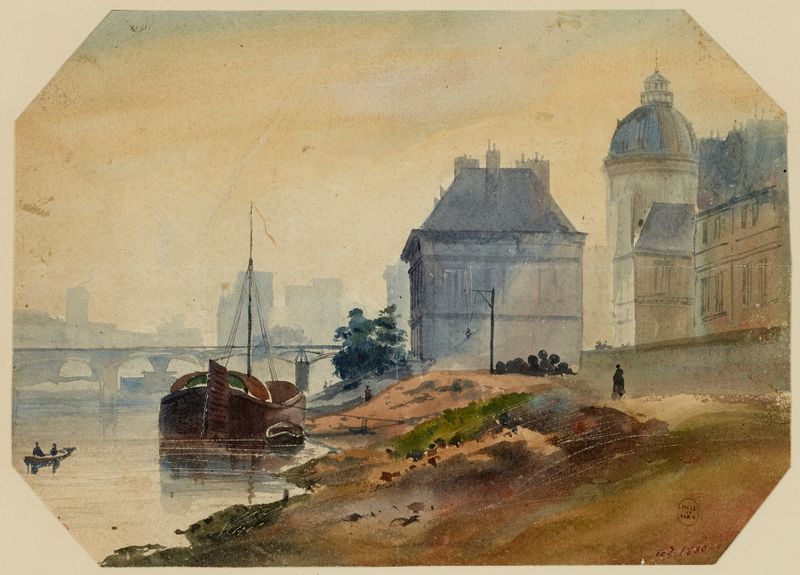
Seine devant l’Institut de France
Henri Jean Baptiste Levis
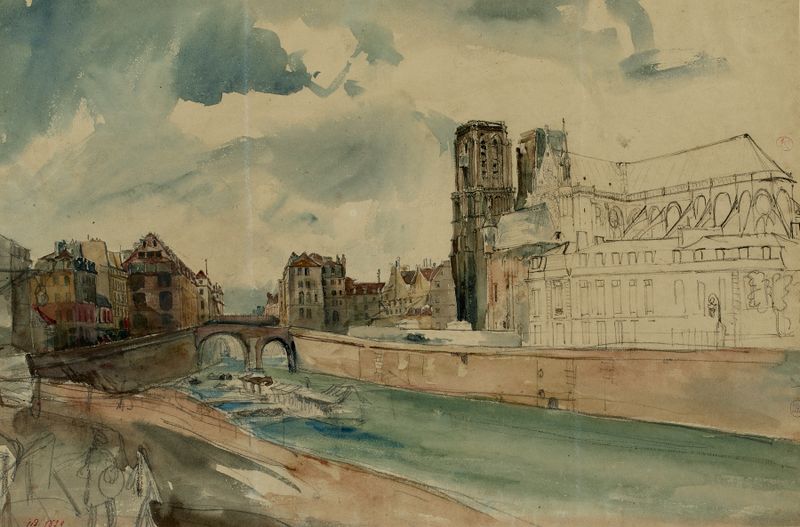
Seine devant l’archevêché et la cathédrale Notre-Dame vers 1840
Henri Jean Baptiste Levis
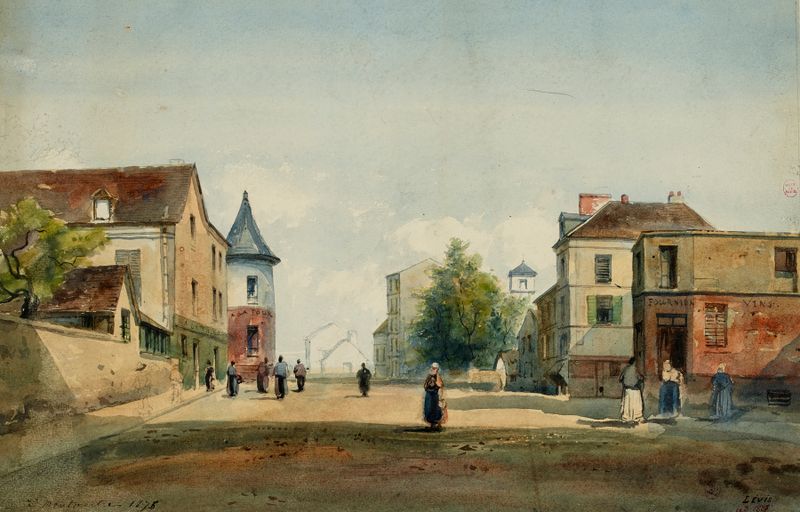
Rue Marcadet et rue du Mont-Cenis en 1876, 18ème arrondissement, Paris
Henri Jean Baptiste Levis
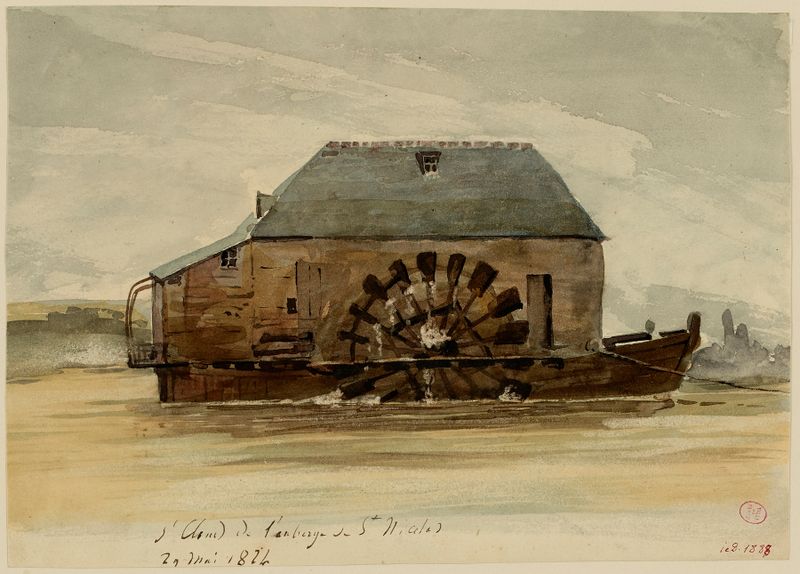
Machine à eau à Saint-Cloud auberge Saint-Nicolas en 1824
Henri Jean Baptiste Levis
More Architecture Art
Browse all →
The statue of Liberty
Frédéric Auguste Bartholdi

View of Houses in Delft, Known as ‘The Little Street’
Johannes Vermeer

View of Houses in Delft, Known as ‘The Little Street’
Johannes Vermeer

The Cathedral in Rouen. The portal, Grey Weather
Claude Monet

The yellow house
Vincent van Gogh

The Church in Auvers-sur-Oise, View from the Chevet
Vincent van Gogh