
Eichbaum — History & Facts
What if beauty was never meant to be finished? In Eichbaum, the essence of time unfurls through the interplay of light and shadow, capturing a moment that feels eternally suspended. Look to the center of the canvas, where a stately oak tree stands resolute, its gnarled branches reaching toward a sky brushed with soft clouds. Notice how the artist uses a delicate palette—earthy greens mingling with warm browns and tranquil blues—to evoke a serene atmosphere. The subtle gradations of light illuminate the tree’s textured bark, guiding your gaze to the tranquil waters below, where reflections ripple quietly, suggesting the passage of time. Delve deeper into the nuances of this work.
The oak, a symbol of strength and endurance, contrasts with the fluidity of the water beneath, hinting at the tension between permanence and transience. The faint outline of distant hills in the background further emphasizes this duality, as they stand in serene stillness, bathed in dusk’s gentle embrace. Each element harmonizes, inviting contemplation of nature’s cyclical beauty and the fleeting moments we often overlook. In the mid-19th century, when Eichbaum was created, Johann Wilhelm Schirmer was exploring the Romantic ideals that celebrated nature and the sublime.
Living in Germany, he was influenced by the burgeoning interest in landscape painting—a movement that sought to evoke emotional resonance and connection to the natural world. This period, marked by both personal and artistic discovery, saw him honing his skills as a landscape artist, embracing the intricate relationship between time and nature in his work.
More Artworks by Johann Wilhelm Schirmer
Browse all →
Waldlandschaft mit Blick auf Olevano und den Monte Cavo
Johann Wilhelm Schirmer
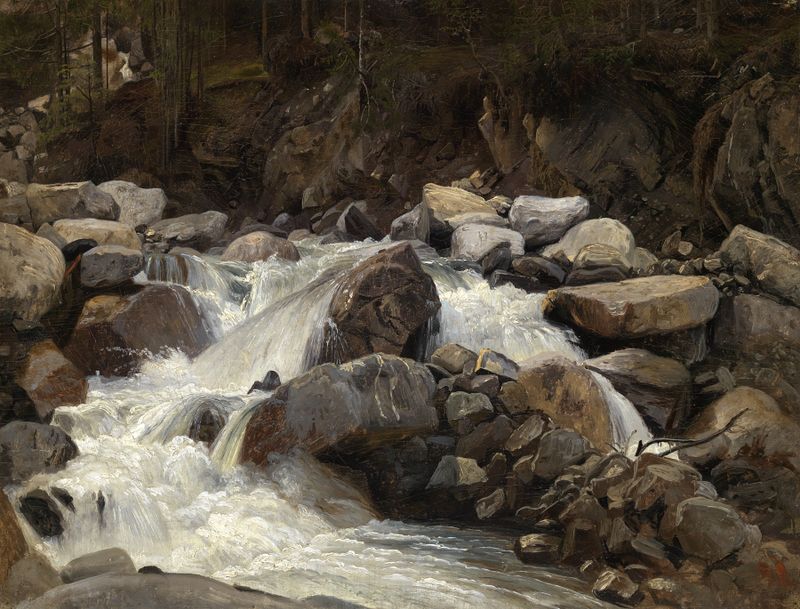
Schweizer Gebirgsbach
Johann Wilhelm Schirmer
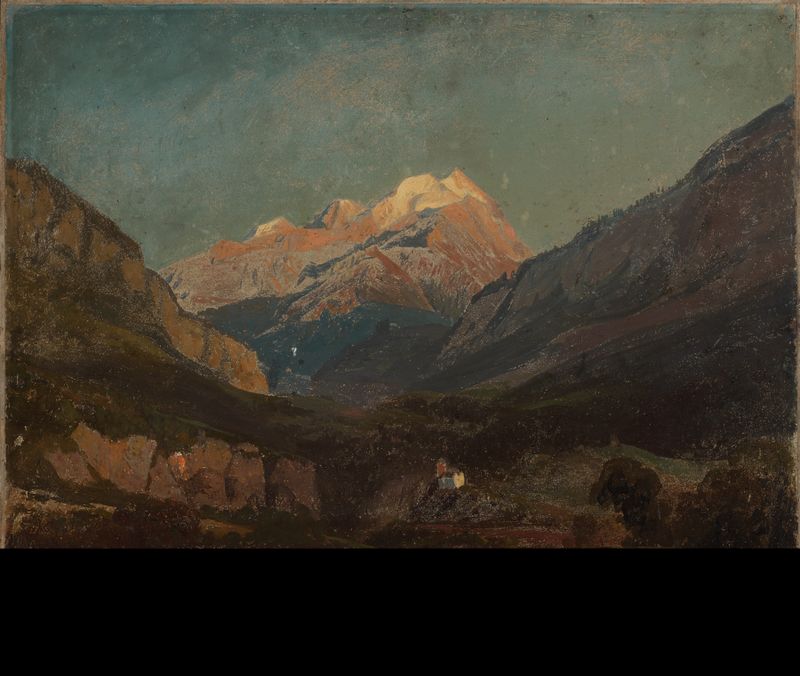
Schweizer Gebirgslandschaft mit Kapelle und fernem Schneegipfel
Johann Wilhelm Schirmer

Schweizer Gebirgslandschaft mit dem Piz Beverin im Hintergrund
Johann Wilhelm Schirmer

Waldinneres mit Hirschen am Wasser
Johann Wilhelm Schirmer

The Wetterhorn
Johann Wilhelm Schirmer

Partie aus der Römischen Campagna
Johann Wilhelm Schirmer

Felsabhang in der Schweiz
Johann Wilhelm Schirmer
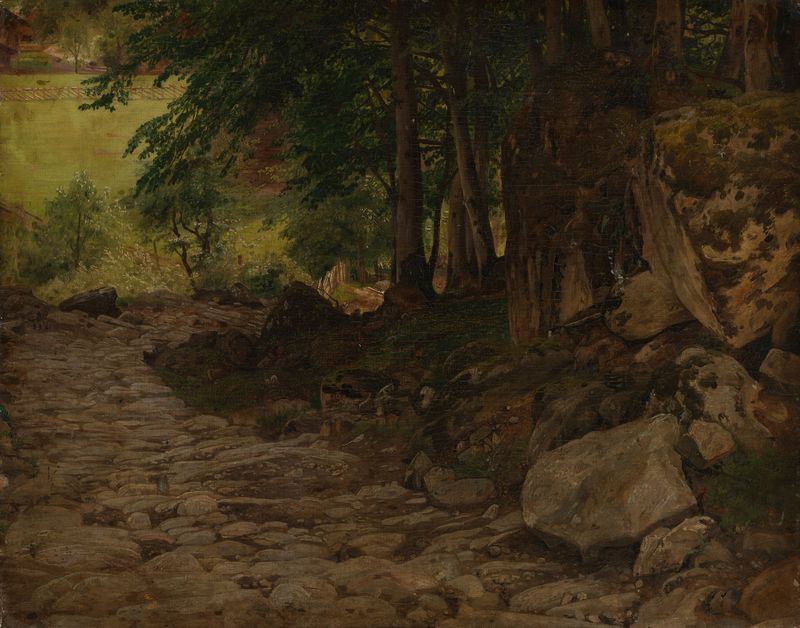
Felsweg in der Schweiz
Johann Wilhelm Schirmer
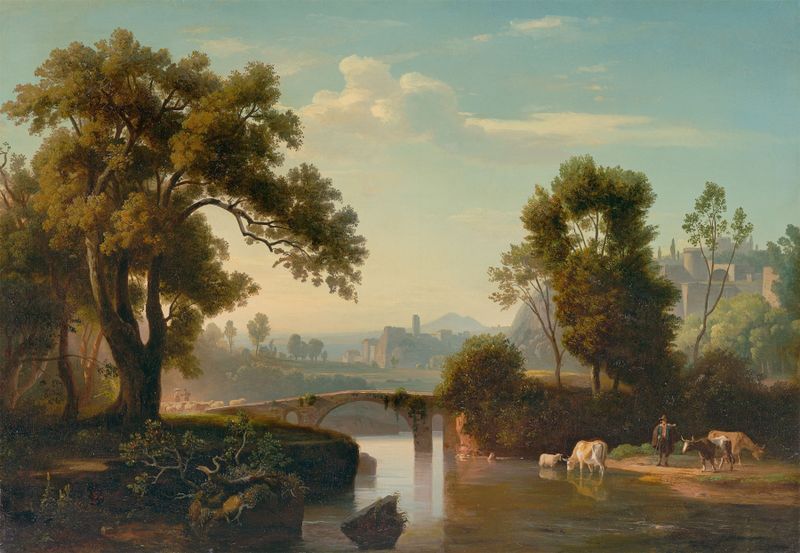
Italienische Landschaft mit Hirten
Johann Wilhelm Schirmer





