
Eine warme Mahlzeit — History & Facts
No other painting by Felix Schlesinger is as widely reproduced as Eine warme Mahlzeit, a work that has charmed viewers for generations despite the mystery surrounding its creation. The painting’s enduring appeal lies in its intimate glimpse into everyday life, a genre scene that resonated with the growing middle class of 19th-century Germany. Though the exact date and circumstances of its making remain uncertain, Eine warme Mahlzeit became a popular motif in prints and postcards, suggesting it struck a chord with contemporary audiences hungry for images of domestic comfort and simplicity. At the heart of the picture, a grandmother ladles steaming soup into a bowl for a young child, while another child waits in eager anticipation.
The humble kitchen glows with warm light, illuminating the worn wooden table, simple crockery, and modest clothing—each detail reinforcing the theme of familial care and nourishment. The children’s attentive gazes and the grandmother’s gentle posture speak to a moment of shared affection, a pause in daily hardship. Unlike the more theatrical scenes of Adolph von Menzel or the moralizing tone of Jan Steen, Schlesinger’s approach is quiet and sincere, focusing on the small rituals that bind families together. Eine warme Mahlzeit belongs to a tradition of German genre painting that flourished in the late 19th century, though little is known about its early provenance or exhibition history.
Schlesinger, who specialized in scenes of childhood and family, found steady success with such subjects, and his works were sought after by collectors who valued their honest sentiment. Today, the painting is often encountered in reproduction rather than in a specific museum collection, and its original whereabouts are not widely documented. Nevertheless, it remains a touchstone for those interested in the everyday realities of its era, and a testament to Schlesinger’s gentle observation of domestic life.
More Artworks by Felix Schlesinger

Fleißige Helfer in der Küche
Felix Schlesinger

Die Zeitungslektüre
Felix Schlesinger
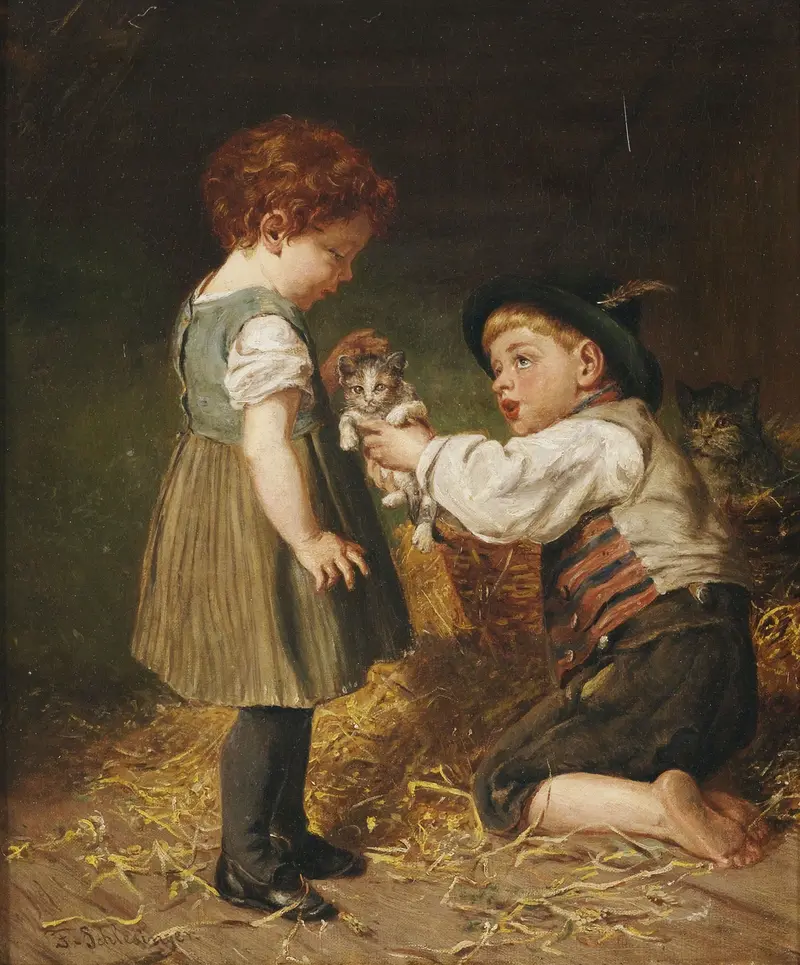
Zwei Kinder mit Kätzchen im Stall
Felix Schlesinger
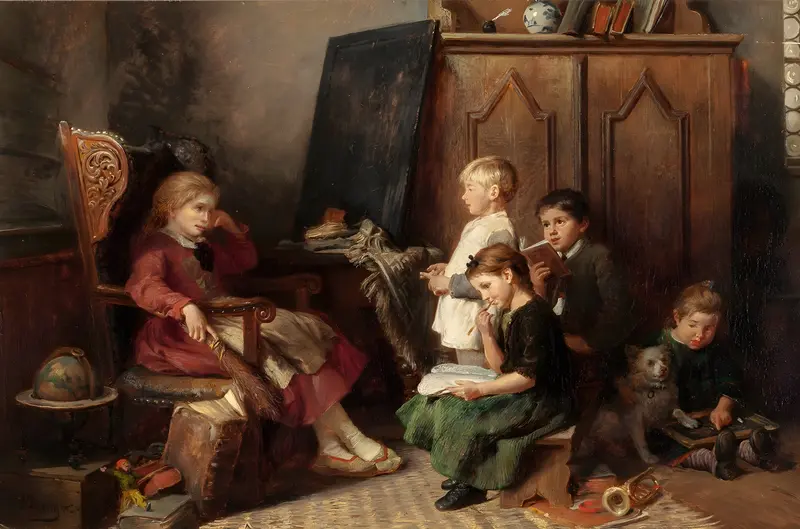
Children Reading
Felix Schlesinger
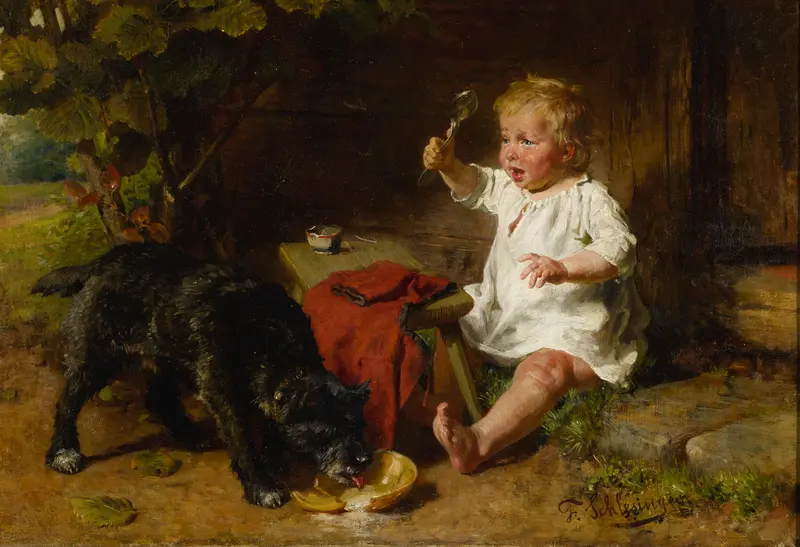
A Shared Meal
Felix Schlesinger
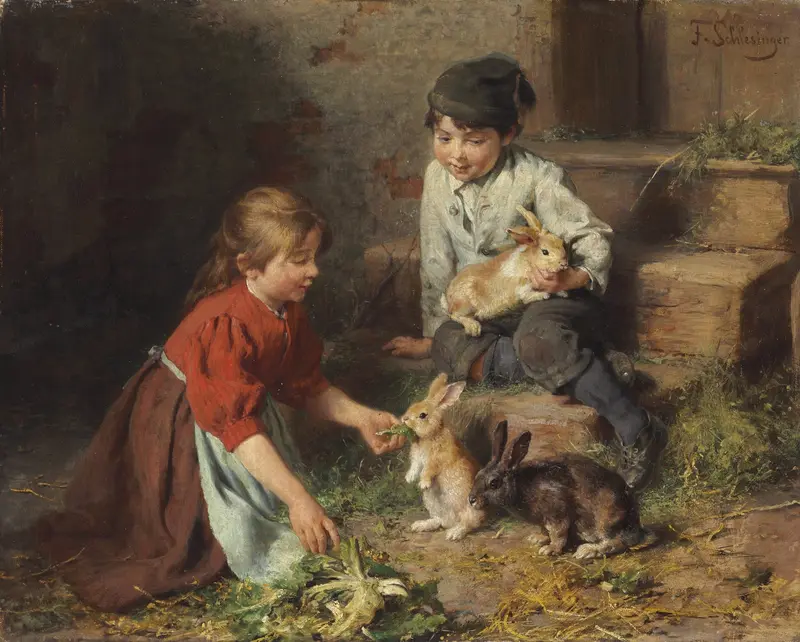
Fütterung Der Kaninchen
Felix Schlesinger
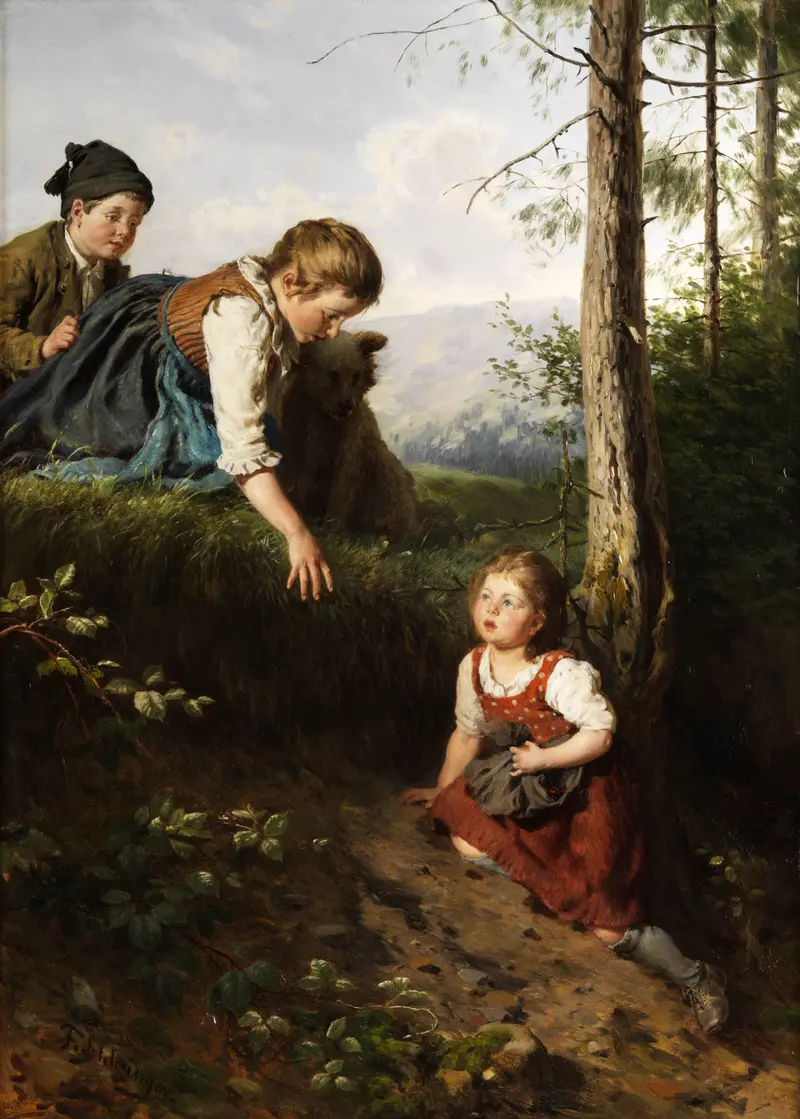
Drei Kinder im Wald beim Beerenpflücken
Felix Schlesinger
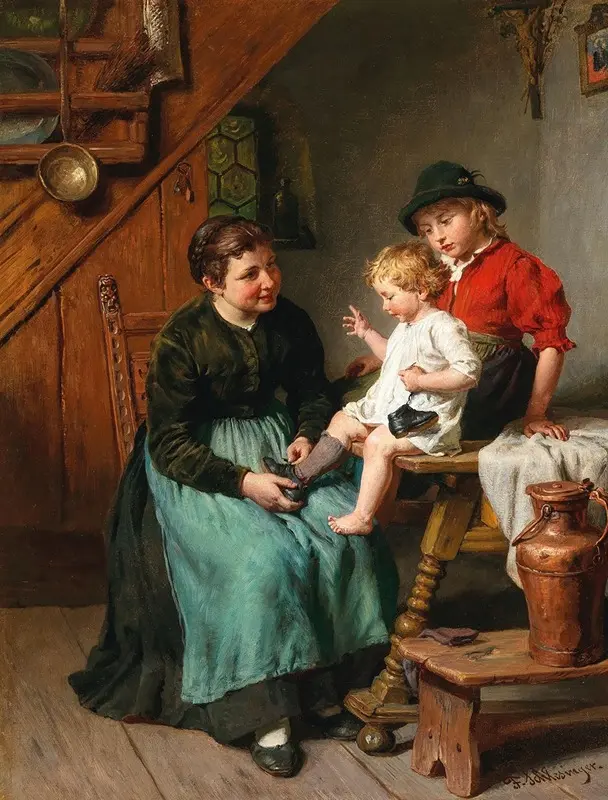
The First Shoe
Felix Schlesinger
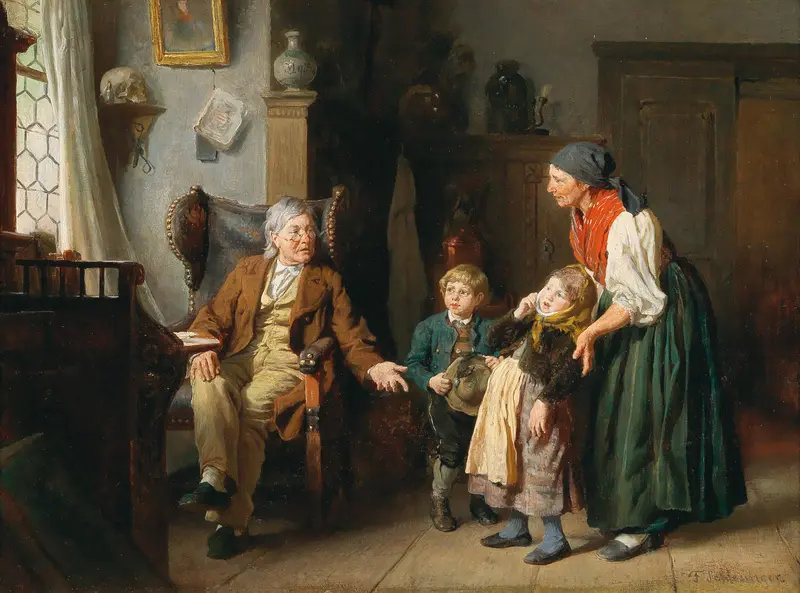
The village doctor
Felix Schlesinger
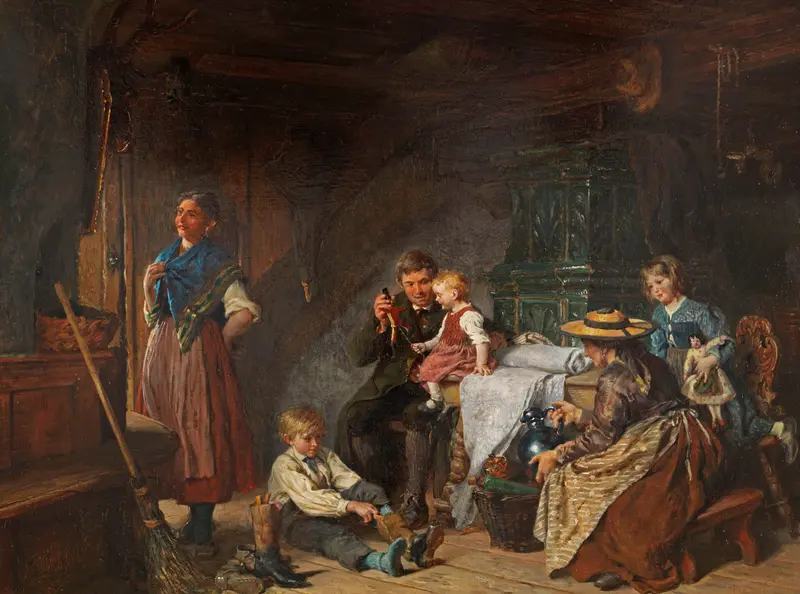
Familienszene
Felix Schlesinger
More Genre Scene Art

Banquet of the Officers of the St George Civic Guard
Frans Hals

Rembrandt and Saskia in the Scene of the Prodigal Son
Rembrandt van Rijn

Bal du moulin de la Galette
Pierre-Auguste Renoir

Quadrille at the Moulin Rouge
Henri de Toulouse-Lautrec

A Burial at Ornans
Gustave Courbet

When Will You Marry?
Paul Gauguin