
Emperor Maximilian II — History & Facts
What first catches the eye is the poised confidence of a young man dressed for both court and campaign, his hand resting lightly on a table where a gleaming helmet and a plume of scarlet feathers signal martial readiness. The sitter’s gaze meets the viewer with a calm self-possession, his pale, almost silvery doublet and hose catching the light in crisp verticals that echo the discipline of armor. Every detail is deliberate: the ornate sword hilt, the medallion at his hip, the subtle gold embroidery that runs along his sleeves and collar.
The background falls away into darkness, drawing all attention to the figure’s presence and the objects that define his rank. The painter’s control of texture—metal, velvet, and flesh—invites the viewer to linger over each surface, as if to weigh the man’s authority for themselves. Painted in 1550 by Antonis Mor, this portrait belongs to the world of mid-sixteenth-century European courts, where images like this were more than likenesses—they were declarations of lineage, power, and legitimacy. The subject, Maximilian II of Habsburg, stands as the son of Emperor Ferdinand I and Empress Anna of Hungary and Bohemia, his attire and bearing crafted to project both dynastic continuity and personal virtue.
Such portraits were often commissioned to cement alliances or commemorate pivotal moments in a prince’s rise, and they circulated among courts as tokens of negotiation and prestige. In a time when the Habsburgs shaped the destinies of kingdoms, the portrait becomes a stage for both public image and private ambition. The viewer is left to wonder what thoughts lie behind that composed expression, and how the armor—resting for now—might soon be called into use.
More Artworks by Antonis Mor

Portrait of a Man
Antonis Mor
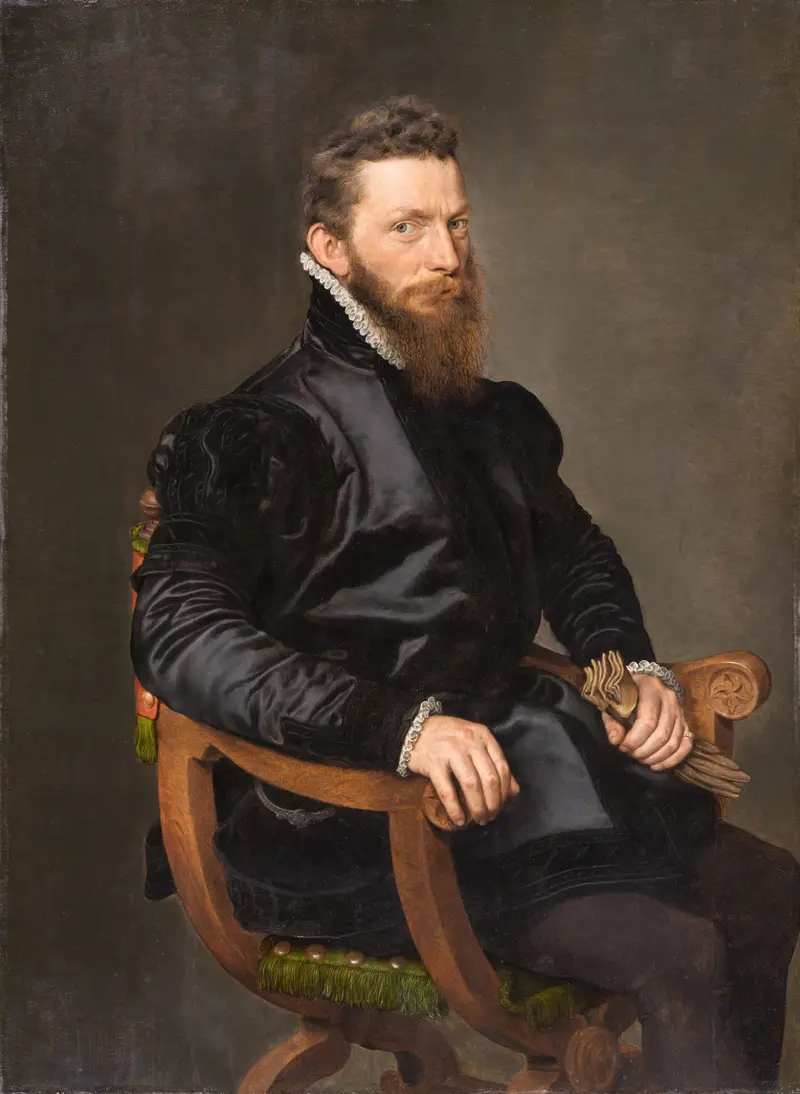
Portrait of a Gentleman
Antonis Mor
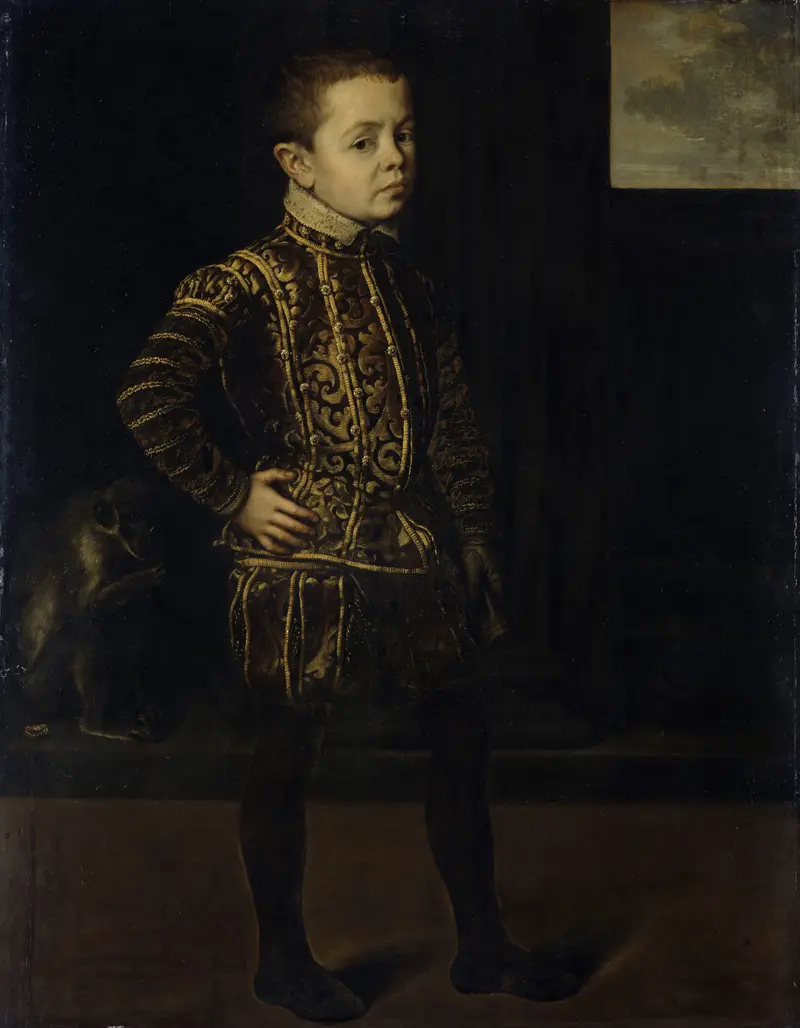
Portrait of a young prince
Antonis Mor
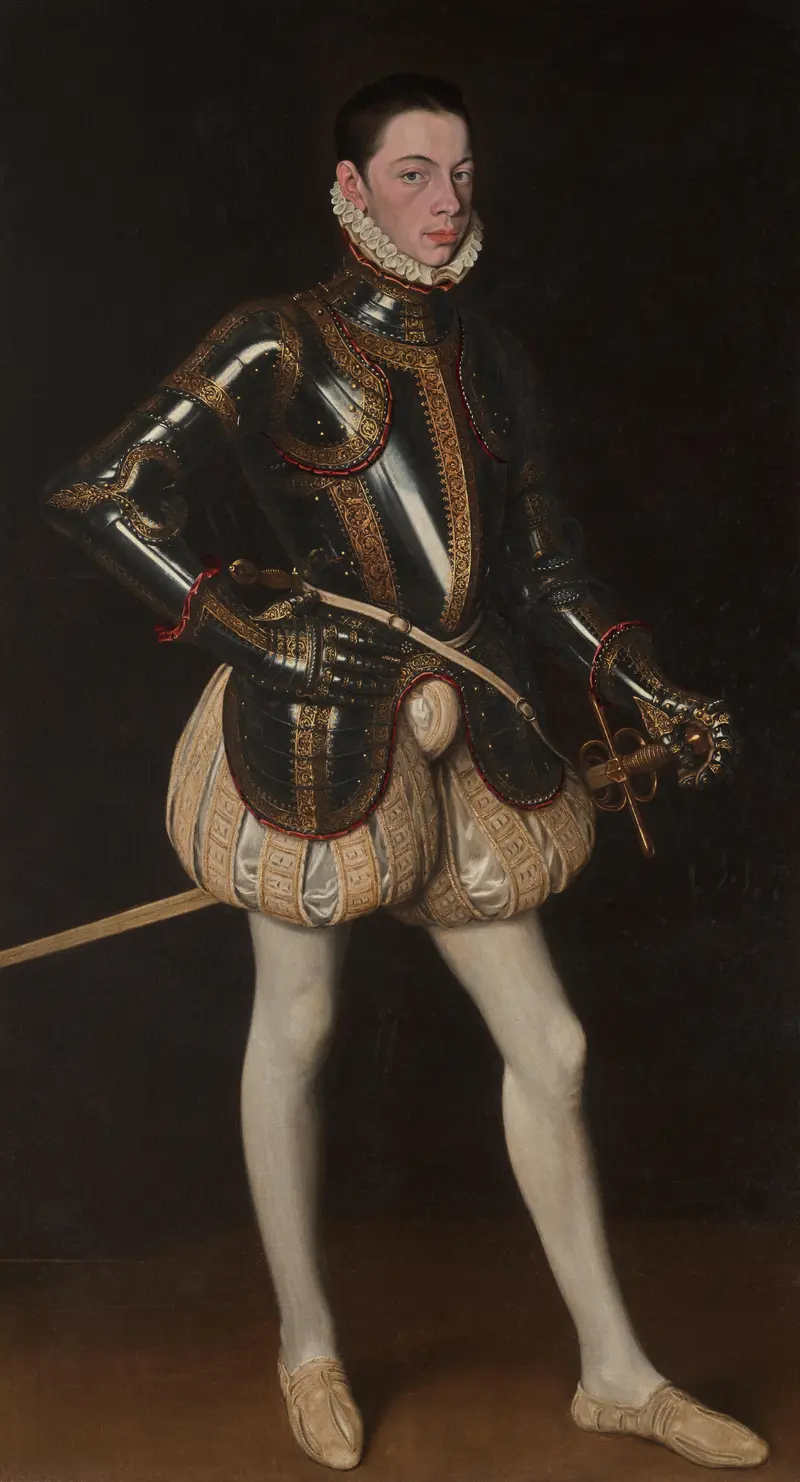
Alessandro Farnese in Armor
Antonis Mor
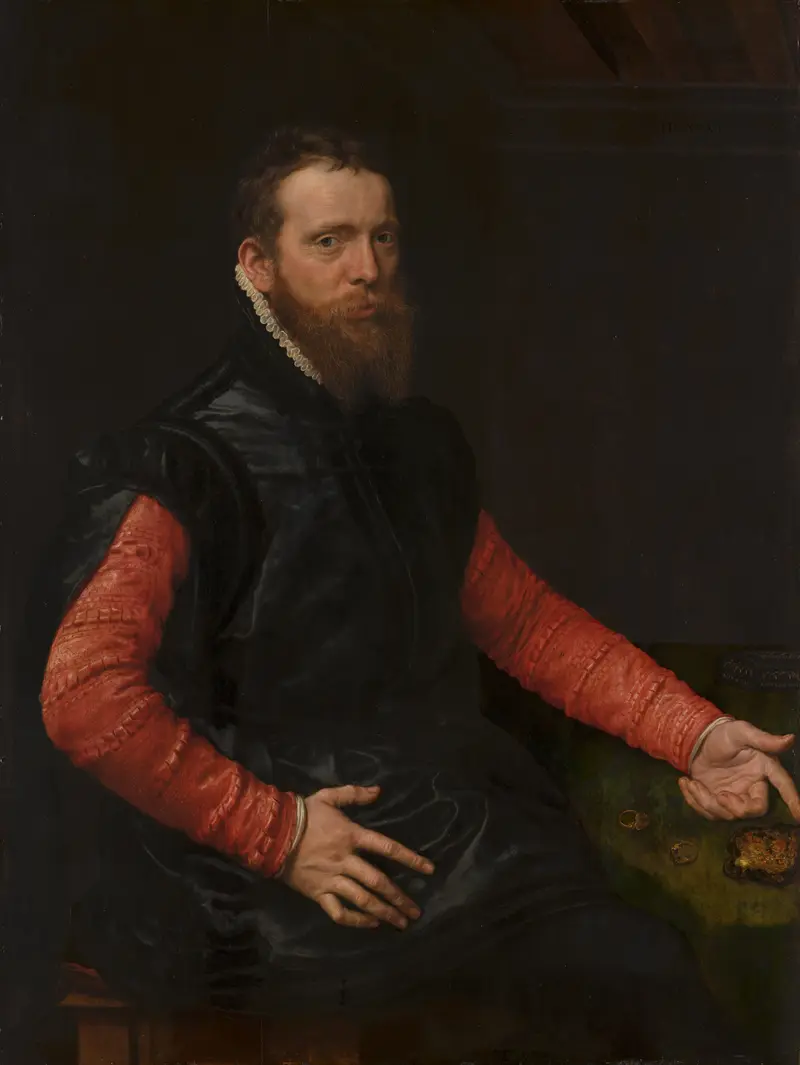
Steven van Herwijck
Antonis Mor
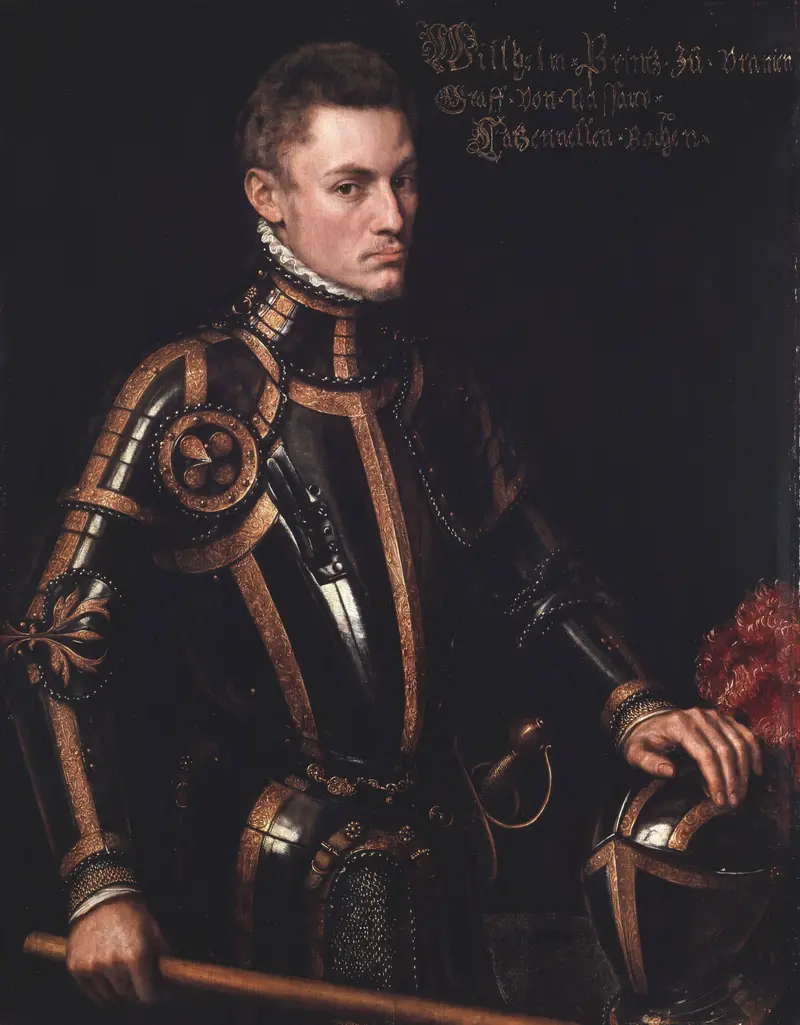
Portrait of William I of Nassau
Antonis Mor
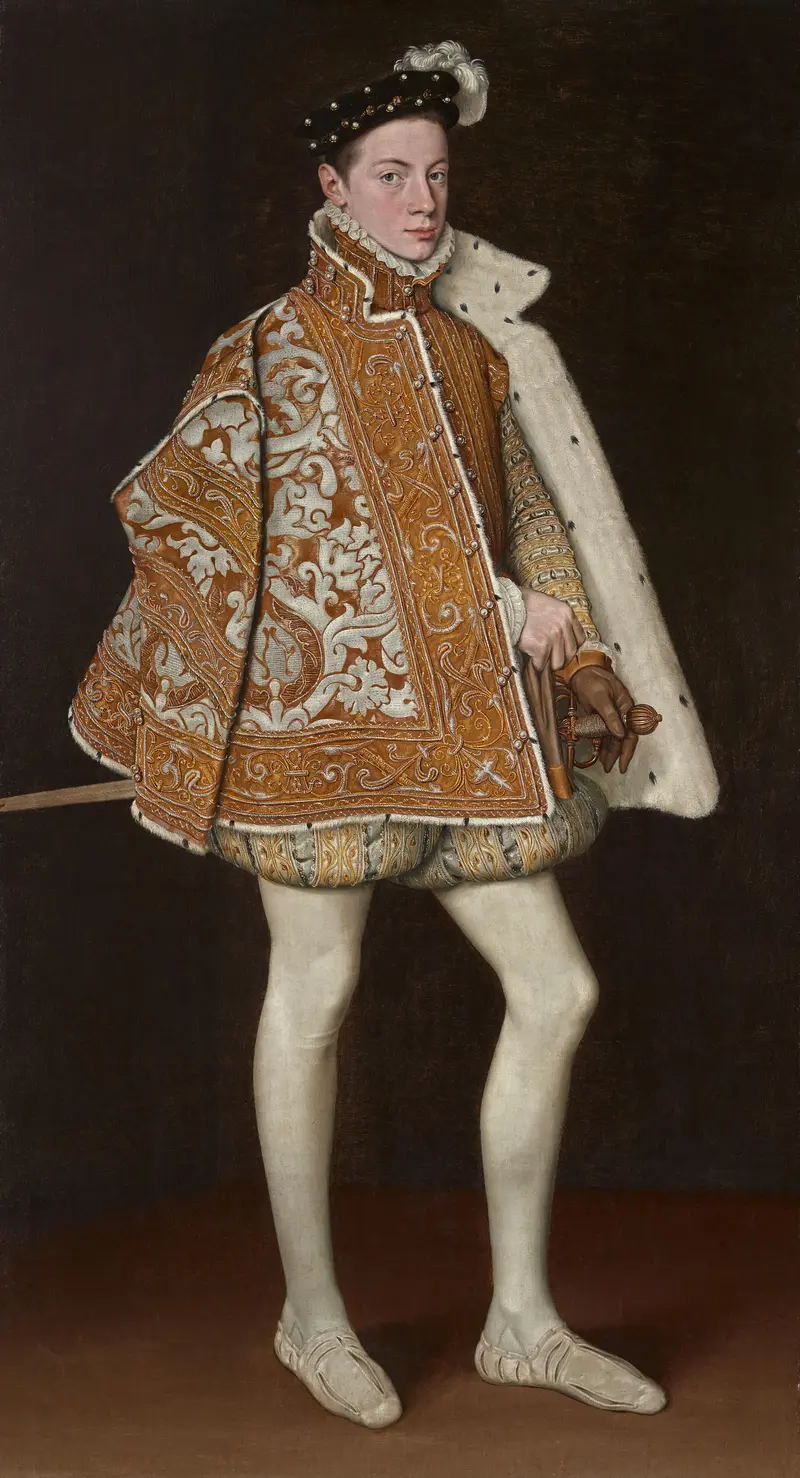
Portrait of Alessandro Farnese in Cape and Black Cap
Antonis Mor
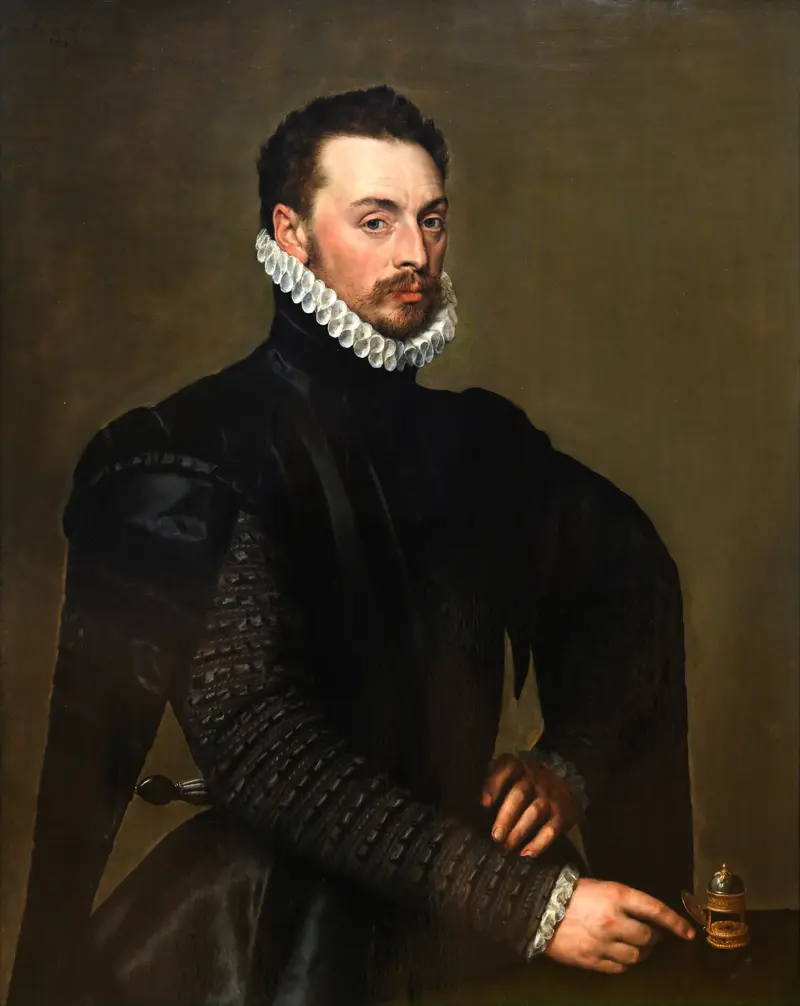
Portrait d'homme désignant une pendule Antonio Moro Musée du Louvre Peintures INV 1582 ; MR 880
Antonis Mor
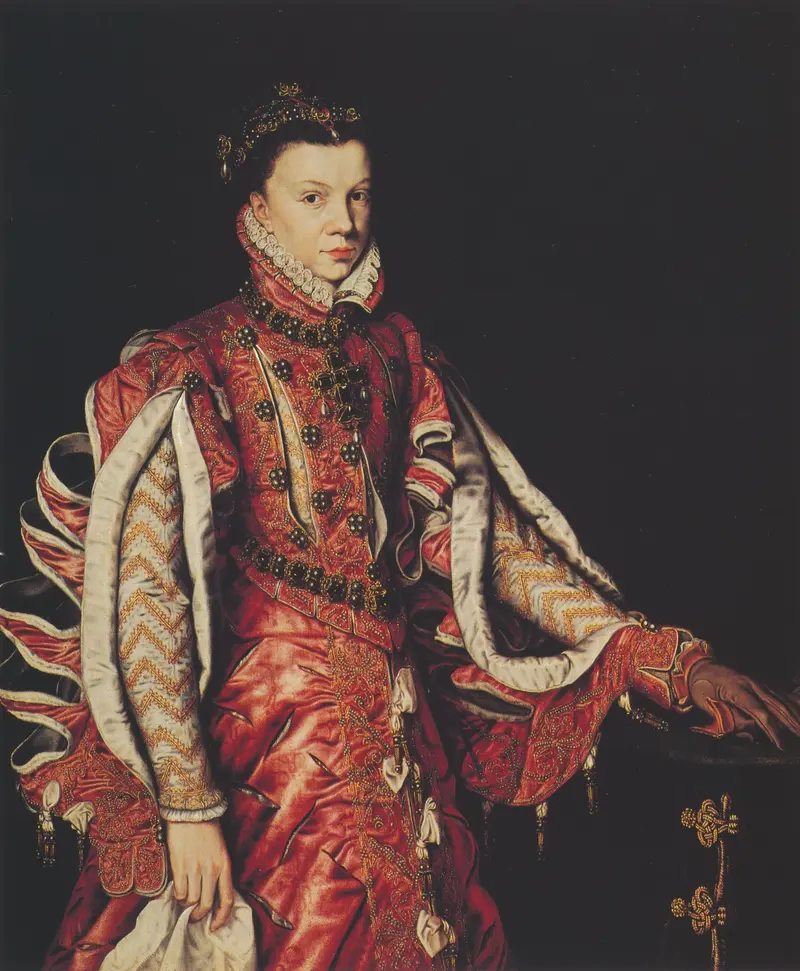
Portrait of Elisabeth of Valois, third wife of King Philip II of Spain
Antonis Mor
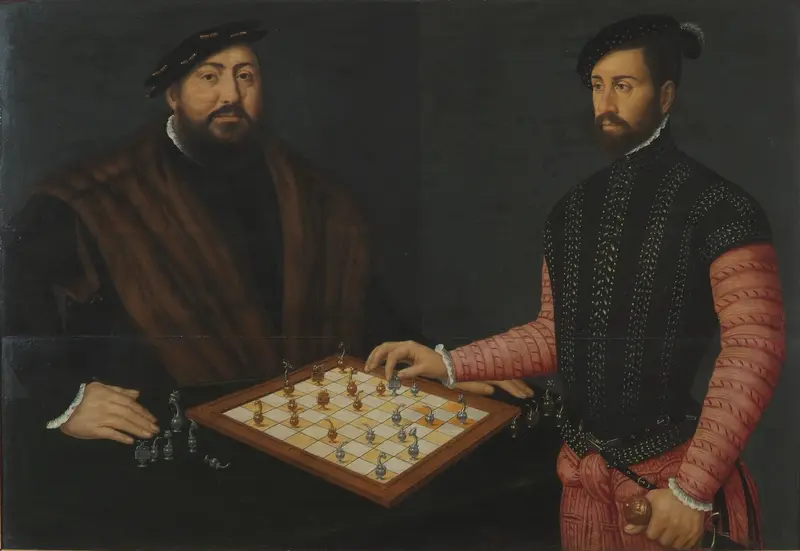
Von Sachsen vs. a Spaniard
Antonis Mor





