
English partridge with gorse and thistles. — History & Facts
What first draws the eye in English partridge with gorse and thistles by Archibald Thorburn is the sense of quiet congregation: four plump partridges, their feathers rendered with astonishing precision, settle into the sandy earth while a fifth bird peers from the background. The light falls softly from the left, picking out the subtle gradations of grey, russet, and chestnut in their plumage, while the thistles at the right edge bristle with a dry, almost tactile realism. The birds are not merely specimens but characters, each with its own posture—one upright and alert, others nestled low, half-submerged in the dust, as if caught in a moment of wary rest.
The gorse behind them forms a vivid, spiky halo, setting off the round, soft forms of the birds and lending the whole scene a hush that feels both wild and intimate. Painted by 1935, this work belongs to a tradition of British wildlife art that flourished in the late nineteenth and early twentieth centuries, when natural history illustration and sporting art often overlapped. Artists like Thorburn were celebrated for their ability to combine scientific accuracy with a painter’s sensitivity to light and mood, producing images prized by collectors, sportsmen, and naturalists alike. Such works were often commissioned for country houses or published in ornithological volumes, serving both as records of native species and as emblems of rural life.
Today, English partridge with gorse and thistles is held in the Bonhams collection, its delicate observation a testament to a time when the English countryside was both a subject of study and a source of quiet wonder. Look again at the thistles’ down and the partridges’ wary eyes—every detail is a small act of attention, inviting your own.
More Artworks by Archibald Thorburn

The Watchful Hinds
Archibald Thorburn
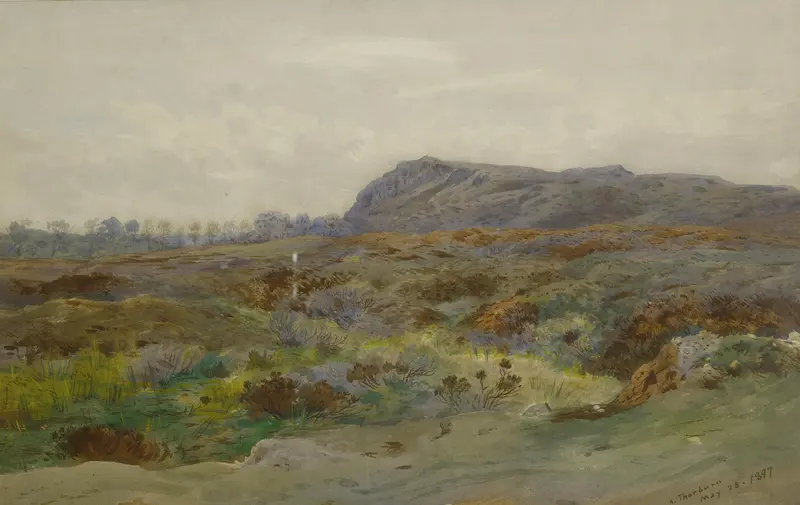
Moorland Landscape
Archibald Thorburn
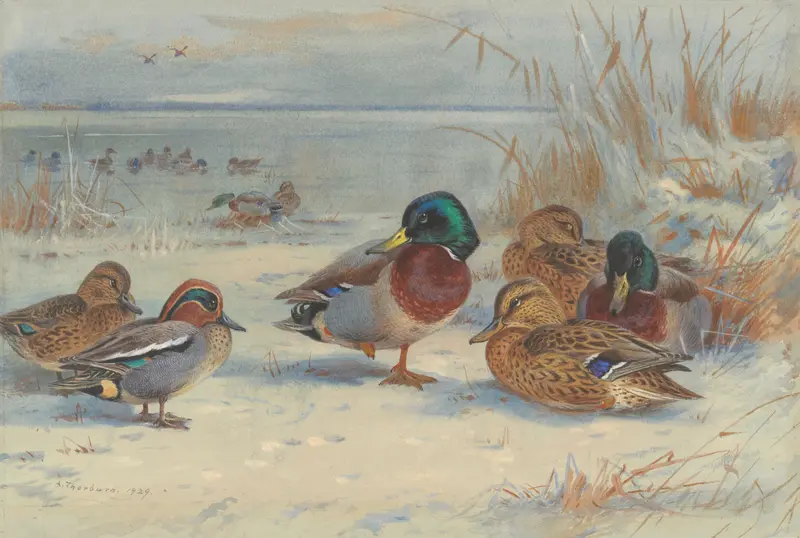
Mallard and teal in the snow
Archibald Thorburn
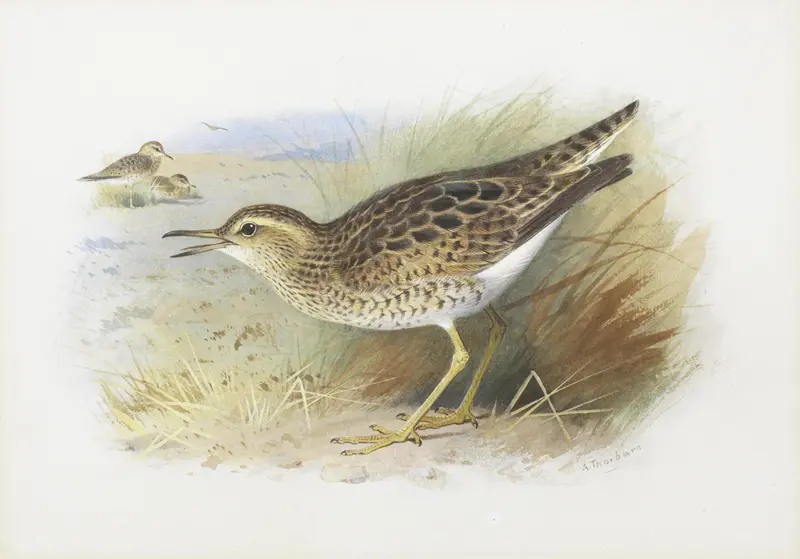
Bartram's Plover
Archibald Thorburn
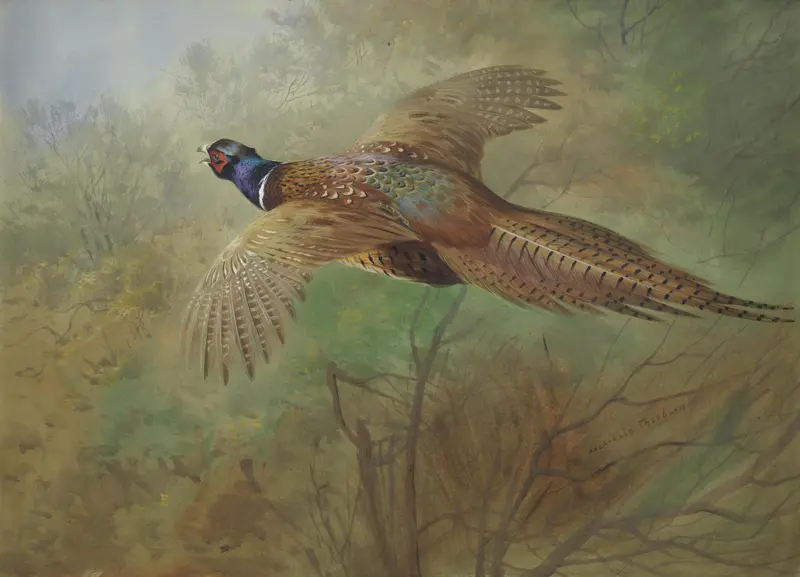
Pheasant in flight
Archibald Thorburn
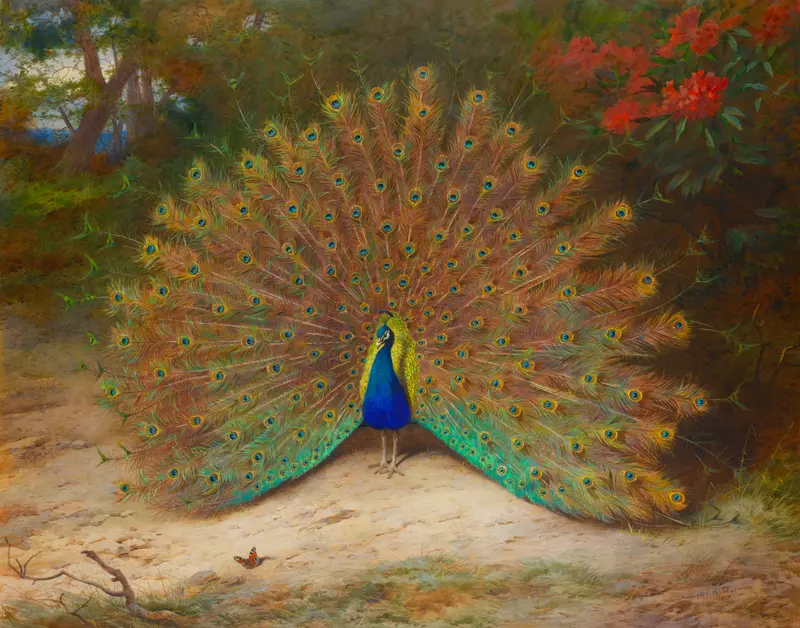
Peacock and Peacock Butterfly
Archibald Thorburn
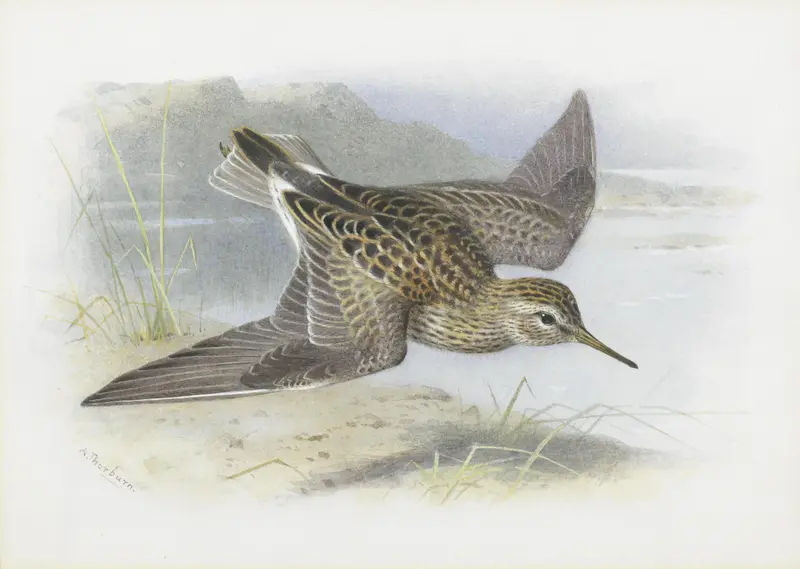
Pectoral Sandpiper
Archibald Thorburn
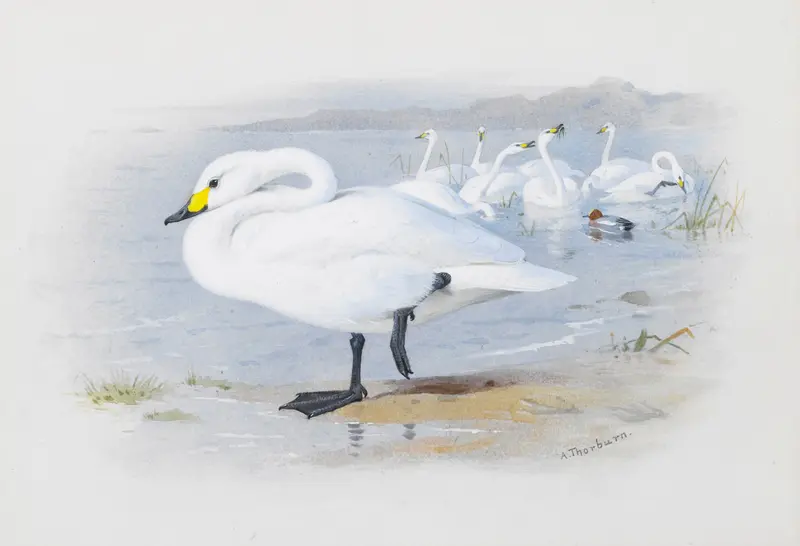
Bewick's swan.
Archibald Thorburn
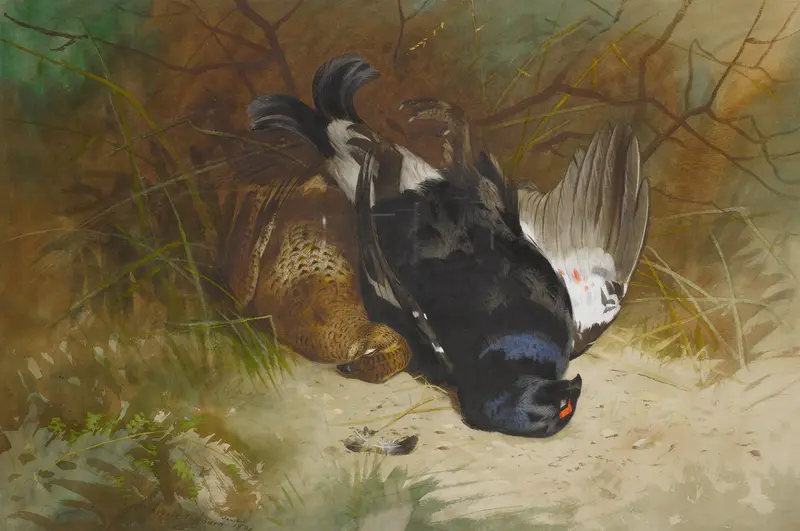
Still life of a pair of Blackgame.
Archibald Thorburn
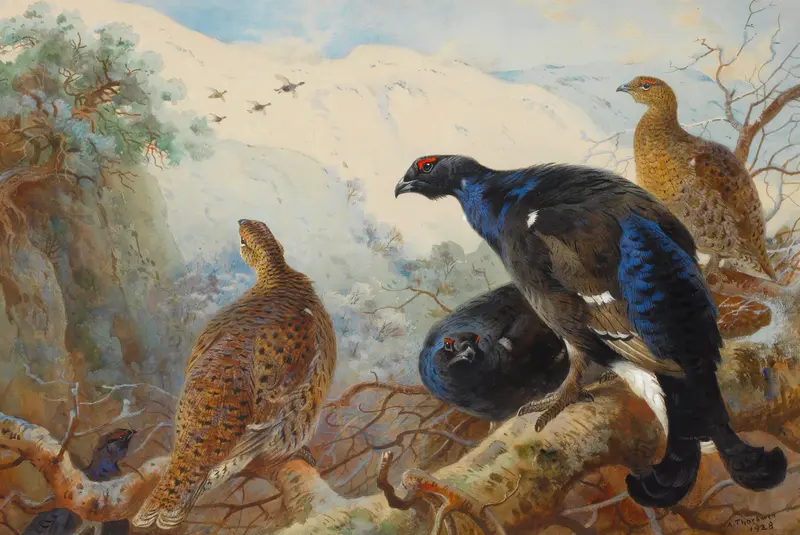
Blackgame
Archibald Thorburn





