
Entrance to the Harbor,Le Havre — History & Facts
What if beauty was never meant to be finished? In Entrance to the Harbor, Le Havre, the fleeting essence of the moment resonates with a quiet revelation, inviting us to embrace the impermanence of life and art. Look to the left at the delicate interplay between the rippling water and the soft, atmospheric sky. The artist’s brushstrokes create a harmonious blend of blues and grays, with wisps of white clouds lazily drifting. The composition is anchored by sailboats, their sails catching the wind, gently leading your eye towards the bustling harbor, while hints of warm colors in the buildings suggest the life and vibrancy of this port town just beyond the horizon. Within this serene landscape, contrasting elements emerge.
The tranquil water juxtaposed with the lively activity of the harbor embodies the tension between stillness and movement, solitude and community. The clouds, caught in a moment of transition, hint at the passage of time, a reminder that beauty is often found in the ephemeral, in the very act of creation itself. Eugène Boudin painted this scene in 1883 during a period of artistic evolution in France, as Impressionism began to take root. Working en plein air, he captured the evolving dynamics of the natural world and its relationship to human activity.
At this point in his life, Boudin was recognized as a precursor to the Impressionists, influencing young artists like Monet, while simultaneously grappling with the changing tides of modernity in both art and society.
More Artworks by Eugène Boudin
Browse all →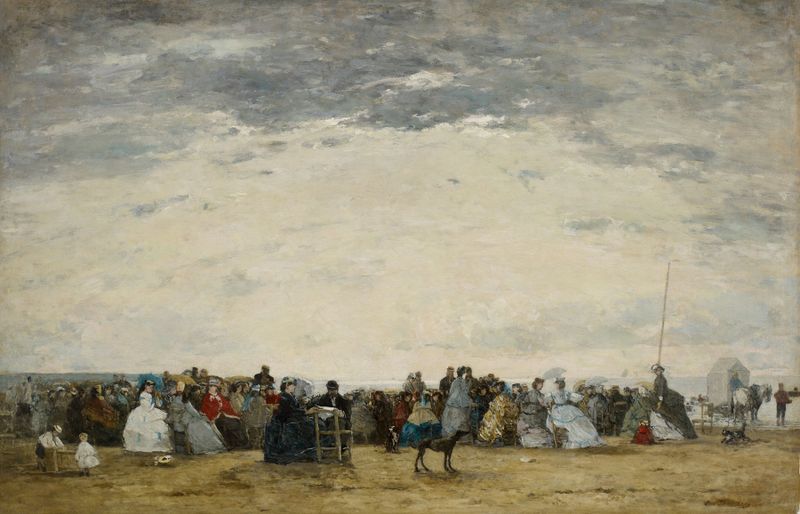
Vacationers on the Beach at Trouville
Eugène Boudin

Washerwoman near Trouville
Eugène Boudin
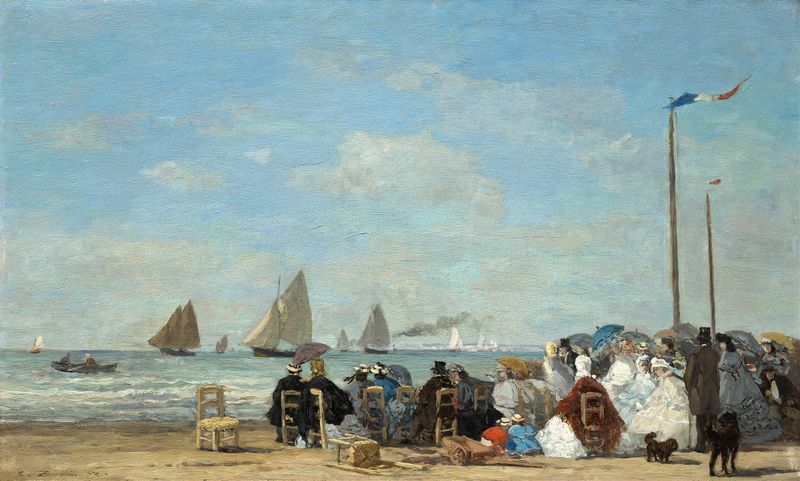
Beach Scene at Trouville
Eugène Boudin

Port aux environs d’Honfleur
Eugène Boudin

Le Faou, un coin du village
Eugène Boudin
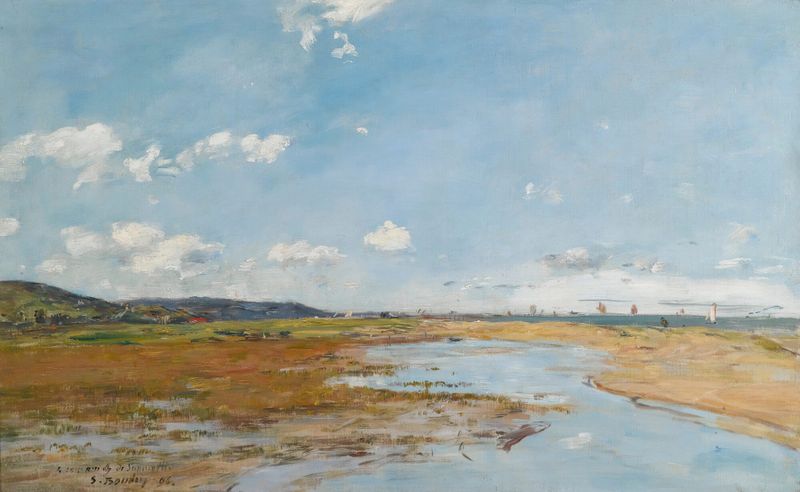
Deauville. Le Rivage
Eugène Boudin
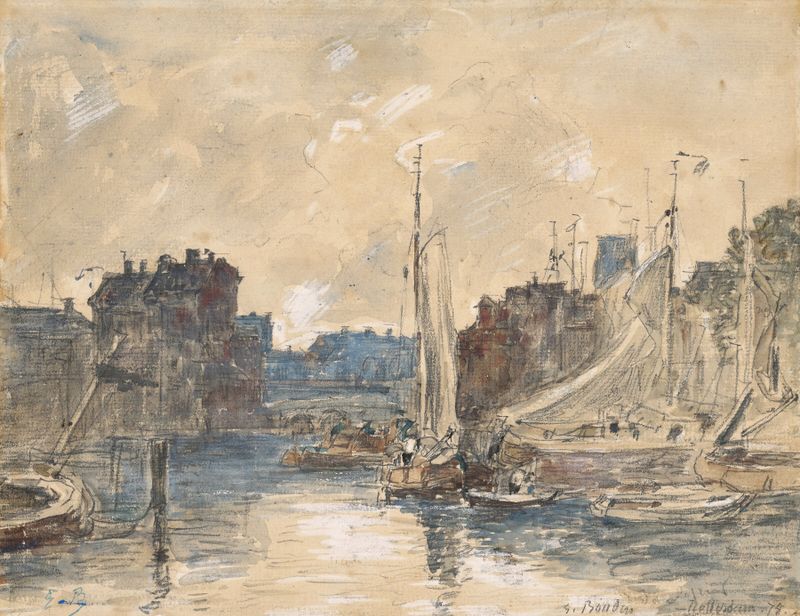
Port de Rotterdam
Eugène Boudin

View of Bordeaux, from the Quai des Chartrons
Eugène Boudin

Trouville, Scène De Plage
Eugène Boudin

Trouville, Le Port
Eugène Boudin





