
Entrée escalier A du Marché des Enfants-Rouges, en 1908. 3ème arrondissement — History & Facts
Could a single brushstroke hold eternity? In the delicate layers of time and decay, beauty whispers its secrets beneath the surface. Look to the left at the weathered entrance of the market, where shadows dance softly across cracked stone. The light filters through the archway, illuminating fragments of forgotten stories etched into the walls. Notice the interplay of muted tones—grays and browns—that evoke both nostalgia and a sense of melancholic beauty.
Each stroke reveals the artist's precise touch, creating a textured façade that reflects the passage of time, amplifying the feeling of impermanence that envelops the scene. As you delve deeper, consider the hints of life that remain among the decay. The vibrant hues of the flowers, though wilting, suggest resilience amidst the inevitable fading, symbolizing a transient beauty that can only be appreciated in its fragility. Look closely, and you might observe the ghostly outlines of figures once bustling through the market, their absence accentuating the stillness.
This juxtaposition of vitality and decay invites contemplation on the cyclical nature of existence, reminding us that every ending births new beginnings. Frédéric Houbron painted this piece in 1908 while living in Paris, a time when the world was teetering between modernity and tradition. The bustling markets of the city, with their lively exchanges and vibrant atmosphere, were slowly giving way to the rapid industrialization and urban development that defined the era. In this transitional moment, the artist sought to capture the essence of a beloved market, preserving its spirit against the relentless march of time.
More Artworks by Frédéric Houbron
Browse all →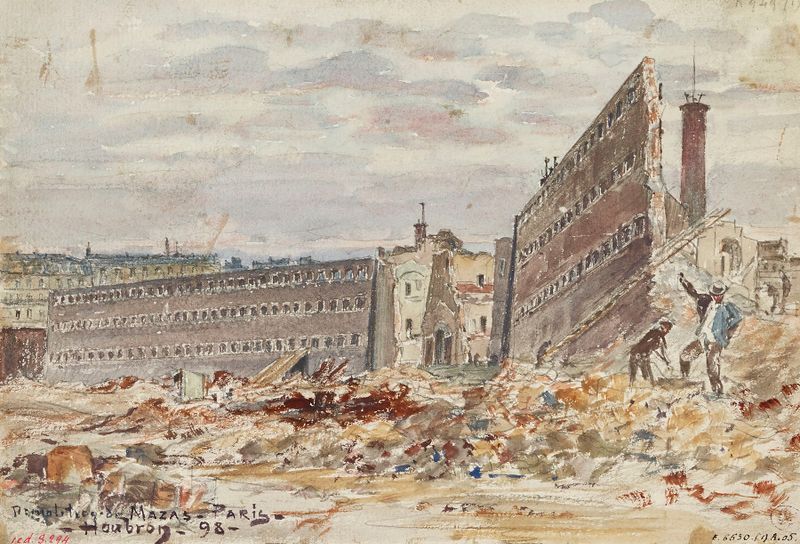
Démolition de la prison Mazas, 23, 25 boulevard Diderot (ancien boulevard Mazas)
Frédéric Houbron
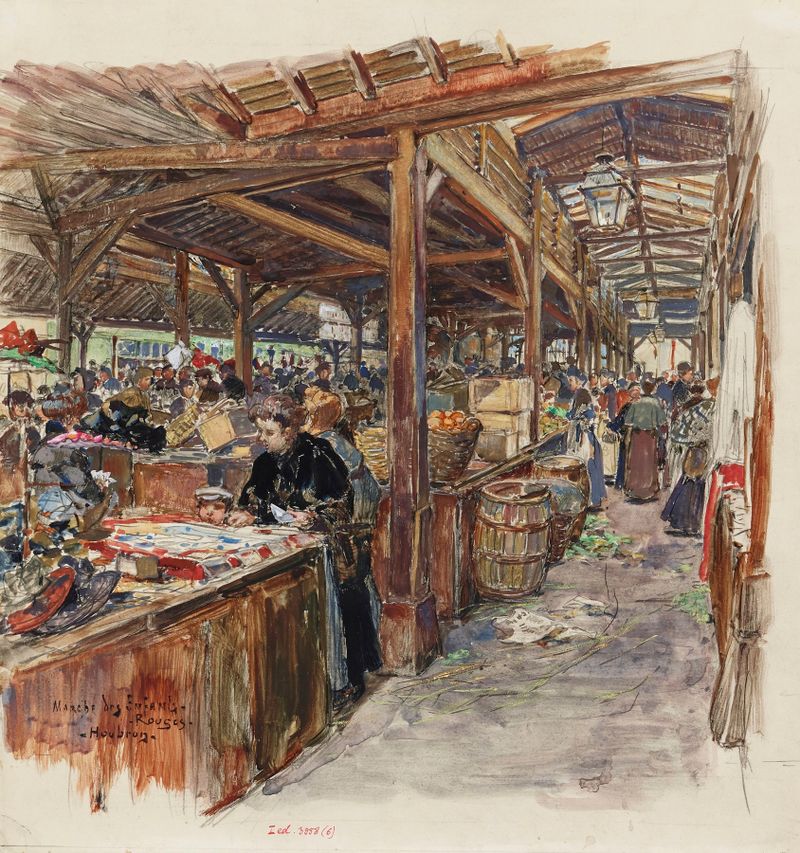
Intérieur du Marché des Enfants Rouges. 3ème arrondissement
Frédéric Houbron
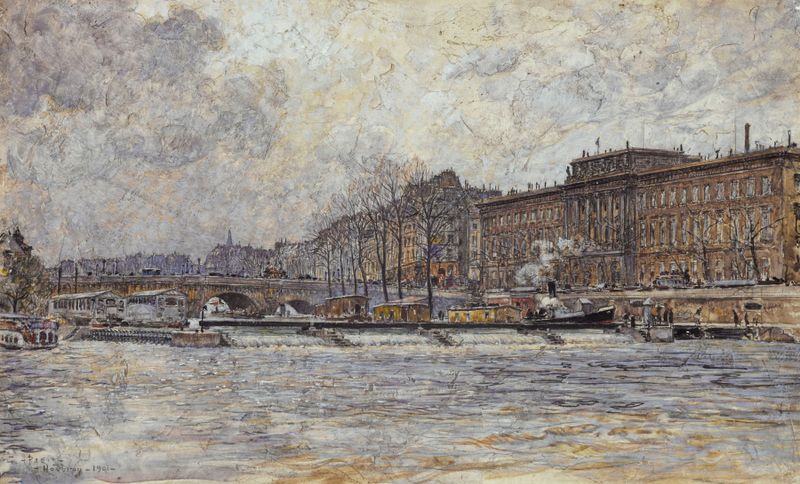
L’Hôtel de la Monnaie et le Pont-Neuf
Frédéric Houbron

Quai des Orfèvres. Paris. 1906
Frédéric Houbron
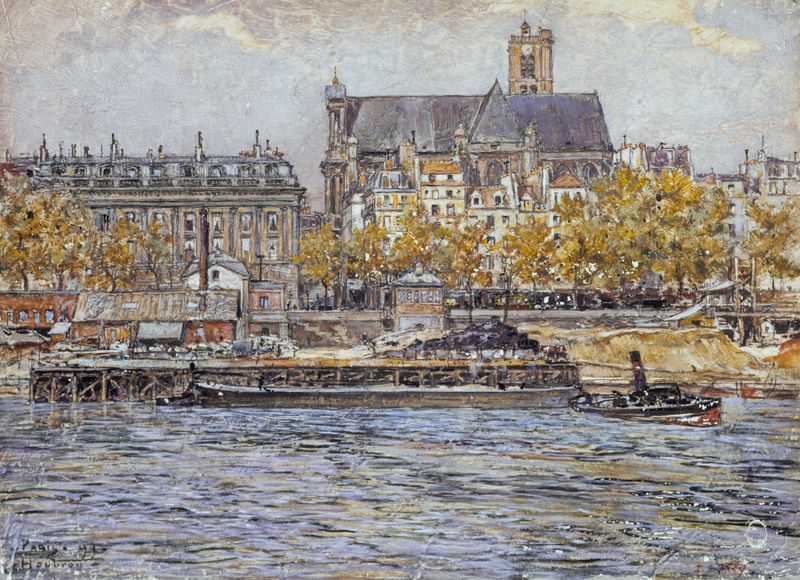
Le quai de l’Hôtel-de-Ville et l’église Saint-Gervais-Saint-Protais
Frédéric Houbron
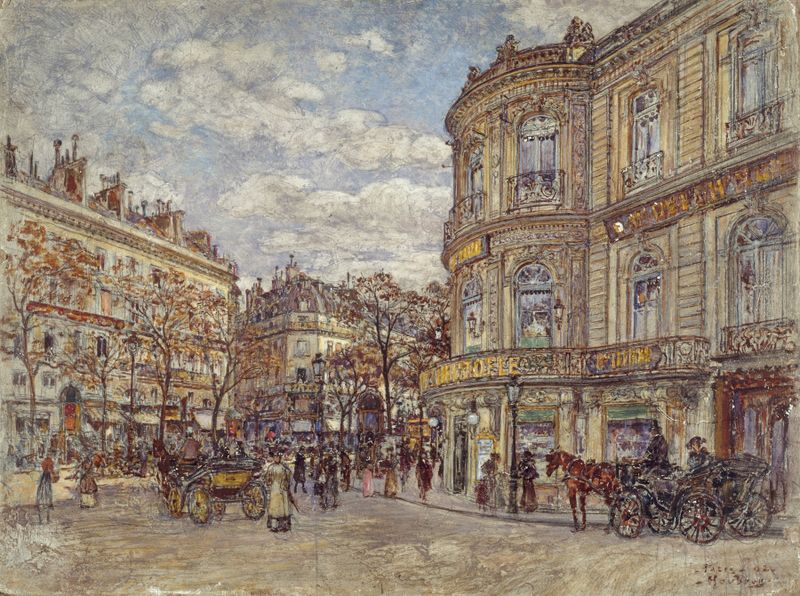
Le Pavillon de Hanovre, rue Louis-le-Grand
Frédéric Houbron

La rue du Chevalier-de-la-Barre, avec le Sacré-Cœur en construction
Frédéric Houbron
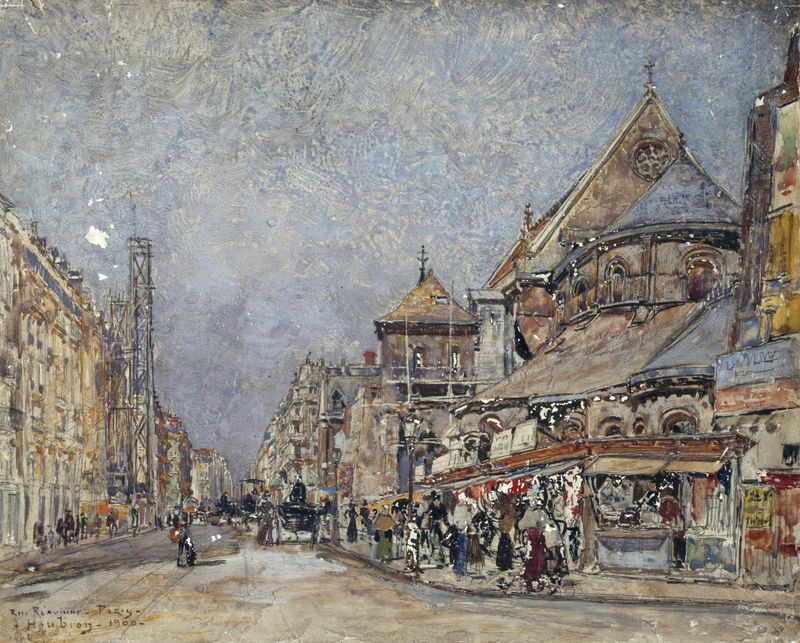
La rue Réaumur et le chevet de l’église Saint-Martin-des-Champs
Frédéric Houbron
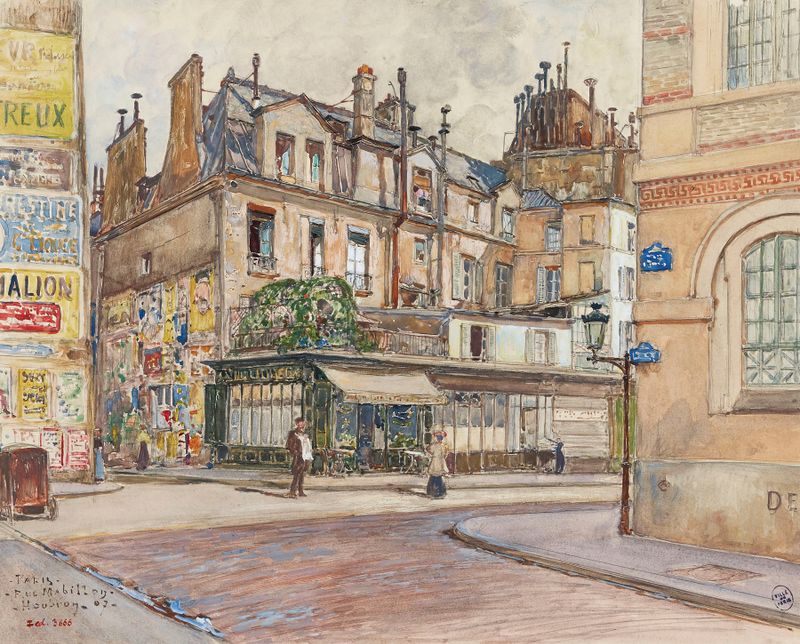
Angle rue Mabillon et rue Clément, en 1907. 5ème et 6ème arrondissements
Frédéric Houbron
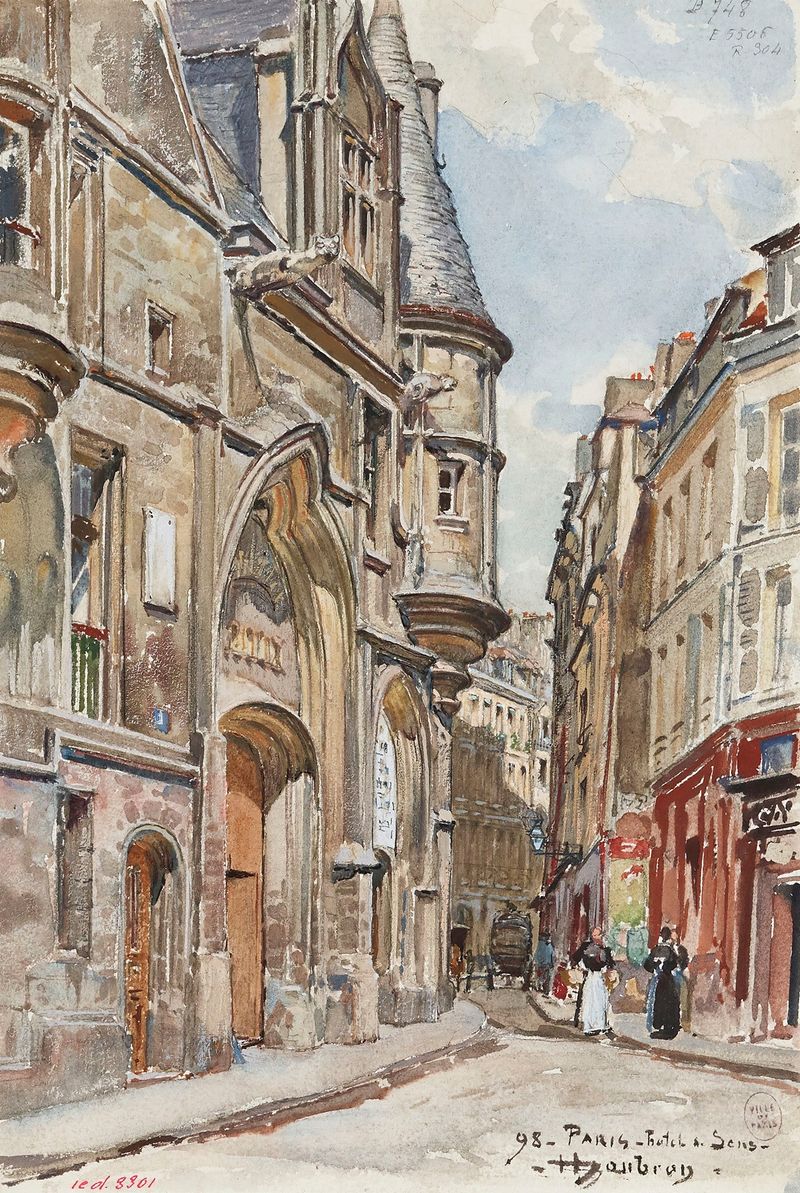
l’Hôtel de Sens, 1 rue du Figuier, en 1898, 4ème arrondissement
Frédéric Houbron
More Architecture Art
Browse all →
The statue of Liberty
Frédéric Auguste Bartholdi

View of Houses in Delft, Known as ‘The Little Street’
Johannes Vermeer

View of Houses in Delft, Known as ‘The Little Street’
Johannes Vermeer

The Cathedral in Rouen. The portal, Grey Weather
Claude Monet

The yellow house
Vincent van Gogh

The Church in Auvers-sur-Oise, View from the Chevet
Vincent van Gogh