
Le quai de l’Hôtel-de-Ville et l’église Saint-Gervais-Saint-Protais — History & Facts
In that stillness, balance emerges from chaos, where the human experience finds harmony amidst the bustle of life. Look to the right at the bustling figures, each one meticulously rendered in Houbron’s delicate brushwork. The play of light across the façade of the Hôtel-de-Ville captures the vibrant energy of the scene while cooler tones drift around the shadows, creating a dialogue between architecture and human presence. Notice how the towering spires of the Saint-Gervais-Saint-Protais church command attention, their lines echoing the upward surge of the city, while a gentle river reflects the scene, offering a momentary pause in the urban fervor. Beyond the immediate beauty lies a tension between the urban environment and the natural world.
The juxtaposition of delicate clouds trailing above the robust architecture symbolizes the fragility of life amid the relentless pace of modernity. The color palette, both warm and cool, indicates a world at twilight — a moment of transition that invites reflection on the passage of time and the balance between past and present. Each figure represents a heartbeat within the city, yet they are merely shadows against the grandeur that surrounds them. Frédéric Houbron created this piece in 1899 while living in Paris, a city undergoing rapid transformation at the turn of the century.
The era was marked by an artistic shift towards Impressionism, reflecting a burgeoning interest in capturing life as it unfolded. Amidst this evolving landscape, the artist sought to distill the essence of Parisian life, showcasing a balance between its architectural magnificence and the everyday moments that define its spirit.
More Artworks by Frédéric Houbron
Browse all →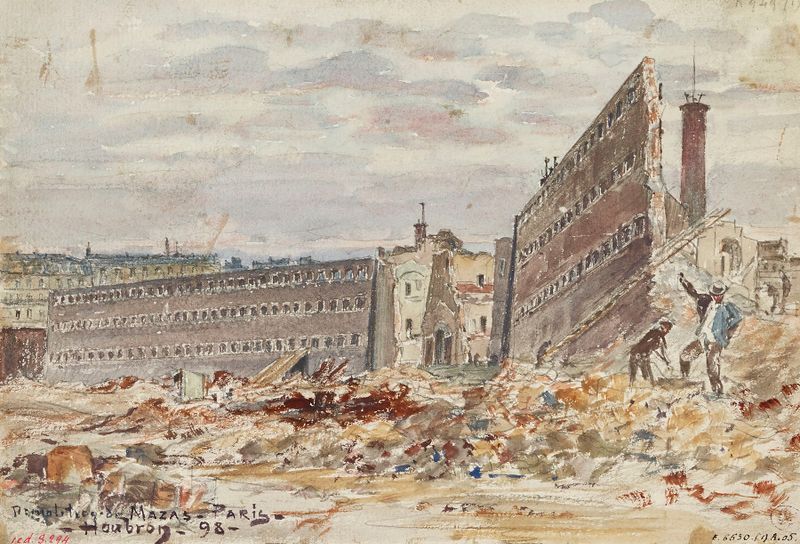
Démolition de la prison Mazas, 23, 25 boulevard Diderot (ancien boulevard Mazas)
Frédéric Houbron
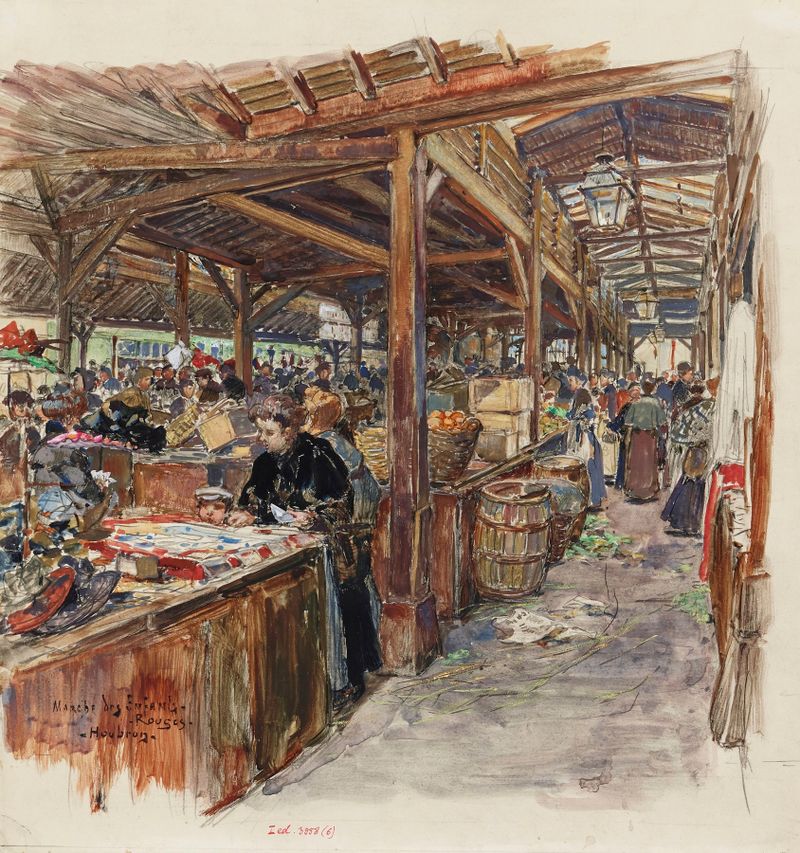
Intérieur du Marché des Enfants Rouges. 3ème arrondissement
Frédéric Houbron
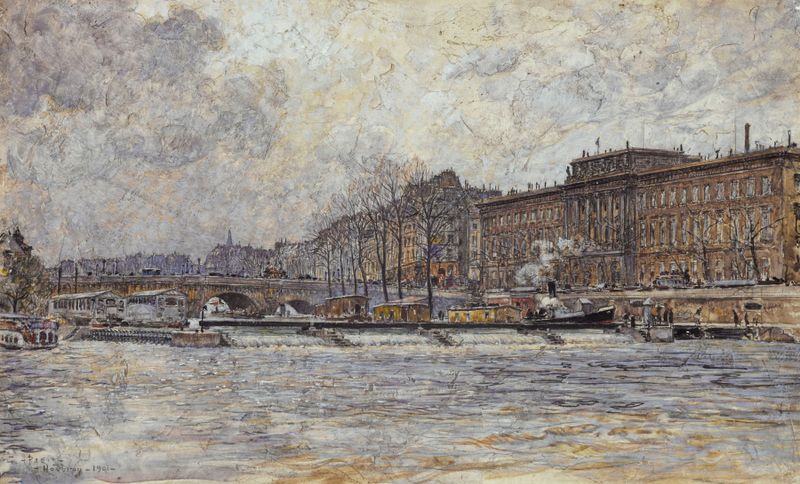
L’Hôtel de la Monnaie et le Pont-Neuf
Frédéric Houbron

Quai des Orfèvres. Paris. 1906
Frédéric Houbron
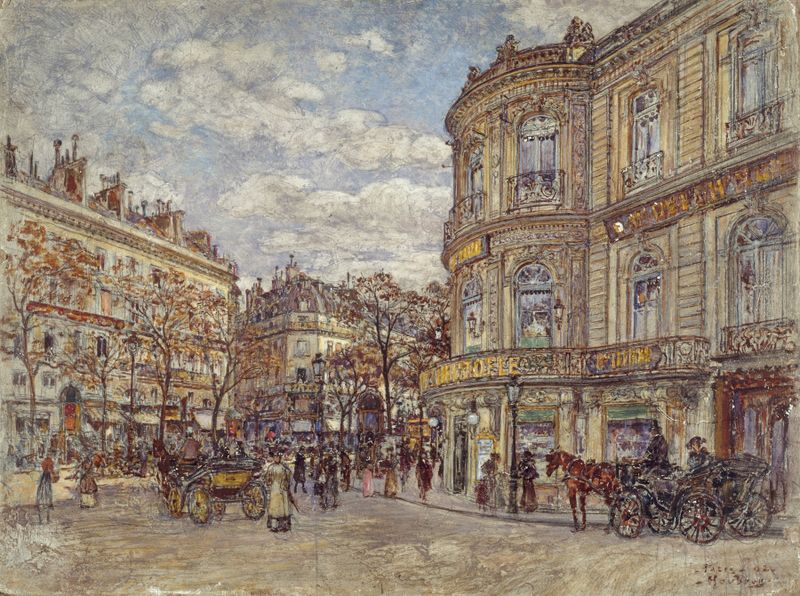
Le Pavillon de Hanovre, rue Louis-le-Grand
Frédéric Houbron

La rue du Chevalier-de-la-Barre, avec le Sacré-Cœur en construction
Frédéric Houbron
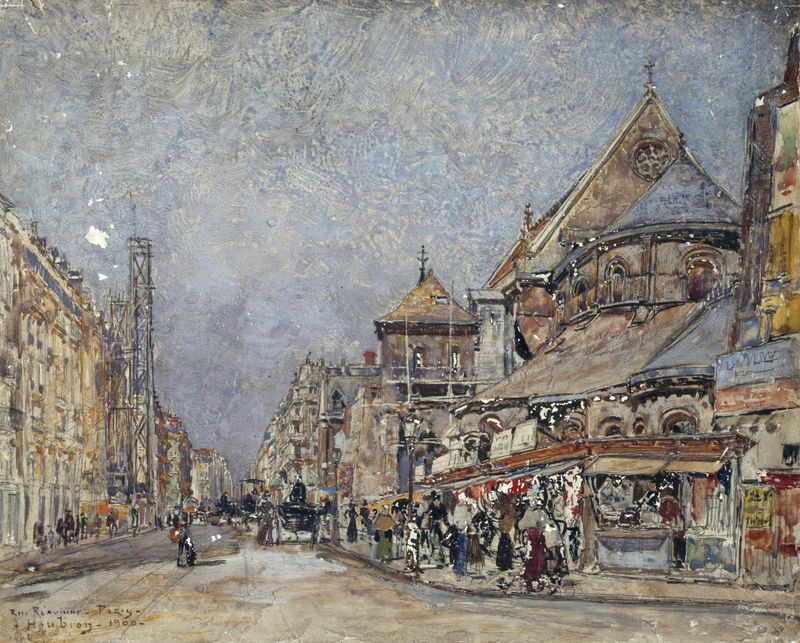
La rue Réaumur et le chevet de l’église Saint-Martin-des-Champs
Frédéric Houbron
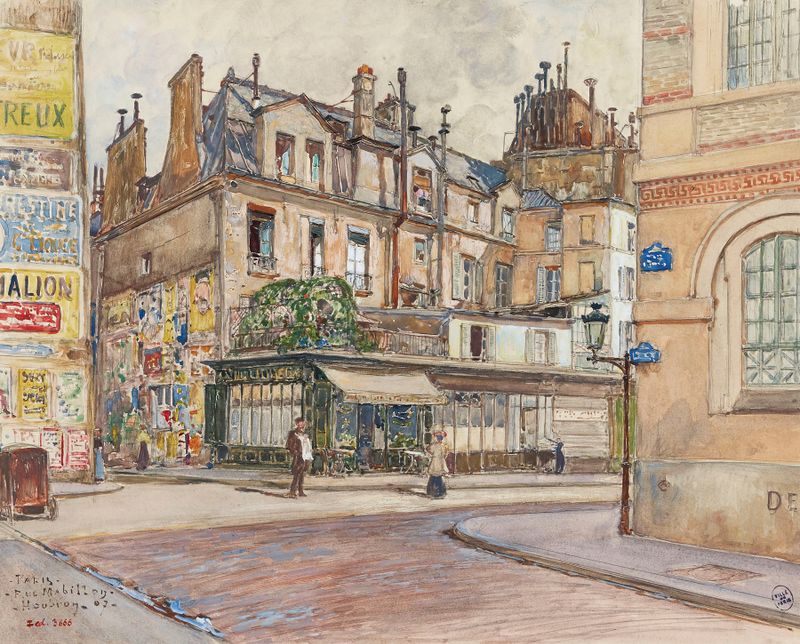
Angle rue Mabillon et rue Clément, en 1907. 5ème et 6ème arrondissements
Frédéric Houbron
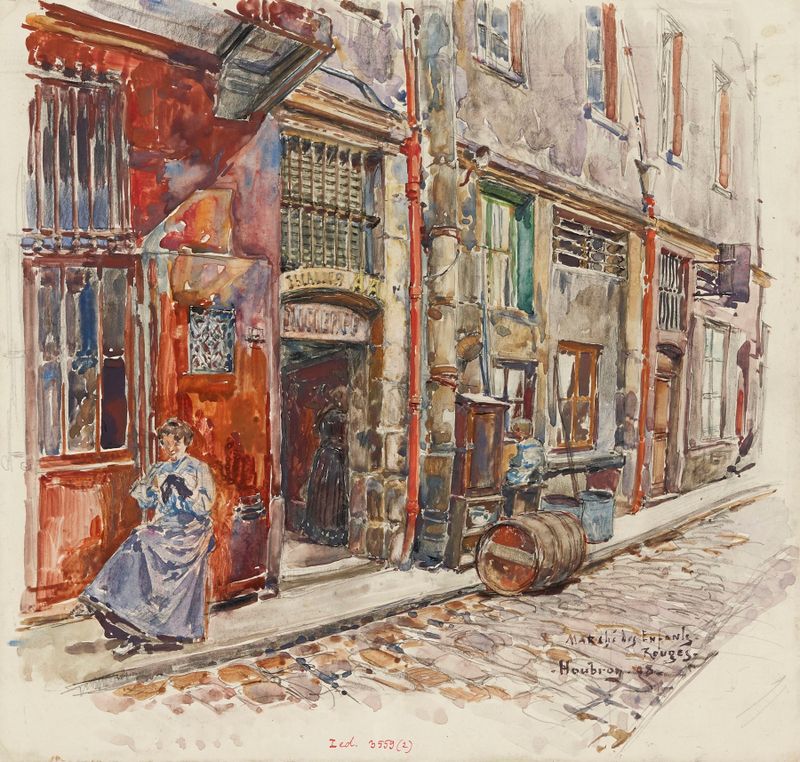
Entrée escalier A du Marché des Enfants-Rouges, en 1908. 3ème arrondissement
Frédéric Houbron
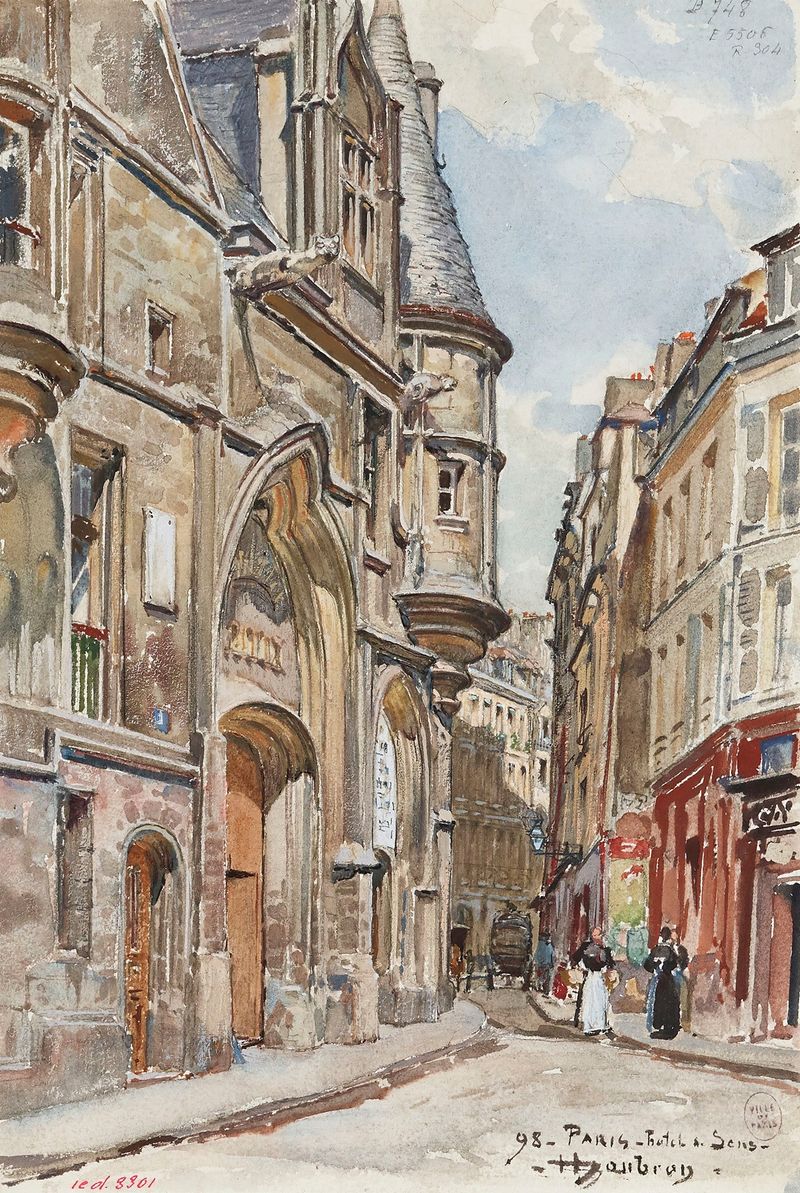
l’Hôtel de Sens, 1 rue du Figuier, en 1898, 4ème arrondissement
Frédéric Houbron





