
Intérieur du Marché des Enfants Rouges. 3ème arrondissement — History & Facts
Did the painter know this moment would outlive them? In Intérieur du Marché des Enfants Rouges, the essence of hope lingers in the air, captured perfectly within the bustling confines of a Parisian market. Look to the left at the vibrant stalls, where fresh produce spills over tables like a cascade of colors — rich reds, earthy browns, and bright greens. Notice how the light filters through the arched roof, casting soft shadows that dance on the cobblestones, inviting you to explore each corner. The composition draws your gaze from the lively vendors to the engaged customers, forming a vivid tapestry that tells stories of daily life. Beneath the surface, the contrasts in this scene hold deeper significance.
The juxtaposition between the chaotic bustle of market life and the quiet moments of connection between people evokes a sense of community. The soft expressions on the faces of those interacting reveal fleeting yet profound connections, a reminder of the shared human experience amidst the hustle. Each figure is not merely a part of the crowd; they embody the hope and resilience of a society striving for normalcy in the face of uncertainty. Frédéric Houbron painted this scene between 1907 and 1908, at a time when Paris was on the cusp of modernity.
The early 20th century marked a dynamic period in art, as artists began to move away from traditional forms, seeking to capture the essence of modern life. In this vibrant market, Houbron found a narrative that resonated with the pulse of his city, one that would speak to audiences long after the paint dried.
More Artworks by Frédéric Houbron
Browse all →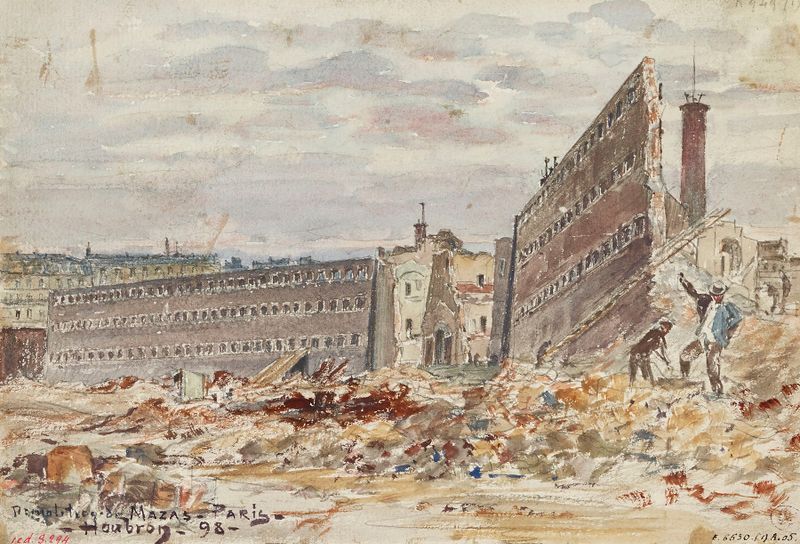
Démolition de la prison Mazas, 23, 25 boulevard Diderot (ancien boulevard Mazas)
Frédéric Houbron
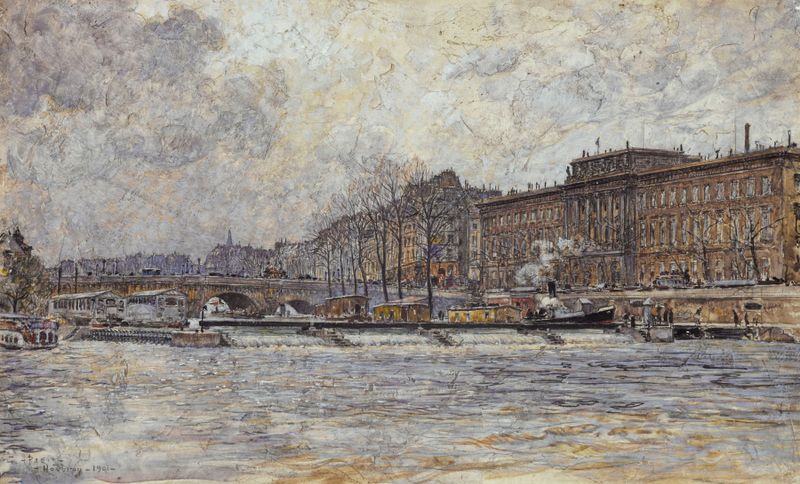
L’Hôtel de la Monnaie et le Pont-Neuf
Frédéric Houbron

Quai des Orfèvres. Paris. 1906
Frédéric Houbron
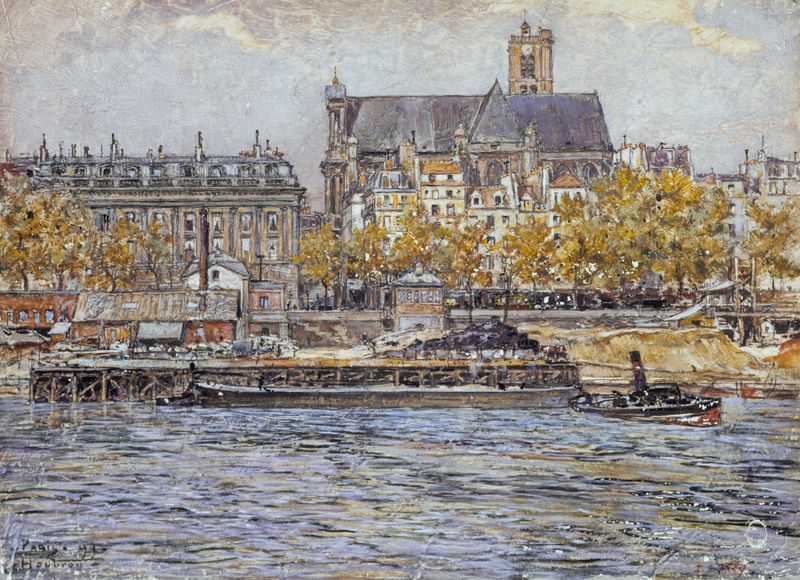
Le quai de l’Hôtel-de-Ville et l’église Saint-Gervais-Saint-Protais
Frédéric Houbron
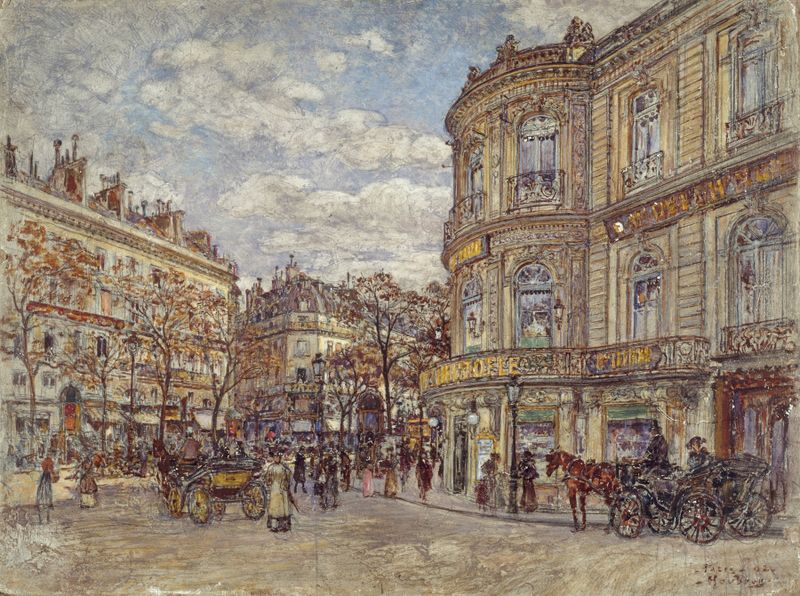
Le Pavillon de Hanovre, rue Louis-le-Grand
Frédéric Houbron

La rue du Chevalier-de-la-Barre, avec le Sacré-Cœur en construction
Frédéric Houbron
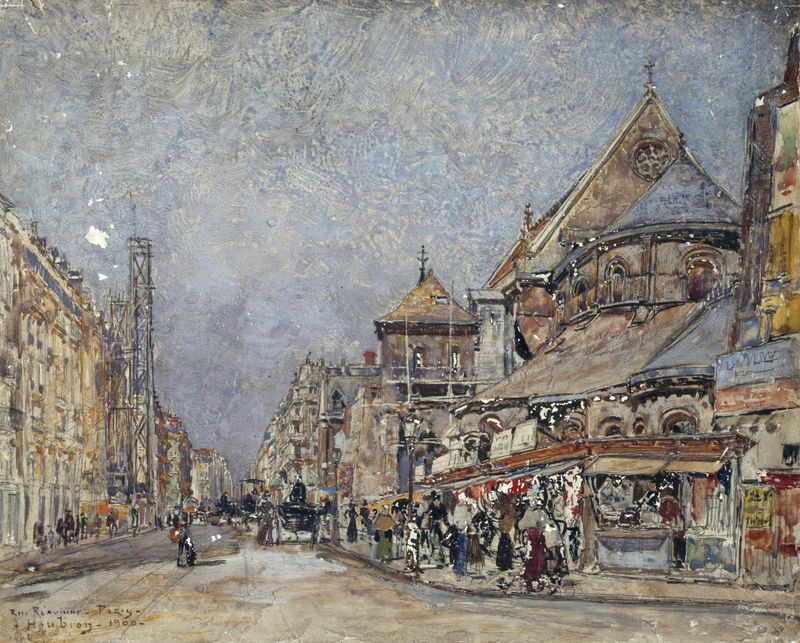
La rue Réaumur et le chevet de l’église Saint-Martin-des-Champs
Frédéric Houbron
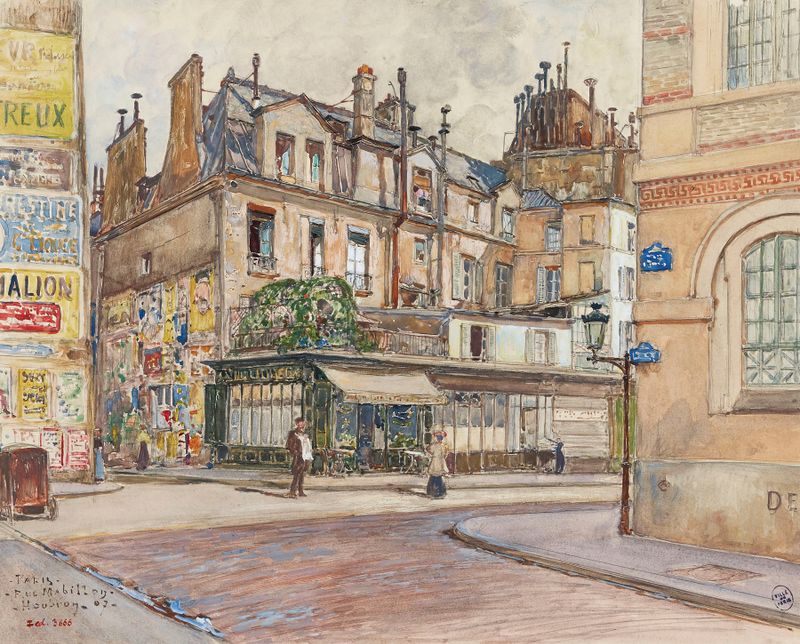
Angle rue Mabillon et rue Clément, en 1907. 5ème et 6ème arrondissements
Frédéric Houbron
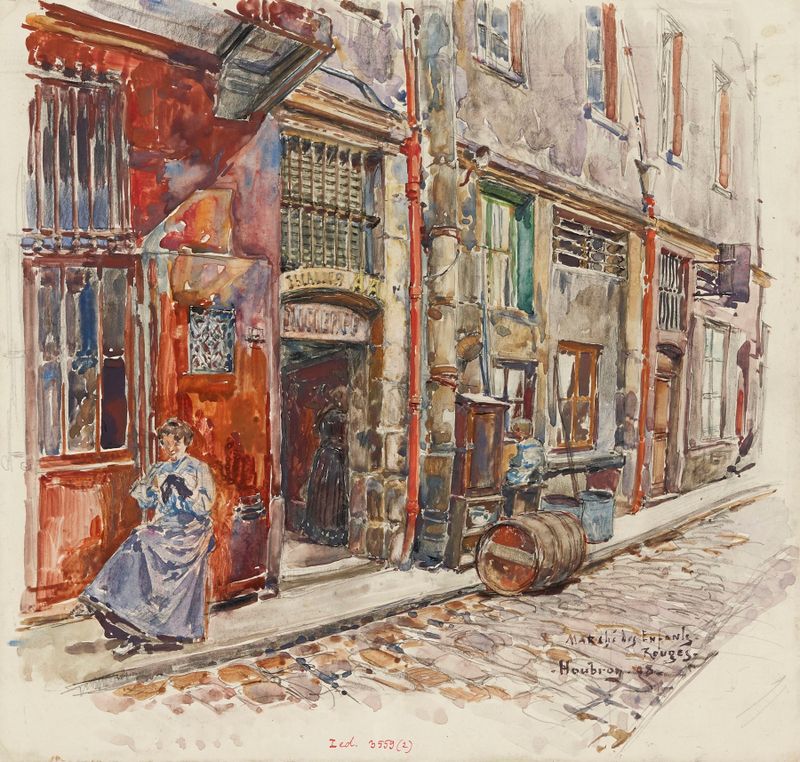
Entrée escalier A du Marché des Enfants-Rouges, en 1908. 3ème arrondissement
Frédéric Houbron
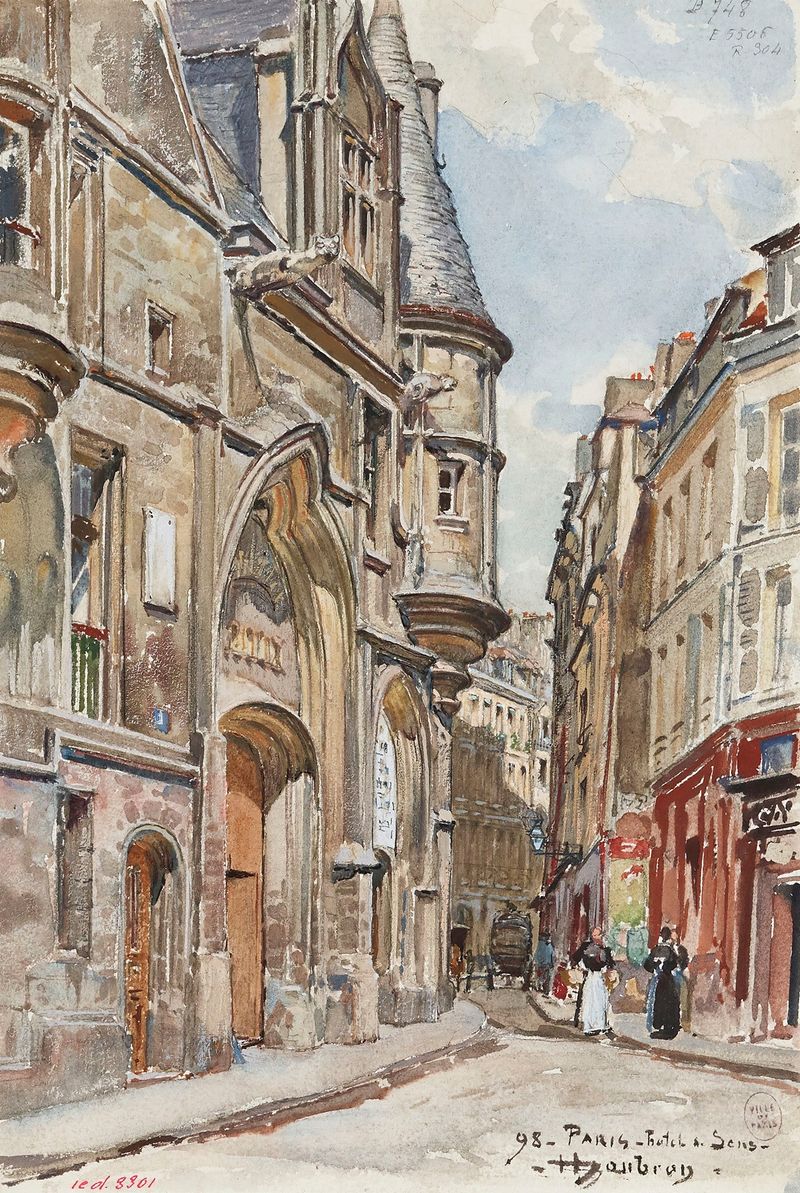
l’Hôtel de Sens, 1 rue du Figuier, en 1898, 4ème arrondissement
Frédéric Houbron





