
Evening — History & Facts
When Evening entered public view in 1820, it was one of a series of mysterious, luminous images that William Blake created late in his life, when he was largely ignored by the art establishment. Unlike his earlier, more overtly visionary works, this piece belongs to a group of "large color prints" whose exact techniques remain debated by scholars even today. The uncertainty surrounding its medium—whether monotype, tempera, or another experiment—has only deepened the painting’s allure.
What is certain is that Evening stands as a testament to Blake’s restless innovation and refusal to conform to the conventions of the Romantic era. The scene captures the quiet threshold between day and night, a favorite metaphor for Blake. A solitary figure, draped in flowing robes, gazes westward as the last rays of sunlight fade behind a low horizon. The figure’s outstretched arm and upward glance suggest both farewell and hope, while the soft, glowing tones of the sky contrast with the encroaching darkness below.
The motif of transition—light to dark, activity to rest—echoes through the composition. Unlike J.M.W. Turner, whose sunsets often explode in color and drama, Blake’s Evening is hushed, meditative, and inward, inviting the viewer to contemplate the passage of time. The physical journey of Evening is less documented than its spiritual one.
Created during a period when Blake was supported by a small circle of admirers rather than wealthy patrons, the work likely remained in private hands for decades. It resurfaced in the 20th century as interest in Blake’s art and poetry revived, and now resides in a major public collection. As with many of his late works, Evening blurs the line between painting, print, and vision, standing as a quiet but insistent challenge to the boundaries of medium and meaning in British art.
More Artworks by William Blake
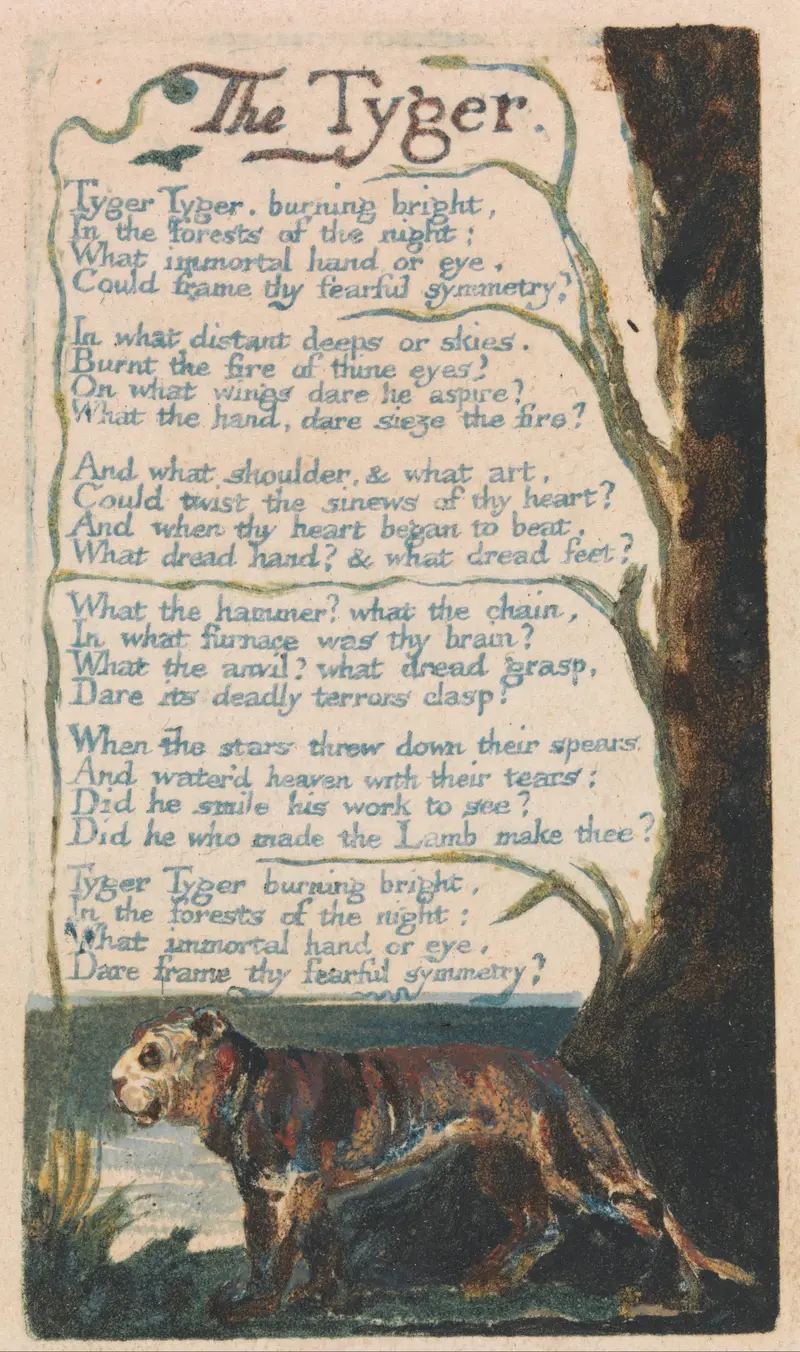
The Tyger
William Blake

Christ Blessing
William Blake
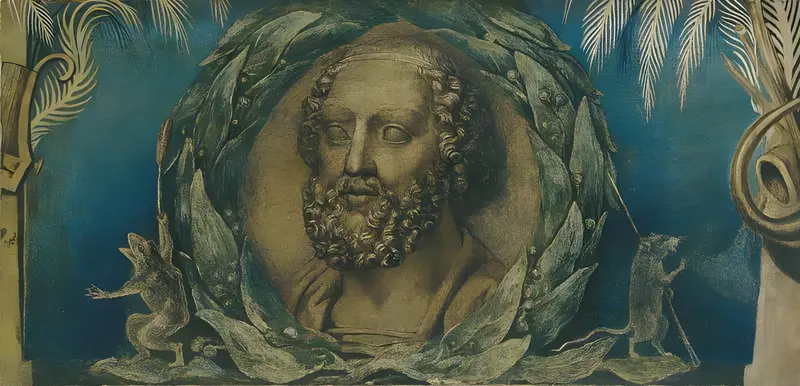
Homer
William Blake
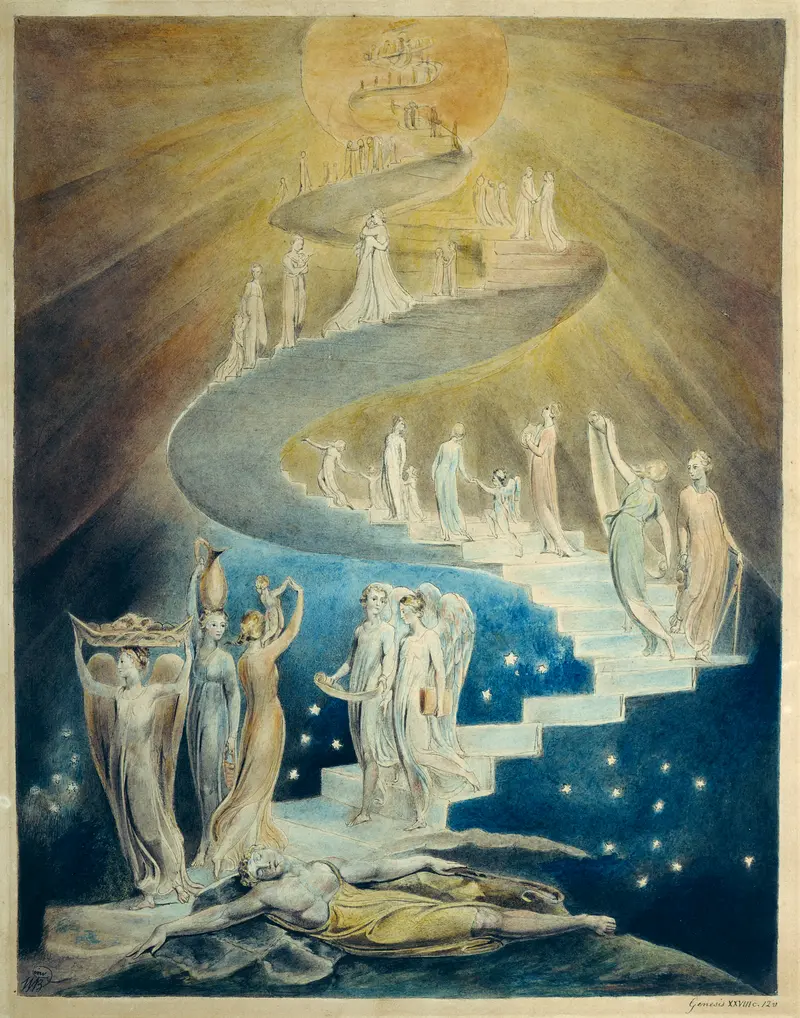
Jacob's Ladder
William Blake
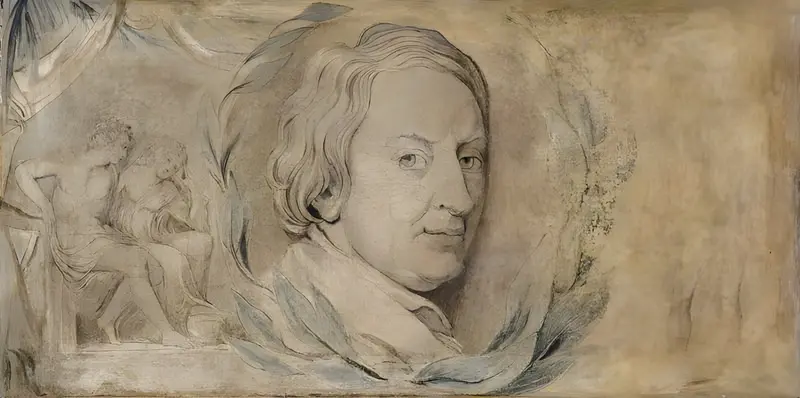
John Dryden (1631–1700)
William Blake
Landscape near Felpham
William Blake
Sacrifice of Job
William Blake
Christ's Entry into Jerusalem
William Blake
The Ancient of Days
William Blake
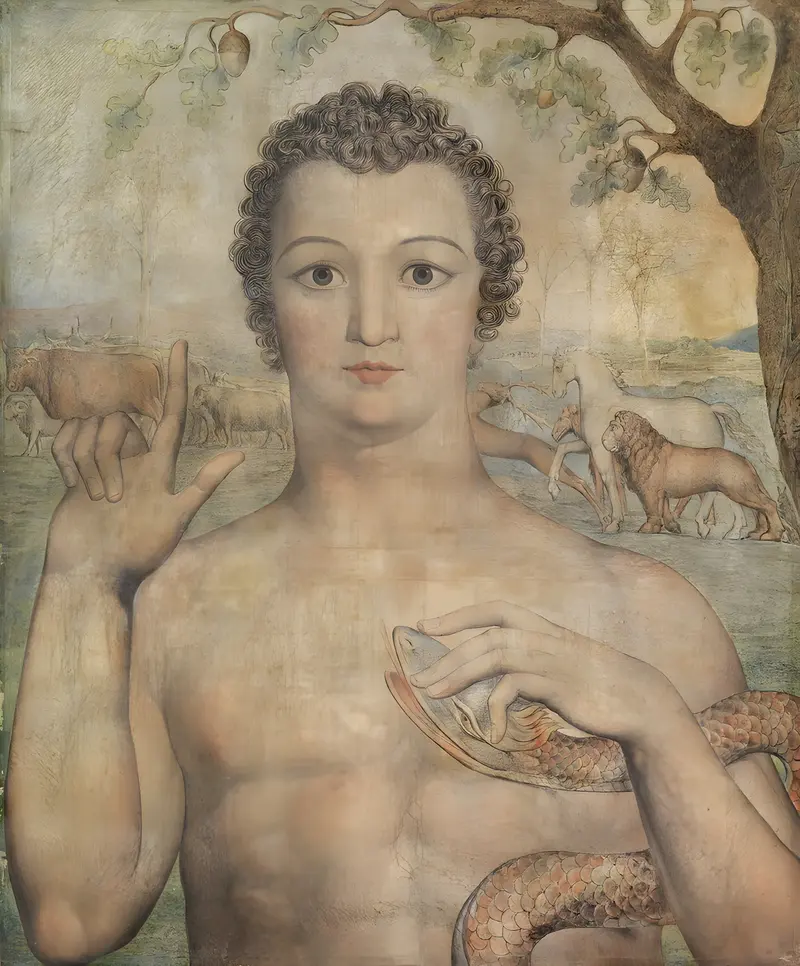
Adam Naming the Beasts
William Blake
More Landscape Art

The Starry Night
Vincent van Gogh

View of Delft
Johannes Vermeer

Water Lilies
Claude Monet

The Grand Canal, Venice, looking north-west from the Ca' Corner to the Ca' Contarini degli Scrigni, with the campanile of Santa Maria della Carità
Canaletto

Windsor Castle
Canaletto

The Grand Canal looking North-East from the Palazzo Dolfin-Manin to the Rialto Bridge
Canaletto