
Eze — History & Facts
When did color learn to lie? In a world awash with hues, Eze takes us beyond mere representation, inviting us to ponder the truth within each vibrant stroke. Look to the left where the azure sea embraces the rocky coast, its waves dappled with brilliant whites and greens that pulse with life. The cheerful yellow and orange of the sunlit buildings contrast sharply with the cool blues, creating a rhythmic balance that draws the eye across the canvas. Notice how Dufy's broad brushstrokes and playful use of color evoke a sense of warmth and spontaneity, as if the scene itself is alive with laughter and light. Yet, beneath this celebration of color lies an emotional tension—an interplay between nature and human existence.
The jagged cliffs loom over the picturesque village, suggesting a fragility to the idyllic scene. The bright colors may suggest joy, but they also mask a deeper yearning for connection, echoing the struggle of humanity against the vastness of nature. Each layer of paint reveals not just the beauty of a place, but also the transitory nature of life itself. In 1926, during a period of significant artistic experimentation, Raoul Dufy was finding his voice in the vibrant colors of Fauvism.
Living in France, he was influenced by the post-war desire for renewal and the exploration of expression through color. The world was shifting, and in this pivotal year, Dufy’s work reflected both a personal and collective search for transcendence amid modernity's chaos.
More Artworks by Raoul Dufy
Browse all →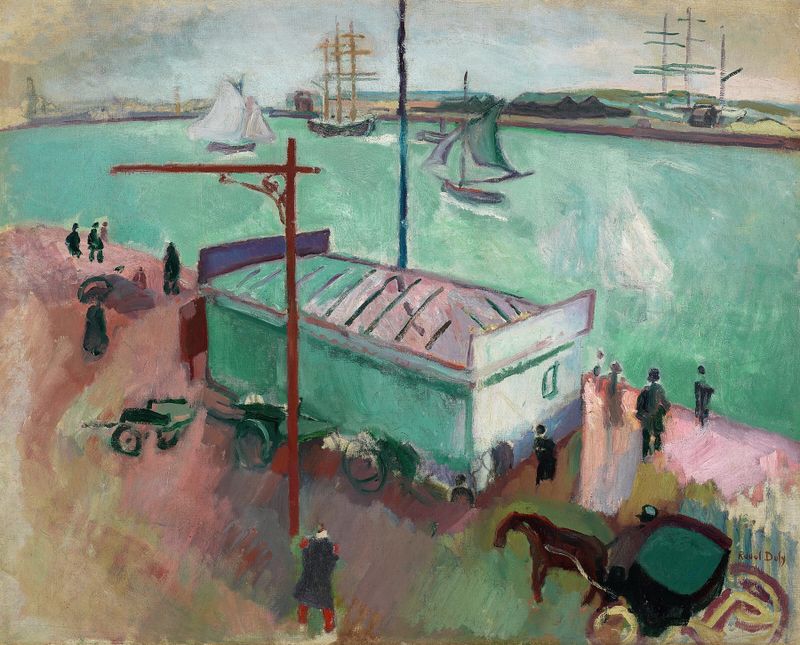
Le Port du Havre
Raoul Dufy
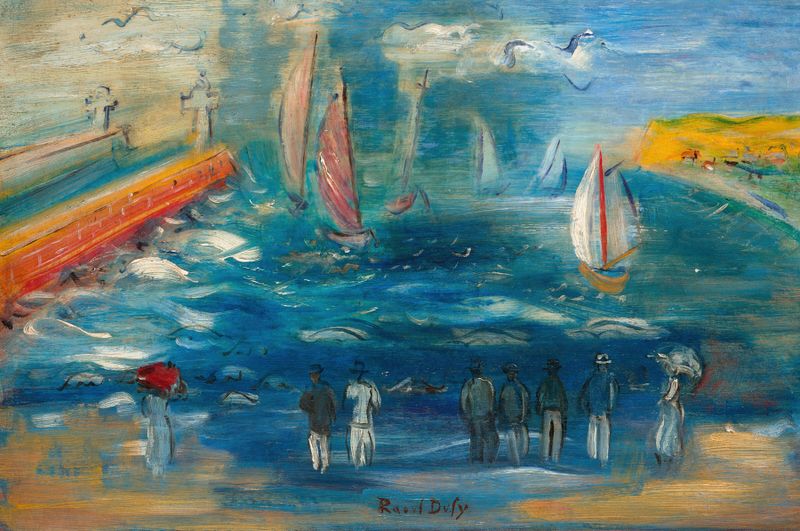
Départ des régates
Raoul Dufy

Les canotiers sur la Marne
Raoul Dufy
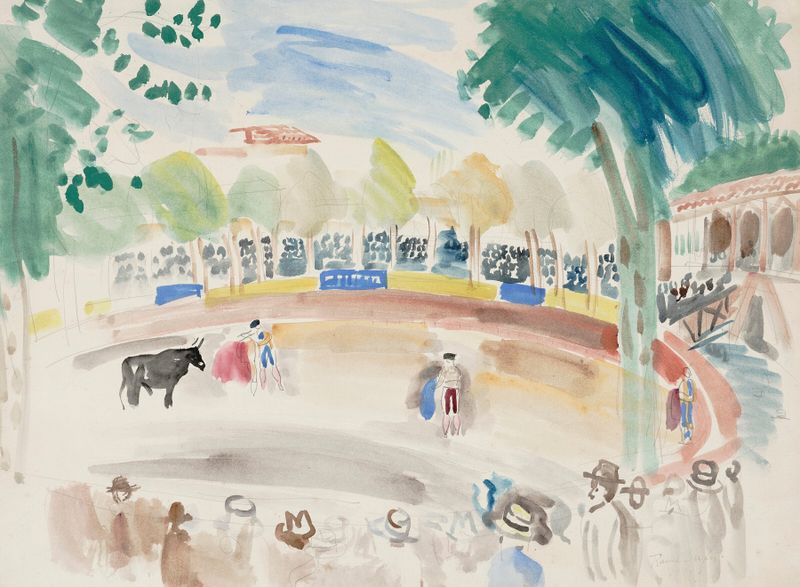
La corrida
Raoul Dufy

Composition au port et à la fontaine
Raoul Dufy
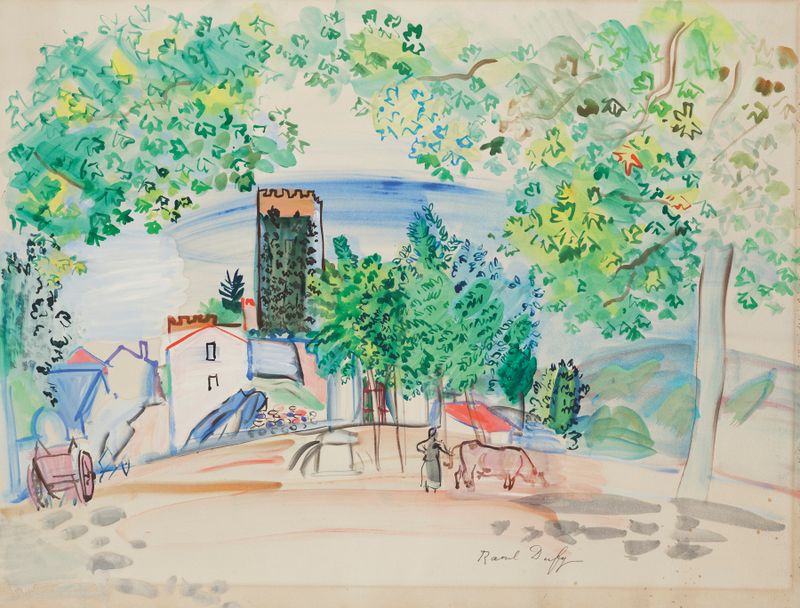
Vue de la Tour de Vernet-les-Bains
Raoul Dufy
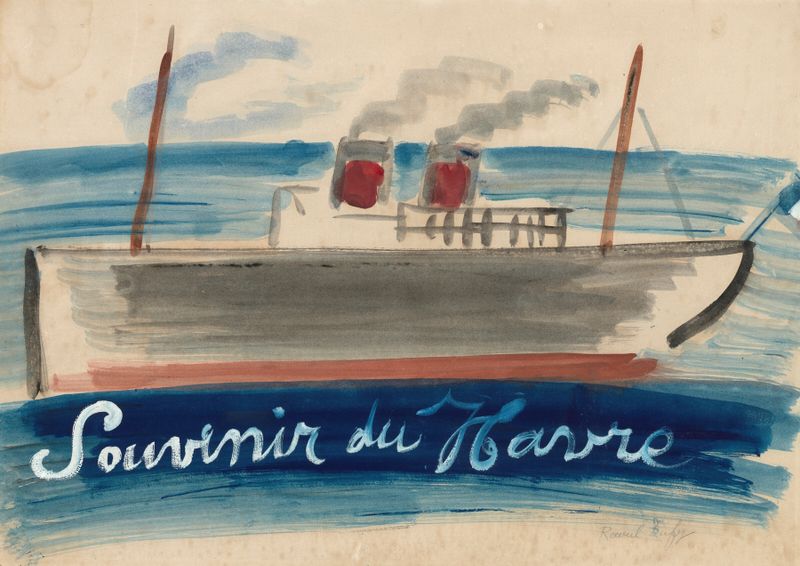
Souvenir du Havre
Raoul Dufy

Les Barques
Raoul Dufy
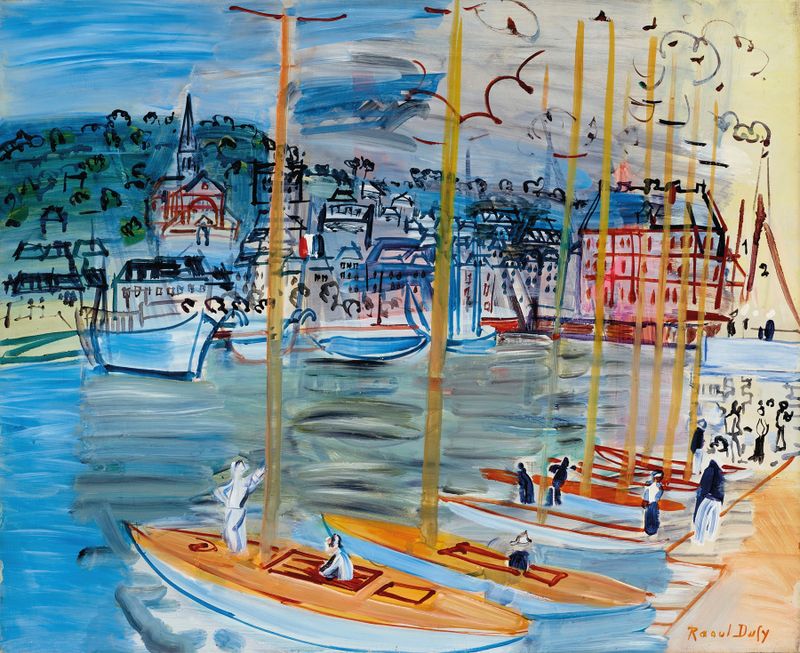
Le bassin de Deauville
Raoul Dufy

Régates à Deauville
Raoul Dufy





