
Farmland in Early Spring / — History & Facts
The first thing that catches the eye in Farmland in Early Spring is the bold geometry of the freshly turned earth, its furrows drawing you straight toward the heart of the scene. The fields, streaked with deep browns and sharp greens, are interrupted only by the vertical punctuation of bare trees and a dark, low farmhouse. The sky is wide and unsettled, its pale expanse pressing down on the land, hinting at the lingering chill of early spring.
Two small figures work the soil, dwarfed by the landscape, their presence a quiet reminder of the human rhythm that shapes and is shaped by the land. The unfinished quality of the painting is not a flaw but a window into the artist’s process—brushstrokes left raw, outlines only half-resolved, as if the scene is still emerging from winter’s hold. Created in 1884, this work stands at the intersection of realism and a more poetic vision of the countryside, a hallmark of Arnold Böcklin's later years. In the late nineteenth century, landscapes like this were both records of rural life and meditations on nature’s cycles, painted for an audience increasingly distant from the land itself.
The painting’s unfinished state, noted in its documentation, invites us to imagine the artist at work, pausing between observation and invention. Housed today in digital collections such as GalleriX and Google Arts & Culture, Farmland in Early Spring is a fragment of a world in transition—one foot in the old rhythms of the earth, the other stepping into the uncertainties of modernity. Let your gaze follow those furrows and see where the story might have gone.
More Artworks by Arnold Böcklin

Die Toteninsel III
Arnold Böcklin
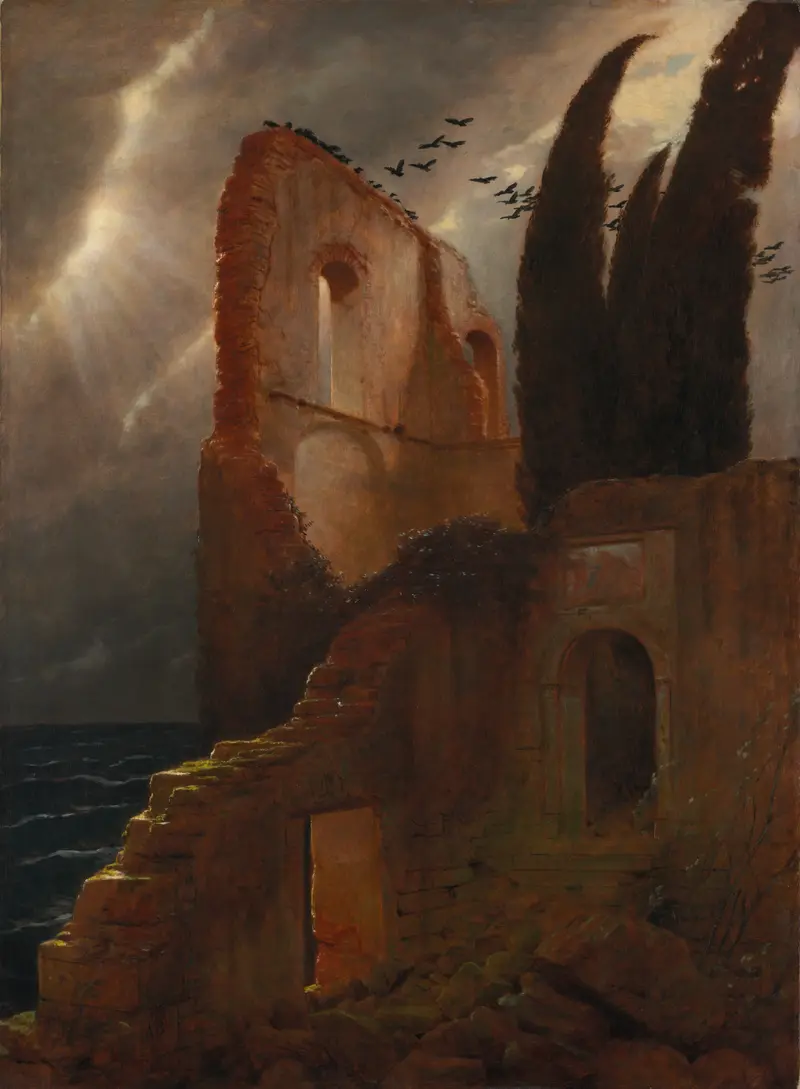
Ruin by the Sea
Arnold Böcklin
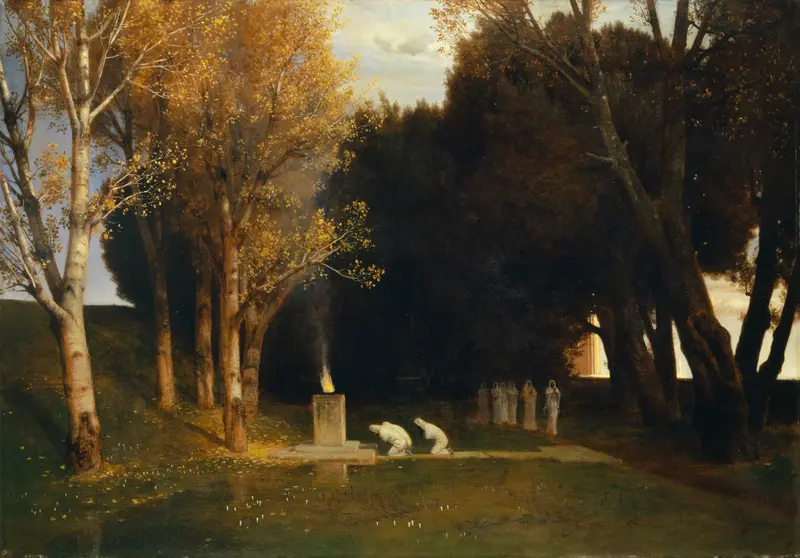
The Sacred Grove
Arnold Böcklin
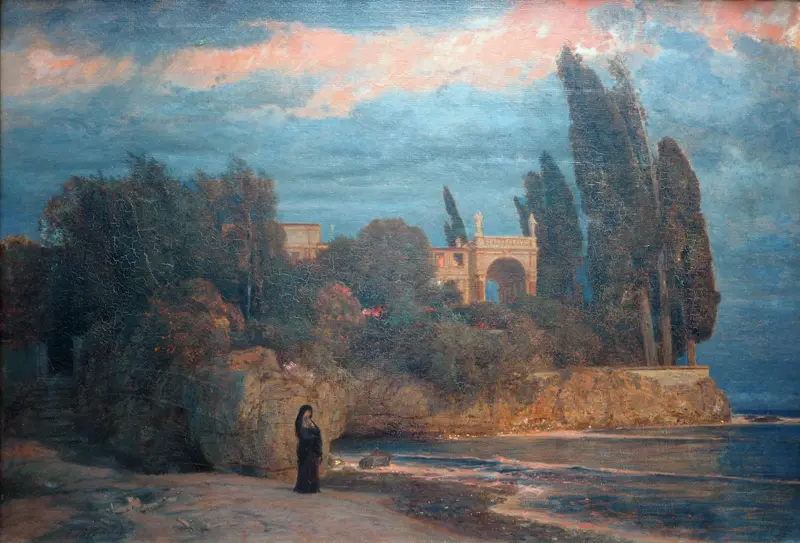
Villa by the Sea
Arnold Böcklin
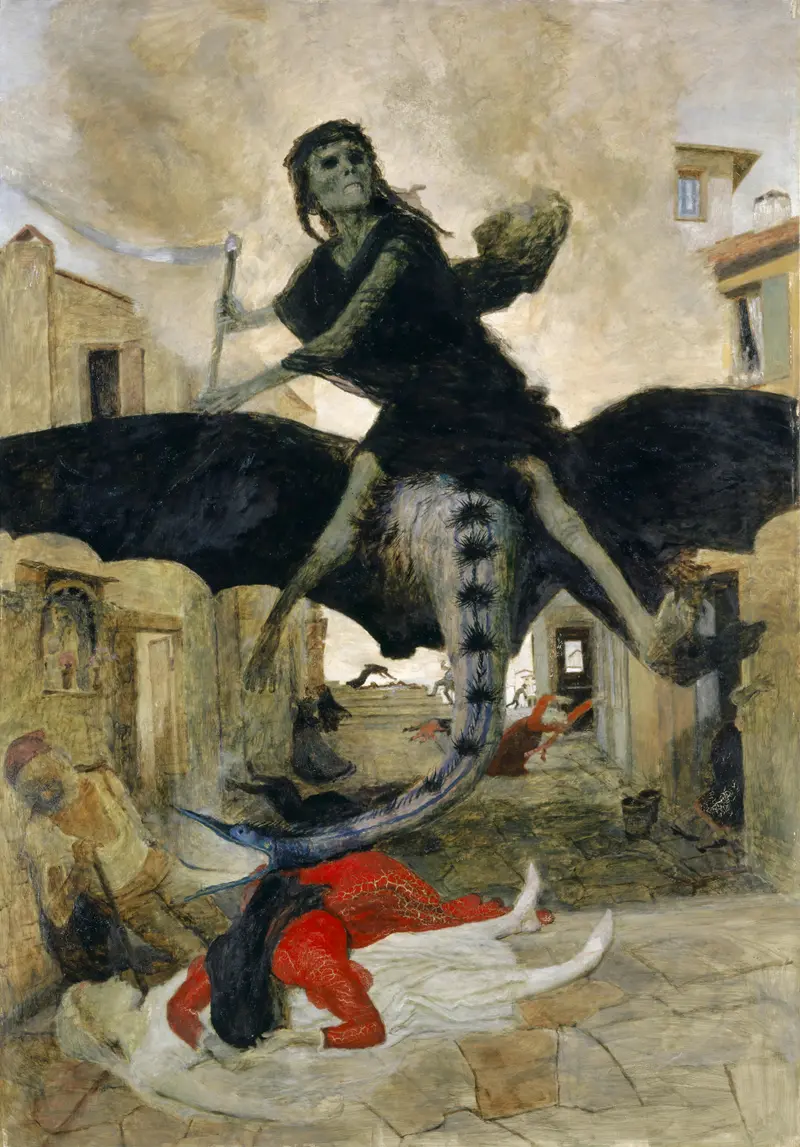
The Plague
Arnold Böcklin
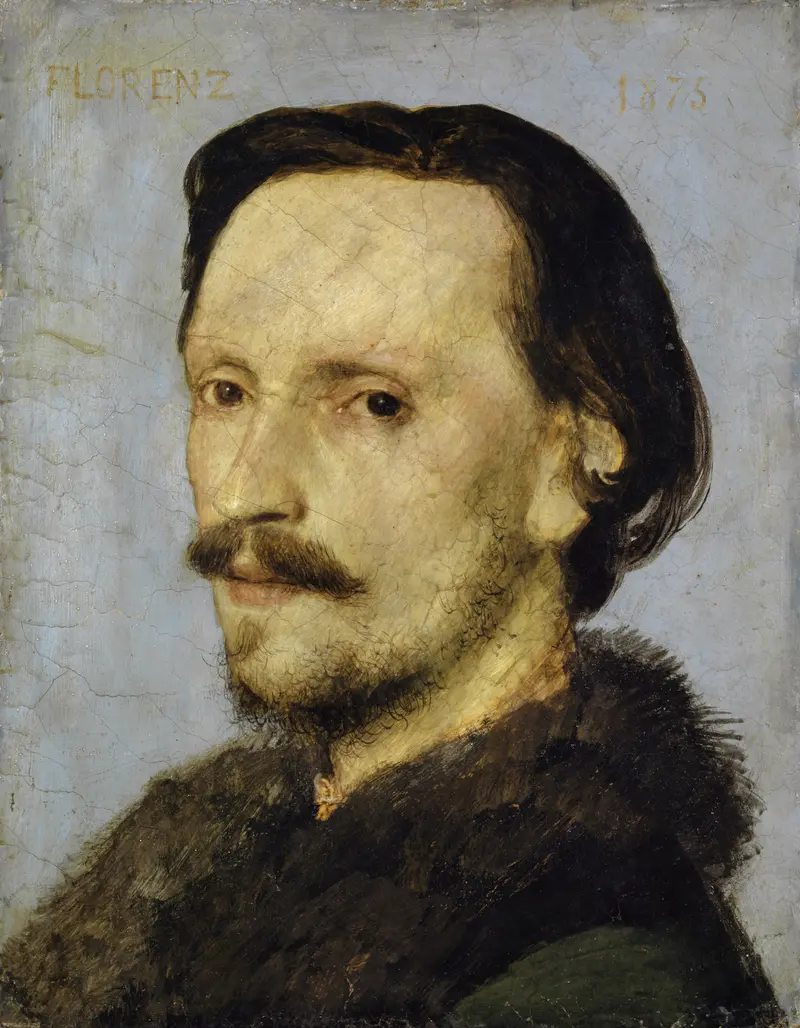
Böcklin Bildnis des Kunsthistorikers Adolph Bayersdorfer, 1875
Arnold Böcklin
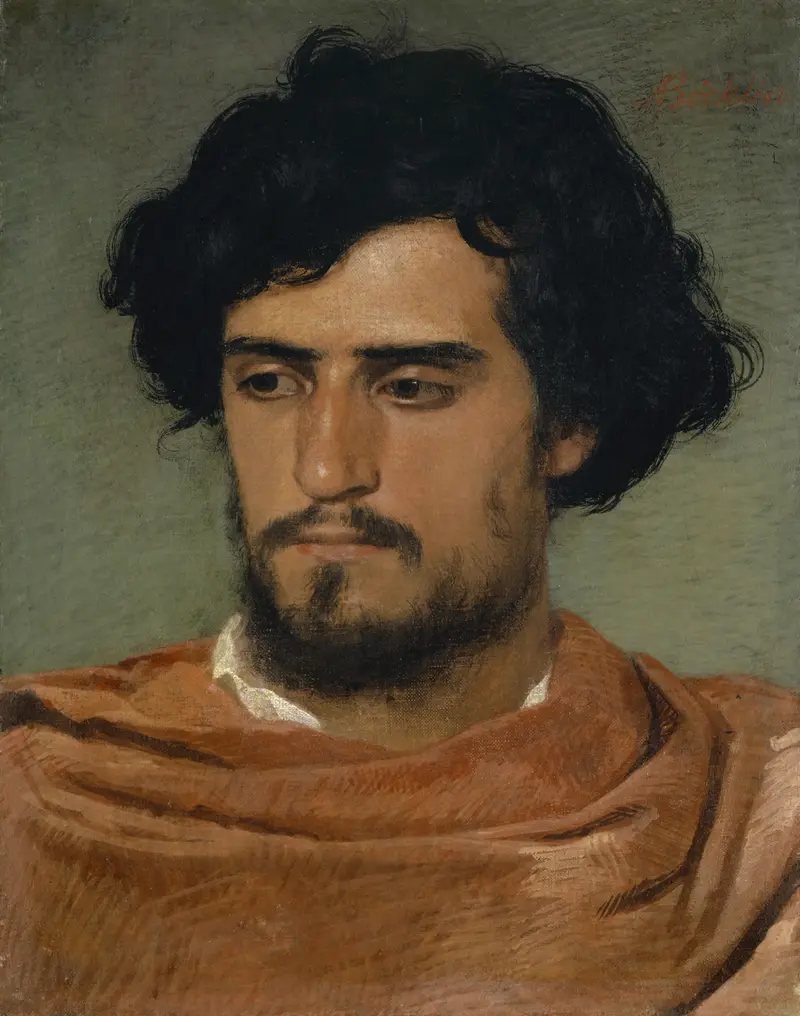
Head of a Roman
Arnold Böcklin
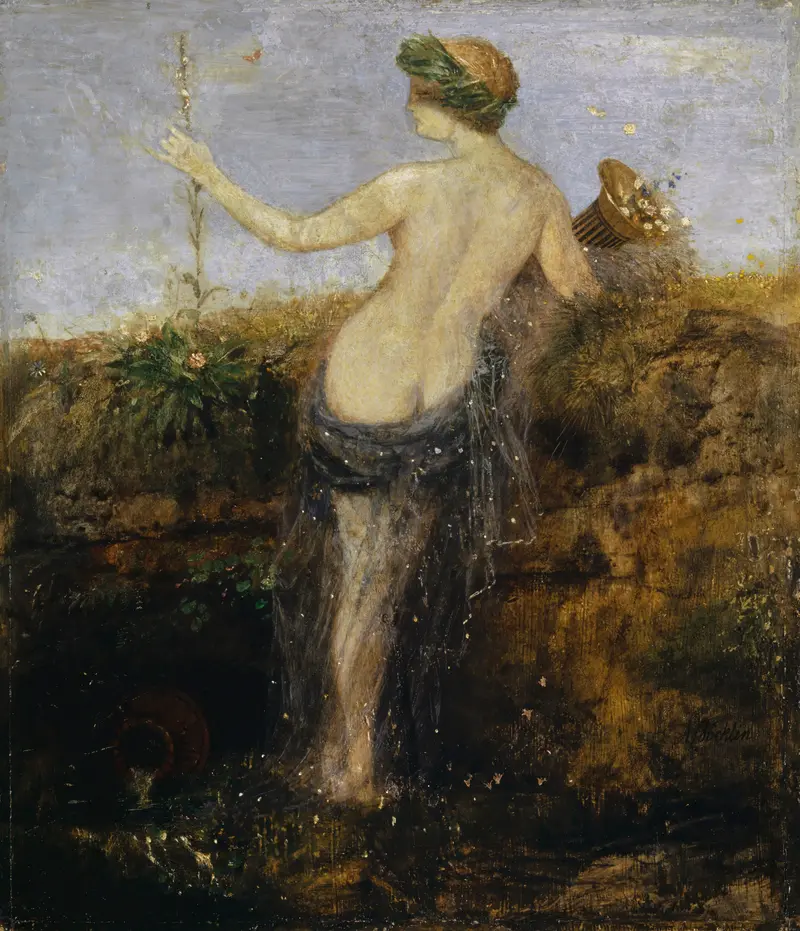
Nymphe with Horn of Plenty
Arnold Böcklin
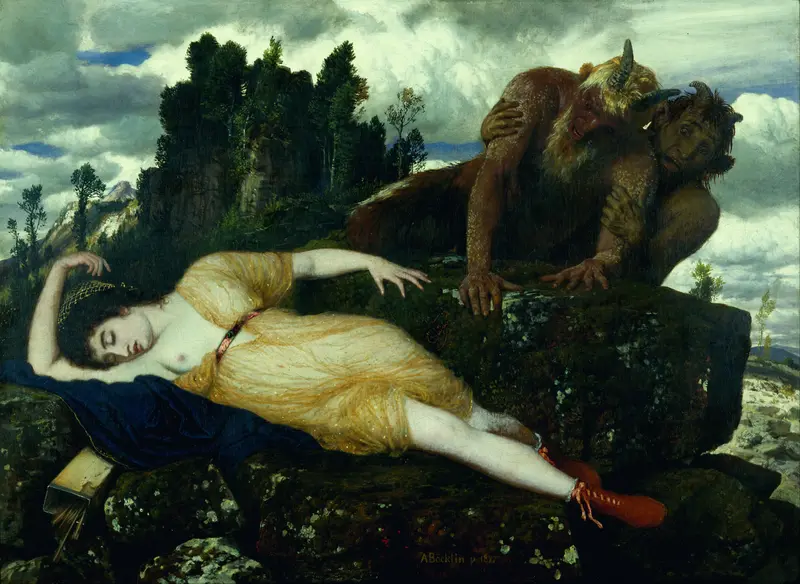
Sleeping Diana Watched by Two Fauns
Arnold Böcklin
Spring (Songs of Spring)
Arnold Böcklin
More Landscape Art

The Starry Night
Vincent van Gogh

View of Delft
Johannes Vermeer

Water Lilies
Claude Monet

The Grand Canal, Venice, looking north-west from the Ca' Corner to the Ca' Contarini degli Scrigni, with the campanile of Santa Maria della Carità
Canaletto

Windsor Castle
Canaletto

The Grand Canal looking North-East from the Palazzo Dolfin-Manin to the Rialto Bridge
Canaletto