
Felsiges Flussgestade — History & Facts
Who listens when art speaks of silence? In Felsiges Flussgestade, the subtle interplay of rocks and water invites an ecstasy of contemplation, where nature breathes, unhindered by the weight of words. Focus first on the bold, jagged formations to the left, their textures carved by time. Shadows dance among the crags, revealing a rugged, untamed beauty that draws the eye deeper into the composition. Notice the soft, reflective surface of the river that runs through the center, capturing a chiaroscuro effect that suggests both tranquility and movement.
The lush greenery on either side frames this serene escape, creating a stark contrast against the harshness of the rocks. The palette of muted earth tones and vibrant greens mirrors the harmony of chaos and calm. Delve into the emotional tension as you observe the way the water seems to caress the stones, a gentle act of defiance against their solidity. Here, the juxtaposition of smooth and rough surfaces suggests the relentless passage of time, whispering of history and resilience.
The overall composition evokes a sense of yearning, an invitation for the viewer to step beyond the physical realm and into a place of introspection and wonder. In 1830, Johann Wilhelm Schirmer painted this work while living in Germany, a time marked by the emerging Romantic movement, which sought to celebrate the emotional power of nature. Amidst societal changes and artistic evolution, he explored landscapes with deep psychological resonance, focusing on the interplay of light and shadow. This painting reflects not only his personal journey but also the shifting currents in the world of art, as he embraced the sublime in the natural world.
More Artworks by Johann Wilhelm Schirmer
Browse all →
Waldlandschaft mit Blick auf Olevano und den Monte Cavo
Johann Wilhelm Schirmer
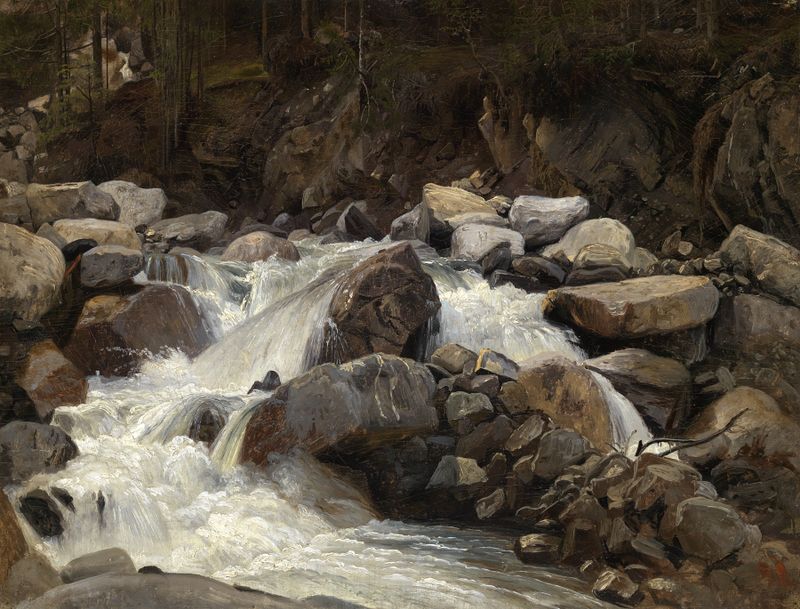
Schweizer Gebirgsbach
Johann Wilhelm Schirmer
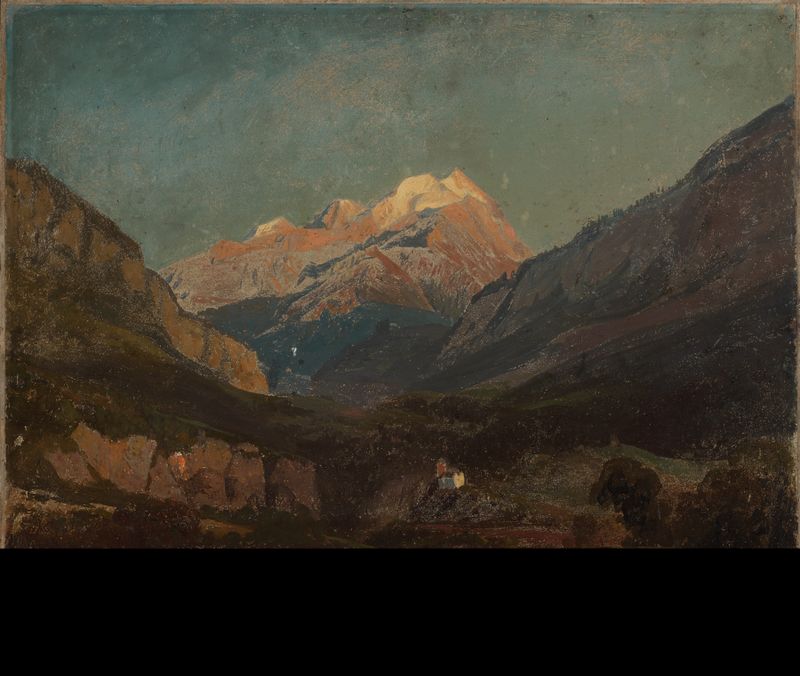
Schweizer Gebirgslandschaft mit Kapelle und fernem Schneegipfel
Johann Wilhelm Schirmer

Schweizer Gebirgslandschaft mit dem Piz Beverin im Hintergrund
Johann Wilhelm Schirmer

Waldinneres mit Hirschen am Wasser
Johann Wilhelm Schirmer

The Wetterhorn
Johann Wilhelm Schirmer

Partie aus der Römischen Campagna
Johann Wilhelm Schirmer

Felsabhang in der Schweiz
Johann Wilhelm Schirmer
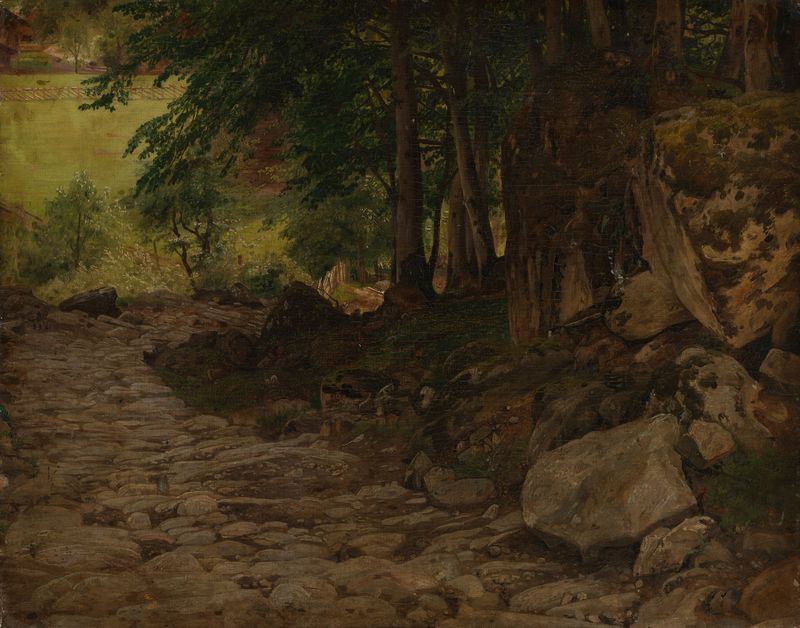
Felsweg in der Schweiz
Johann Wilhelm Schirmer
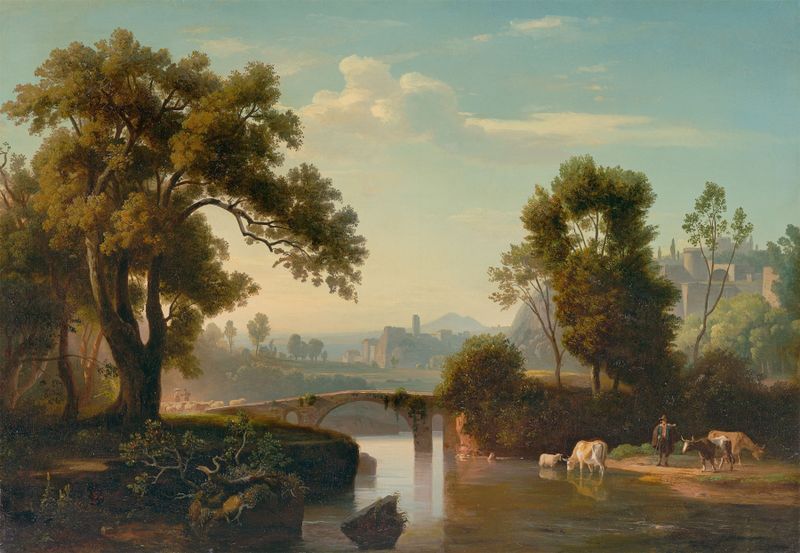
Italienische Landschaft mit Hirten
Johann Wilhelm Schirmer





