
Felsküste bei Etretat — History & Facts
What if beauty was never meant to be finished? In the gentle embrace of twilight, a somber landscape unfolds, imbued with a poignant nostalgia that lingers in the air. Look to the left at the rugged cliffs, their crests softly illuminated by a fading sun, where vibrant hues of orange and deep purple melt into one another. Notice how the artist’s brushstrokes evoke a sense of movement in the waves below, each crashing surf revealing the delicate interplay of light and shadow across the rocky shoreline. The billowing clouds overhead, tinted with hints of gold, frame the scene, drawing the viewer's gaze toward the horizon where land meets sky. Yet amid this beauty lies a profound sense of melancholy.
The desolate beach, sparsely dotted with figures, suggests solitude in a moment suspended between day and night. The contrasting textures of the rough cliffs and smooth waves highlight the fragile balance between nature's grandiosity and its inherent transience. Each element whispers of impermanence, evoking a bittersweet reflection on what it means to confront beauty that is perpetually in the process of becoming. Johann Wilhelm Schirmer painted Felsküste bei Etretat in 1836, during a period of significant artistic evolution in Europe.
Living in Germany, he was deeply influenced by Romantic ideals, emphasizing emotion and nature's sublime qualities. This work, created when he was exploring landscape painting, reflects a broader artistic movement that sought to capture not just beauty, but the deeper feelings it evokes within the human soul.
More Artworks by Johann Wilhelm Schirmer
Browse all →
Waldlandschaft mit Blick auf Olevano und den Monte Cavo
Johann Wilhelm Schirmer
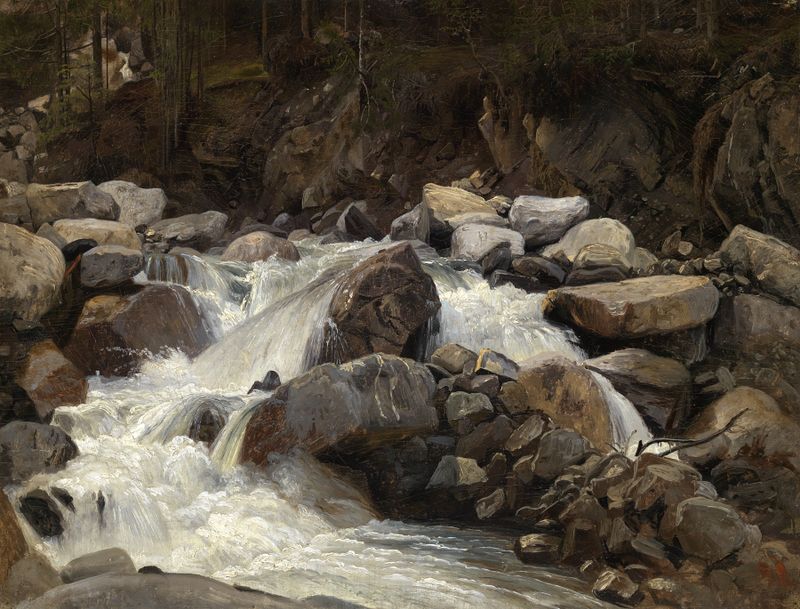
Schweizer Gebirgsbach
Johann Wilhelm Schirmer
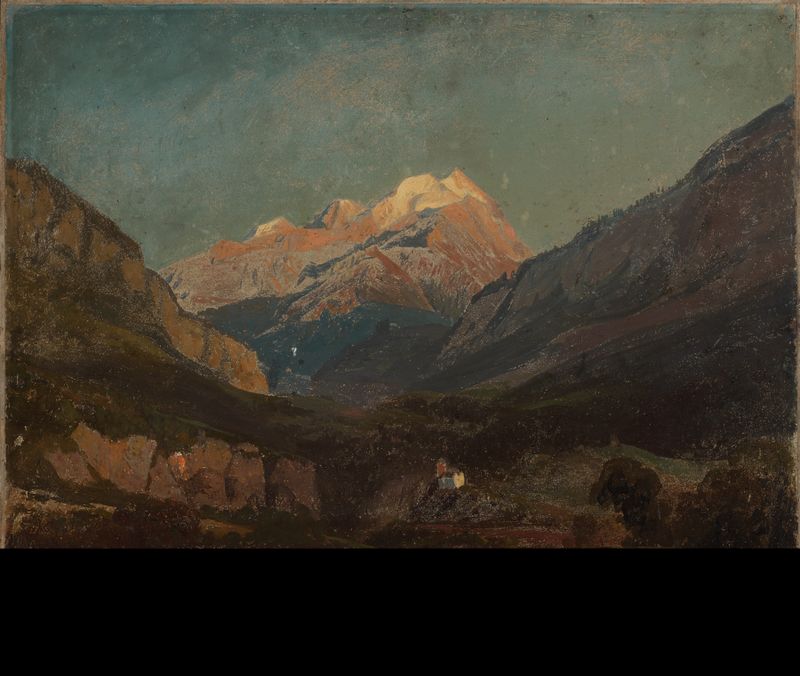
Schweizer Gebirgslandschaft mit Kapelle und fernem Schneegipfel
Johann Wilhelm Schirmer

Schweizer Gebirgslandschaft mit dem Piz Beverin im Hintergrund
Johann Wilhelm Schirmer

Waldinneres mit Hirschen am Wasser
Johann Wilhelm Schirmer

The Wetterhorn
Johann Wilhelm Schirmer

Partie aus der Römischen Campagna
Johann Wilhelm Schirmer

Felsabhang in der Schweiz
Johann Wilhelm Schirmer
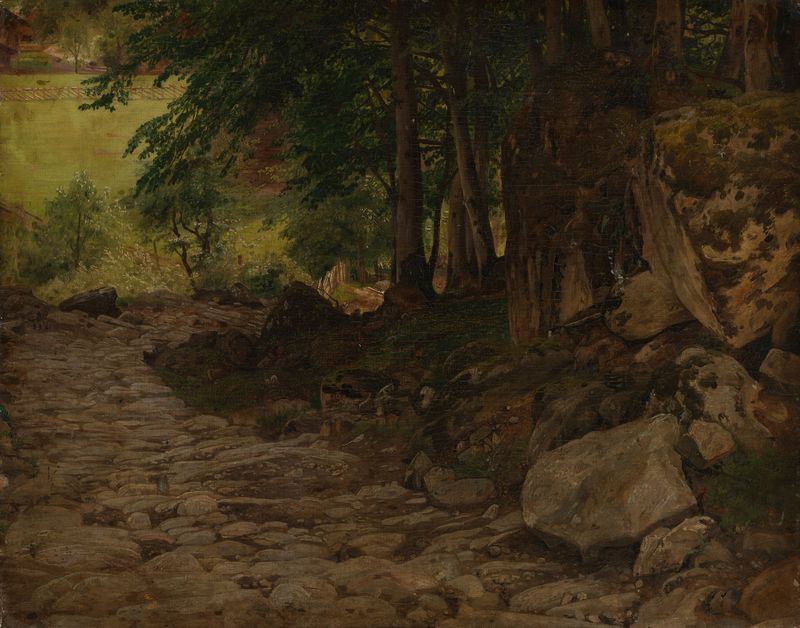
Felsweg in der Schweiz
Johann Wilhelm Schirmer
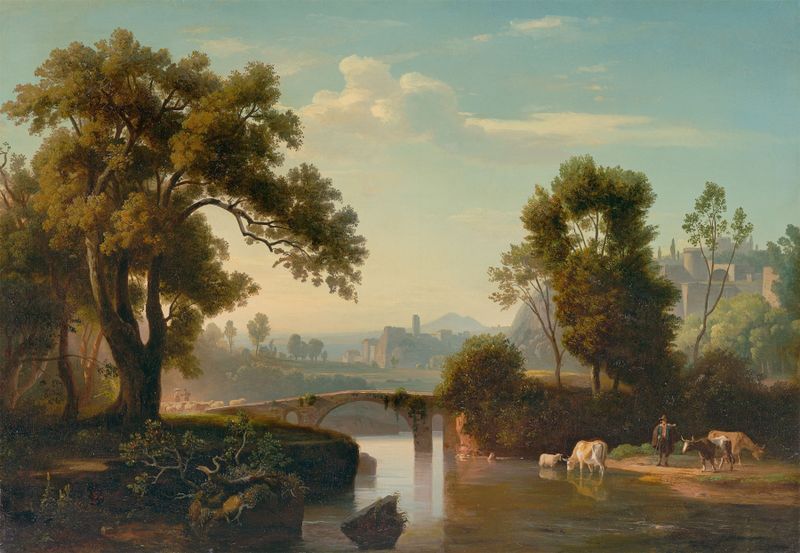
Italienische Landschaft mit Hirten
Johann Wilhelm Schirmer





