
Fischer in stürmischer See — History & Facts
What grips the viewer first is the relentless energy of the sea itself—a force that seems to hurl both the fishing boat and its crew into the foreground. The eye is drawn to the tumult of white-capped waves, each brushstroke thick and curling, as if the water might spill out of the frame. The sails, battered and straining, are painted with a roughness that echoes the chaos below, while the small rowboat at left, its oarsmen hunched and urgent, signals both peril and determination.
Light catches on the crest of every wave and on the wet backs of the figures, guiding us from the men in the boat to the battered vessel ahead. The palette is all storm and brine—greys, ochres, and the dull red of the torn sail—setting a mood of struggle and uneasy hope. Painted by Adolf Kaufmann by 1916, this work belongs to a tradition of maritime painting that flourished in the late nineteenth and early twentieth centuries, when images of fishermen and storm-tossed boats spoke to both the romance and the hardship of coastal life. Such scenes were often commissioned by collectors drawn to the drama of the sea, or by those nostalgic for a vanishing way of life as industrialization crept ever closer to Europe’s shores.
The painting’s presence in the Dorotheum’s collection today is a reminder of how these subjects, once so familiar, have become windows into a world where survival depended on skill, luck, and the mercy of the elements. Look again at the figures—anonymous, unheroic, yet utterly absorbed in their task—and the painting’s urgency becomes a testament to the endurance of ordinary lives against extraordinary odds.
More Artworks by Adolf Kaufmann

A River Landscape in Spring
Adolf Kaufmann

Winterliche Flusslandschaft
Adolf Kaufmann
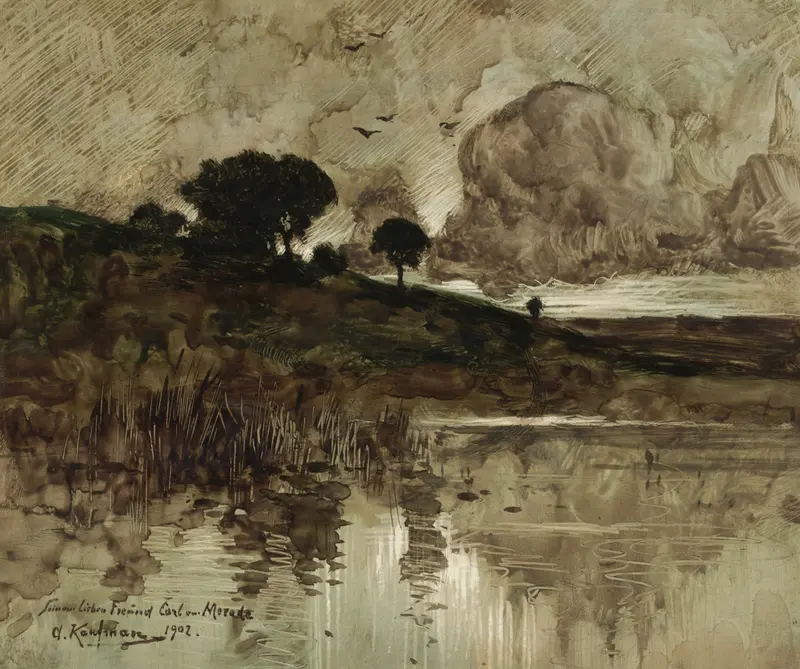
Herbstabend am See
Adolf Kaufmann

Mühle im Herbstwald
Adolf Kaufmann

A Mill in an Autumnal Forest
Adolf Kaufmann
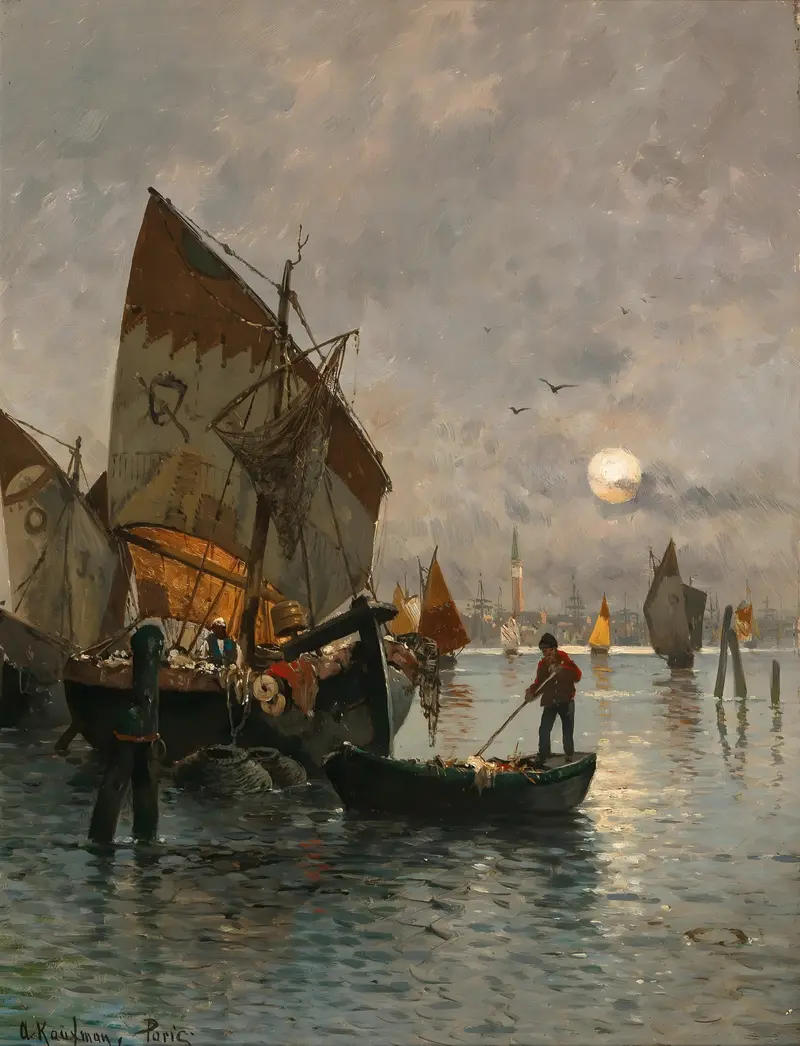
In der Lagune Venedigs
Adolf Kaufmann

In the Forest of Barbizon
Adolf Kaufmann
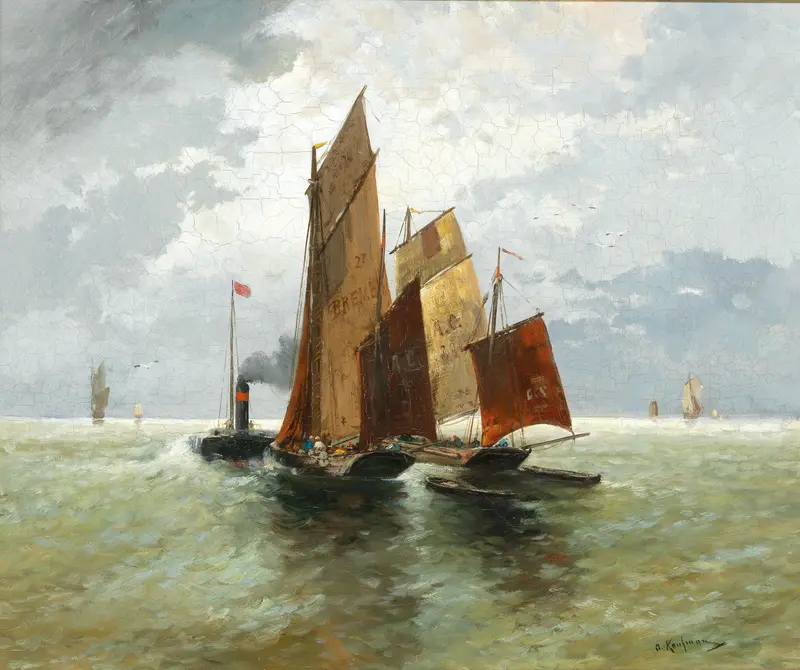
Steamboat and Fishing Boats at Sea
Adolf Kaufmann
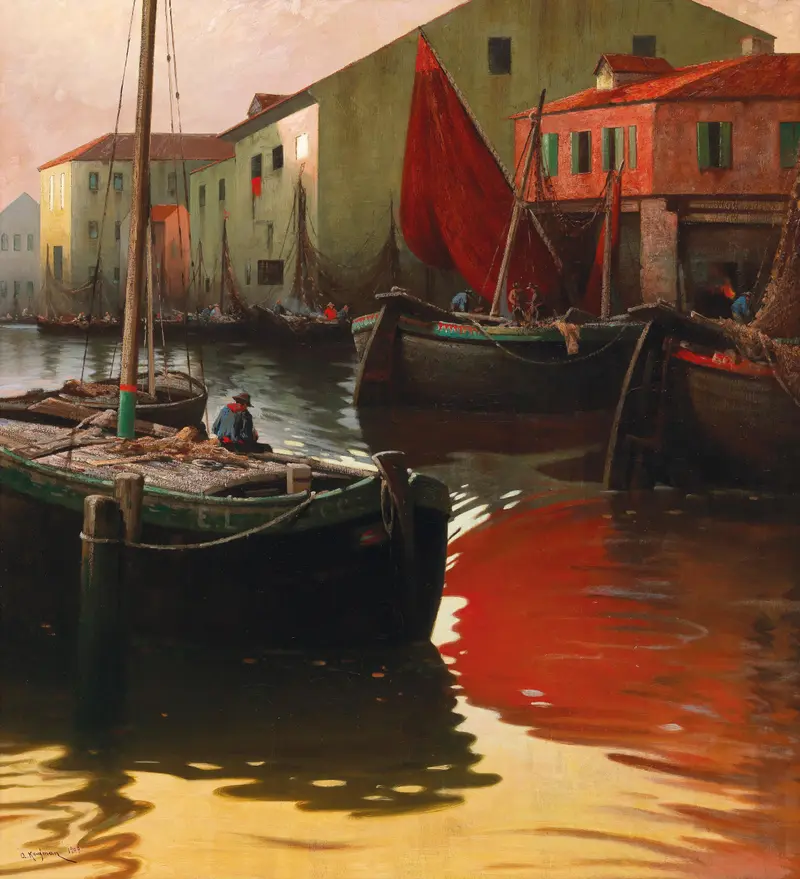
Motif Of Chioggia
Adolf Kaufmann
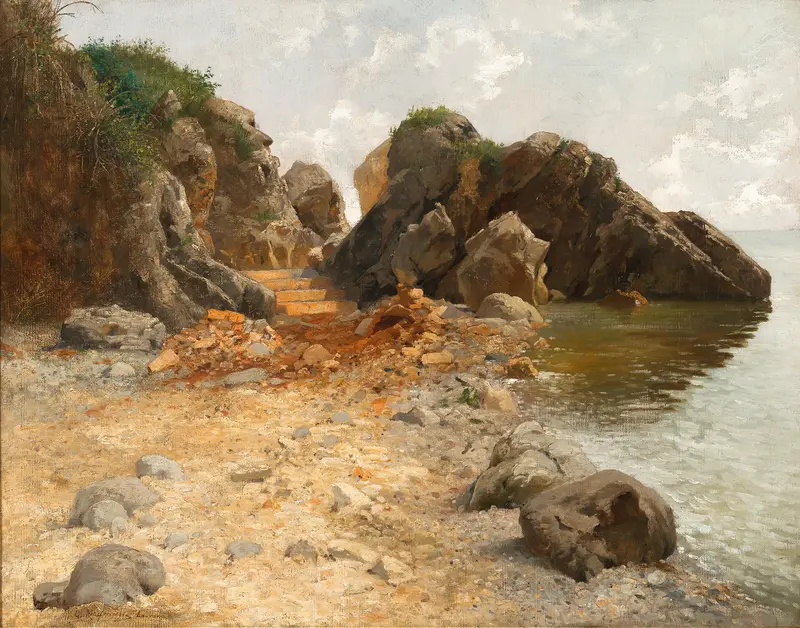
A Rocky Coast near Lovrano
Adolf Kaufmann





