
Fishing Boats at Kerhor — History & Facts
In a world awash in hues, the void of unpainted canvas speaks as loudly as the brush's rhythm. Look to the foreground of Fishing Boats at Kerhor, where the gentle strokes of white and blue depict the frothy surf, inviting the viewer’s gaze to linger. The boats, nestled in the embrace of the coastline, are rendered with delicate precision, their sails catching the soft light filtering through muted clouds. The palette of earthy browns and the coolness of the sea evoke a sense of tranquility, while the movement of water commands attention, imbuing the scene with a sense of life and vitality. As you step back, the contrasts deepen.
The stillness of the boats is a poignant counterpoint to the restless waves; one is anchored in the moment while the other is ever-flowing, suggesting a dance between stability and uncertainty. The void left in the painting hints at the space between nature's beauty and the human experience, inviting contemplation on both the physical and emotional landscapes. This tension resonates, echoing the often-unseen currents beneath the surface of everyday life. In 1872, Boudin found himself in the vibrant milieu of Normandy, a region burgeoning with artistic exploration.
Influenced by the burgeoning Impressionist movement, he was dedicated to capturing the effects of light and atmosphere. During this period, he was not only refining his own style but also mentoring a young Monet, who would later carry these lessons into his groundbreaking works. The world of art was beginning to shift, embracing the fleeting and the ephemeral, and Boudin was at the forefront of this transformation.
More Artworks by Eugène Boudin
Browse all →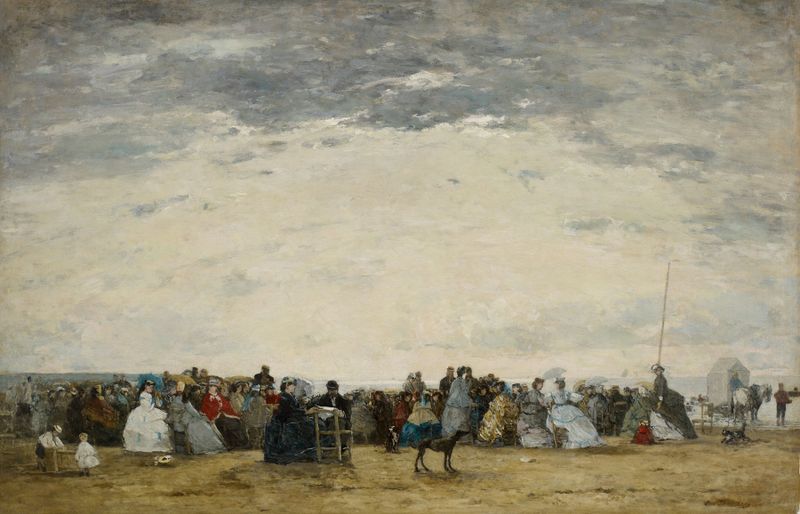
Vacationers on the Beach at Trouville
Eugène Boudin

Washerwoman near Trouville
Eugène Boudin
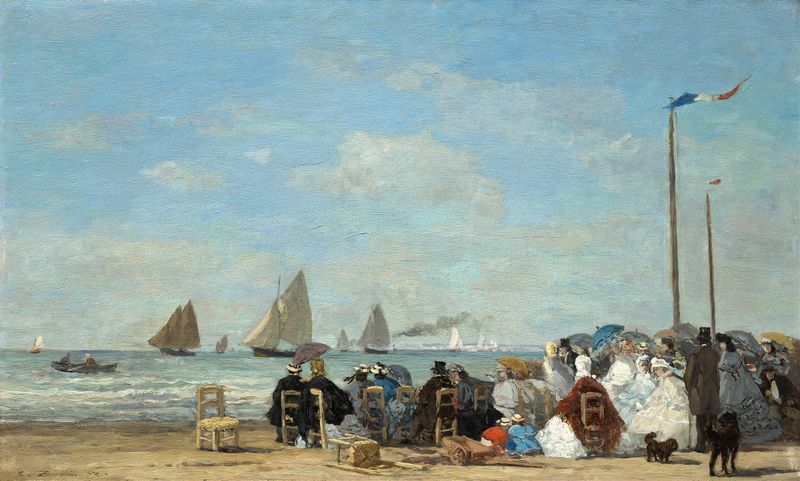
Beach Scene at Trouville
Eugène Boudin

Port aux environs d’Honfleur
Eugène Boudin

Le Faou, un coin du village
Eugène Boudin
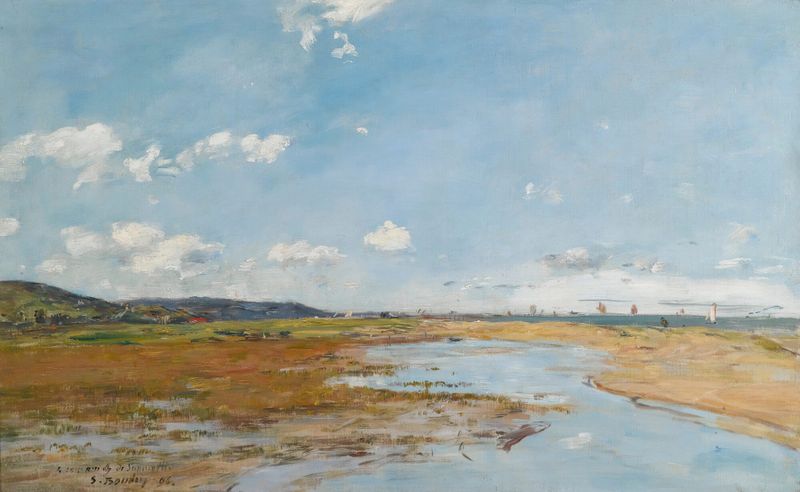
Deauville. Le Rivage
Eugène Boudin
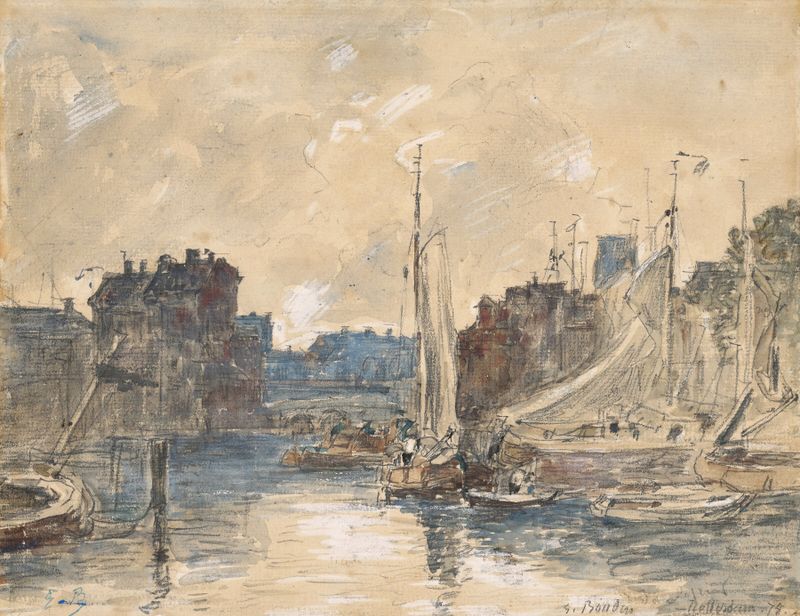
Port de Rotterdam
Eugène Boudin

View of Bordeaux, from the Quai des Chartrons
Eugène Boudin

Trouville, Scène De Plage
Eugène Boudin

Trouville, Le Port
Eugène Boudin





