
Ford on the Waiau — History & Facts
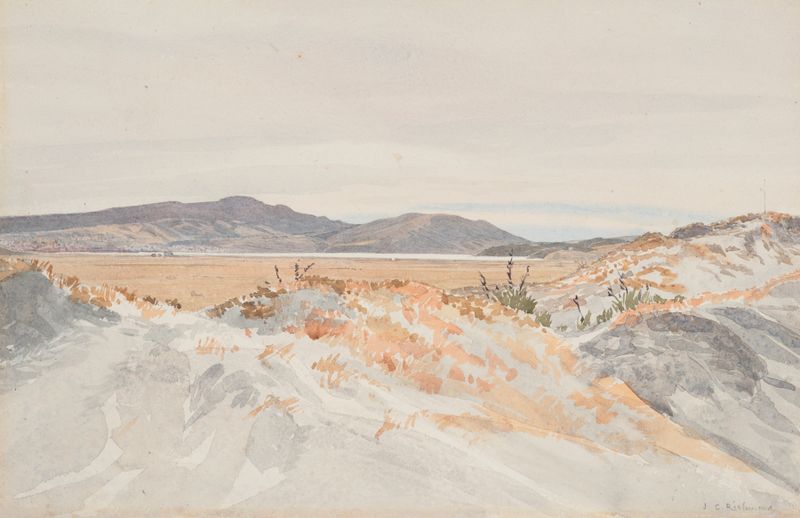
Did the painter know this moment would outlive them? In Ford on the Waiau, color becomes the silent witness to a fleeting yet eternal encounter between nature and humankind. Focus on the shimmering waters at the center, where gentle ripples catch the light, reflecting a spectrum of blues and greens. Notice how the warm ochres of the landscape cradle the scene, contrasting beautifully with the cool hues of the river. The figures on the far side, perhaps fishermen or travelers, draw your gaze with their subtle gestures, rooted firmly in the earth yet reaching toward the flowing water, a delicate dance between the permanence of land and the transience of water. In this composition, the vibrant colors evoke a sense of harmony, yet beneath the surface lies an undertone of tension — the struggle of man against the elements.
The juxtaposition of the rugged mountains looming in the background against the serene immediacy of the river suggests a moment of pause in an otherwise relentless journey. Each brush stroke invites contemplation of man's place in the vast, ever-changing world, revealing both unity and vulnerability. Richmond painted this work in 1864, during a period of burgeoning national identity in New Zealand, where he was deeply influenced by the landscapes surrounding him. As he captured this idyllic moment in time, the burgeoning art scene was transforming, with artists beginning to embrace themes that celebrated their environment.
This painting stands as a testament to not only Richmond’s skill but also the burgeoning recognition of New Zealand as a land of beauty and significance.
More Artworks by James Crowe Richmond
Browse all →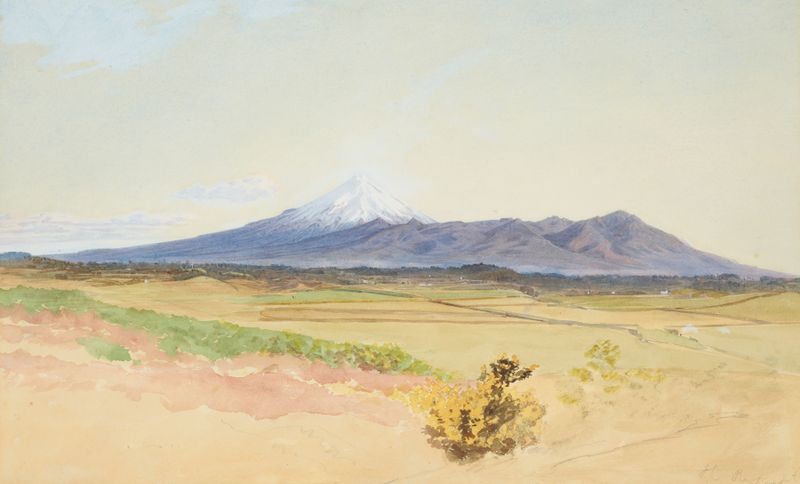
Mount Egmont and Pouakai, from New Plymouth
James Crowe Richmond
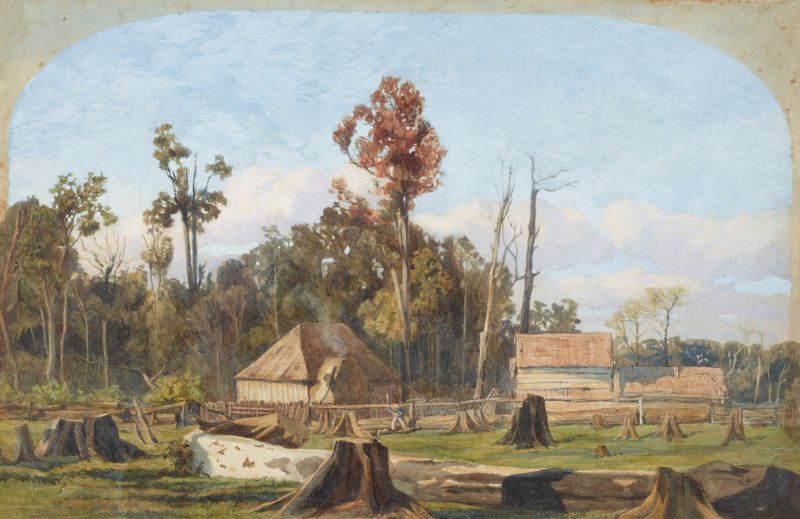
Settler’s home, Merton, near New Plymouth
James Crowe Richmond
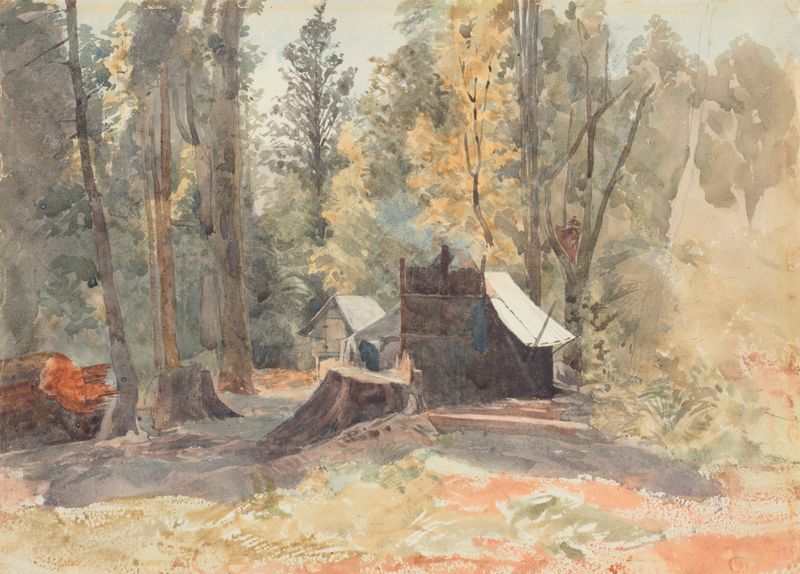
Hut of the ‘Italian party’, old diggings on Buller
James Crowe Richmond

Mosque at Tlemcen
James Crowe Richmond

Ngatapa, Te Kooti’s Pa
James Crowe Richmond

Dividing Range, Riwaka and Takaka
James Crowe Richmond
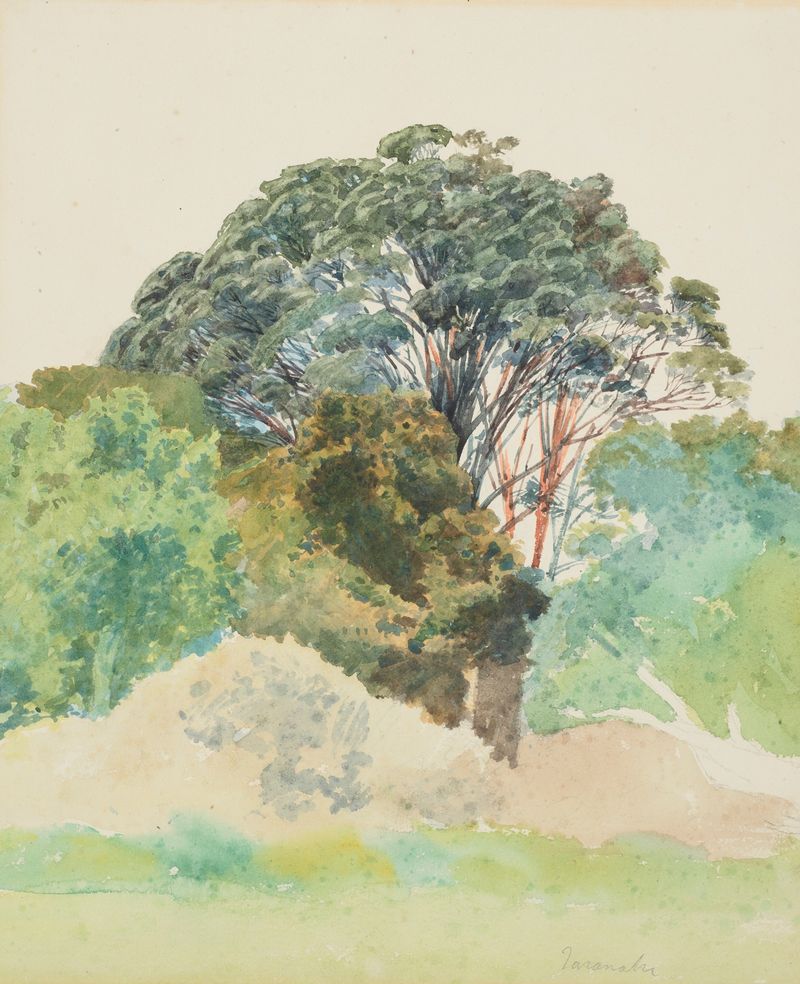
Rata, Taranaki
James Crowe Richmond

Grey River, on the beach
James Crowe Richmond
Dunedin from the Ocean Beach
James Crowe Richmond

On Collingwood Goldfields
James Crowe Richmond





