
Four Card-Players in an Inn — History & Facts
A hush of anticipation hangs over the card table, where four men lean in with the intensity of gamblers who have wagered more than coins. The light, golden and smoky, pours from the left, catching the rim of a jug and the rough weave of a jacket, drawing the viewer’s eye to the drama of hands and faces. Each gesture is a clue: the man in blue, pipe clenched between his teeth, studies his cards with furrowed brow; his neighbor, hat askew, seems to weigh a bluff.
The woman standing behind, half-shadowed, peers over a player’s shoulder—her presence both domestic and conspiratorial. Even the dog, nose to the floor, seems to sense that something is at stake. This is the world of Adriaen van Ostade in 1655, a moment when Dutch taverns and peasant interiors became stages for everyday theater. Scenes like this were beloved by collectors of the Dutch Golden Age, who saw in them both a moral warning and a celebration of humble pleasures.
The artist’s palette—earthy browns, ochres, and flashes of red—anchors the scene in the warmth and clutter of rural life, while the low ceiling and crowded furnishings press the drama into intimate proximity. History has kept few traces of this particular painting’s journey, but its presence in a modern collection invites us to linger, to count the cards, and to wonder what fortunes might turn on the next hand.
More Artworks by Adriaen van Ostade

Dans in de herberg
Adriaen van Ostade
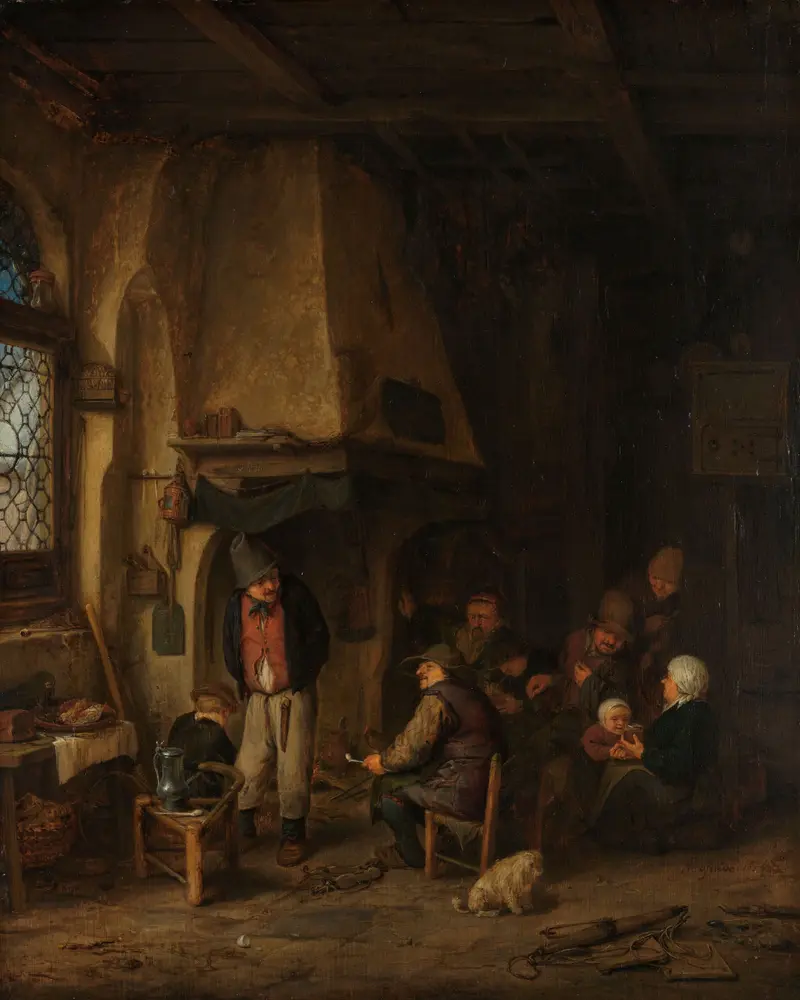
‘The Skaters’: Peasants in an Interior
Adriaen van Ostade
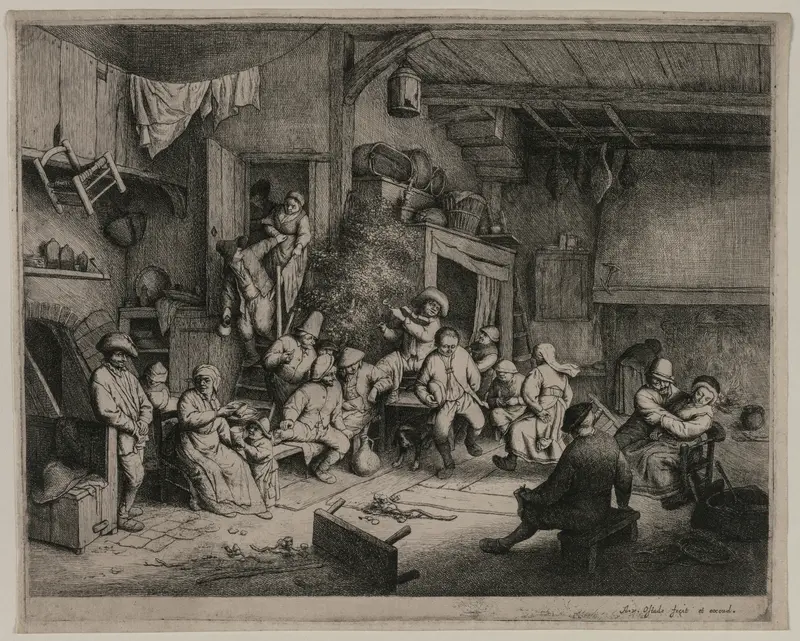
Dance at the Inn
Adriaen van Ostade
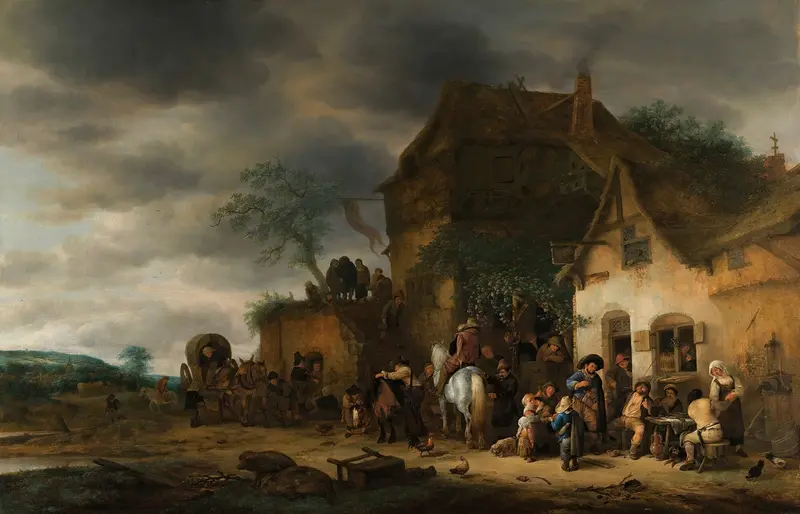
Travellers Halted At A Country Inn
Adriaen van Ostade
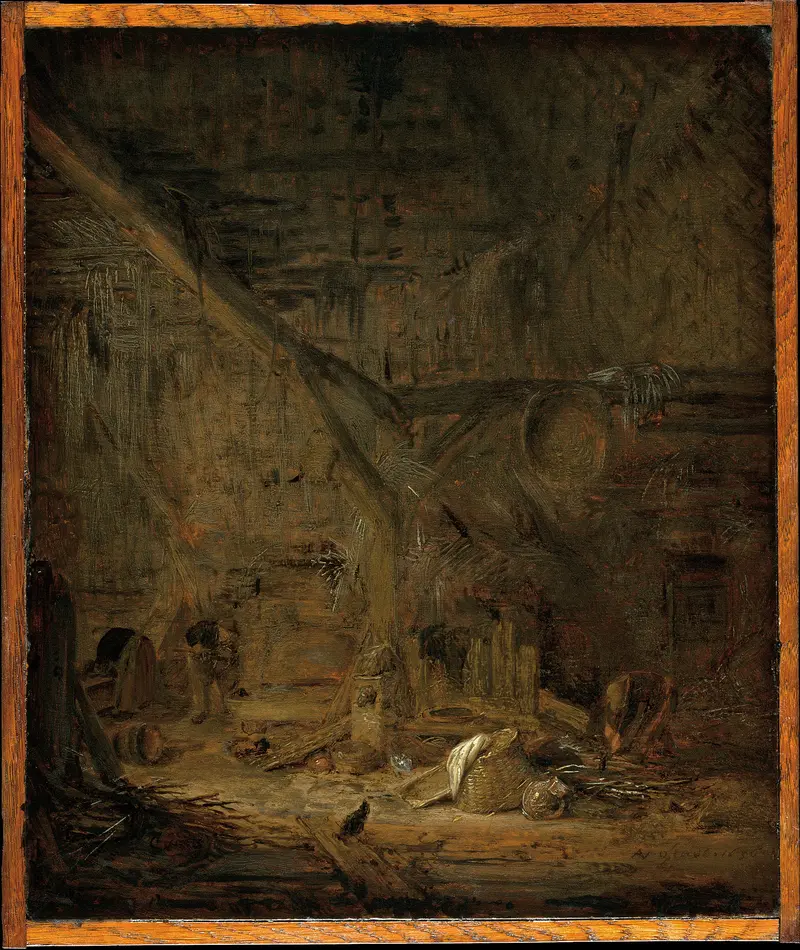
Interior of a Barn
Adriaen van Ostade
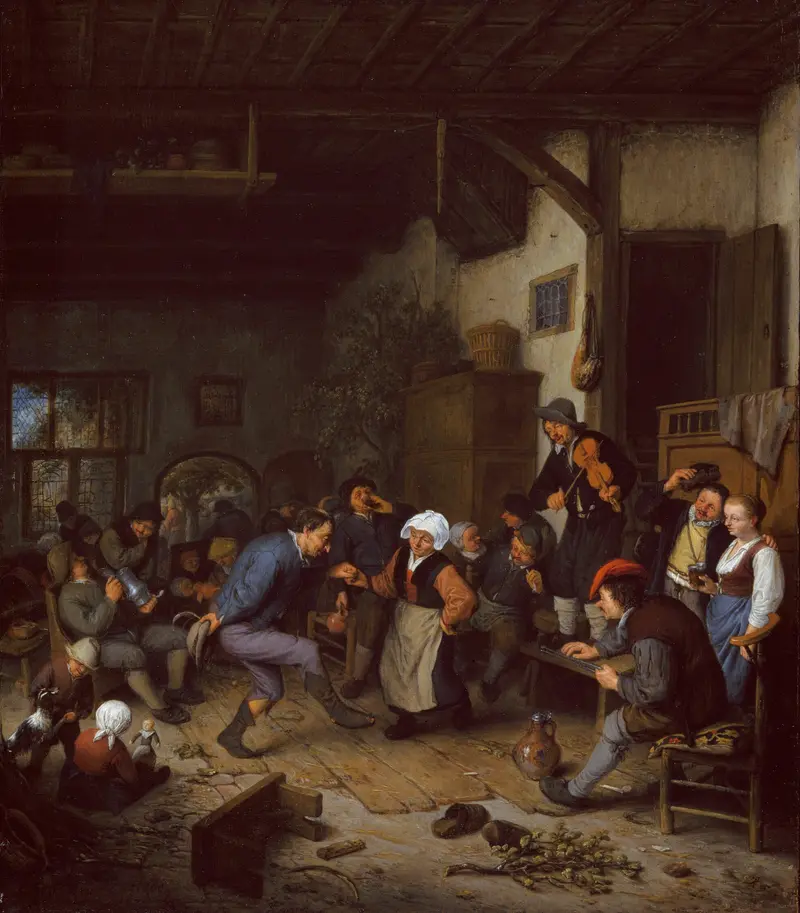
Merrymakers in an Inn
Adriaen van Ostade
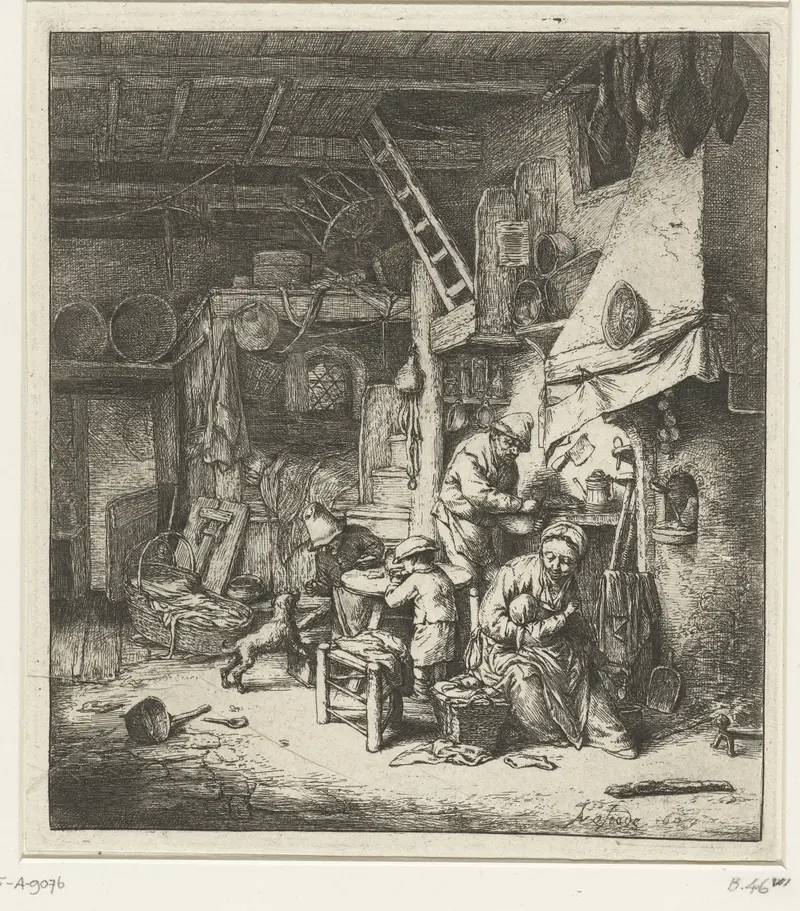
Boerengezin in interieur
Adriaen van Ostade
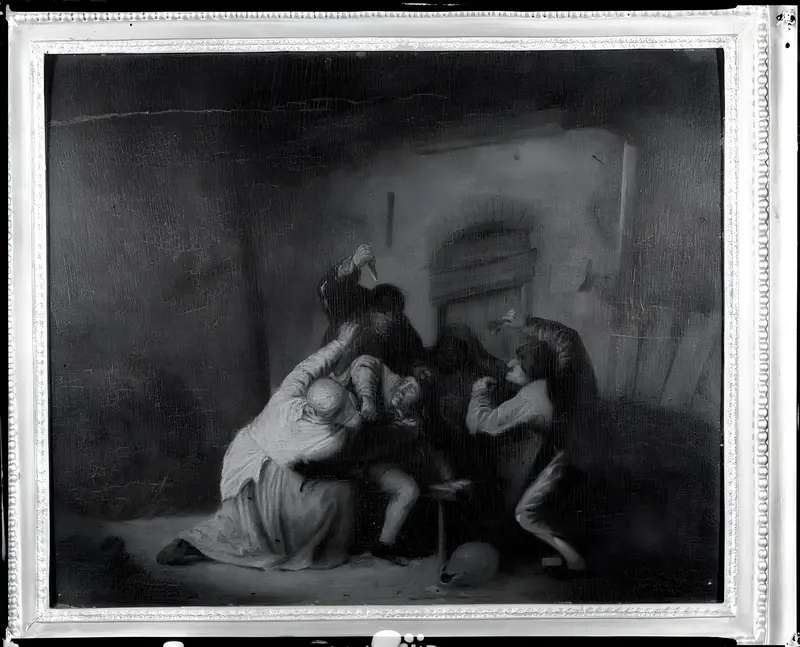
Peasants Brawling in a Tavern
Adriaen van Ostade
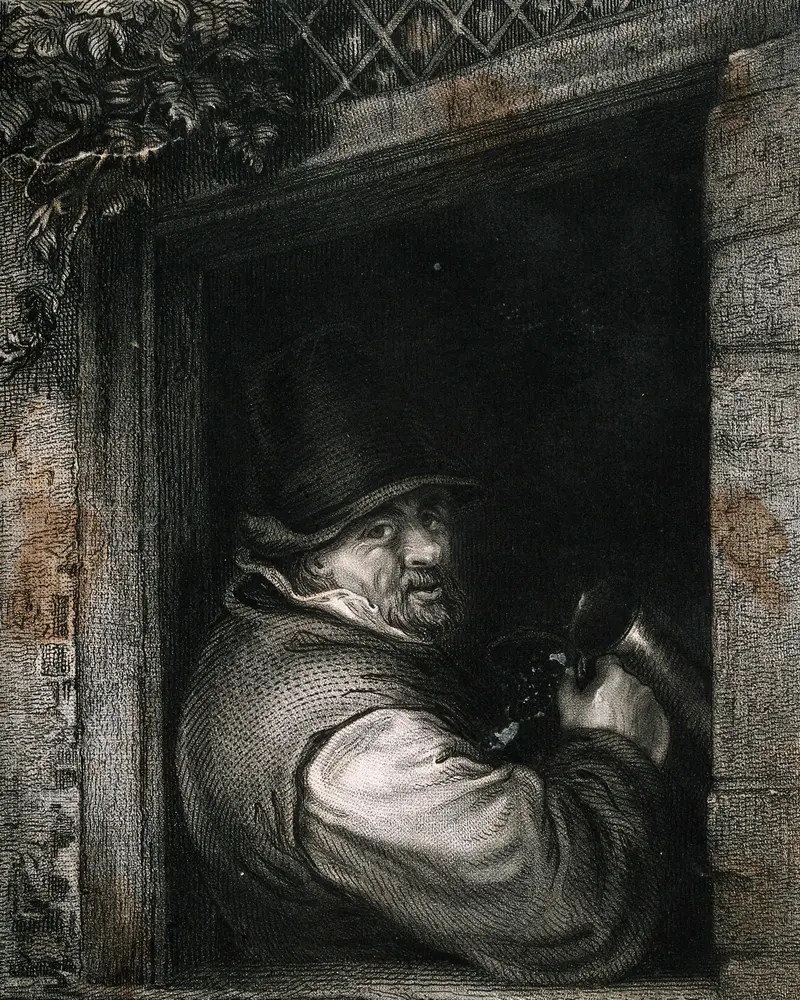
Man with a Tankard at a Window
Adriaen van Ostade
Dans in de herberg
Adriaen van Ostade
More Genre Scene Art

Banquet of the Officers of the St George Civic Guard
Frans Hals

Rembrandt and Saskia in the Scene of the Prodigal Son
Rembrandt van Rijn

Bal du moulin de la Galette
Pierre-Auguste Renoir

Quadrille at the Moulin Rouge
Henri de Toulouse-Lautrec

A Burial at Ornans
Gustave Courbet

When Will You Marry?
Paul Gauguin