
Four Peasants in a Barn — History & Facts
A shaft of dusty light falls through the rafters, catching the lazy curl of smoke from a peasant’s pipe and the rough textures of timber and brick. The scene in Four Peasants in a Barn by Adriaen van Ostade is anything but grand: a man slouches in his chair, pipe in hand, while his companions huddle over a table, their faces half-lost in shadow. Every detail is a clue to the barn’s true role—not just shelter for animals or tools, but a stage for everyday survival and fleeting comfort.
The cluttered foreground, the sagging beams, and the patched clothing all speak of a world where warmth and company are as precious as gold. Painted in 1800, this work belongs to a long tradition of Dutch and Flemish genre painting, where scenes of peasant life were both a window for urban viewers and a subtle moral lesson. Collectors in the eighteenth and nineteenth centuries prized such images for their earthy humor and unvarnished realism, but also for the technical challenge of rendering humble interiors with convincing light and texture. While Adriaen van Ostade is known for his many barn interiors, history has kept few traces of this particular painting’s early journey; today, it resides in the Slovak National Gallery, a quiet testament to the enduring fascination with ordinary lives.
Look again at the painting—the play of light on a battered boot, the slouch of a tired back—and see how much story can be found in the shadows.
More Artworks by Adriaen van Ostade

Dans in de herberg
Adriaen van Ostade
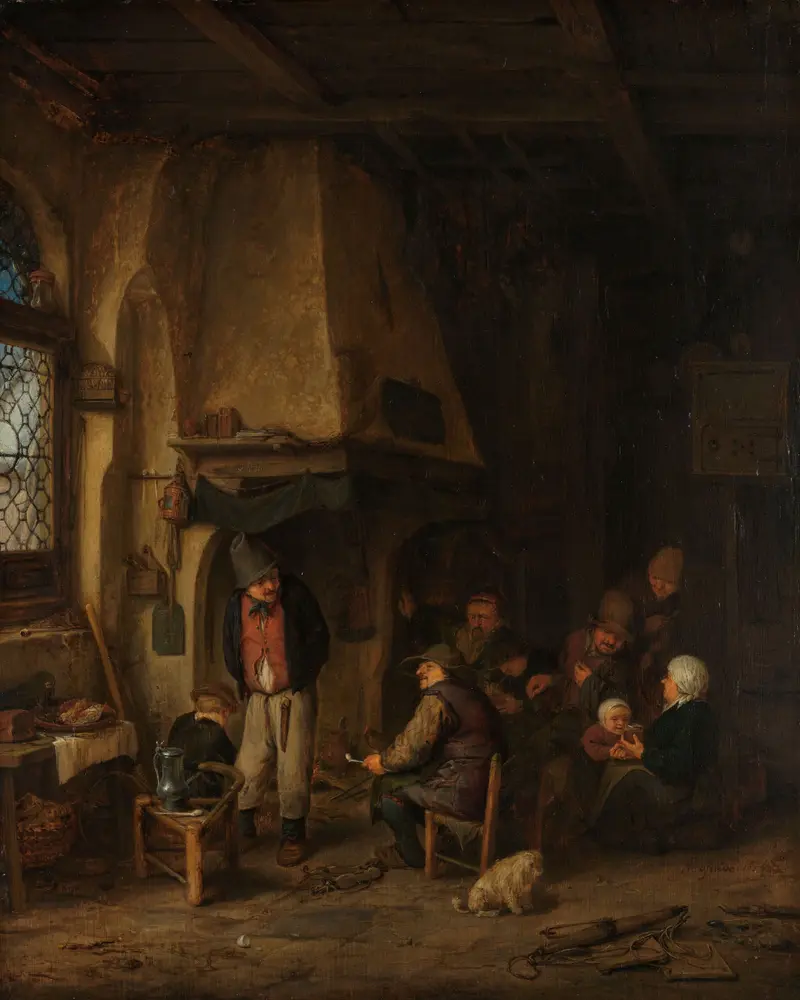
‘The Skaters’: Peasants in an Interior
Adriaen van Ostade
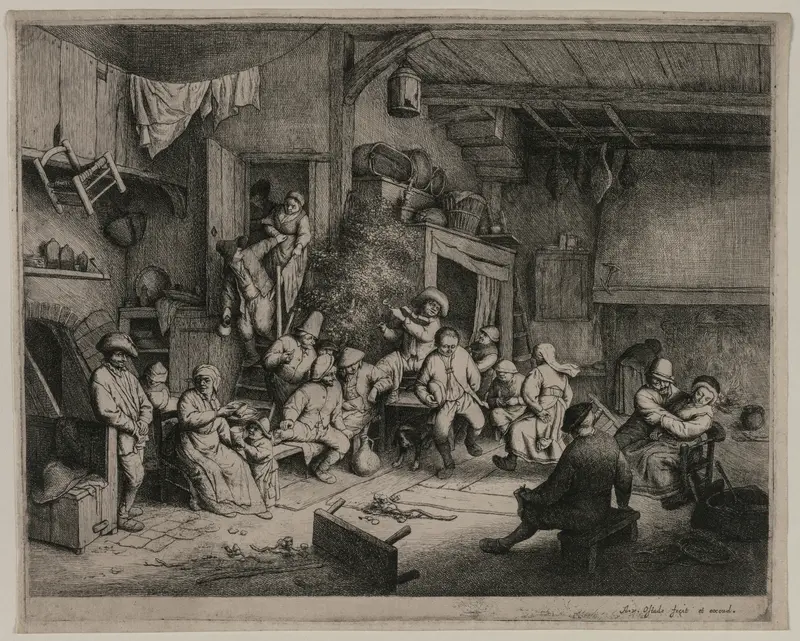
Dance at the Inn
Adriaen van Ostade
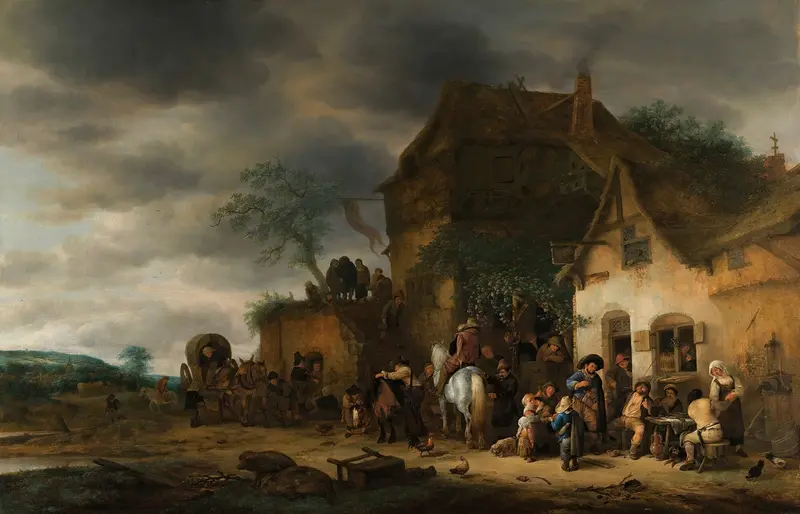
Travellers Halted At A Country Inn
Adriaen van Ostade
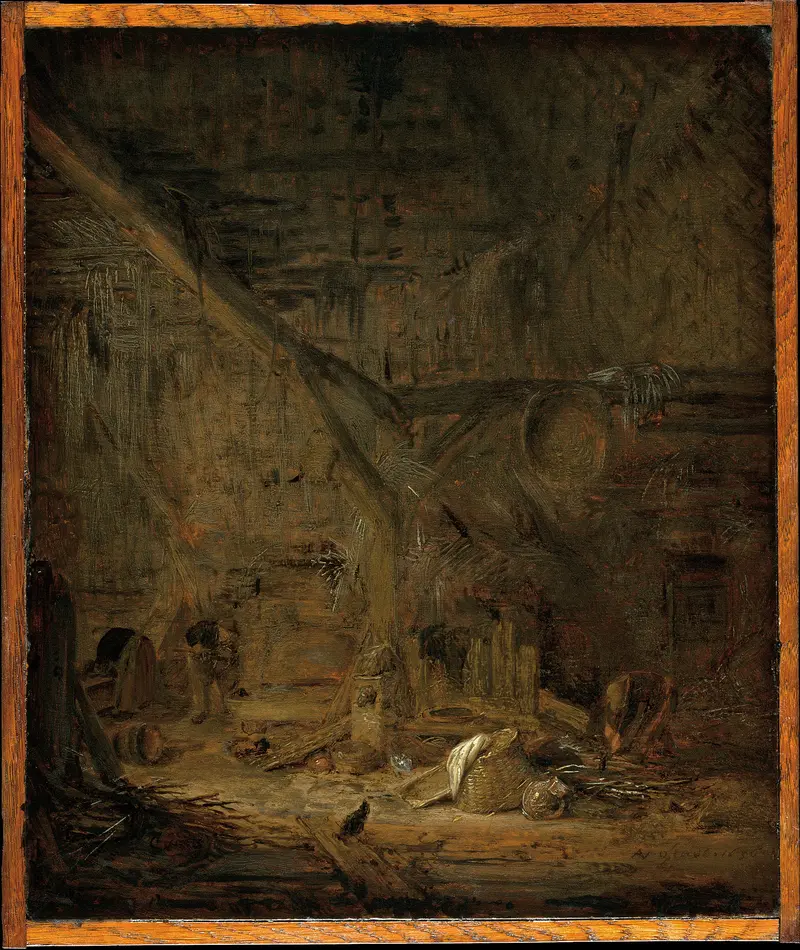
Interior of a Barn
Adriaen van Ostade
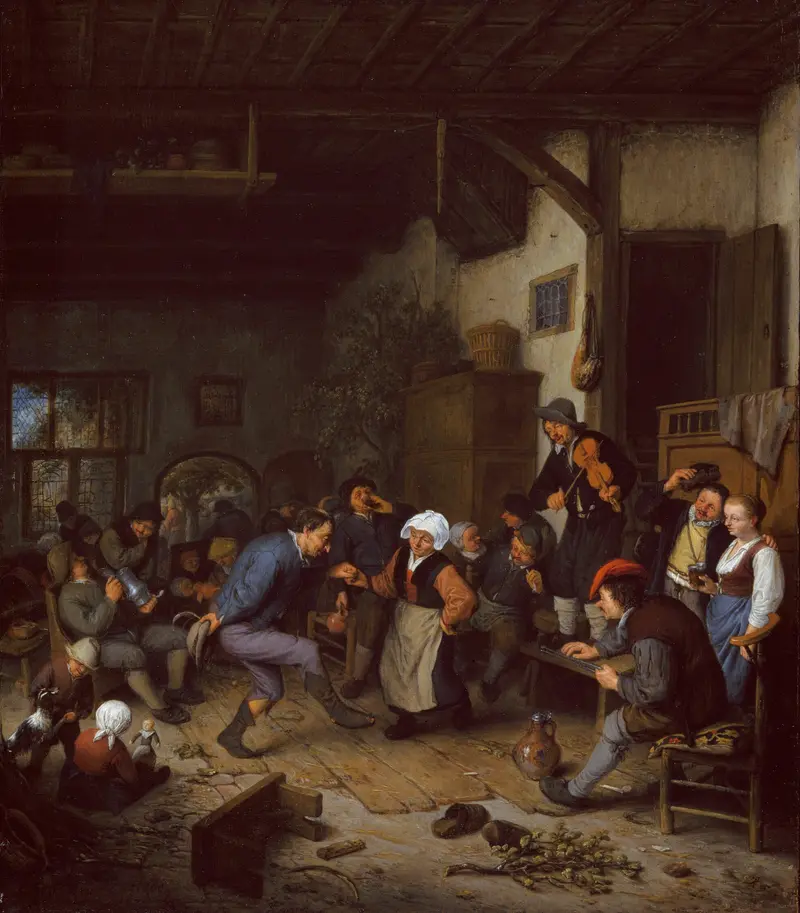
Merrymakers in an Inn
Adriaen van Ostade
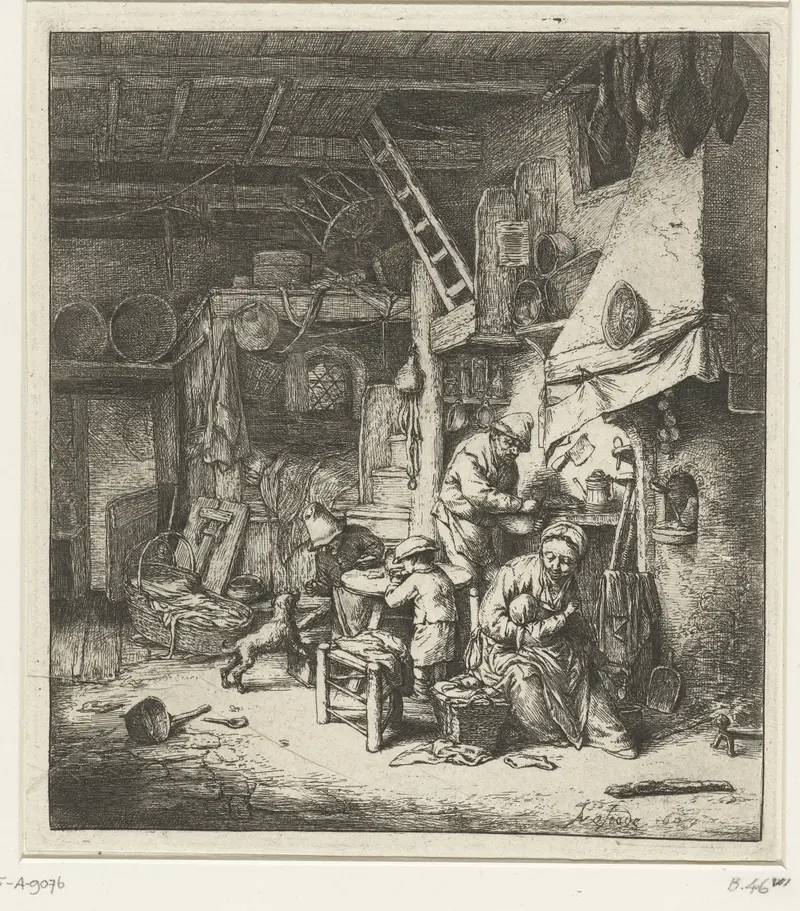
Boerengezin in interieur
Adriaen van Ostade
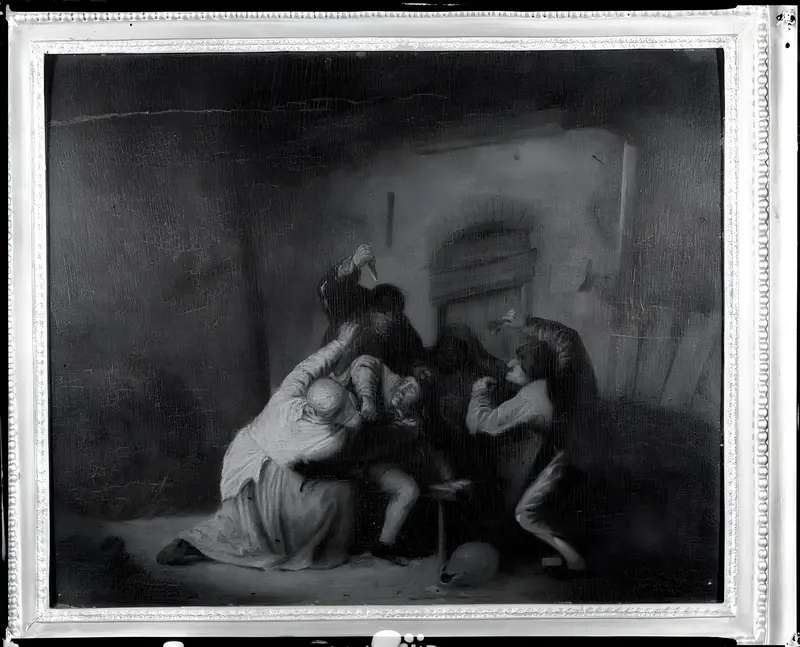
Peasants Brawling in a Tavern
Adriaen van Ostade
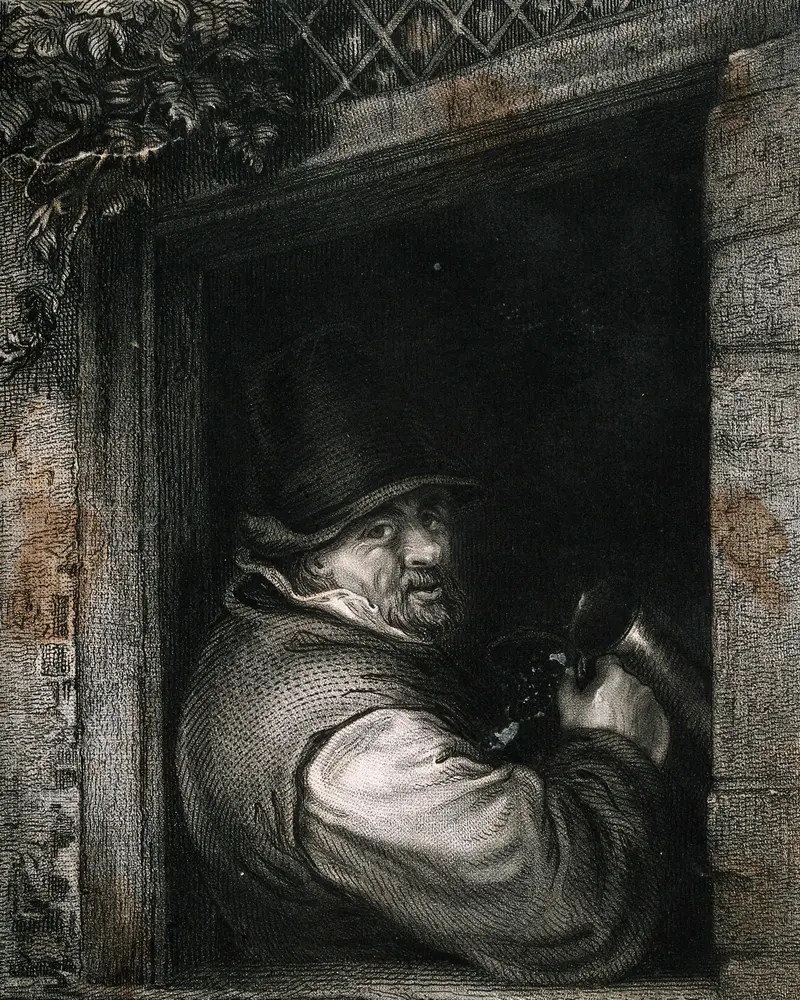
Man with a Tankard at a Window
Adriaen van Ostade
Dans in de herberg
Adriaen van Ostade
More Genre Scene Art

Banquet of the Officers of the St George Civic Guard
Frans Hals

Rembrandt and Saskia in the Scene of the Prodigal Son
Rembrandt van Rijn

Bal du moulin de la Galette
Pierre-Auguste Renoir

Quadrille at the Moulin Rouge
Henri de Toulouse-Lautrec

A Burial at Ornans
Gustave Courbet

When Will You Marry?
Paul Gauguin