
French partridge and chicks. — History & Facts
What first catches the eye in French partridge and chicks is the crisp, almost tactile sharpness of each feather, rendered with a precision that seems to slow time. The adult partridge stands alert, its scarlet beak and legs vivid against the sandy ground, while another nestles low, half-submerged in the dust—a gesture that hints at the bird’s instinct to shelter or perhaps to dust-bathe. The two chicks, smaller and softer in hue, linger at the edge of the scene, their striped plumage echoing the adults’ but with a downy delicacy.
Light falls from above, flattening shadows and giving the whole group a sense of quiet exposure, as if the moment is both intimate and observed. Thorburn’s palette is naturalistic but never dull: the subtle greens and ochres of the grass frame the birds, drawing the viewer’s gaze from the alert adult to the more tentative young. Painted in 1915, this watercolor and gouache work belongs to the world of early twentieth-century British naturalism, a time when artists like Archibald Thorburn were celebrated for their ability to capture wildlife with scientific accuracy and painterly grace. Such pictures were often commissioned by collectors, sportsmen, or publishers of ornithological books, eager to possess or reproduce the beauty of native and game birds.
Thorburn’s art, produced at a moment when field guides and illustrated albums were in high demand, bridges the gap between documentation and admiration. History has kept few traces of the individual stories behind many of these works, but their purpose endures: to bring the living detail of the wild into the quiet of the study or gallery. Each brushstroke invites the viewer to linger, tracing the line between observation and wonder.
More Artworks by Archibald Thorburn

The Watchful Hinds
Archibald Thorburn
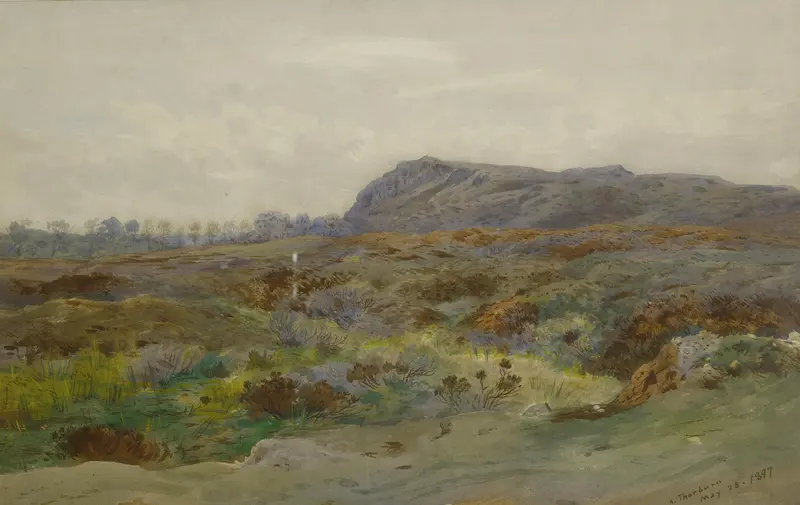
Moorland Landscape
Archibald Thorburn
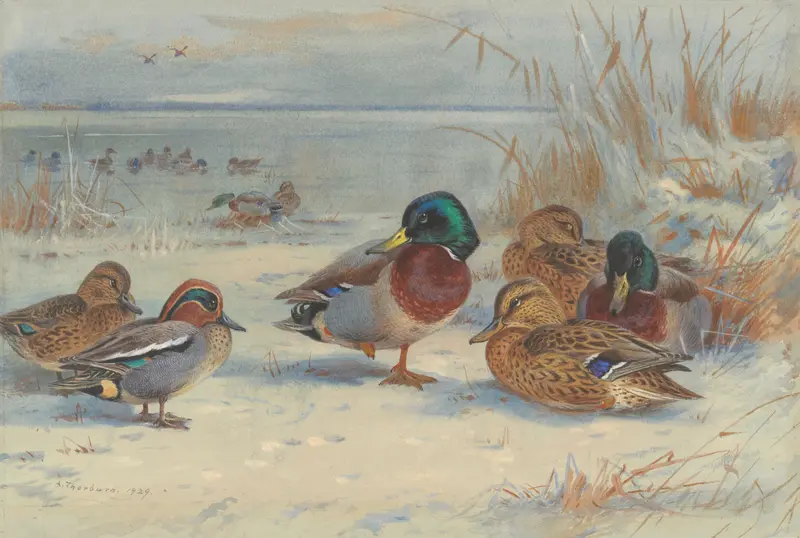
Mallard and teal in the snow
Archibald Thorburn
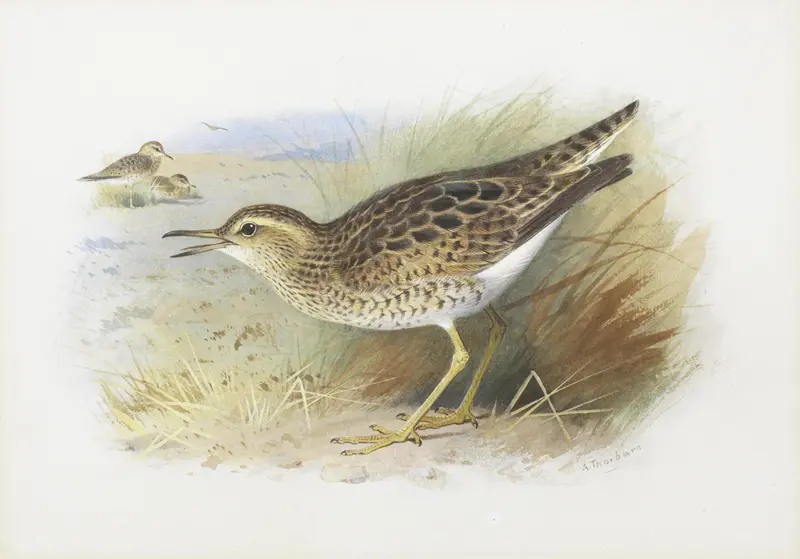
Bartram's Plover
Archibald Thorburn
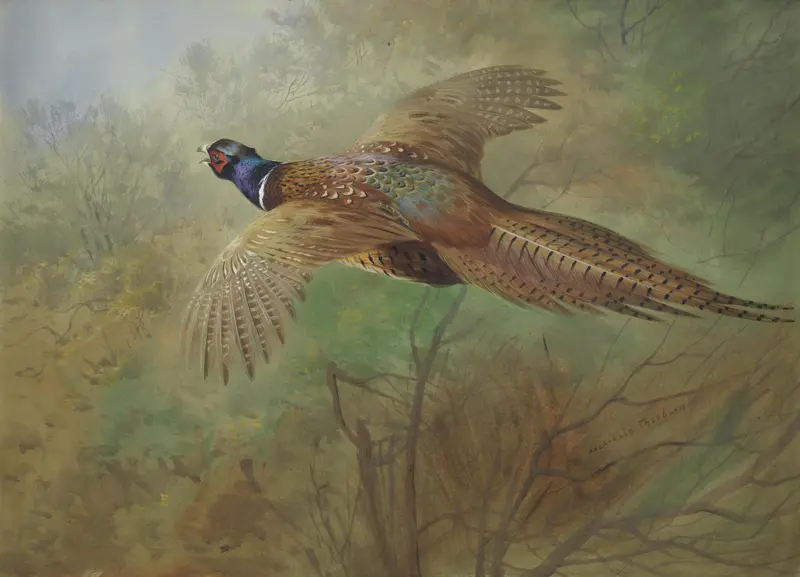
Pheasant in flight
Archibald Thorburn
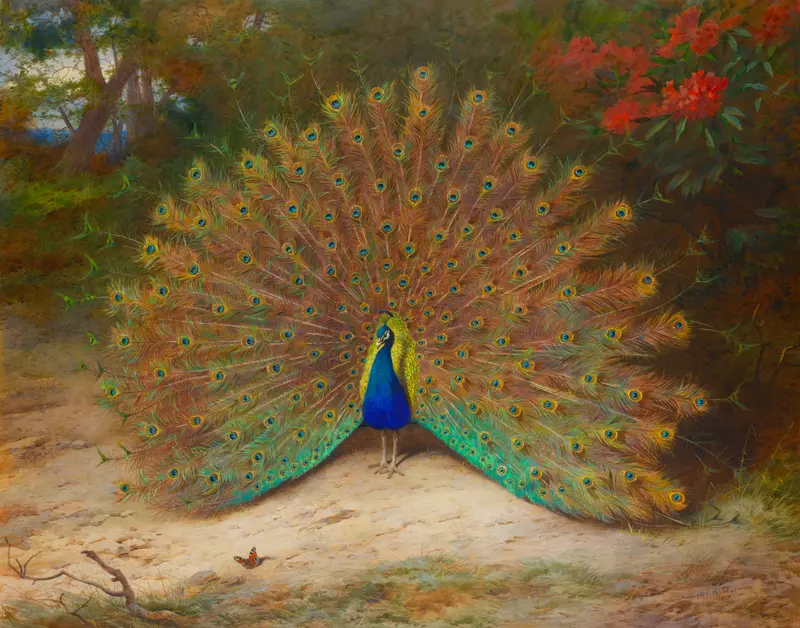
Peacock and Peacock Butterfly
Archibald Thorburn
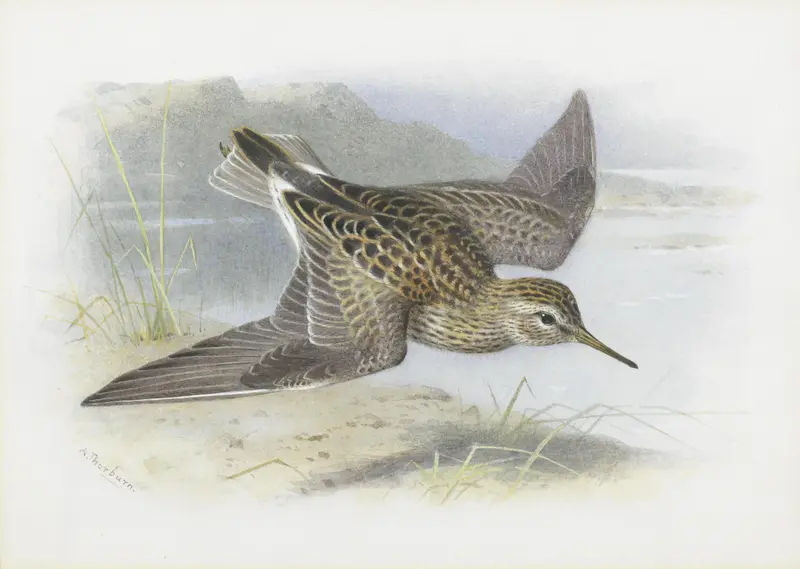
Pectoral Sandpiper
Archibald Thorburn
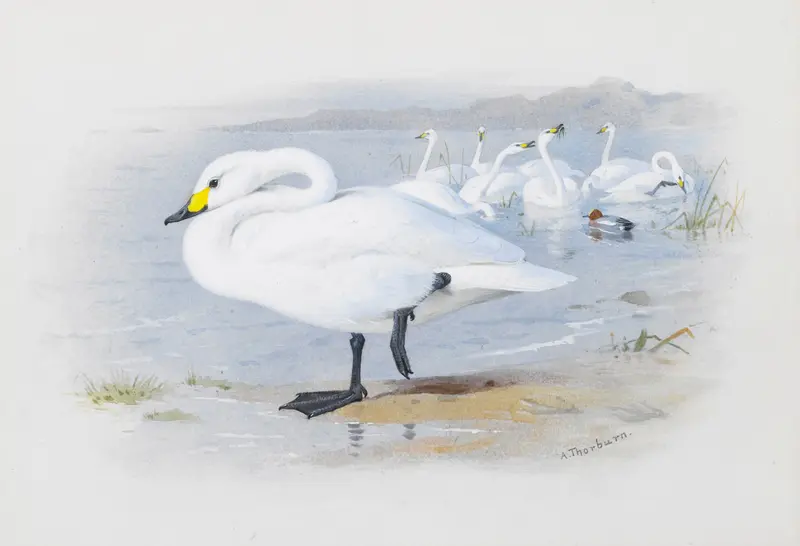
Bewick's swan.
Archibald Thorburn
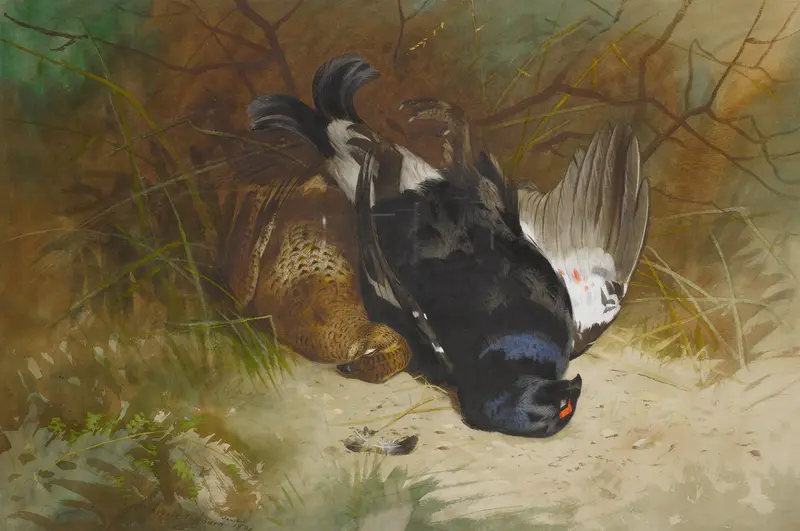
Still life of a pair of Blackgame.
Archibald Thorburn
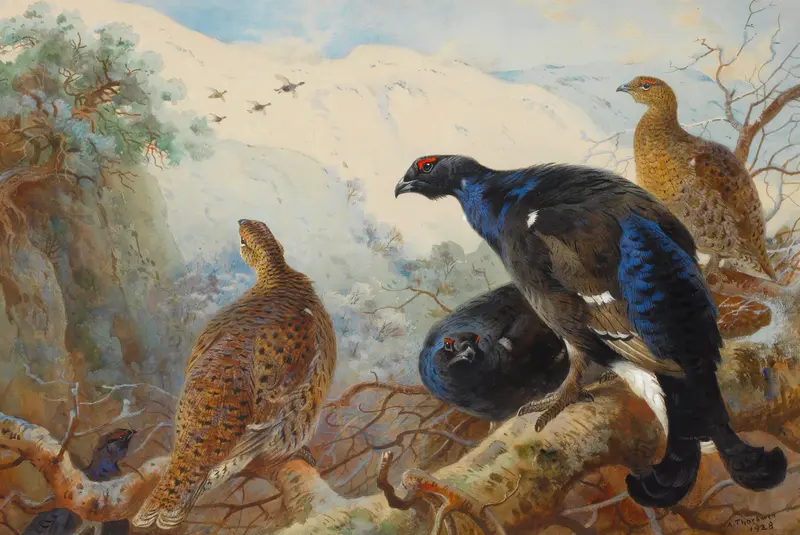
Blackgame
Archibald Thorburn





