
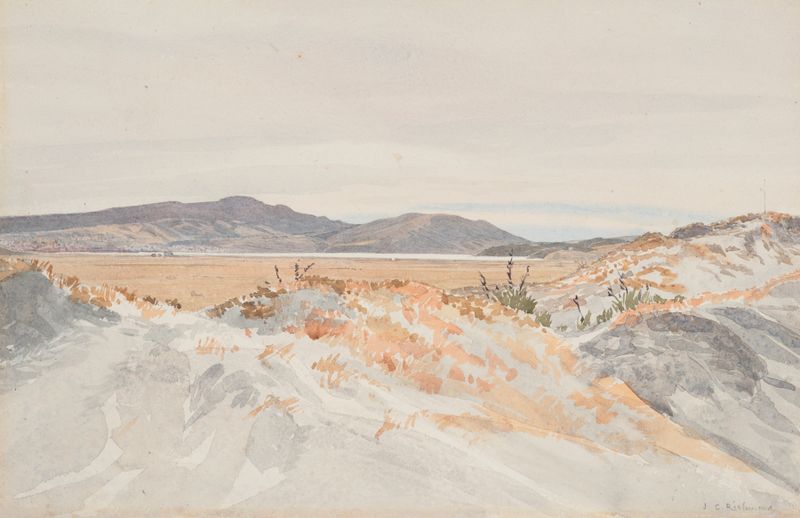
From Maitai saddle, Dun Mountain looking South up Waimea — History & Facts
What secret hides in the quiet of the canvas? Beneath the stillness of nature lies an exploration of mortality, echoing an unspoken truth about the passage of time. Focus on the gentle undulation of the hills as you look to the center of the composition, where soft greens and browns meld seamlessly under an expansive sky. The brushwork gives life to the landscape, with delicate strokes suggesting the textured foliage and craggy mountains framing the view. Notice how light cascades over the terrain, casting shadows that hint at the contours of the land and inviting the eye to wander towards the distant horizon. The contrast between the vibrant greenery and the muted sky speaks to the fleeting nature of life.
The untouched beauty of this scene coexists with an underlying sense of impermanence. Each element—be it the sun-dappled leaves or the looming mountains—whispers of a world that is both alive and subject to change, reminding us that what we see is perhaps a moment captured in time, never to be experienced in the same way again. In 1860, Richmond created this work while living in New Zealand, a time when the country was undergoing significant transformation both culturally and ecologically. This period marked his deep engagement with the landscape and his growing recognition within the art community.
The interplay of natural beauty and the human experience of this evolving world becomes a poignant backdrop for exploring themes of existence and the quiet laws of nature that govern life and death.
More Artworks by James Crowe Richmond
Browse all →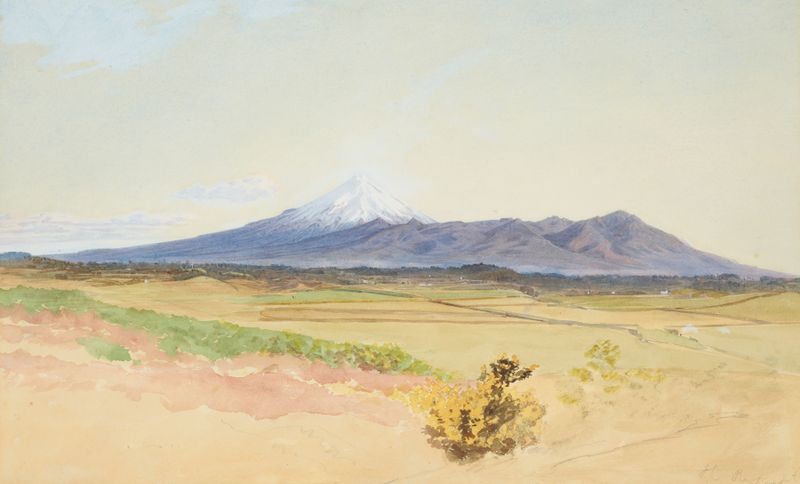
Mount Egmont and Pouakai, from New Plymouth
James Crowe Richmond
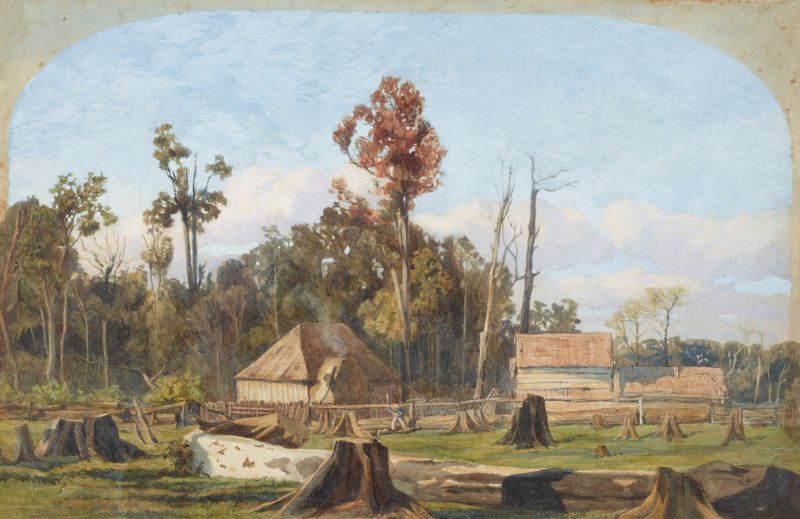
Settler’s home, Merton, near New Plymouth
James Crowe Richmond
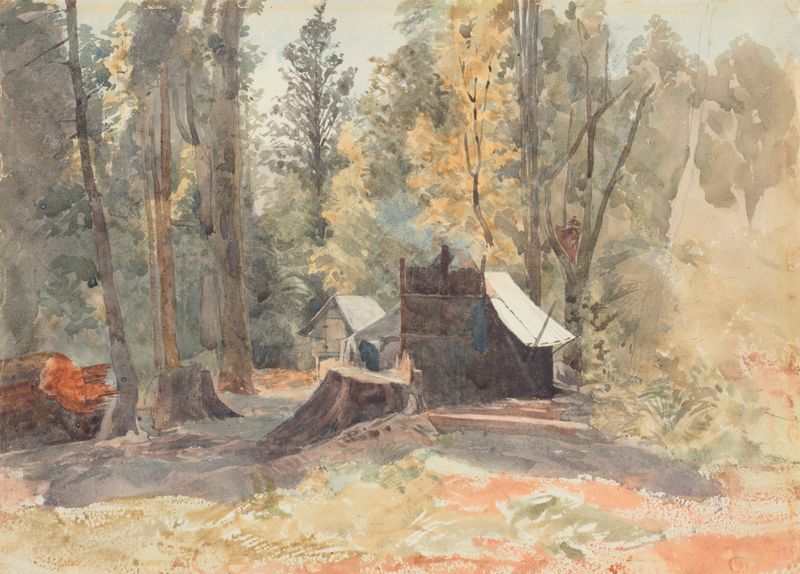
Hut of the ‘Italian party’, old diggings on Buller
James Crowe Richmond

Mosque at Tlemcen
James Crowe Richmond

Ngatapa, Te Kooti’s Pa
James Crowe Richmond

Dividing Range, Riwaka and Takaka
James Crowe Richmond
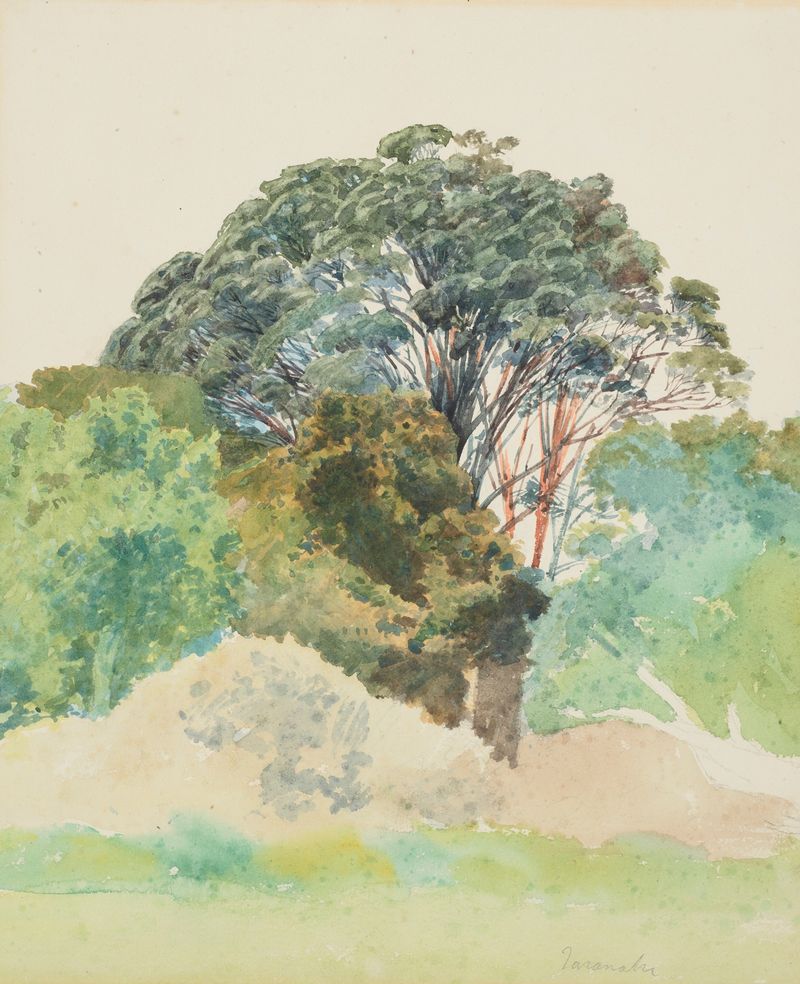
Rata, Taranaki
James Crowe Richmond

Grey River, on the beach
James Crowe Richmond
Dunedin from the Ocean Beach
James Crowe Richmond

On Collingwood Goldfields
James Crowe Richmond





