
Fête dans le bassin d’Honfleur — History & Facts
In the gentle embrace of a summer's day, delicate moments flutter like a whisper upon the water, yet beneath the vibrancy lies the echo of what has been lost. Each stroke resonates with the weight of time, inviting contemplation of the fragility of joy amidst the inevitable passage of life. Look to the left at the shimmering reflections in the water, where hues of azure and green blend seamlessly, capturing the essence of a lively gathering. The figures, dressed in their period attire, seem almost ephemeral, their laughter suspended in the air, as the artist masterfully applies a palette of soft pastels.
Notice how the dappled sunlight dances on the surface, casting fleeting shadows that hint at both celebration and the lurking presence of nostalgia. Boudin's work is rich with contrasts; the spirited scene juxtaposes the fleeting nature of happiness against a backdrop of underlying melancholy. The figures, though engaged and animated, are portrayed with a sense of distance, possibly representing the artist's own reflections on loss and the transient beauty of life. The sunny tones may suggest warmth, yet they are layered with a poignant reminder that every joy is accompanied by the shadow of impermanence. In 1862, while painting this piece in Honfleur, Boudin was forging connections with fellow artists, including Claude Monet, who would later embrace his style.
It was a period of transition in the art world where Impressionism began to take root, capturing the essence of everyday moments. Boudin, already an established figure in capturing the French coastline and life, used this work to explore the depths of human emotion and the interstices of existence, shaping a profound narrative that resonates even today.
More Artworks by Eugène Boudin
Browse all →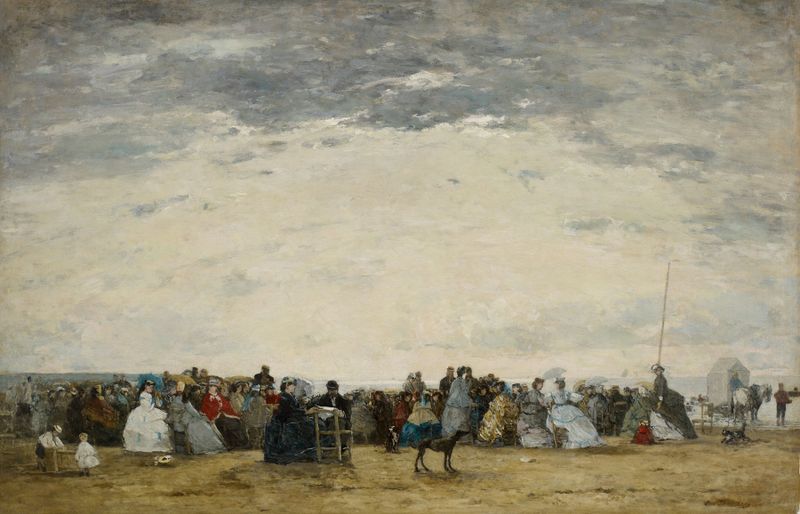
Vacationers on the Beach at Trouville
Eugène Boudin

Washerwoman near Trouville
Eugène Boudin
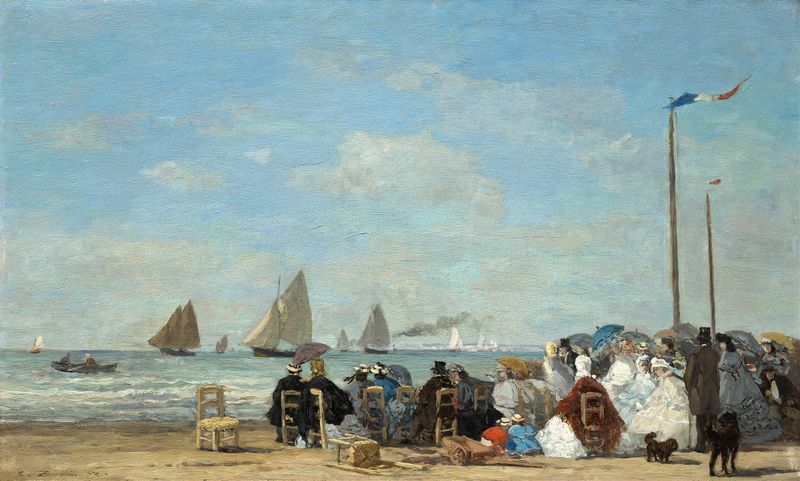
Beach Scene at Trouville
Eugène Boudin

Port aux environs d’Honfleur
Eugène Boudin

Le Faou, un coin du village
Eugène Boudin
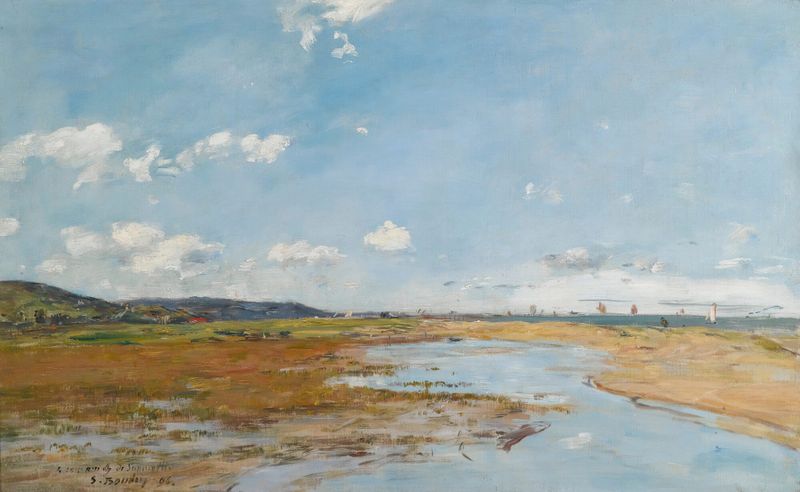
Deauville. Le Rivage
Eugène Boudin
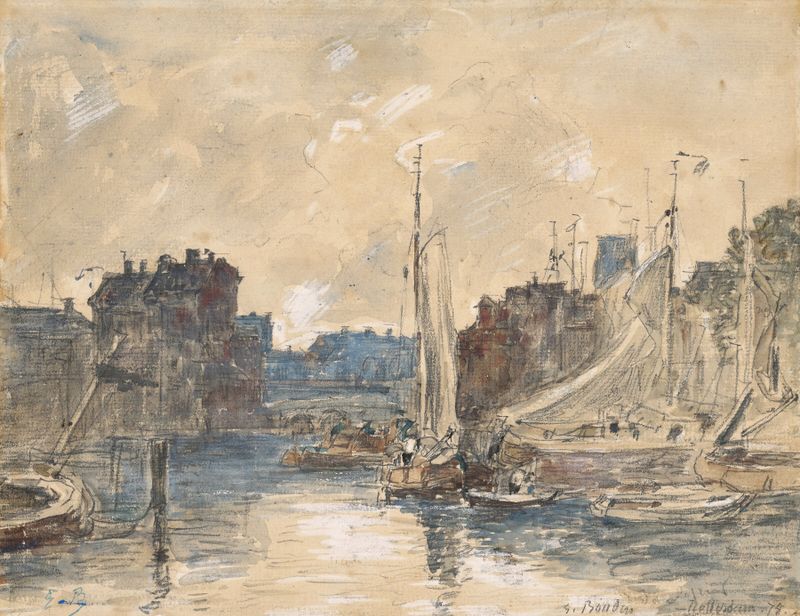
Port de Rotterdam
Eugène Boudin

View of Bordeaux, from the Quai des Chartrons
Eugène Boudin

Trouville, Scène De Plage
Eugène Boudin

Trouville, Le Port
Eugène Boudin





