
Garden Stair, Haddon Hall — History & Facts
Amid the lush greenery of a hidden garden, the soft light filters through sprawling branches, illuminating the weathered stone stairway. A child, blissfully unaware of the world beyond, clambers up the steps, her laughter mingling with the gentle rustle of leaves. The air is filled with the scent of blooming flowers, and the stillness of the moment feels almost sacred, suspended in time. Look to the left at the warm hues of the staircase, its worn edges hinting at years of footsteps past.
The surrounding foliage bursts with varying shades of green, creating a vibrant contrast that draws the eye upward, towards the figure of the child. Notice how the dappled sunlight dances across her dress, capturing the innocence of youth, while the intricate details of the stonework evoke a sense of history and permanence. The interplay of light and shadow reveals a poignant juxtaposition: the fleeting nature of childhood set against the steadfastness of the garden's architecture. This moment encapsulates the essence of innocence, as the child’s carefree ascent symbolizes growth and exploration, contrasted by the crumbling stones that remind us of time’s relentless passage.
Each petal and leaf whispers a narrative of joy and nostalgia, inviting reflection on the harmony found in nature. In 1849, William Callow found inspiration in the idyllic setting of Haddon Hall, an English manor renowned for its picturesque gardens. At this time, he was heavily influenced by the Romantic movement and focused on capturing the beauty of landscapes. On the cusp of a shift towards more modern interpretations, he infused his work with a deep appreciation for both nature and the innocence of childhood, revealing the interconnectedness of time and place in his art.
More Artworks by William Callow
Browse all →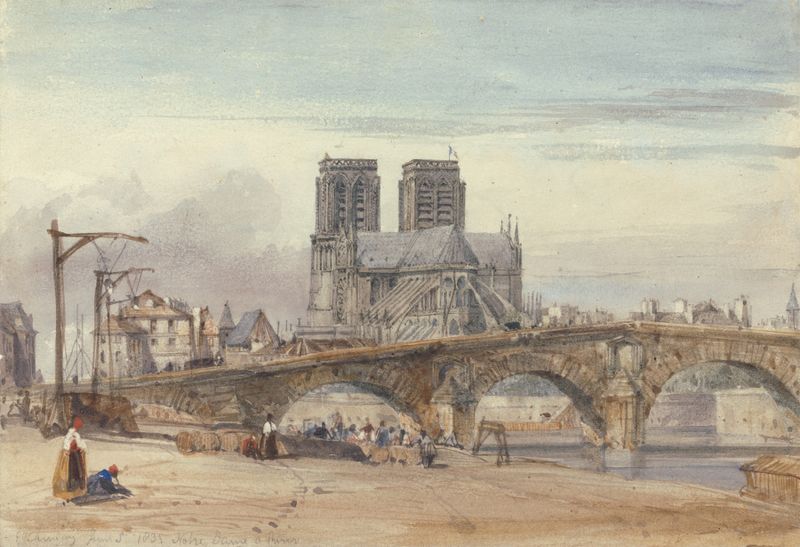
Notre Dame, Paris
William Callow
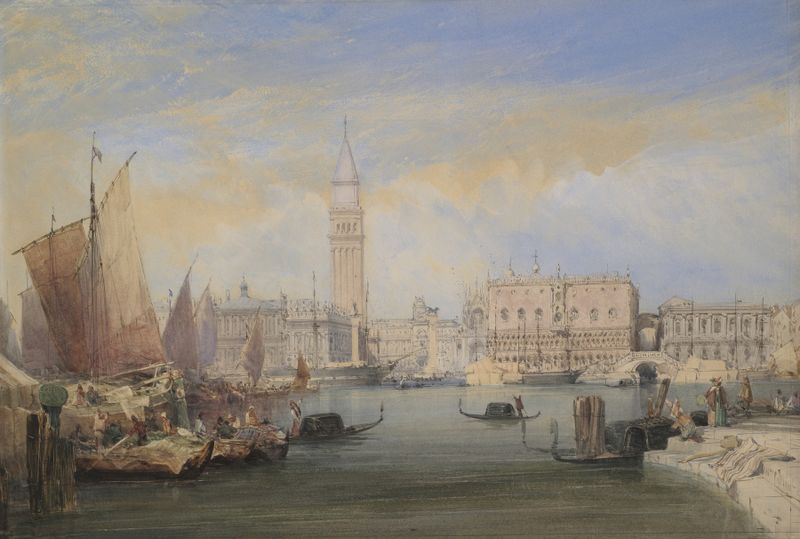
Venice from St. Giorgio
William Callow
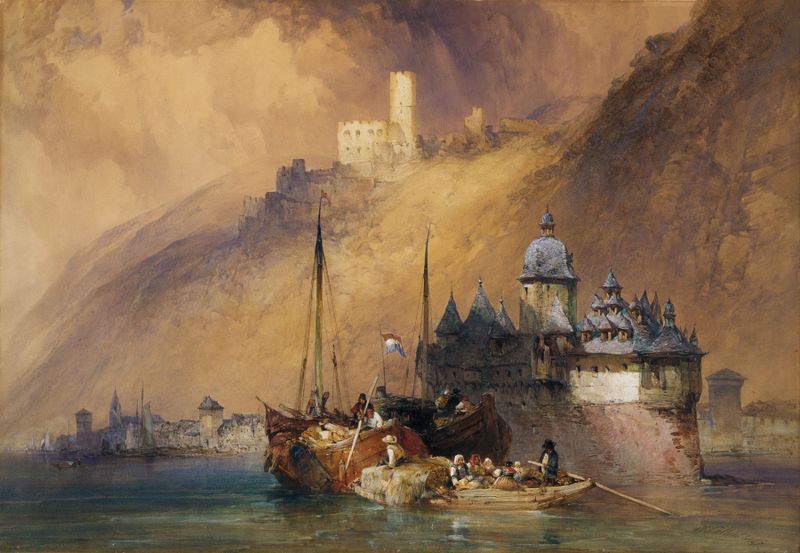
The Phalz Castle on the Rhine
William Callow

The Luxor, Paris, December 1833
William Callow

On the Wharfe, Bolton Abbey
William Callow

Caesar’s Tower, Warwick Castle
William Callow
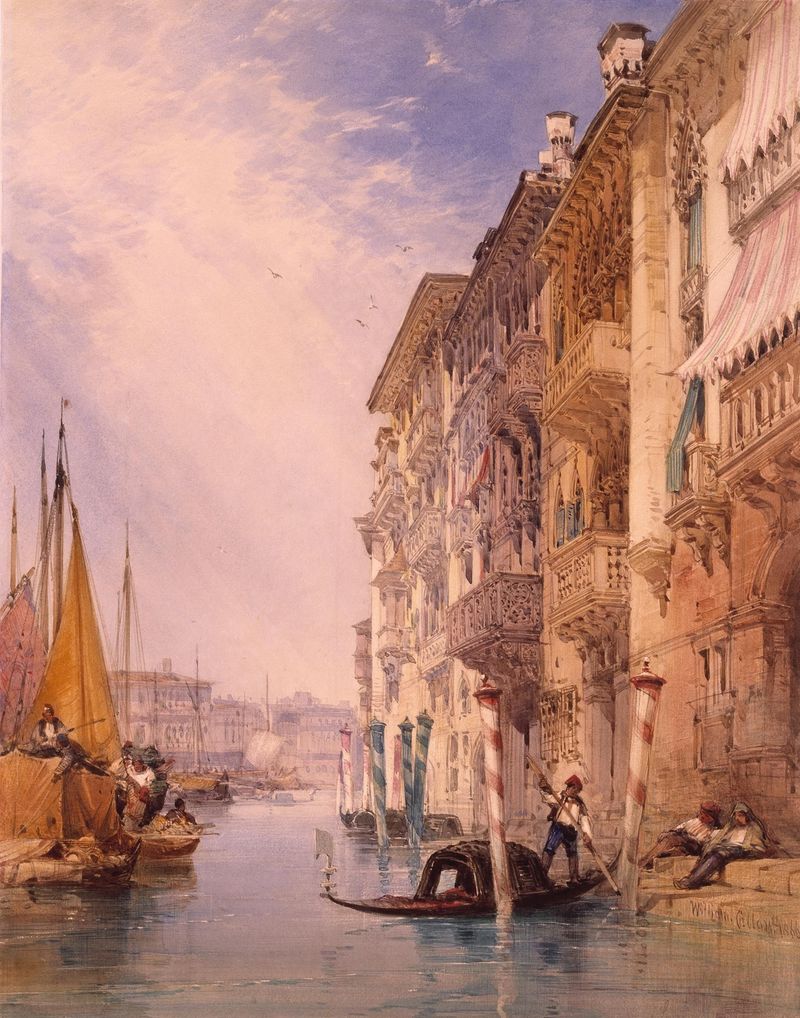
A Gondola on the Grand Canal, Venice
William Callow

Rheinfels and St. Goar
William Callow
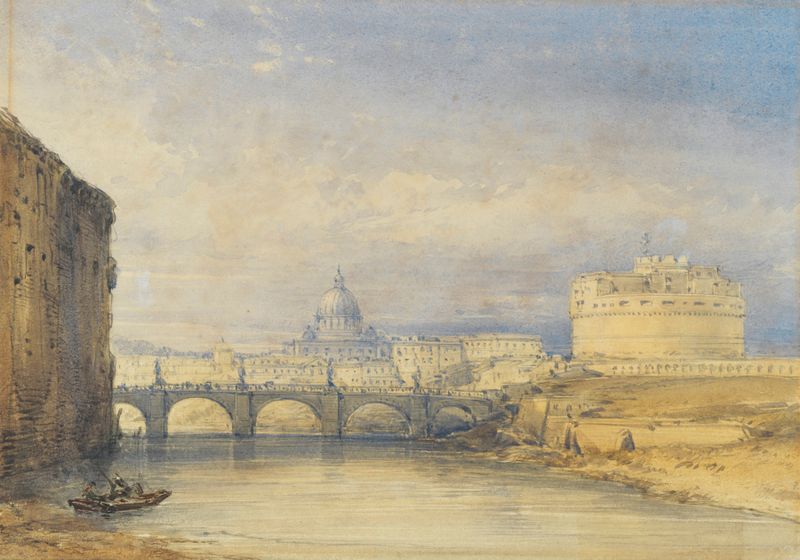
Castel Sant’Angelo, Rome
William Callow

Entering Harbour
William Callow





