Gehöft mit mehreren Figuren, vorne ein Hund — History & Analysis
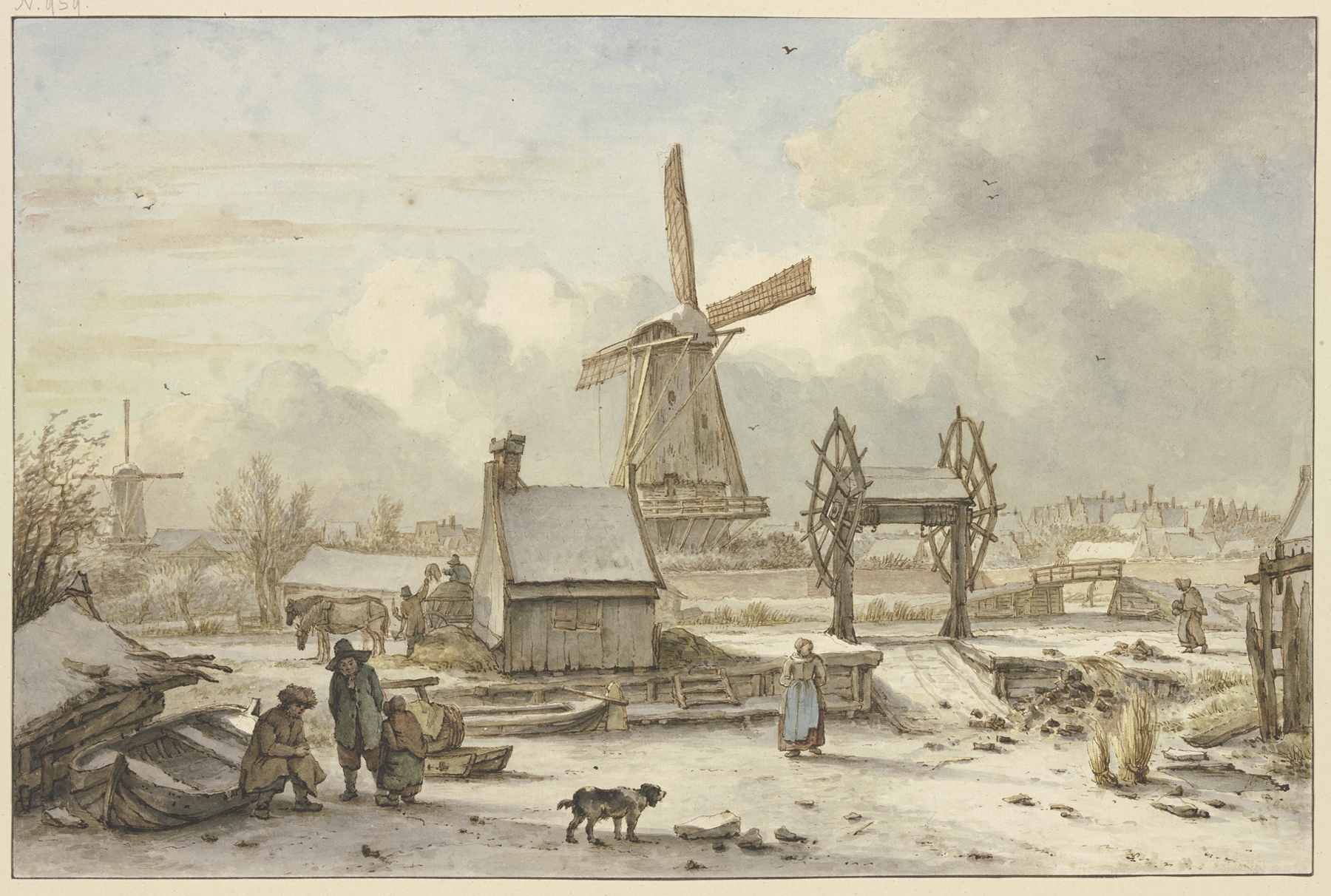
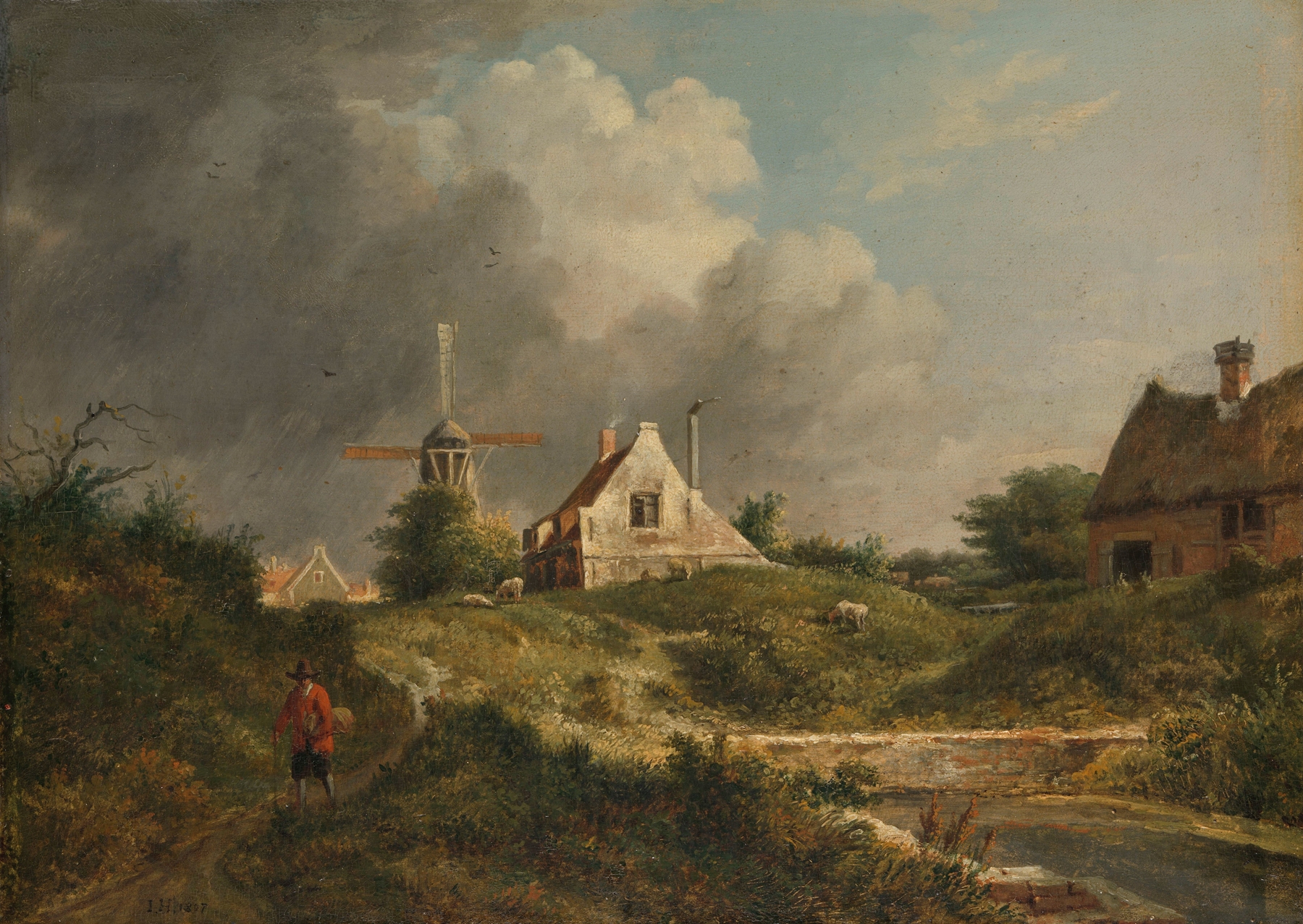
Could a single brushstroke hold eternity? Each stroke whispers the untold stories of grief, echoing deep into the heart of the viewer. As you delve into the composition, look to the center where a group of figures stands, seemingly frozen in time. The muted palette of browns and grays envelops them, grounding their presence in a somber reality. Notice how the light delicately caresses the contours of their forms, enhancing the tension of their expressions — a subtle interplay of hope and despair that draws you closer, inviting reflection on their collective plight.
The dog, positioned in the foreground, exudes a silent loyalty, its gaze fixated on the figures, embodying the emotions unvoiced within this poignant gathering. In the background, the skeletal outlines of buildings loom, suggesting a narrative of loss that transcends the immediate scene. Each figure, though distinct, shares an unspoken bond, their postures echoing a shared burden. The dog’s presence hints at the unyielding loyalty that often accompanies grief, contrasting with the weight borne by the human figures.
This tension between companionship and solitude invites contemplation on the nature of loss — how it's handled, expressed, and sometimes left unaddressed. Jan Hulswit created this work during a period of personal and societal upheaval. Active in the late 17th century, he navigated the challenges of a rapidly changing art world and the emotional landscapes of his time. The absence of a definitive date for this painting adds to its enigmatic quality, suggesting that the themes of grief and connection were not just momentary but a lingering presence throughout his career.