
Genfersee_bei_Sonnenuntergang — History & Facts
The sky in Genfersee_bei_Sonnenuntergang by Gustave Courbet seems to command the entire scene, its fiery bands of orange and red pushing down toward the lake and giving the water a molten, restless glow. Your eye is drawn first to that horizon, where the clouds gather in dense, dramatic masses, then to the small sailboat that drifts quietly in the foreground, its angled mast and solitary figure dwarfed by the spectacle above. The boat’s pale sail catches the last light, a fragile triangle amid the vastness, while the water’s surface mirrors the sky’s tumult in softer, rippling brushwork.
Every element here is in dialogue: the stillness of the boat, the movement of the clouds, the uncertain boundary between water and sky. Courbet’s palette, heavy with earth and fire, turns the familiar into something almost unfamiliar, as if sunset itself were a force at work. This painting belongs to the final years of the 19th century, when artists like Courbet—once a radical champion of Realism—turned their gaze to the changing moods of nature itself. By 1876, landscape painting had become both a celebration of national identity and a deeply personal meditation, especially in Switzerland and France, where lakes and mountains were seen as symbols of independence and renewal.
The Kunsthaus Zürich’s 1998 exhibition, "Von Anker bis Zünd, Die Kunst im jungen Bundesstaat 1848 - 1900," placed this work among others that sought to capture not only a view, but a fleeting sensation—a world on the brink of night, a moment suspended. History has kept few traces of this particular canvas, but its atmosphere invites you to linger, letting your own imagination drift with the solitary boat across the glowing water.
More Artworks by Gustave Courbet
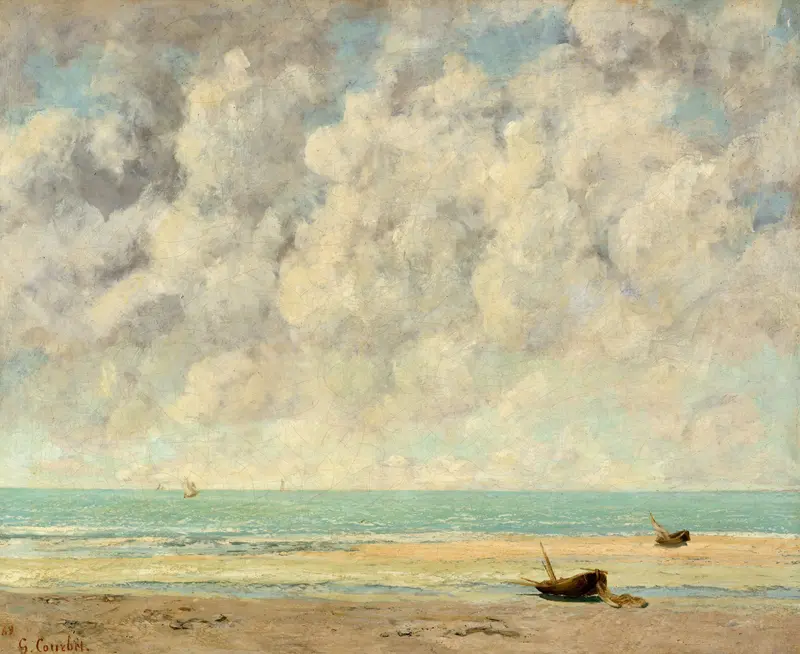
The Calm Sea
Gustave Courbet

A Burial at Ornans
Gustave Courbet
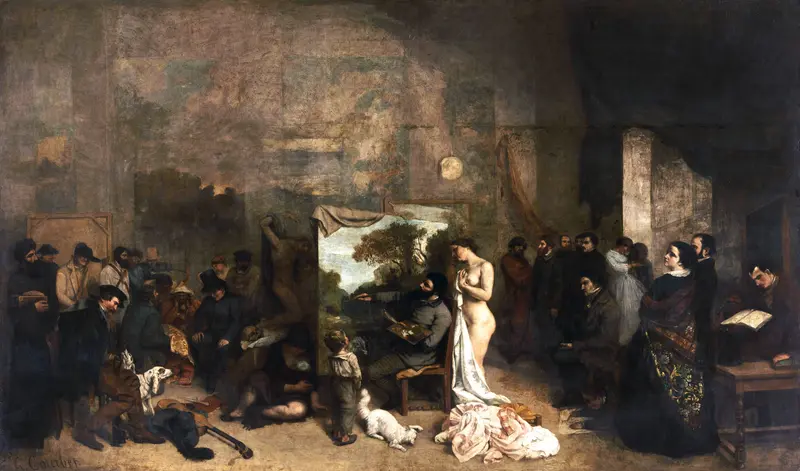
The Painter's Studio
Gustave Courbet
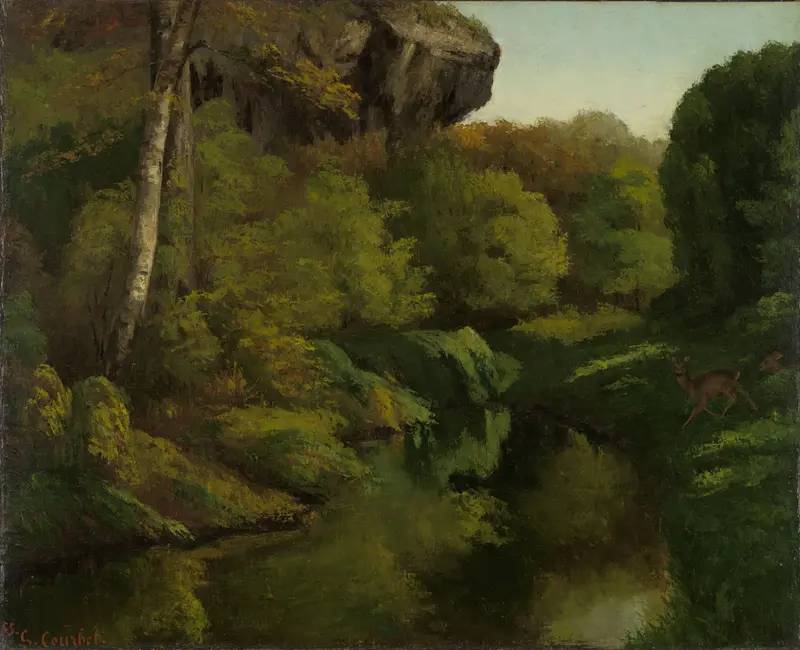
View in the Forest of Fontainebleau
Gustave Courbet
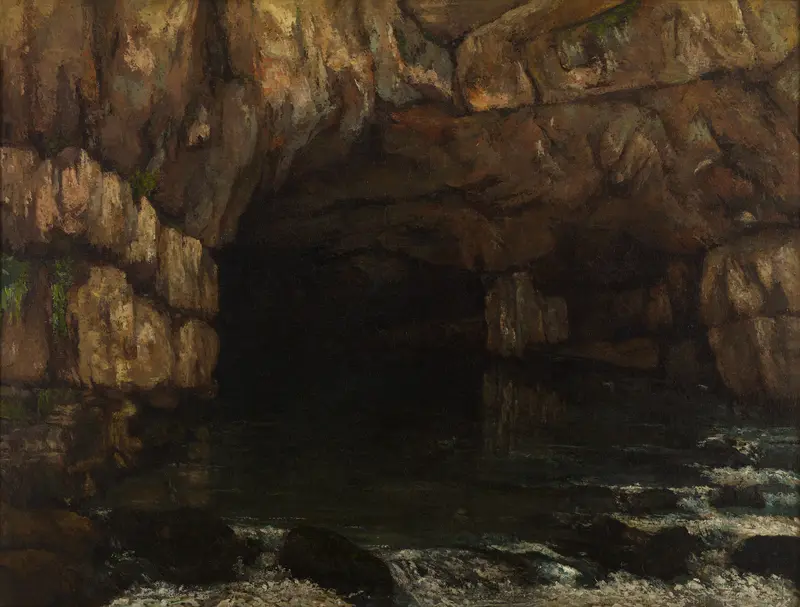
La source de la Loue (The Source of the Loue)
Gustave Courbet
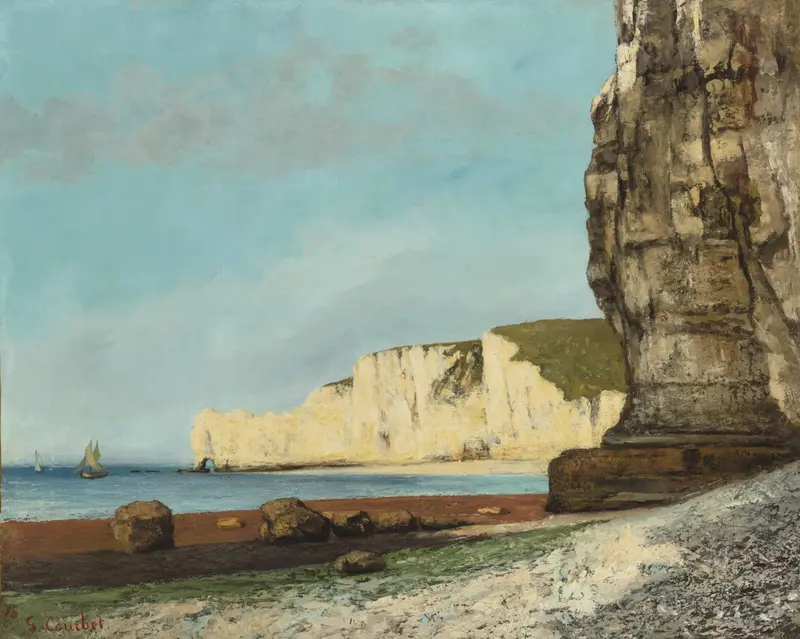
Étretat; Les Falaises
Gustave Courbet
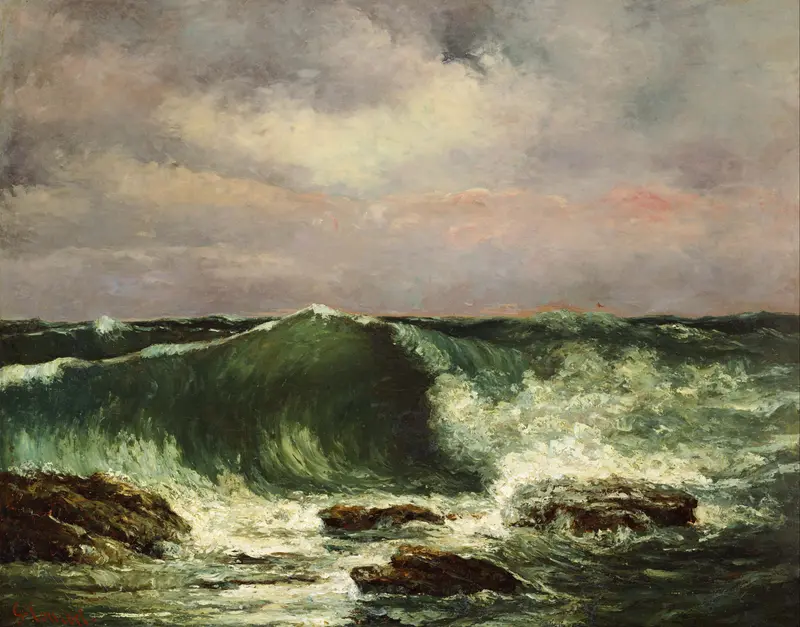
Waves
Gustave Courbet
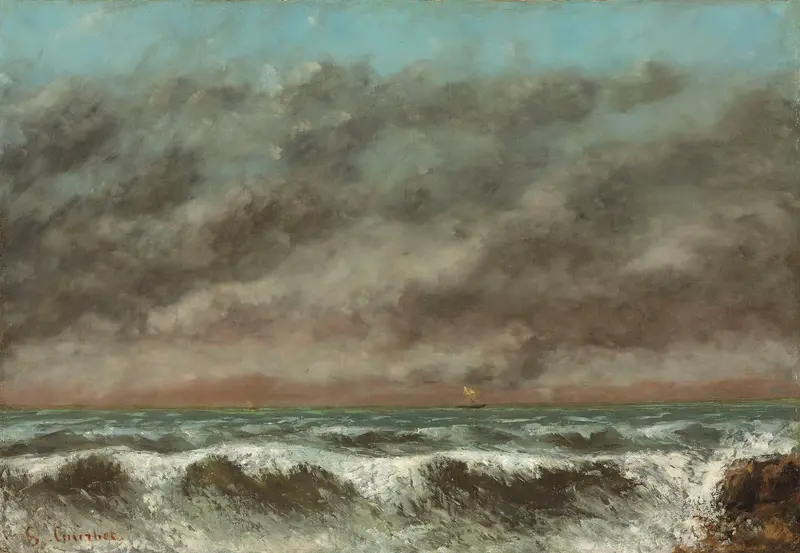
Marine
Gustave Courbet
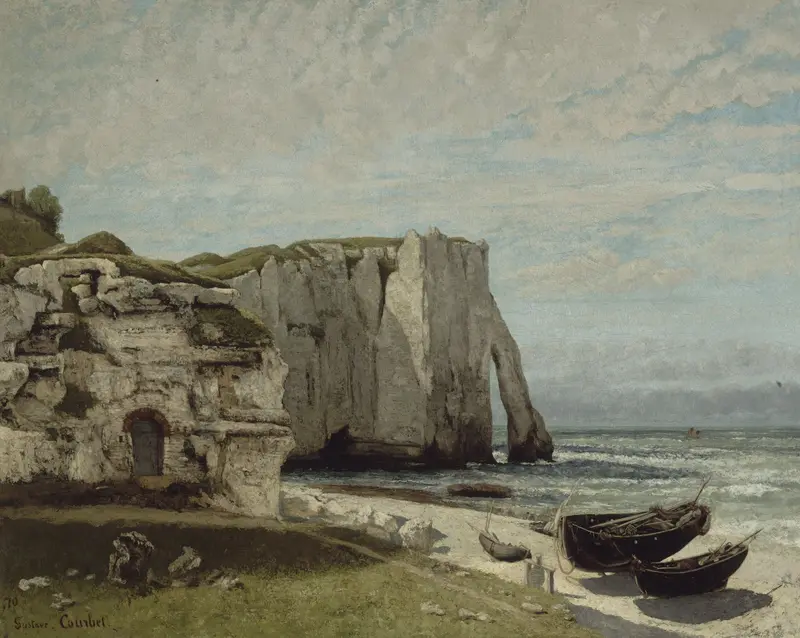
The Etretat Cliffs after the Storm
Gustave Courbet
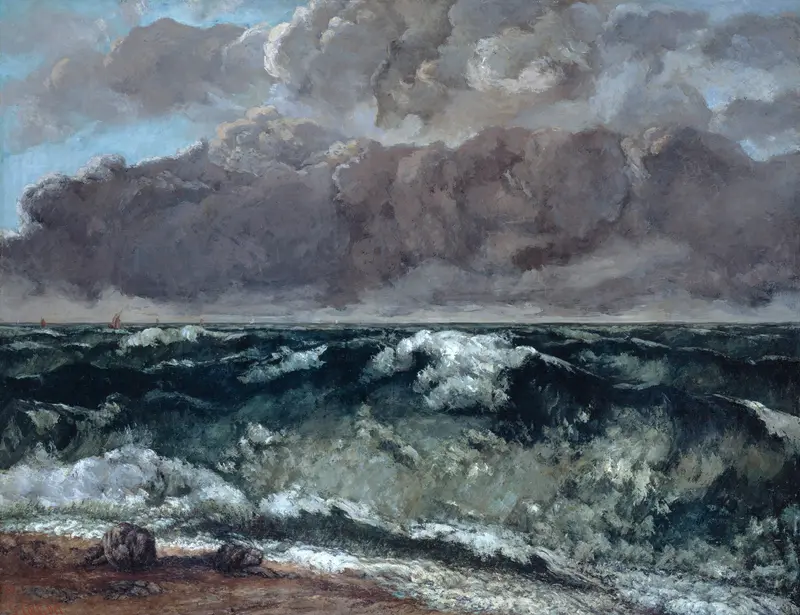
The Wave
Gustave Courbet
More Landscape Art

The Starry Night
Vincent van Gogh

View of Delft
Johannes Vermeer

Water Lilies
Claude Monet

The Grand Canal, Venice, looking north-west from the Ca' Corner to the Ca' Contarini degli Scrigni, with the campanile of Santa Maria della Carità
Canaletto

Windsor Castle
Canaletto

The Grand Canal looking North-East from the Palazzo Dolfin-Manin to the Rialto Bridge
Canaletto