
Genre scene in an interior — History & Facts
What draws the eye first is the hush that seems to settle over the dim room, broken only by the quiet industry of daily life. In this Genre scene in an interior by Adriaen van Ostade, a shaft of warm, golden light picks out two figures at their work—one intent on carving or mending, the other hunched over, absorbed in a humble meal. The third figure, half-reclined in the shadows, lets the world pass by, lost in rest or reverie.
The rough textures of wood and worn clothing, rendered with a soft, almost smoky touch, invite the viewer to imagine the smells, the sounds, the slow passage of time in this modest space. Ostade’s palette of browns and ochres, deepened by shadow, makes the small acts at the painting’s heart glow with a quiet dignity. Works like this flourished in the Dutch Republic of the seventeenth century, when artists such as Adriaen van Ostade found eager patrons among the burgeoning middle class. These genre scenes, often small in scale and intimate in mood, were prized for their glimpses into everyday life—sometimes moralizing, sometimes simply observant.
The world that produced them was one of economic change and urban growth, where the ordinary became worthy of close study and gentle humor. Today, this painting is housed in the National Museum in Warsaw, a reminder that history has kept few traces of the lives it records, but the painter’s eye still guides us back into their world.
More Artworks by Adriaen van Ostade

Dans in de herberg
Adriaen van Ostade
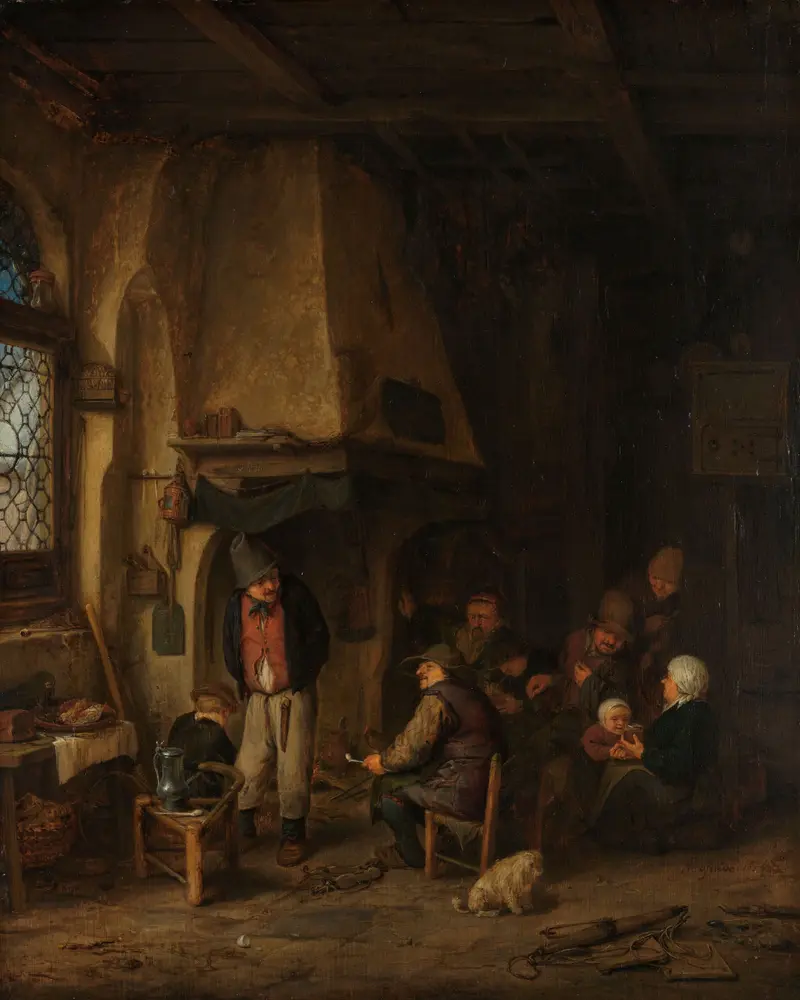
‘The Skaters’: Peasants in an Interior
Adriaen van Ostade
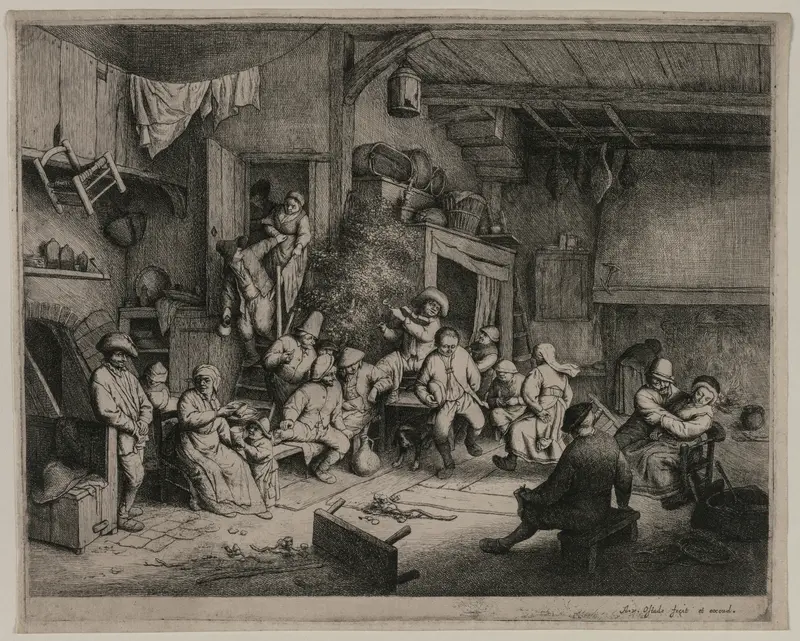
Dance at the Inn
Adriaen van Ostade
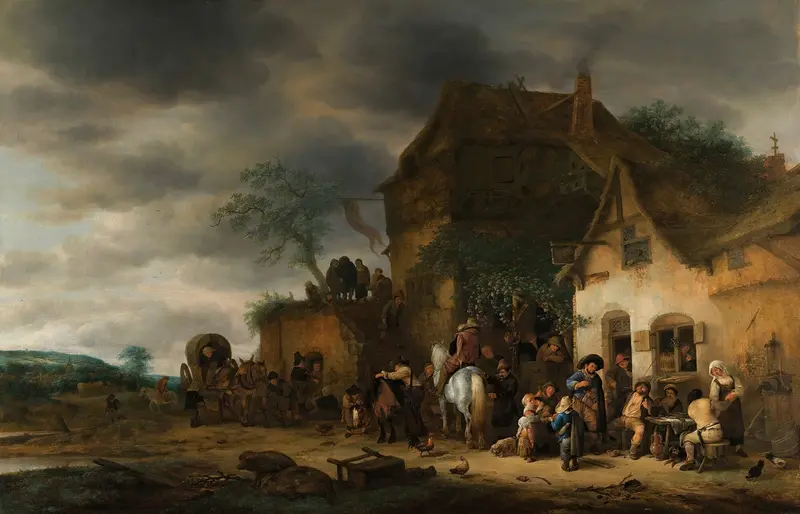
Travellers Halted At A Country Inn
Adriaen van Ostade
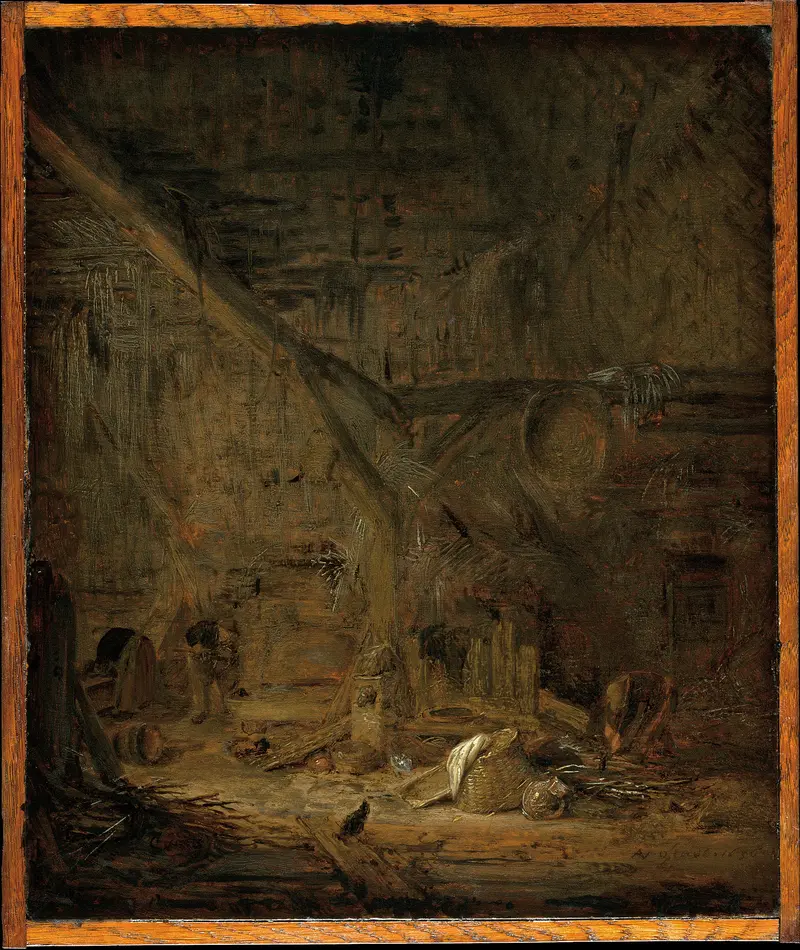
Interior of a Barn
Adriaen van Ostade
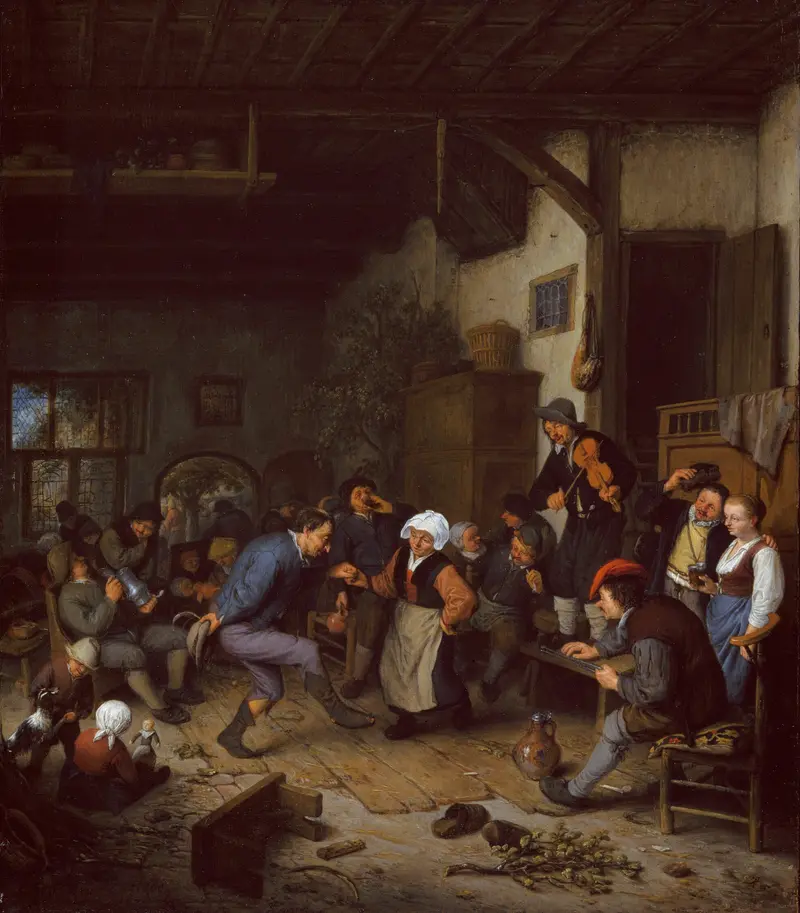
Merrymakers in an Inn
Adriaen van Ostade
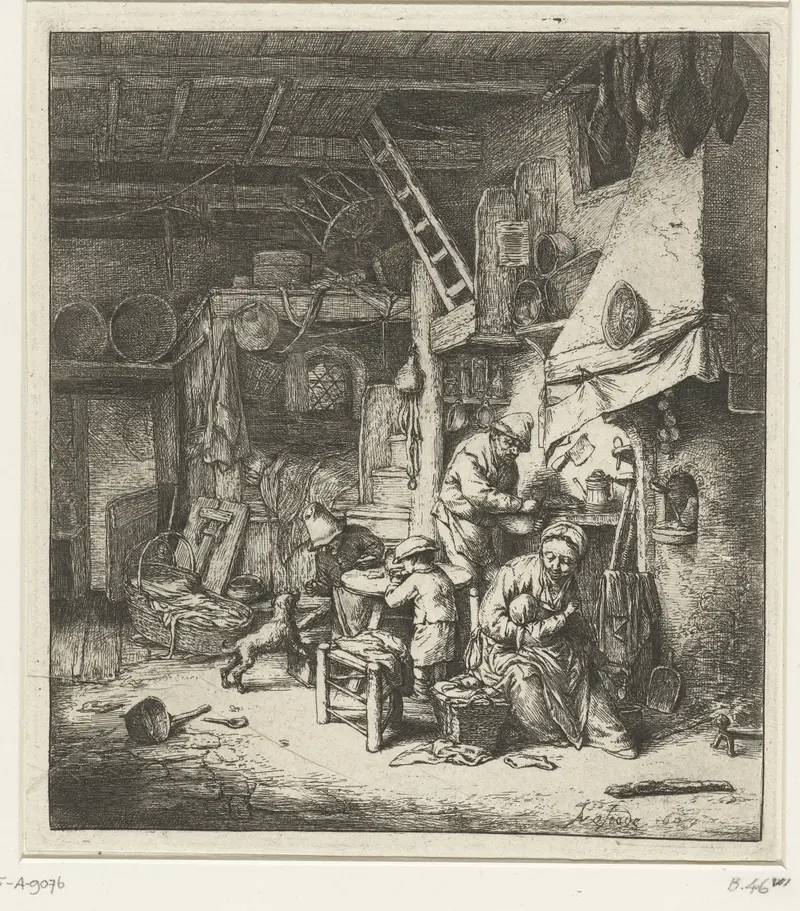
Boerengezin in interieur
Adriaen van Ostade
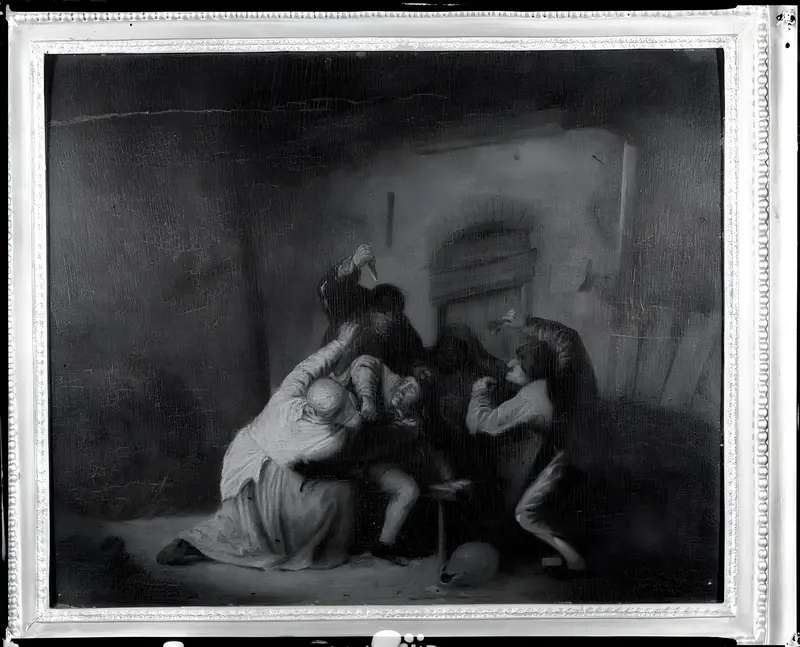
Peasants Brawling in a Tavern
Adriaen van Ostade
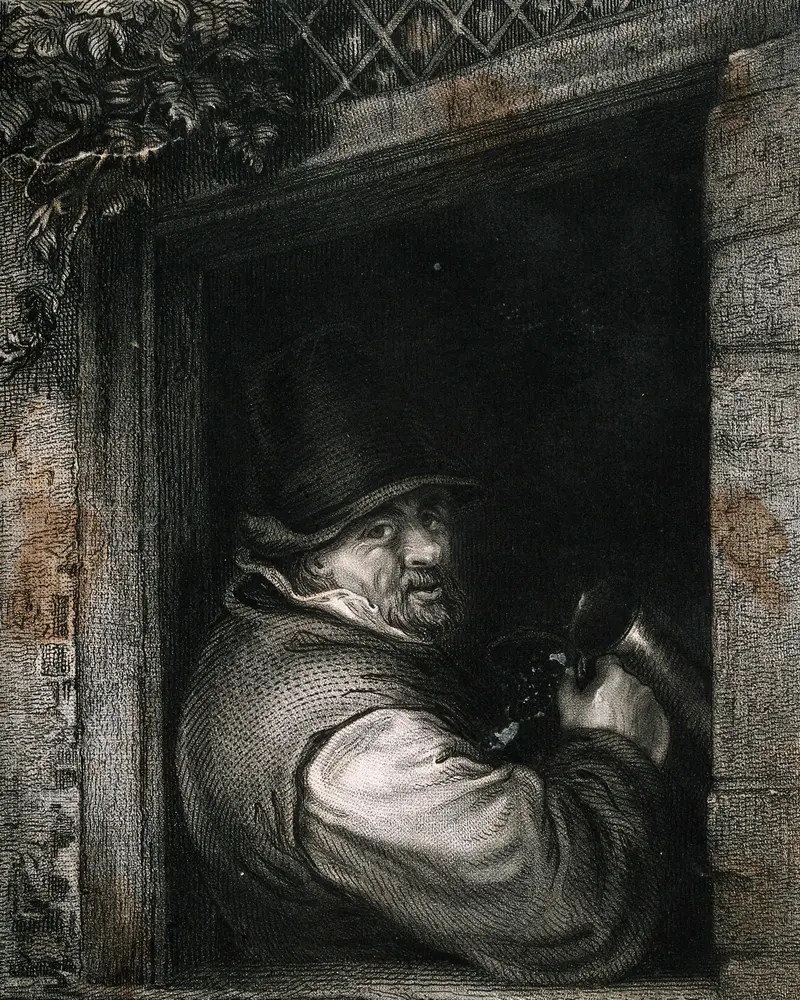
Man with a Tankard at a Window
Adriaen van Ostade
Dans in de herberg
Adriaen van Ostade
More Genre Scene Art

Banquet of the Officers of the St George Civic Guard
Frans Hals

Rembrandt and Saskia in the Scene of the Prodigal Son
Rembrandt van Rijn

Bal du moulin de la Galette
Pierre-Auguste Renoir

Quadrille at the Moulin Rouge
Henri de Toulouse-Lautrec

A Burial at Ornans
Gustave Courbet

When Will You Marry?
Paul Gauguin