
Gezelschap rond de haard — History & Facts
When did color learn to lie? The brushstrokes whisper of warmth and intimacy, yet linger with a lurking unease that seeps through the ambiance of a cozy gathering. In Gezelschap rond de haard, a hidden obsession intertwines with the smiles of those gathered, revealing complexities beneath the surface. Look to the left, where the flickering light of the hearth bathes the figures in a golden glow, illuminating their expressions and creating sharp contrasts with the surrounding shadows. Notice how the artist employs rich, earthy tones to evoke a sense of comfort, while subtle brushwork captures the soft textures of fabrics and the quiet elegance of the room.
The composition draws the viewer’s eye toward the warmth of the fire, hinting at both the solace it provides and the secrets it harbors within its flickering flames. Yet, behind the veneer of camaraderie lies a tension that speaks volumes. The body language of the figures—leaning in, yet distant—suggests an obsession with appearances, masking deeper discord and unspoken desires. The solitary figure at the edge, nearly eclipsed by the group, seems to be an observer caught in the throes of both longing and exclusion, reflecting the human condition's complex dance between connection and isolation. During the years 1642 to 1664, Cornelis Pietersz.
Bega painted this work amid a flourishing Dutch Golden Age, a period marked by burgeoning artistic expression and the exploration of domestic life. As Bega sought to capture the intimate moments of everyday existence, he also navigated his own struggles as an artist in a competitive environment, which influenced the depth and nuance evident in this captivating piece.
More Artworks by Cornelis Pietersz. Bega
Browse all →
Mannen en jonge vrouw in herberg
Cornelis Pietersz. Bega

Twee mannen en vrouw met kind zittend in herberg
Cornelis Pietersz. Bega
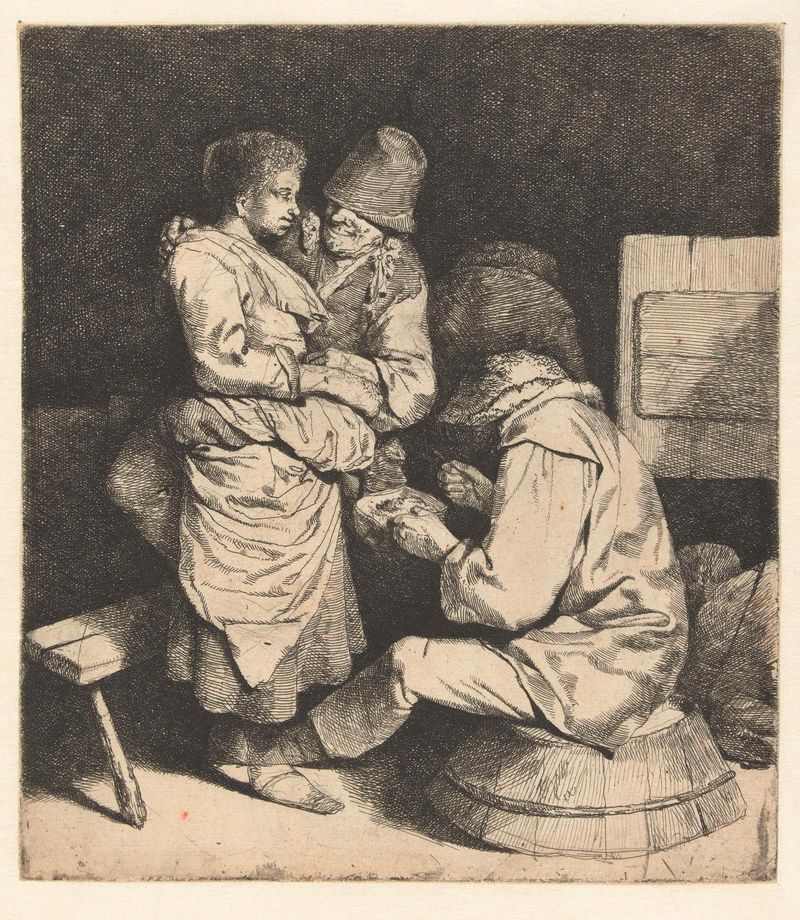
Vrouw vastgepakt door man, andere man zit te eten in herberg
Cornelis Pietersz. Bega

Jonge vrouw zittend met een pijp
Cornelis Pietersz. Bega

Staande vrouw vastgepakt door man, andere man kijkt toe in herberg
Cornelis Pietersz. Bega
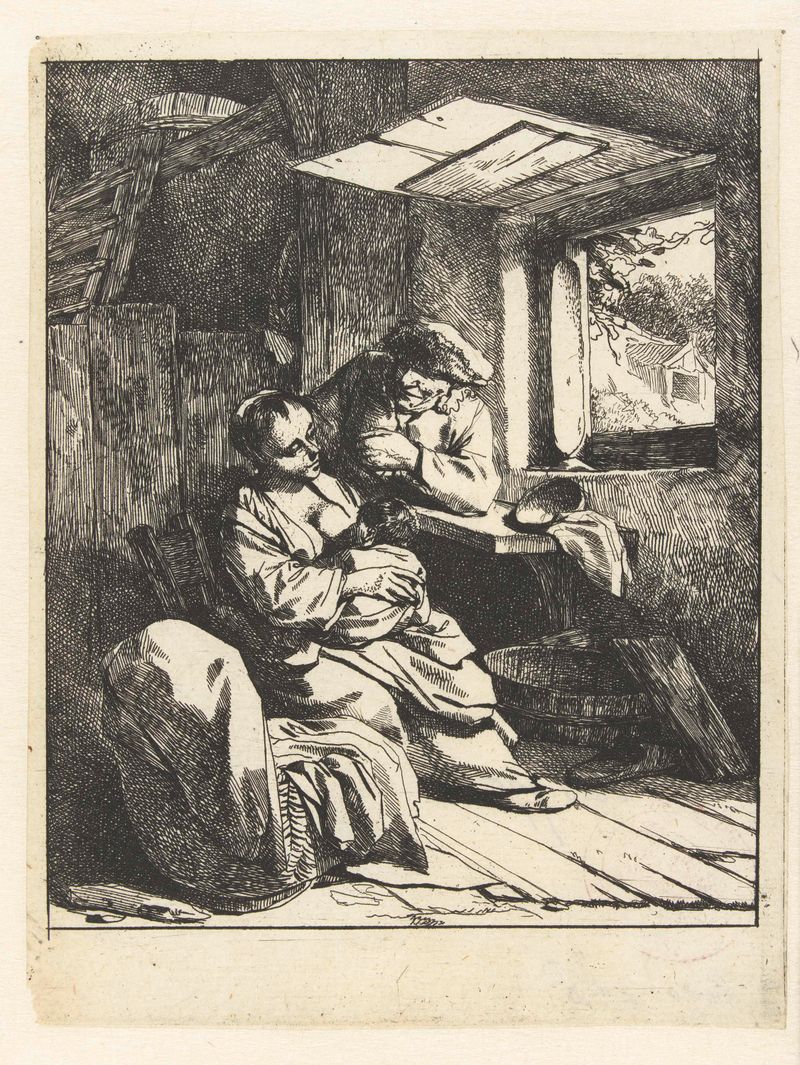
Vrouw met kind en man bij wieg in interieur met open raam
Cornelis Pietersz. Bega
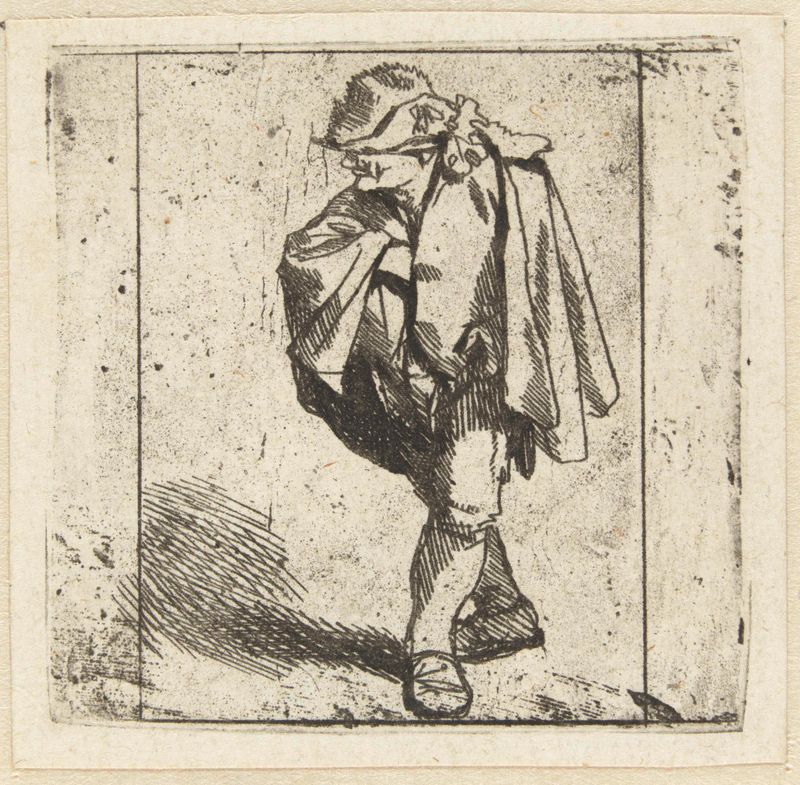
Staande man met de rechterhand op de borst in zijn mantel gestoken
Cornelis Pietersz. Bega
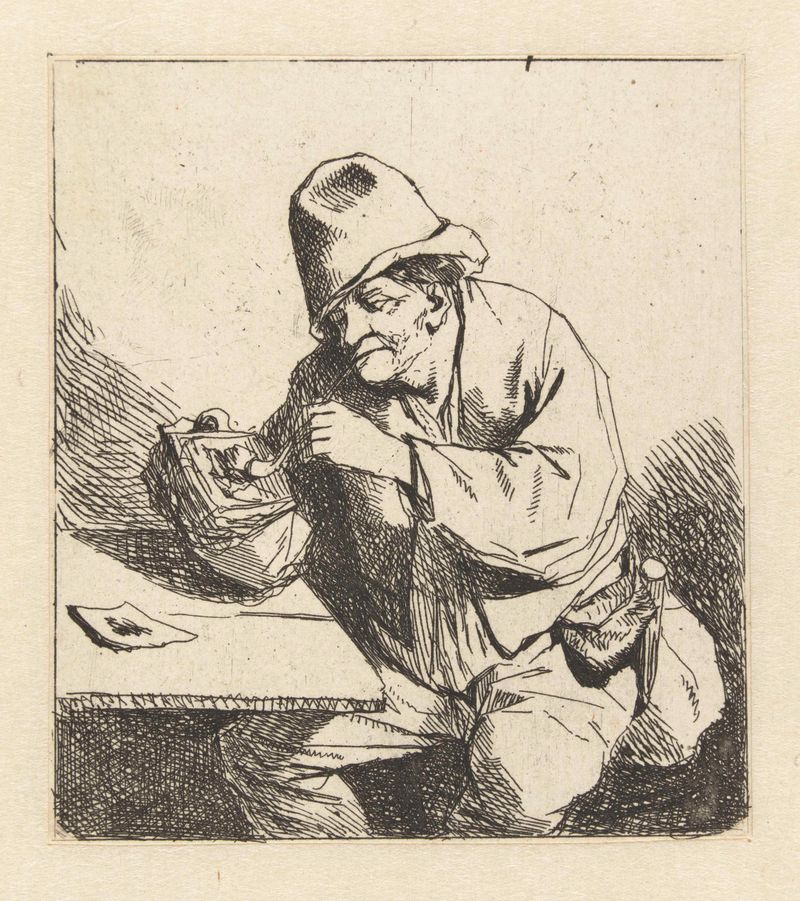
Zittende man steekt pijp aan
Cornelis Pietersz. Bega

Man zittend op ton met kruik in handen
Cornelis Pietersz. Bega

Liefdespaar
Cornelis Pietersz. Bega





