Gezicht op een laan in Ede — History & Analysis
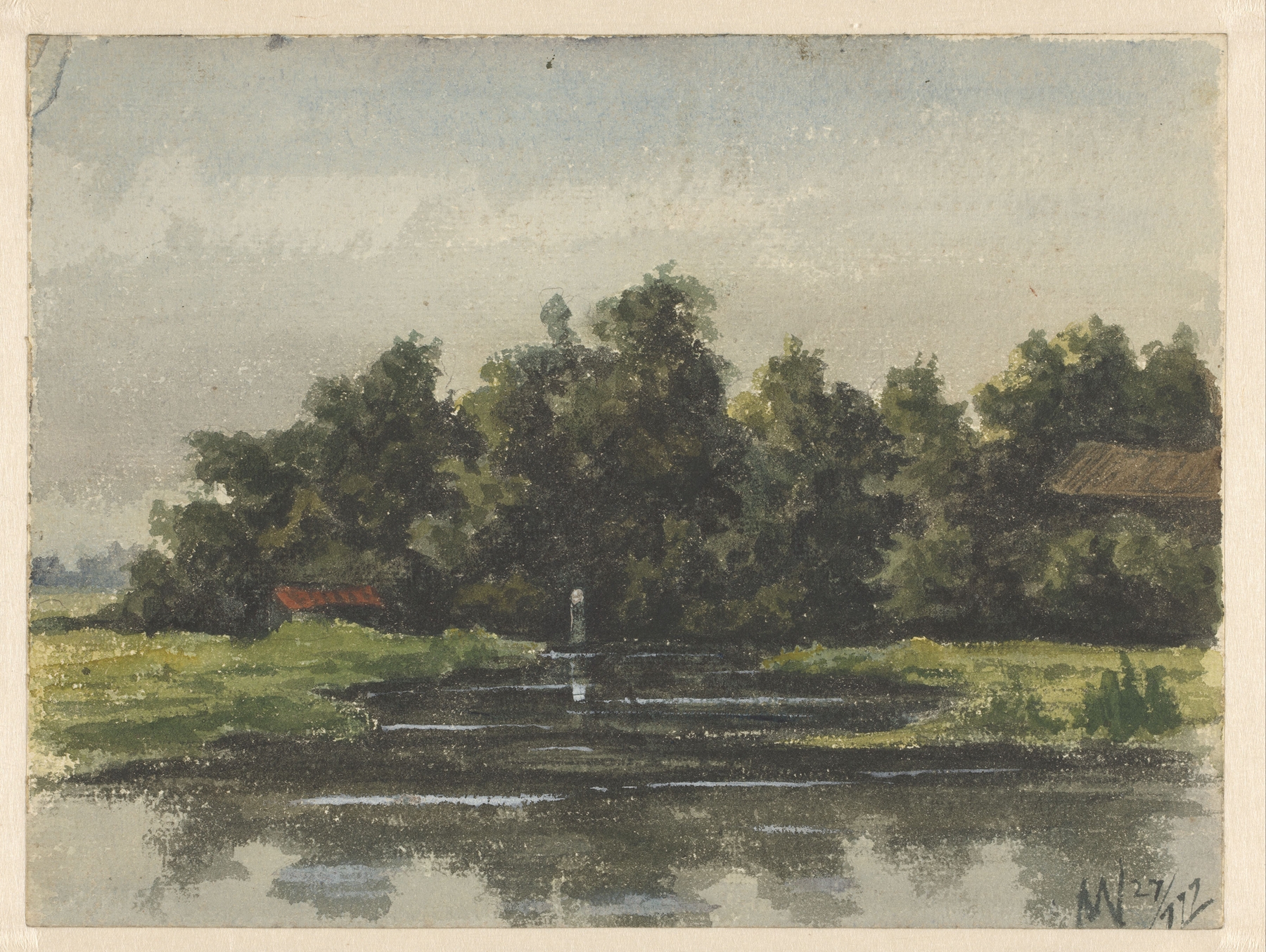
What if beauty was never meant to be finished? In the stillness of a moment captured in time, Gezicht op een laan in Ede invites us to ponder the transience of nature and the elegance of impermanence. Look to the left at the gentle arch of the tree branches, their leaves a vibrant green, reaching towards the sky like delicate fingers yearning for light. Focus on the soft path that meanders through the scene, its earthiness contrasting with the ethereal quality of the foliage above.
The light dances through the canopy, casting intricate shadows that create a dialogue between light and dark, highlighting Witsen's mastery of color and spatial composition. There is a quiet intensity in this painting, a tension between the serenity of the landscape and the underlying sense of change. The path suggests a journey yet to be taken, while the trees seem to whisper secrets of seasons past, hinting at the cycle of life and decay. The interplay of colors—deep greens, hints of browns, and the luminescent quality of sunlight—evokes a meditative state, encouraging viewers to ponder their own relationship with nature and time.
Willem Witsen created this work in 1878 while living in the Netherlands, during a period when artists were increasingly turning to the natural environment for inspiration. This era, marked by the rise of Impressionism, allowed Witsen to explore the beauty of everyday scenes, capturing the essence of Dutch landscapes. At this time, he was developing his own distinctive style, one that would later influence the realm of modern art in his homeland.