Discover insights about this artwork
Girls watering Flowers (The Linde Frieze) — History & Facts
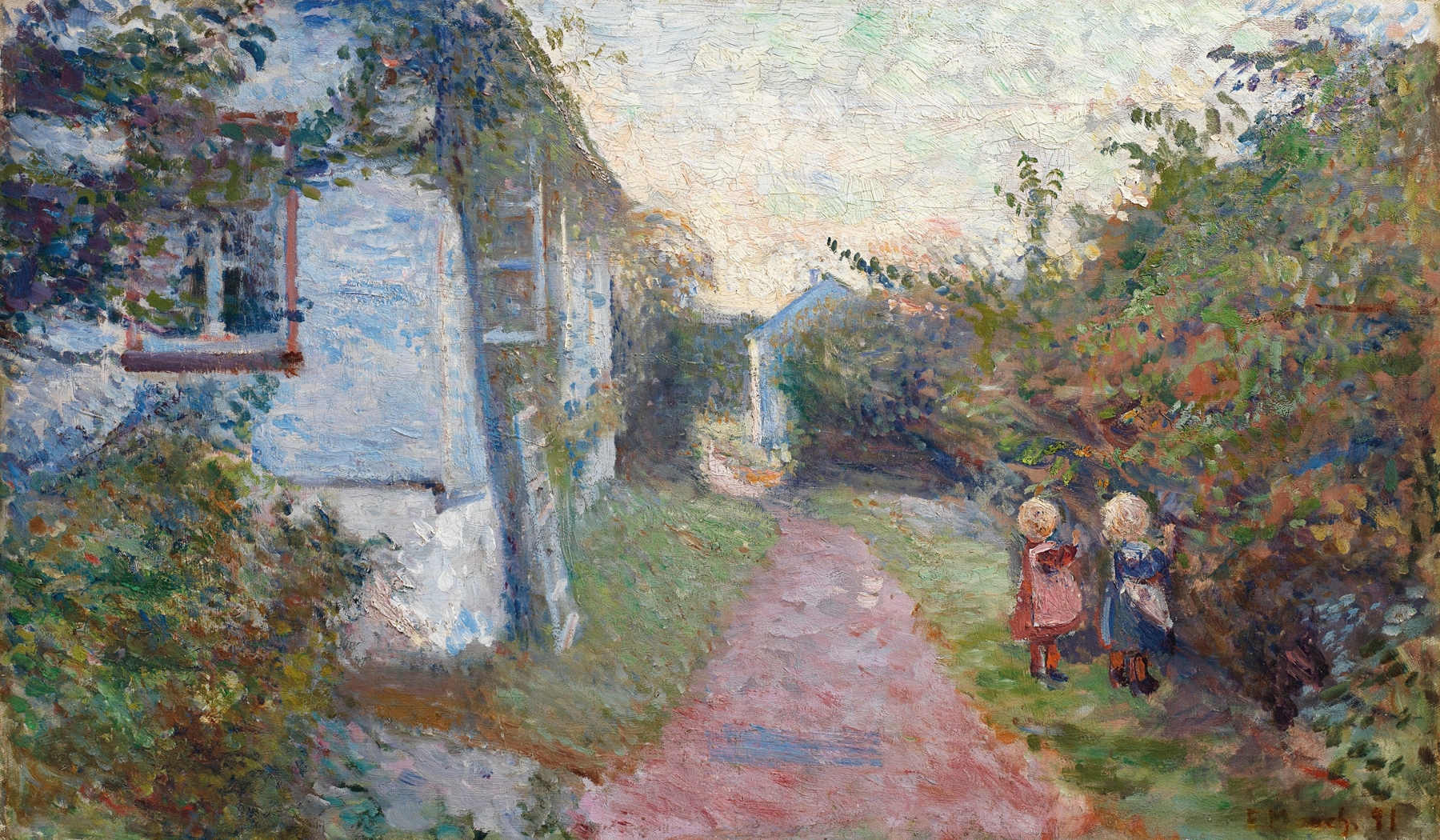
In Girls watering Flowers (The Linde Frieze), we see two young girls engaged in the simple act of watering flowers. The colors are vibrant, with lush greens and soft pastels dominating the scene. The figures are depicted in a naturalistic style, surrounded by blooming flowers that add a sense of life and freshness.
The setting appears to be a garden, emphasizing the connection between the girls and nature. The painting is characterized by Munch's use of color and form, typical of his Symbolist style. The brushwork is expressive, giving a sense of movement as the girls interact with the flowers. The composition is balanced, drawing the viewer's eye towards the central figures.
The overall effect is one of harmony and tranquility, inviting contemplation. Edvard Munch is best known for his exploration of psychological themes, but this work reflects a more serene aspect of his artistic vision. Created during the early 1910s, it showcases his ability to capture the beauty of everyday life. Interestingly, this piece was part of a larger frieze intended for the Linde family, which aimed to celebrate nature and childhood.
Munch's focus on the innocence of youth is a refreshing departure from his more famous, darker works.