
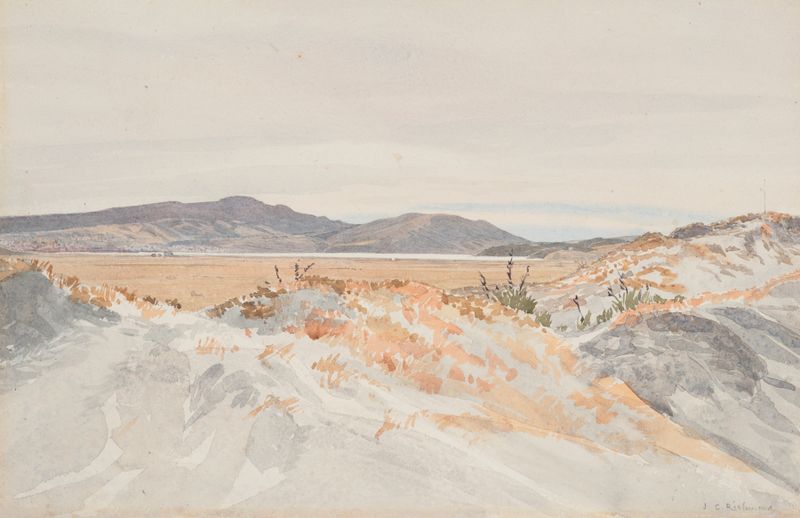
Golden Bay, near Clifton — History & Facts
In the embrace of nature, longing weaves the threads of existence into a tapestry of color and emotion, inviting us to delve deeper. Look to the foreground to see the gentle rise of the cliffs, their earthy tones juxtaposed against the lush greens of grasses and trees that cradle the bay. Notice how the artist employs delicate brushstrokes, creating a soft texture that breathes life into the landscape. The sky, a symphony of warm yellows and soft blues, frames the scene, while light dances upon the water, reflecting flashes of sunlight that guide the eye toward the horizon. Beneath the serene surface lies a tension between the tranquility of the bay and the rugged cliffs that rise behind it, symbolizing the duality of nature’s beauty and its harshness.
The stillness of the water evokes a sense of yearning, inviting viewers to contemplate the untold stories of what lies just beyond the visible. The interplay of light and shadow suggests a fleeting moment, capturing both the ephemeral essence of beauty and the permanence of longing. During the 1860s to 1880s, Richmond painted Golden Bay, near Clifton while immersed in the vibrant art scene of New Zealand. He sought to express the unique interplay of light and land, reflecting both a personal connection to the landscape and the growing appreciation for natural beauty in the art world.
This period marked a significant evolution in his style as he merged observation with emotion, revealing a distinctive voice in the depiction of New Zealand's landscapes.
More Artworks by James Crowe Richmond
Browse all →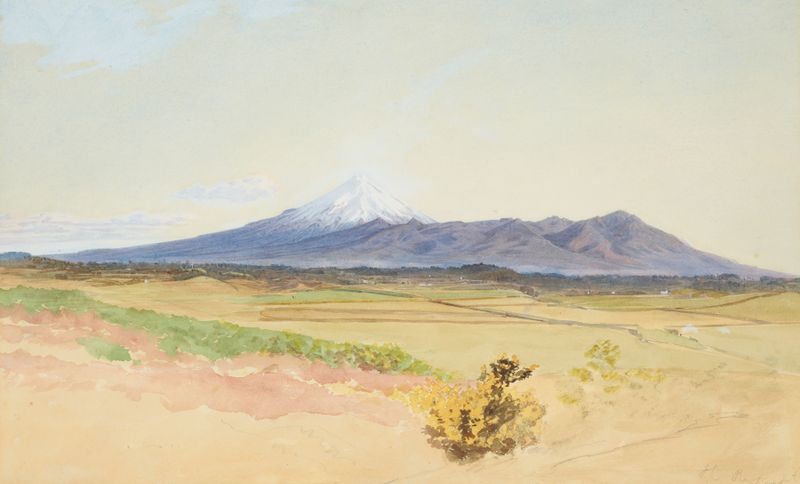
Mount Egmont and Pouakai, from New Plymouth
James Crowe Richmond
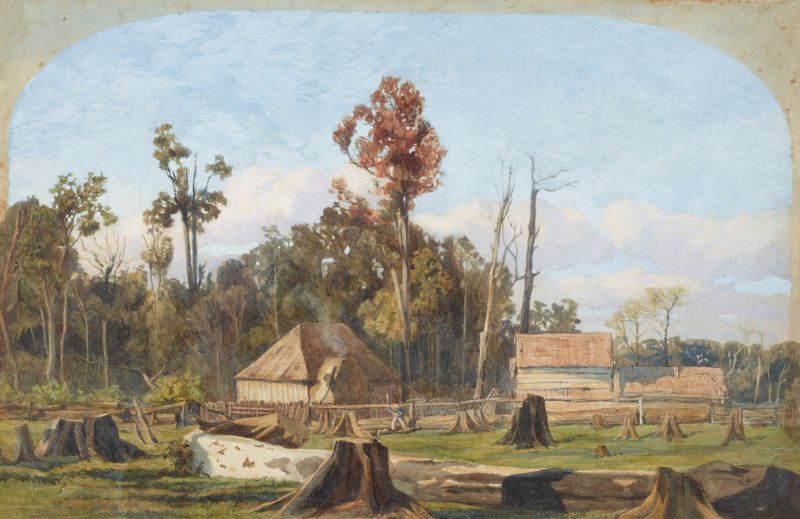
Settler’s home, Merton, near New Plymouth
James Crowe Richmond
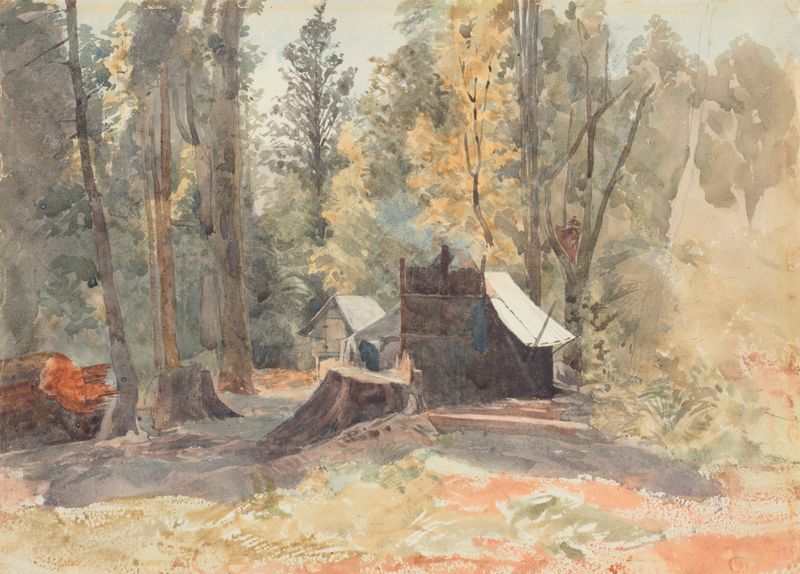
Hut of the ‘Italian party’, old diggings on Buller
James Crowe Richmond

Mosque at Tlemcen
James Crowe Richmond

Ngatapa, Te Kooti’s Pa
James Crowe Richmond

Dividing Range, Riwaka and Takaka
James Crowe Richmond
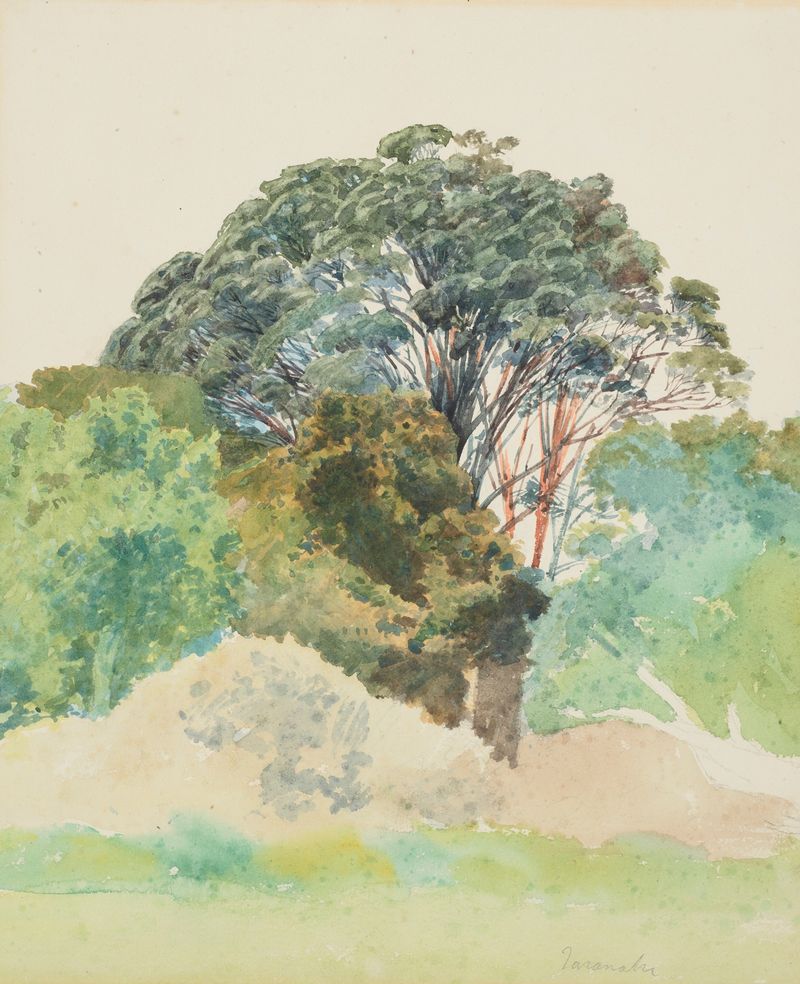
Rata, Taranaki
James Crowe Richmond

Grey River, on the beach
James Crowe Richmond
Dunedin from the Ocean Beach
James Crowe Richmond

On Collingwood Goldfields
James Crowe Richmond





