
Gondelwerft San Trovasi — History & Facts
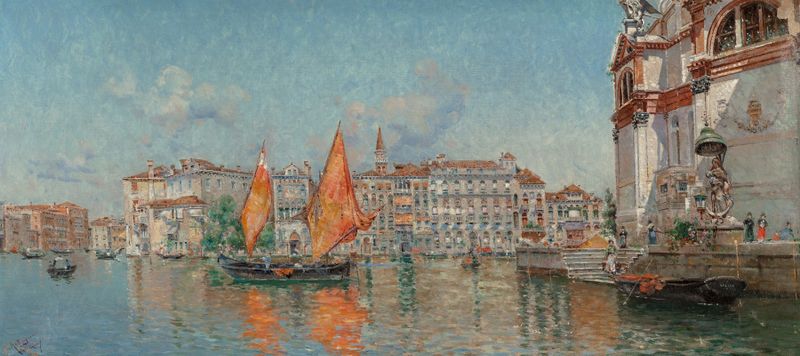
Where does light end, and longing begin? In the shimmering depths of Gondelwerft San Trovasi, the boundary between the two feels tantalizingly thin, beckoning us to explore the essence of destiny entwined with artistry. Focus on the vibrant cerulean waters that cradle the gondolas, their delicate forms reflecting both craftsmanship and the whispers of history. Look closely at the intricate details of the wooden boats, each stroke meticulous and alive. Notice how the sunlight dances across the surface, illuminating the textures of the hulls while casting soft shadows that hint at the stories held within.
The artist employs a masterful palette that contrasts the brightness of the scene with the darker corners of the workshop, highlighting the duality of creation and oblivion. The subtle interplay of light and shadow suggests a deeper narrative—an untold journey of the gondolas, poised between the artist’s intentions and the fate that awaits them in the hands of their future stewards. The warm glow envelops the scene, evoking feelings of nostalgia for a past that is both celebrated and mourned. The juxtaposition of the serene water against the bustling environment evokes a sense of longing, as if the very essence of Venice courses through the wood and water, destined to drift into memory. Antonio María de Reyna Manescau created this piece during an era rich in artistic exploration, likely in the late 19th century.
While little is known about the exact circumstances of its creation, this period marked a growing appreciation for the Impressionist movement in Europe, influencing artists to capture the fleeting moments of light and atmosphere. Manescau’s focus on the gondola, a symbol of Venice, reflects a dedication to both regional identity and the universal themes of migration and destiny, resonating through the ages.
More Artworks by Antonio María de Reyna Manescau
Browse all →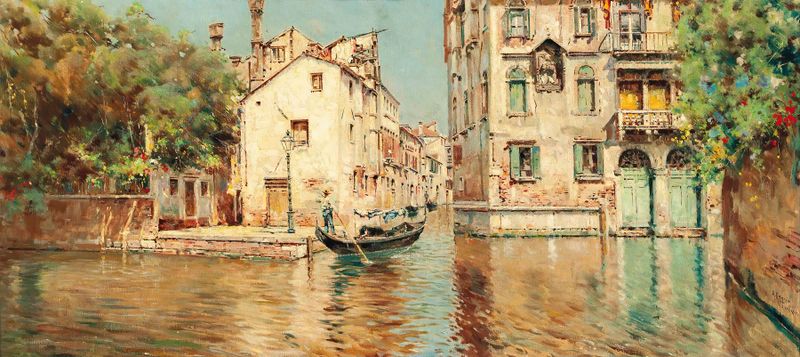
A gondolier on a Venetian backwater
Antonio María de Reyna Manescau
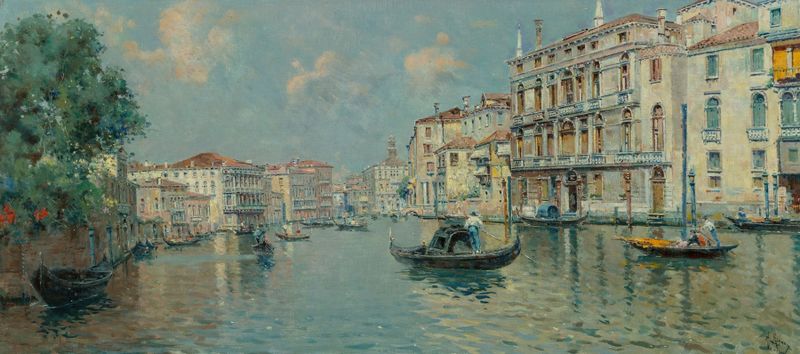
Grand Canal, Venice
Antonio María de Reyna Manescau
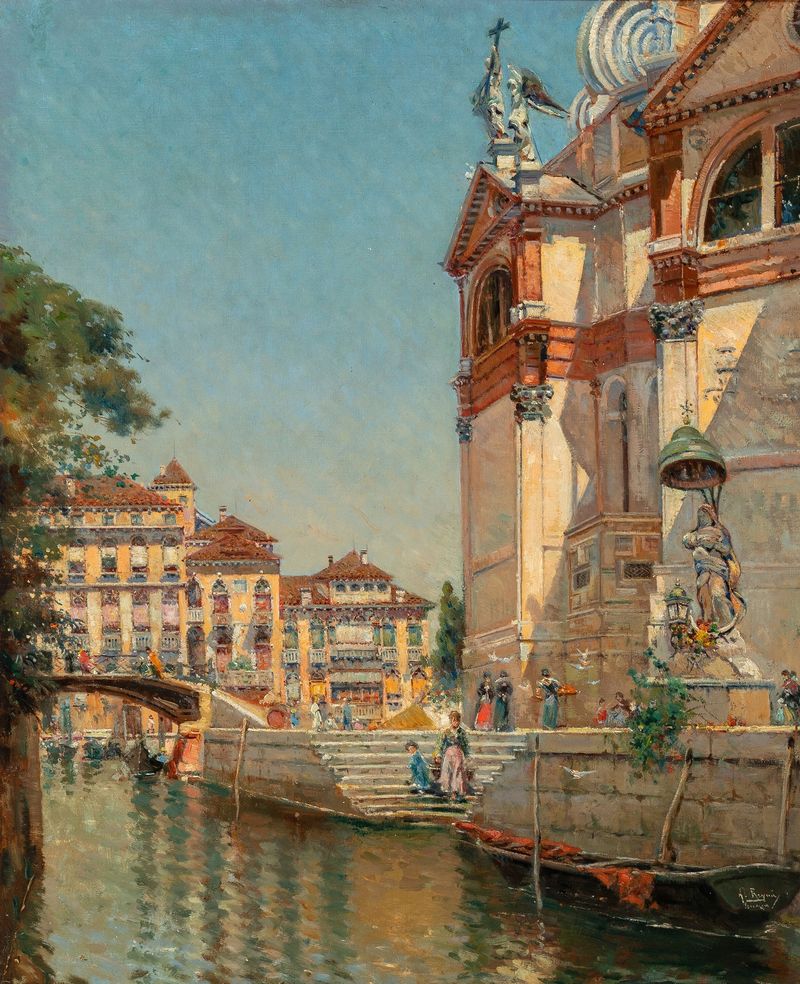
Santa Maria della Salute, Venice, seen from the side
Antonio María de Reyna Manescau
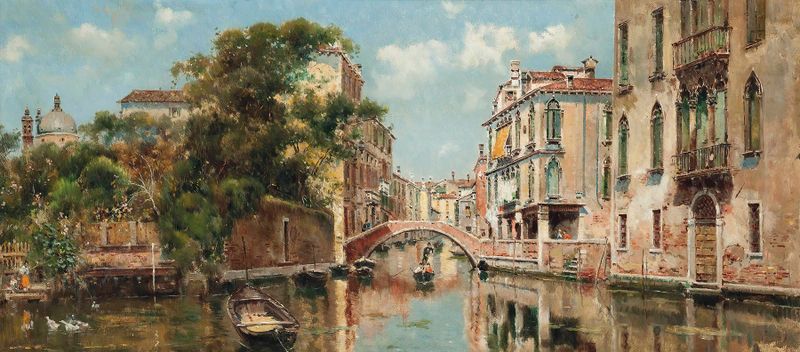
A gondolier before a Venetian bridge
Antonio María de Reyna Manescau
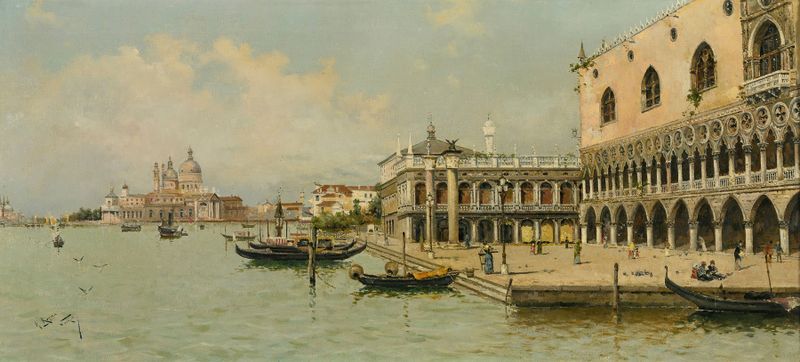
Gondolas By The Doge’s Palace
Antonio María de Reyna Manescau

Vedute von Venedig
Antonio María de Reyna Manescau
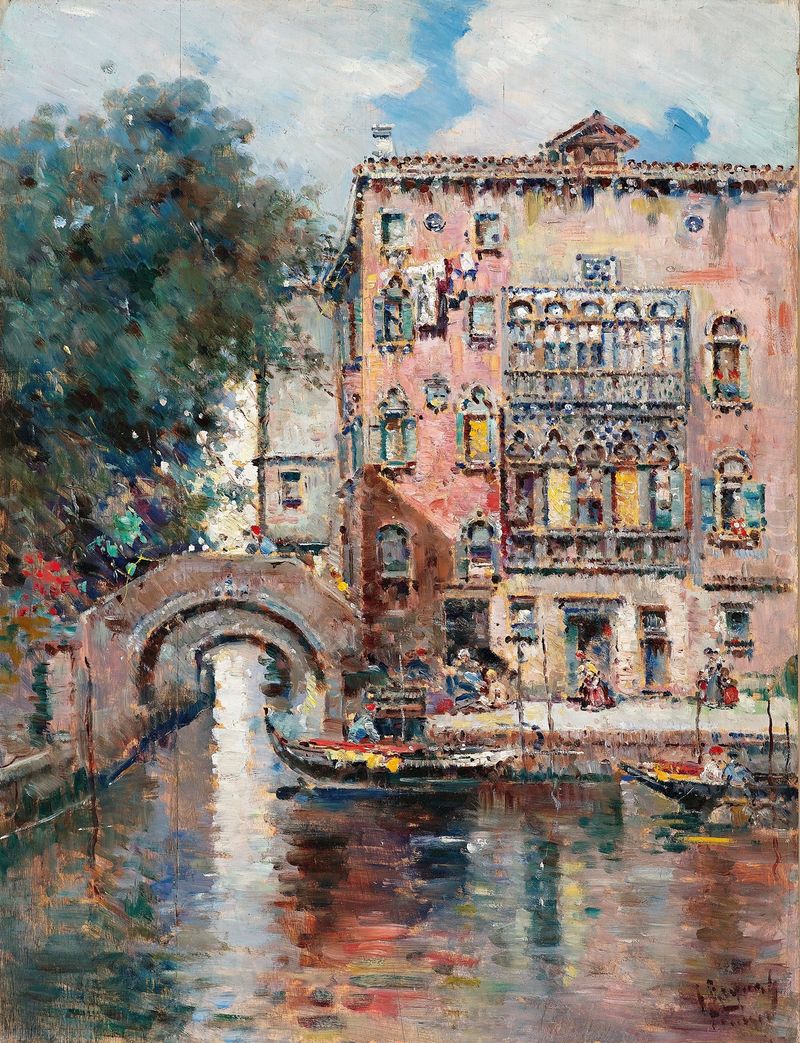
Gondeln in Venedig
Antonio María de Reyna Manescau
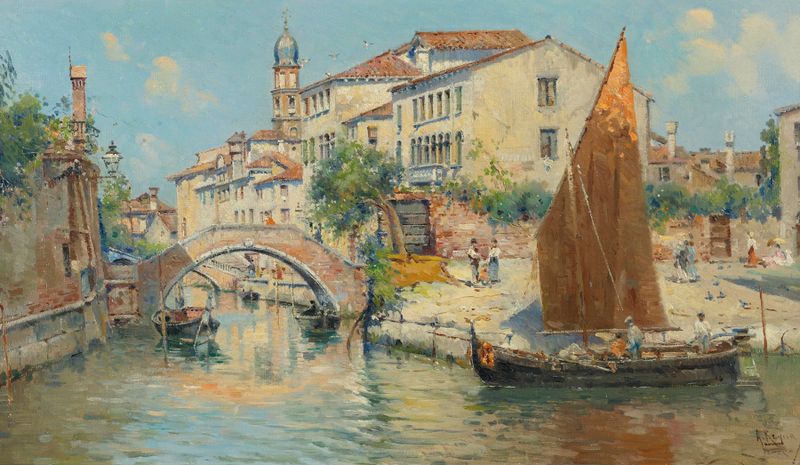
Venice
Antonio María de Reyna Manescau
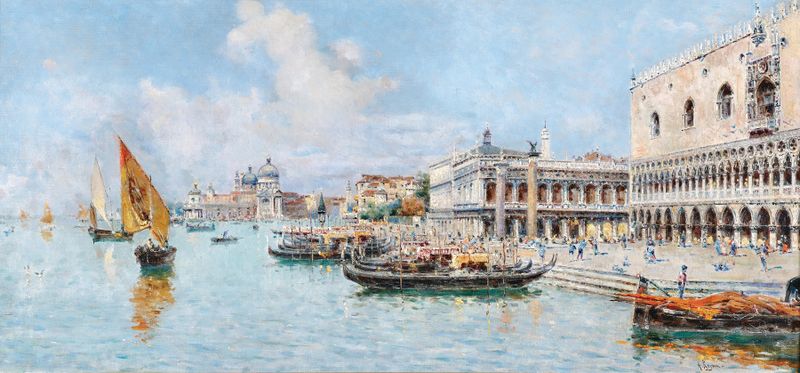
Venice, view of Bacino di San Marco
Antonio María de Reyna Manescau
The Grand Canal, from Santa Maria della Salute, Venice
Antonio María de Reyna Manescau





