
Gondolas in a Venetian Canal — History & Facts
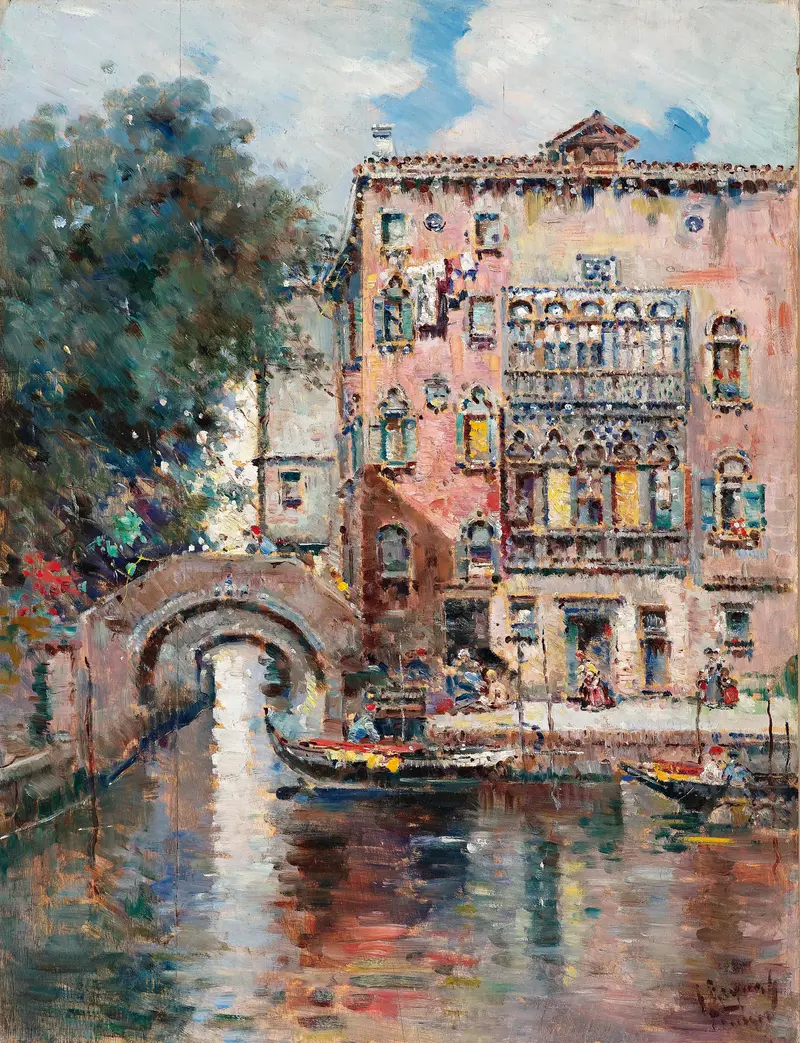
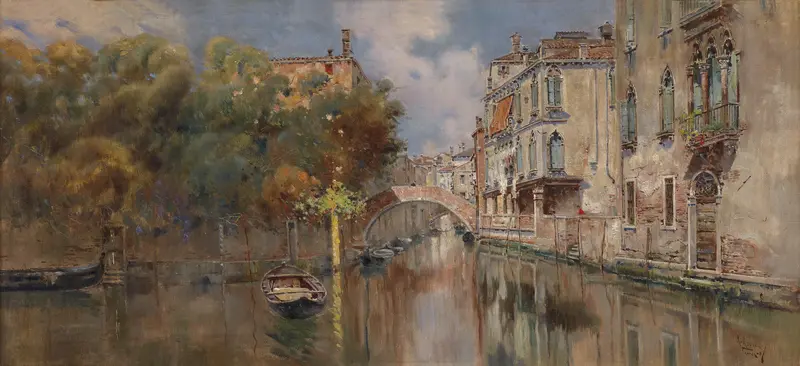
The first thing to catch the eye in Gondolas in a Venetian Canal is the way light dances across the water, pulling the viewer straight into the heart of Venice’s labyrinth. The canal is a mirror, fractured and alive, doubling the faded pinks and ochres of the palazzo that rises above it. A stone bridge arches quietly to the left, its reflection forming a perfect oval that invites the gaze deeper into the painting’s cool shadows.
The brushwork is brisk, almost impatient in the foliage and sky, but lingers over the intricate balconies and the laundry strung above — small signs of daily life that animate the grand façade. Figures gather at the water’s edge, their gestures lost in the shimmer, hinting at stories just out of earshot. At the turn of the 19th to 20th century, scenes like this were painted for a world hungry for the romance of Venice — a city that seemed, to foreign eyes, to float between reality and dream. Artists such as Antonio María de Reyna Manescau found eager patrons among travelers and collectors who wanted to bring home a piece of the city’s magic.
The use of oil on wood, as recorded for this work, allowed for a vividness and texture that canvas sometimes lacks, capturing both the solidity of ancient stone and the fleeting play of light. Though little is recorded about the journey of this particular painting, now in the Dorotheum collection, it stands as a testament to a time when Venice’s canals were not just thoroughfares, but stages for the daily theater of city life. Stand before it, and you may find yourself searching for the next story hidden in the ripples.
More Artworks by Antonio María de Reyna Manescau
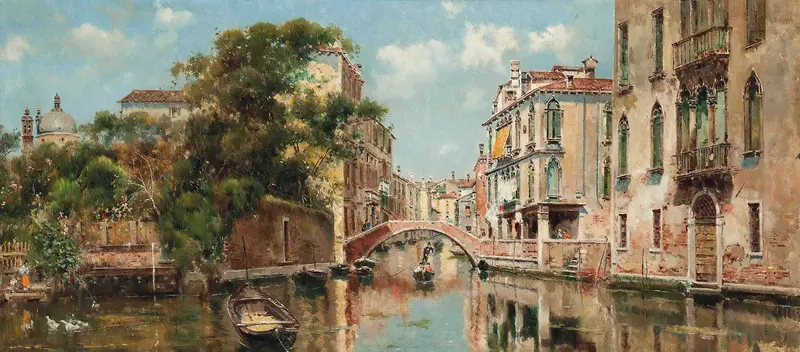
A gondolier before a Venetian bridge
Antonio María de Reyna Manescau
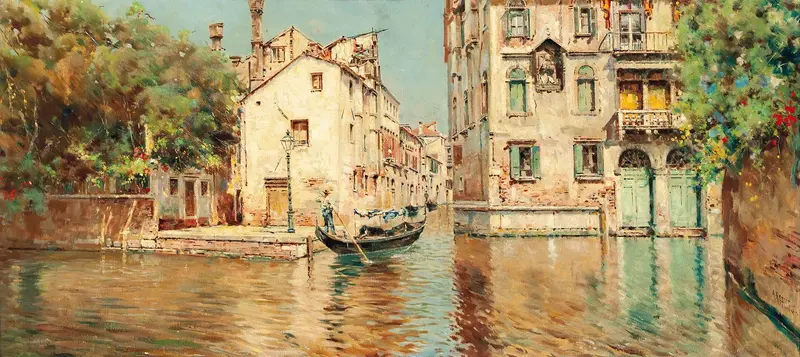
A gondolier on a Venetian backwater
Antonio María de Reyna Manescau
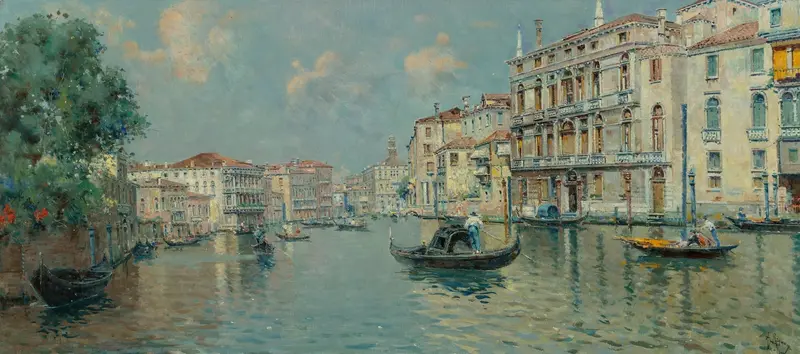
Grand Canal, Venice
Antonio María de Reyna Manescau
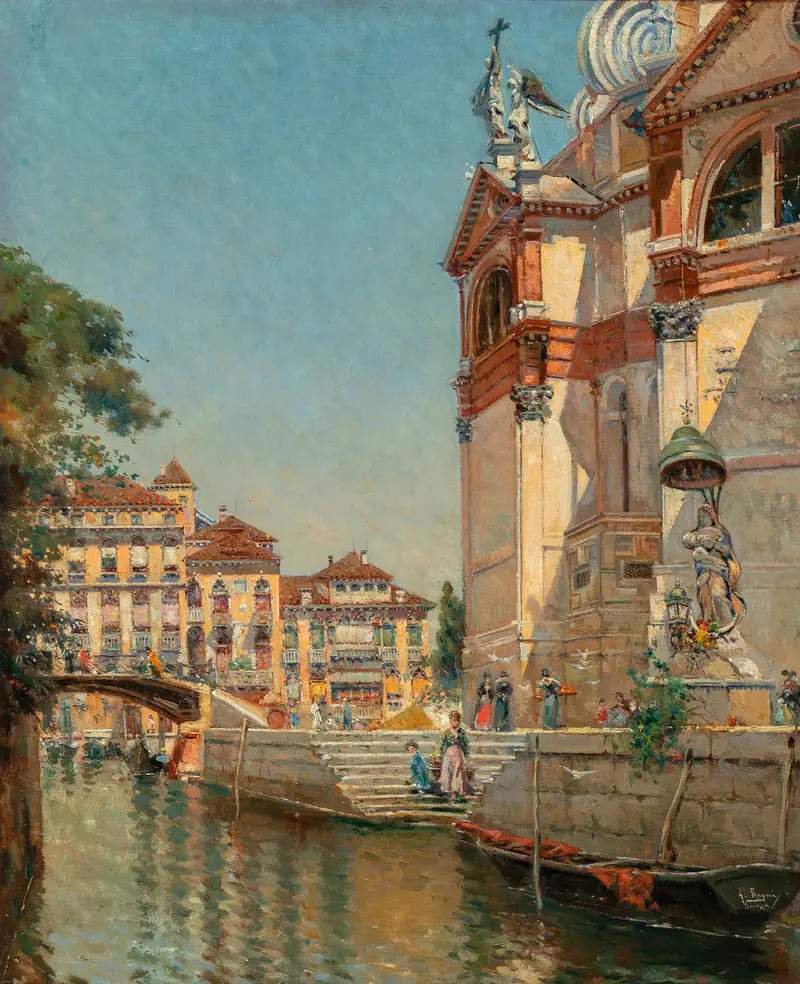
Santa Maria della Salute, Venice, seen from the side
Antonio María de Reyna Manescau
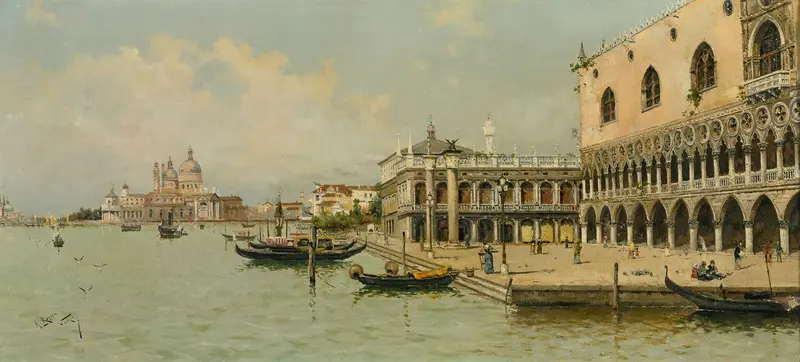
Gondolas By The Doge’s Palace
Antonio María de Reyna Manescau
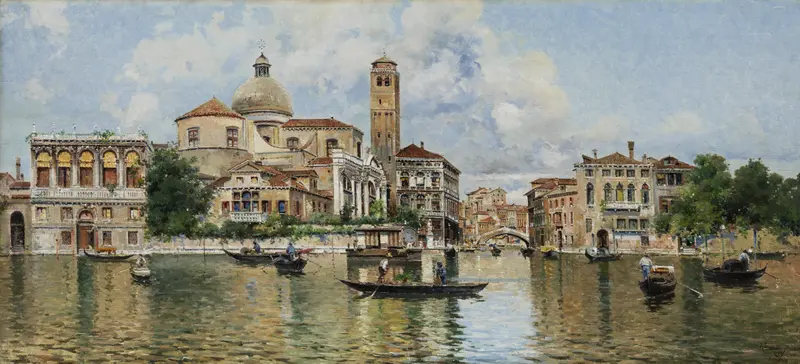
Vedute von Venedig
Antonio María de Reyna Manescau
Gondeln in Venedig
Antonio María de Reyna Manescau
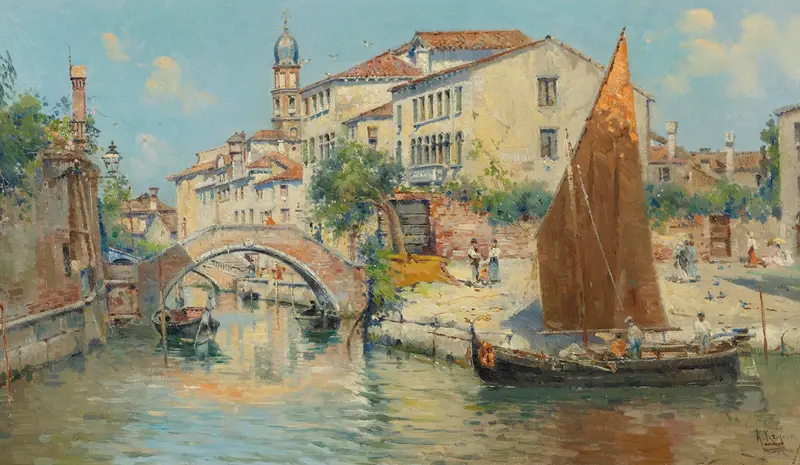
Venice
Antonio María de Reyna Manescau
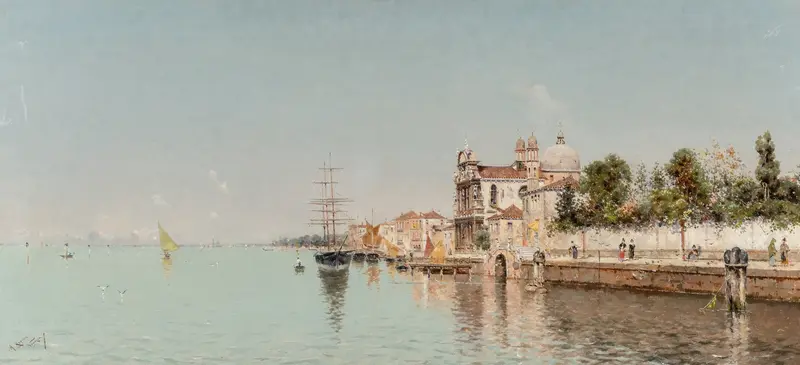
A Venetian waterfront
Antonio María de Reyna Manescau
Blick auf einen Kanal in Venedig
Antonio María de Reyna Manescau
More Landscape Art

The Starry Night
Vincent van Gogh

View of Delft
Johannes Vermeer

Water Lilies
Claude Monet

The Grand Canal, Venice, looking north-west from the Ca' Corner to the Ca' Contarini degli Scrigni, with the campanile of Santa Maria della Carità
Canaletto

Windsor Castle
Canaletto

The Grand Canal looking North-East from the Palazzo Dolfin-Manin to the Rialto Bridge
Canaletto