
Good Friends — History & Facts
Good Friends by Felix Schlesinger stands out among 19th-century genre paintings for its enduring popularity as a reproduction, especially in German and American homes from the late 1800s onward. While the exact date and circumstances of its creation remain uncertain, the painting’s widespread circulation in prints and postcards speaks to its immediate resonance with the public. This domestic scene, often misattributed or copied, became almost iconic in the depiction of childhood innocence and companionship.
The original’s whereabouts were, for a time, uncertain, fueling speculation about its fate and prompting collectors to seek out both originals and copies. At the heart of Good Friends is a moment of gentle intimacy: a young child, seated at a rustic table, shares a meal with a loyal dog. The child’s hand, caught mid-motion as it offers a treat, meets the eager gaze of the animal—an exchange of trust and affection. The warm, diffused light bathes the scene in a sense of security, while the simple furnishings and humble food emphasize the modesty of the setting.
Schlesinger’s attention to the softness of the child’s features and the expressive eyes of the dog invites the viewer to recall similar moments from their own lives. Unlike the more sentimentalized animal scenes of Arthur John Elsley, Schlesinger’s approach is understated, focusing on the quiet bond rather than overt theatrics. Little is known about the original commission or early provenance of Good Friends, typical for many of Schlesinger’s works, which were often produced for the open market rather than a specific patron. The painting’s popularity led to its reproduction by lithographers and printmakers, spreading its image far beyond the artist’s native Germany.
Today, original versions are rarely seen in public collections, and the painting is more often encountered in private hands or as a cherished family print. Within Felix Schlesinger’s career, Good Friends exemplifies his gentle approach to childhood and domestic life, themes that recur throughout his oeuvre and have contributed to his lasting appeal among collectors of 19th-century genre painting.
More Artworks by Felix Schlesinger

Fleißige Helfer in der Küche
Felix Schlesinger

Die Zeitungslektüre
Felix Schlesinger
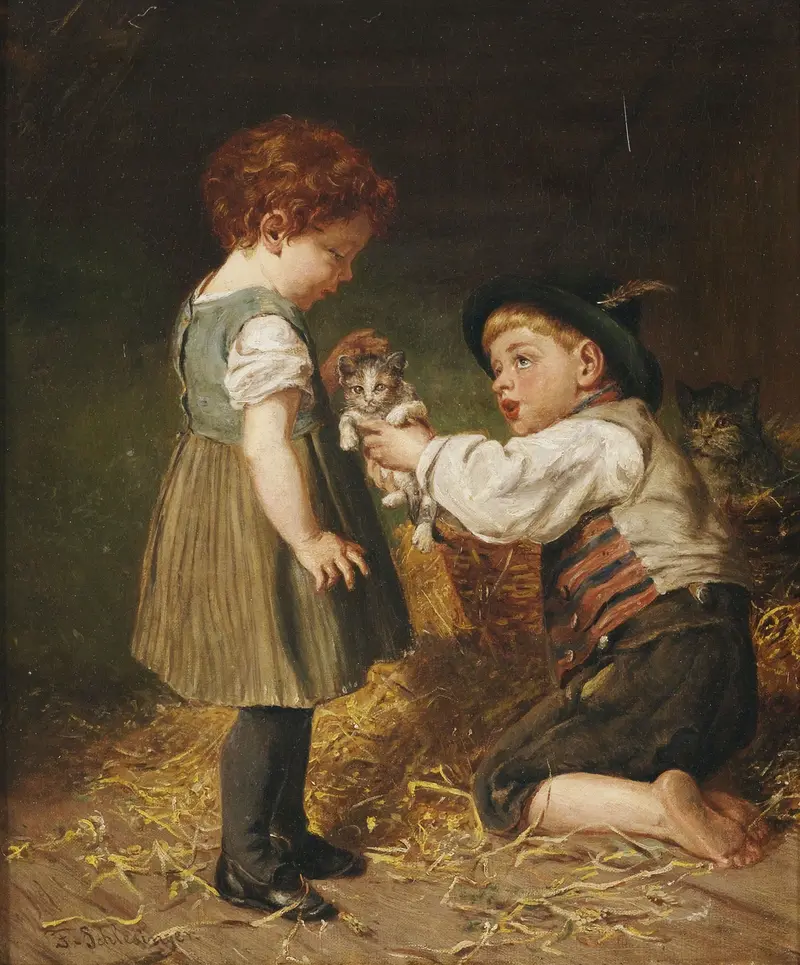
Zwei Kinder mit Kätzchen im Stall
Felix Schlesinger
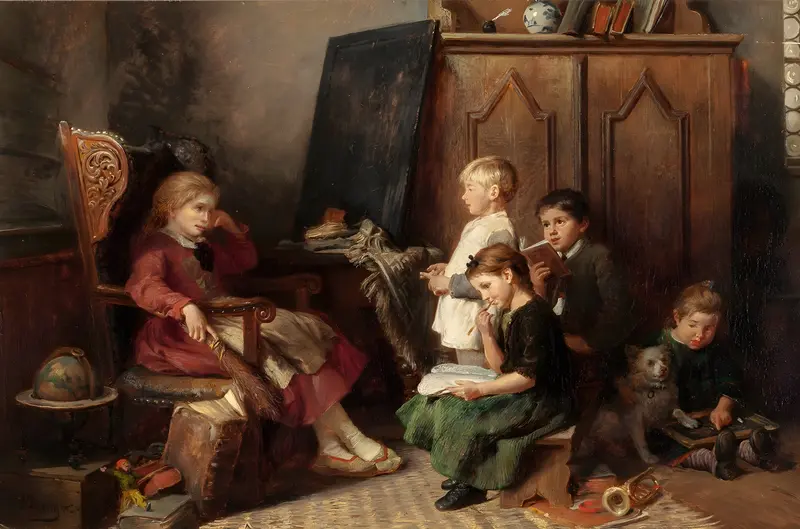
Children Reading
Felix Schlesinger
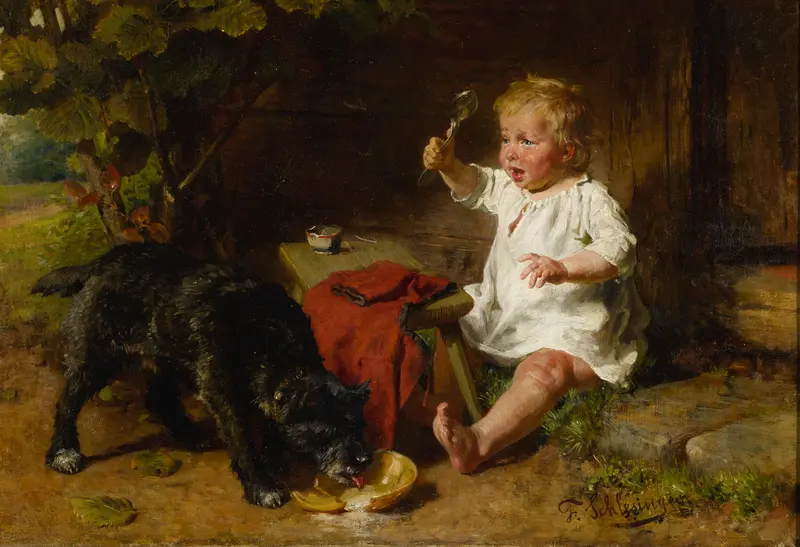
A Shared Meal
Felix Schlesinger
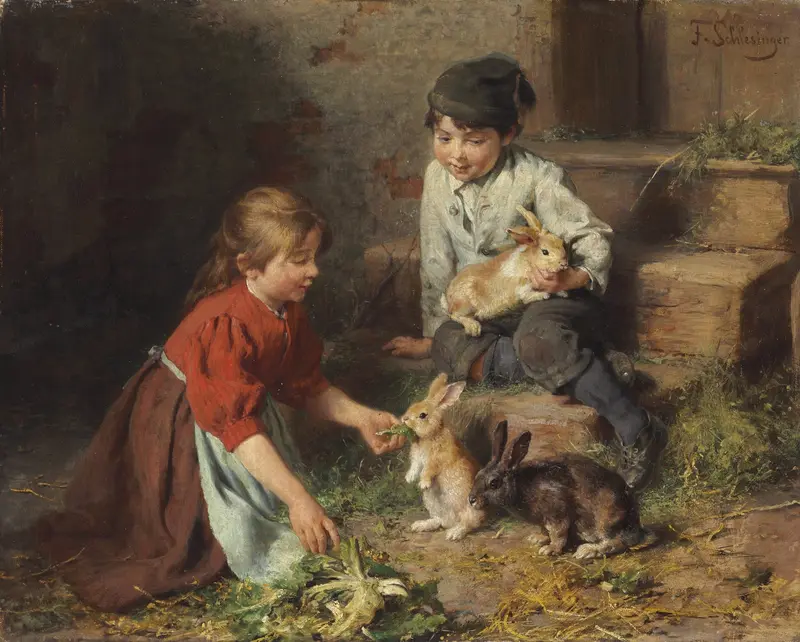
Fütterung Der Kaninchen
Felix Schlesinger
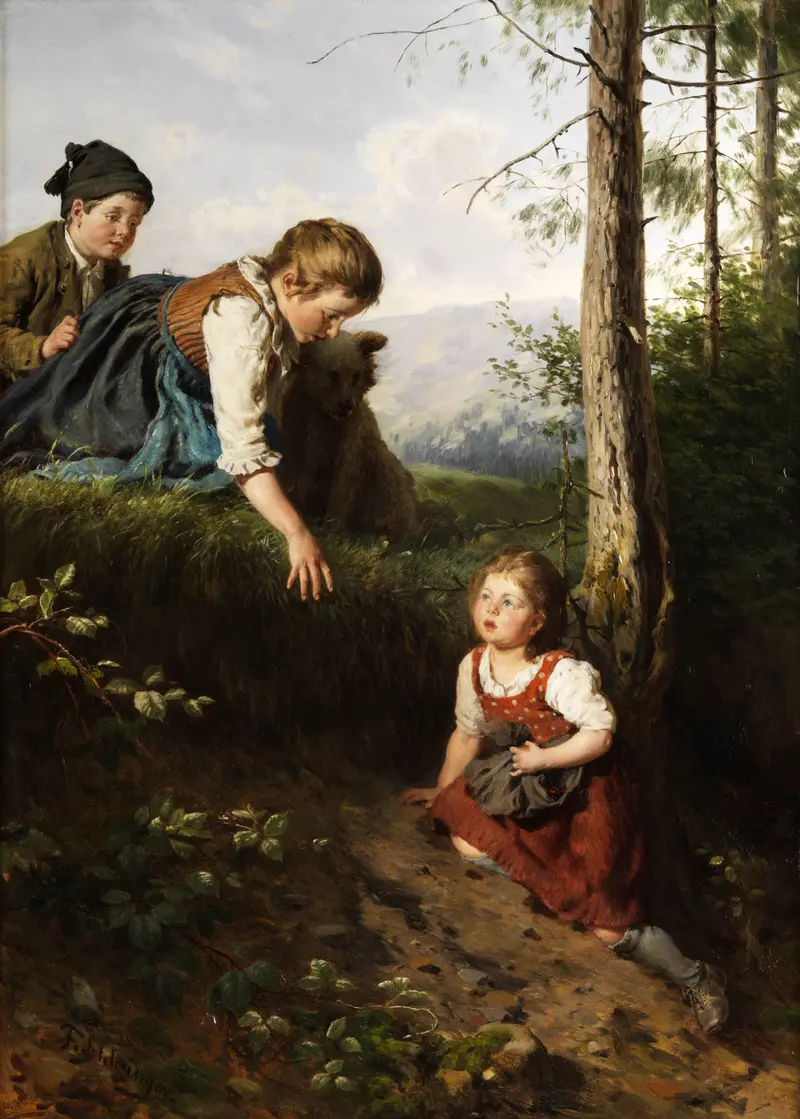
Drei Kinder im Wald beim Beerenpflücken
Felix Schlesinger
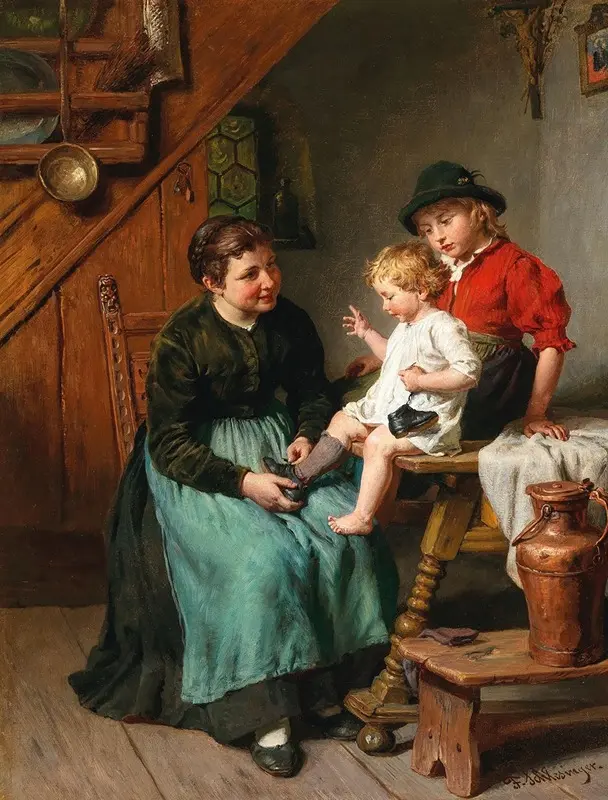
The First Shoe
Felix Schlesinger
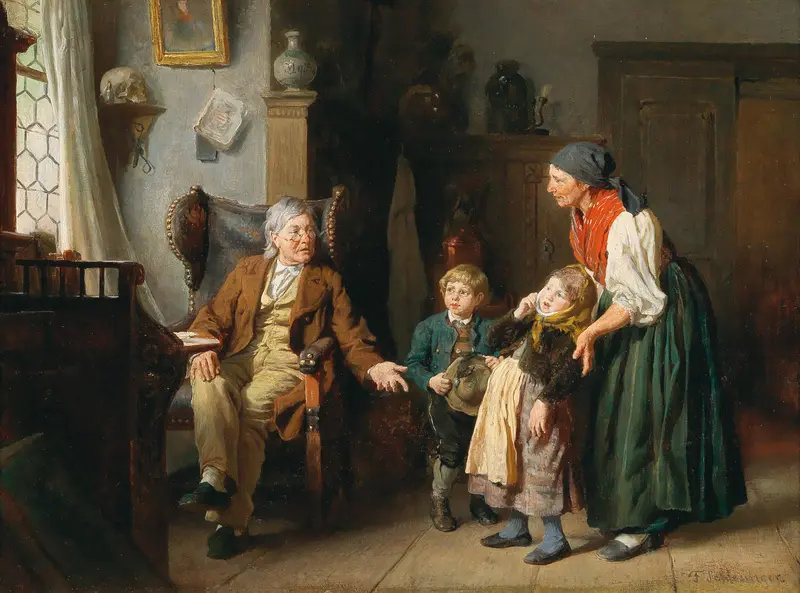
The village doctor
Felix Schlesinger
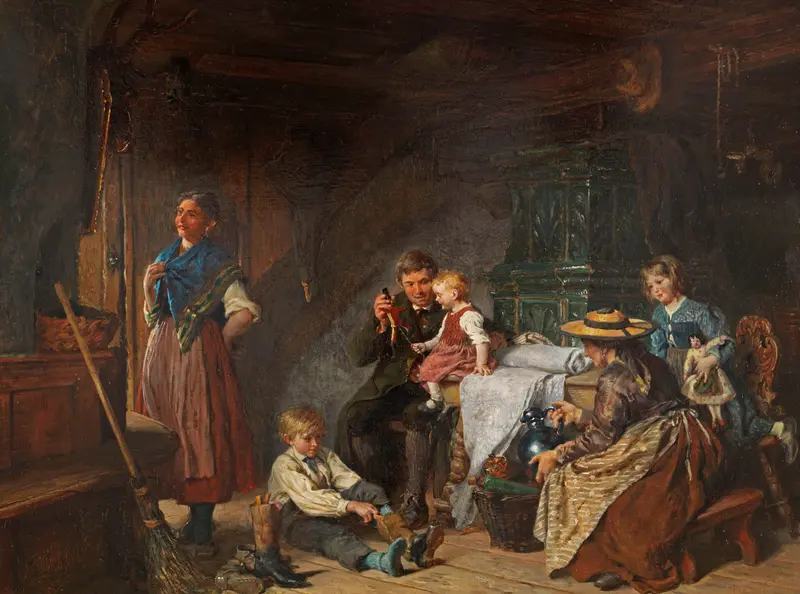
Familienszene
Felix Schlesinger
More Genre Scene Art

Banquet of the Officers of the St George Civic Guard
Frans Hals

Rembrandt and Saskia in the Scene of the Prodigal Son
Rembrandt van Rijn

Bal du moulin de la Galette
Pierre-Auguste Renoir

Quadrille at the Moulin Rouge
Henri de Toulouse-Lautrec

A Burial at Ornans
Gustave Courbet

When Will You Marry?
Paul Gauguin