
Grappe et poisson — History & Facts
A bolt of red slices through the center, tilting the entire world of Grappe et poisson by Fernand Léger into a state of restless balance. Your eye is pulled first to that diagonal, then spun off to a cluster of green orbs—grapes, stylized and almost mechanical—held in tension against a sun-bright yellow disk. The checkered vase, more pattern than vessel, stands at attention on the right, while a single, perfect red drop hovers above, like a signal or a warning.
Léger’s palette is deliberate: the black background flattens space, turning every object into a sign, while the blocks of color and sharp outlines give the scene the crispness of a poster or a stage set. This painting was made in 1927, at the height of Léger’s fascination with the machine age and the language of modern life. In the Paris of the 1920s, artists like Léger were reimagining the still life, stripping away shadows and sentimental flourishes in favor of bold geometry and industrial clarity. The objects here—fruit, plate, fish—are reduced to their essentials, their forms echoing the logic of mass production and design.
History has kept few traces of this particular work’s early life, but its presence in a modern collection today is a reminder of how the ordinary table could become, in the right hands, a site of radical invention. Look again: every shape is a decision, every color a challenge.
More Artworks by Fernand Léger

The Tugboat Bridge
Fernand Léger
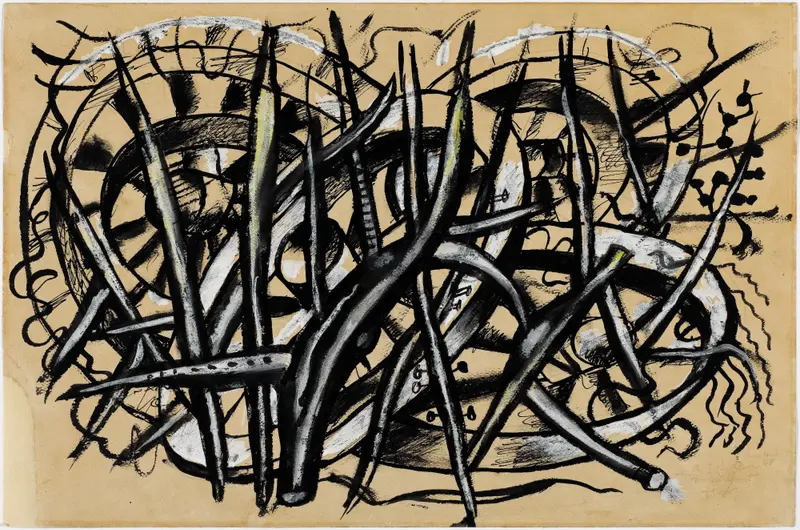
The Wheels
Fernand Léger

Le Cirque Médrano
Fernand Léger
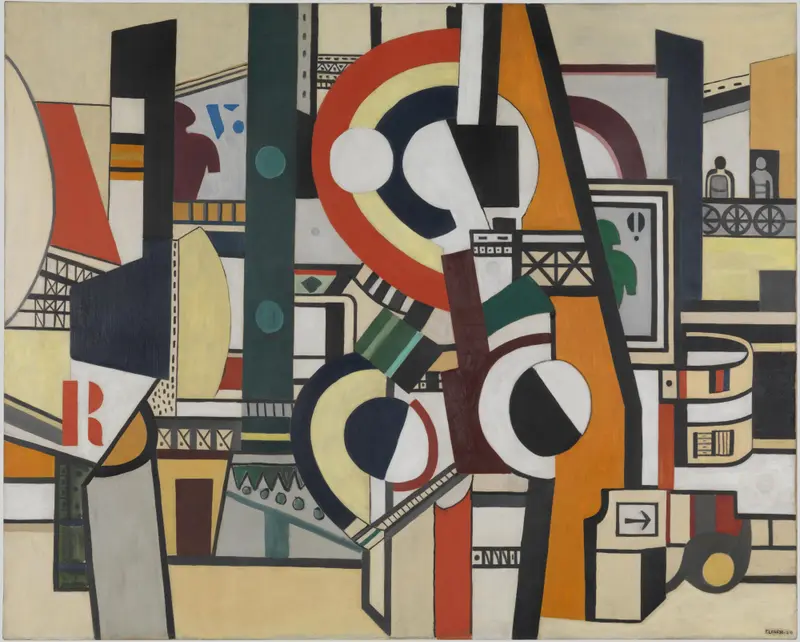
The Disks in the City
Fernand Léger
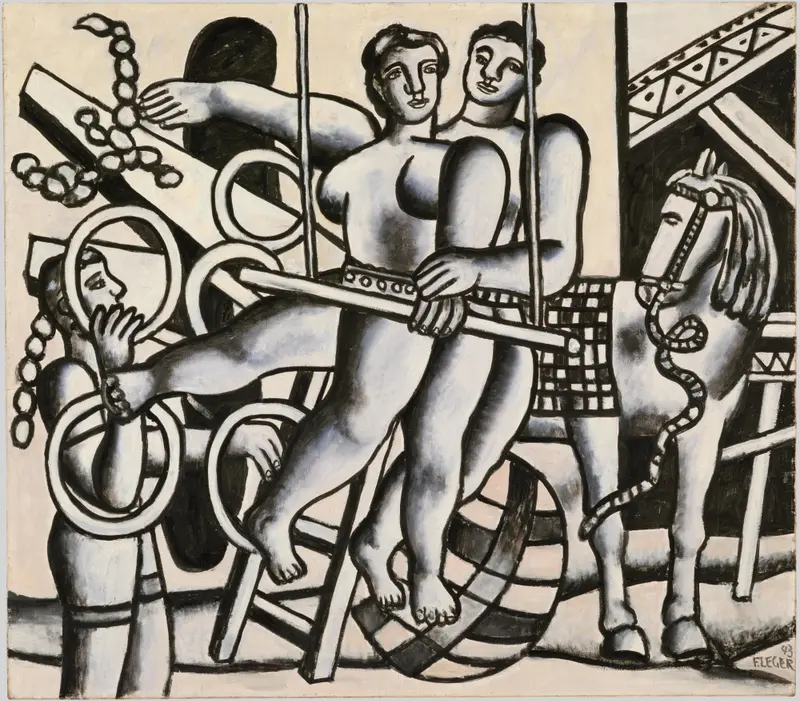
Le Jongleur et les acrobates
Fernand Léger
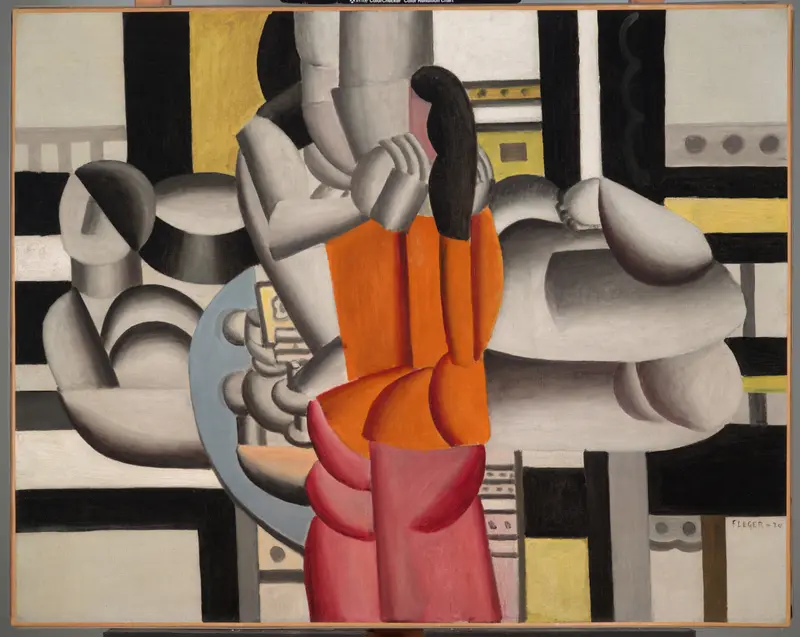
Three Women and Still Life (Déjeuner)
Fernand Léger
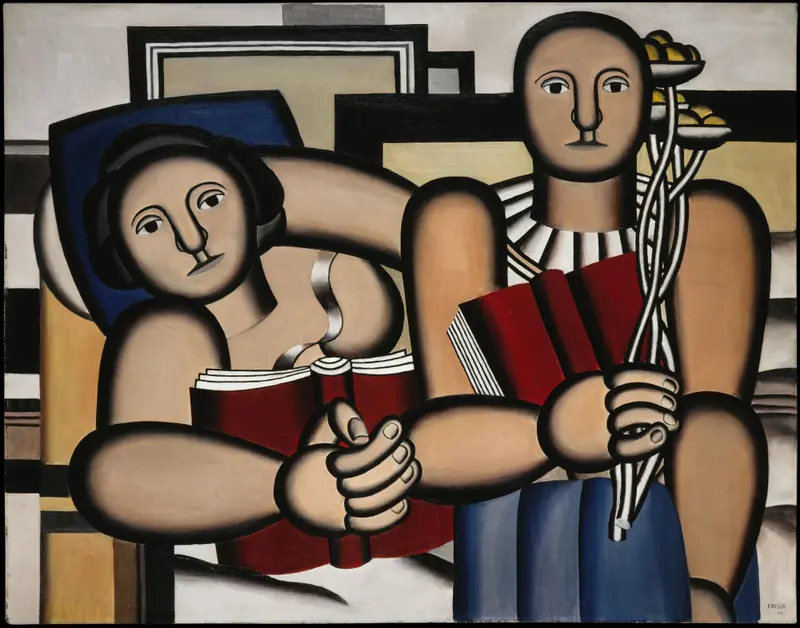
Reading
Fernand Léger
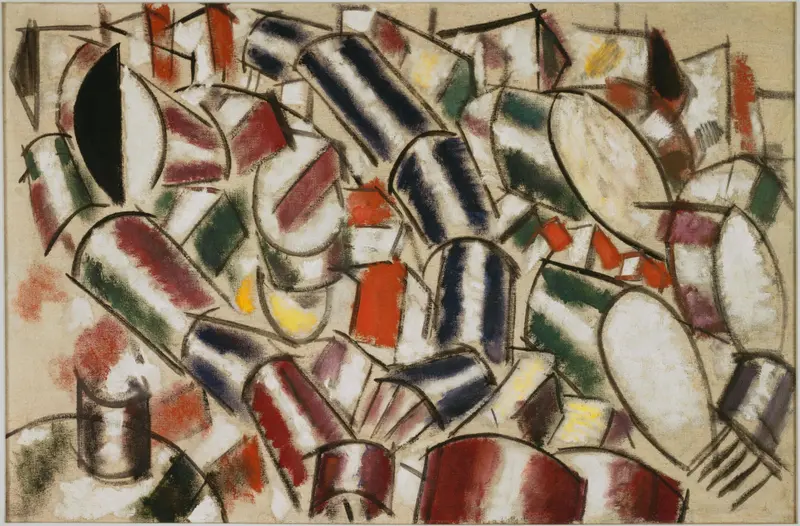
Femme couchée
Fernand Léger
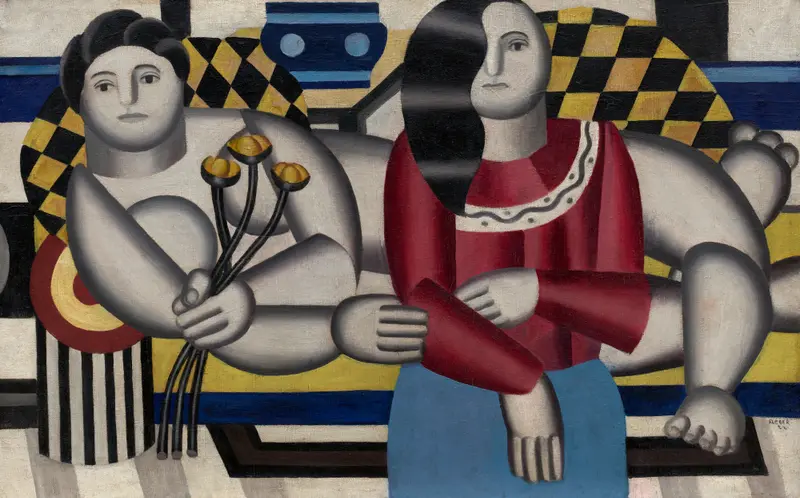
Woman holding flowers
Fernand Léger
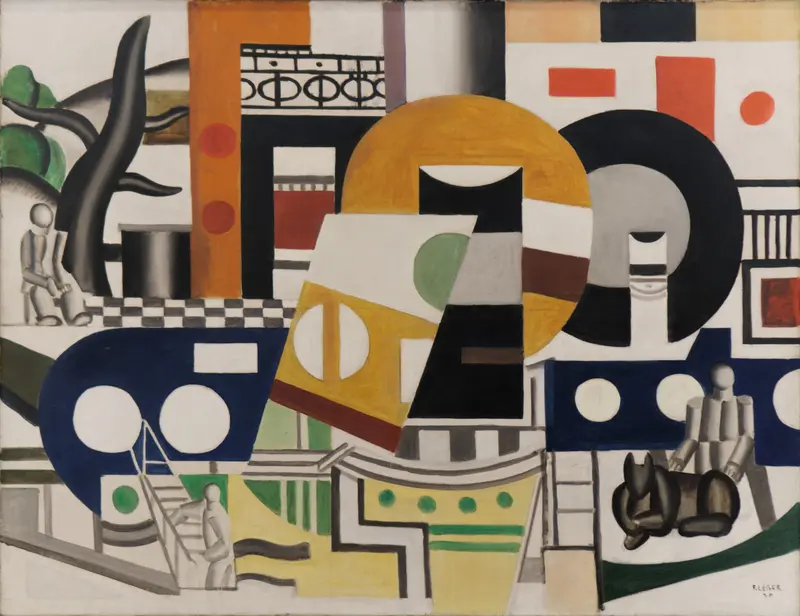
The Tug
Fernand Léger





