
Greeks in Love — History & Facts
What draws the eye first in Greeks in Love is the subtle choreography of glances and gestures—a young woman, head bowed and cheeks flushed, is gently detained by a young man whose posture is all eager anticipation. The hearth glows quietly to the left, casting warm light across the simple interior, while the couple’s traditional dress and the rustic setting root the scene in a particular time and place. The man’s hand, poised on his hip and his body leaning forward, signals both confidence and longing, while the woman’s downcast gaze and slight smile suggest a mixture of shyness and pleasure.
The muted palette and soft brushwork lend the moment a sense of intimacy, as if we are witnessing a private exchange on the threshold of something new. Every detail—the tilt of a head, the careful arrangement of hands—serves to heighten the tension between restraint and desire. Painted in 1880, this work by Theodoros Ralli belongs to a world where genre painting flourished, especially among artists trained in the academic traditions of nineteenth-century Europe. Such scenes were often commissioned or collected by a rising bourgeoisie eager to celebrate national customs and intimate moments of daily life, a trend especially strong in the decades after Greek independence.
Ralli, known for his interest in Eastern Mediterranean subjects, here captures not just costume and setting, but the emotional codes of courtship in a rural Greek home. The painting’s quiet drama and ethnographic detail would have appealed to contemporary viewers hungry for images of tradition in a rapidly modernizing world. In this way, Greeks in Love invites us to linger, to decode the language of gesture and light, and to imagine the stories that flicker just beyond the fire’s glow.
More Artworks by Theodoros Ralli

The Sleeping Concubine
Theodoros Ralli
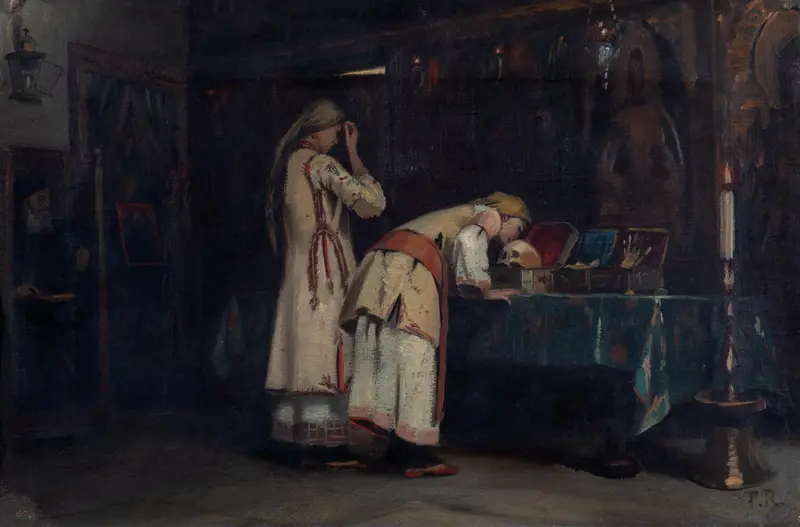
Holy Relics
Theodoros Ralli
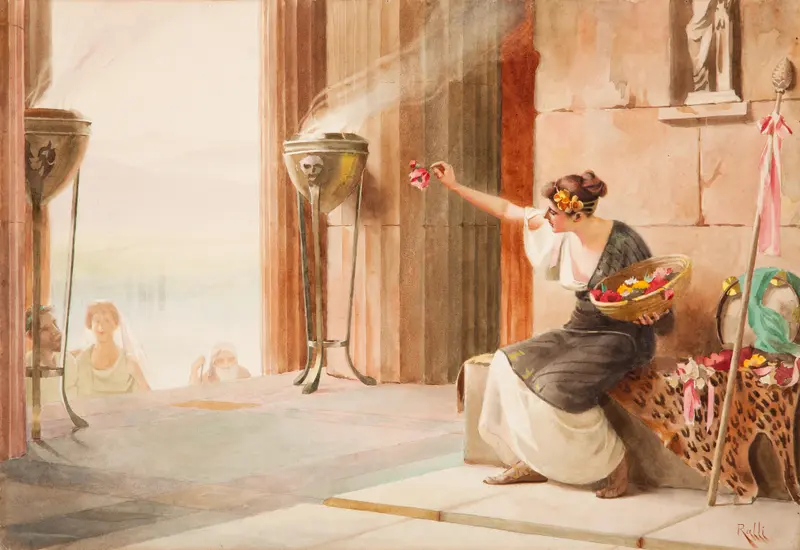
Flower Seller at the Parthenon
Theodoros Ralli
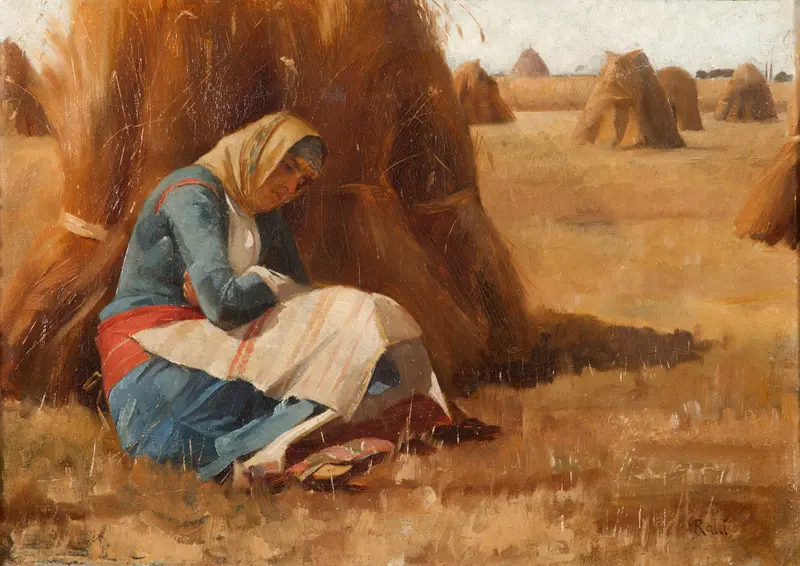
Resting by a Haystack
Theodoros Ralli
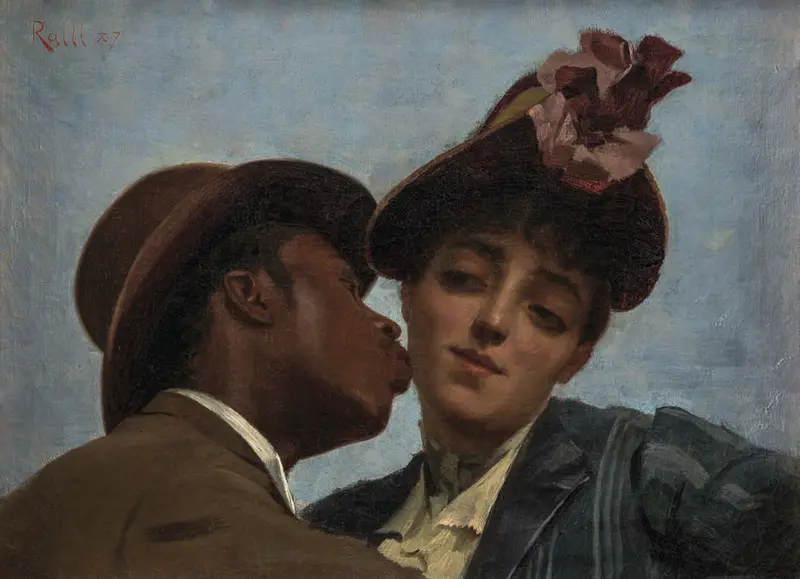
The Kiss (Ralli)
Theodoros Ralli
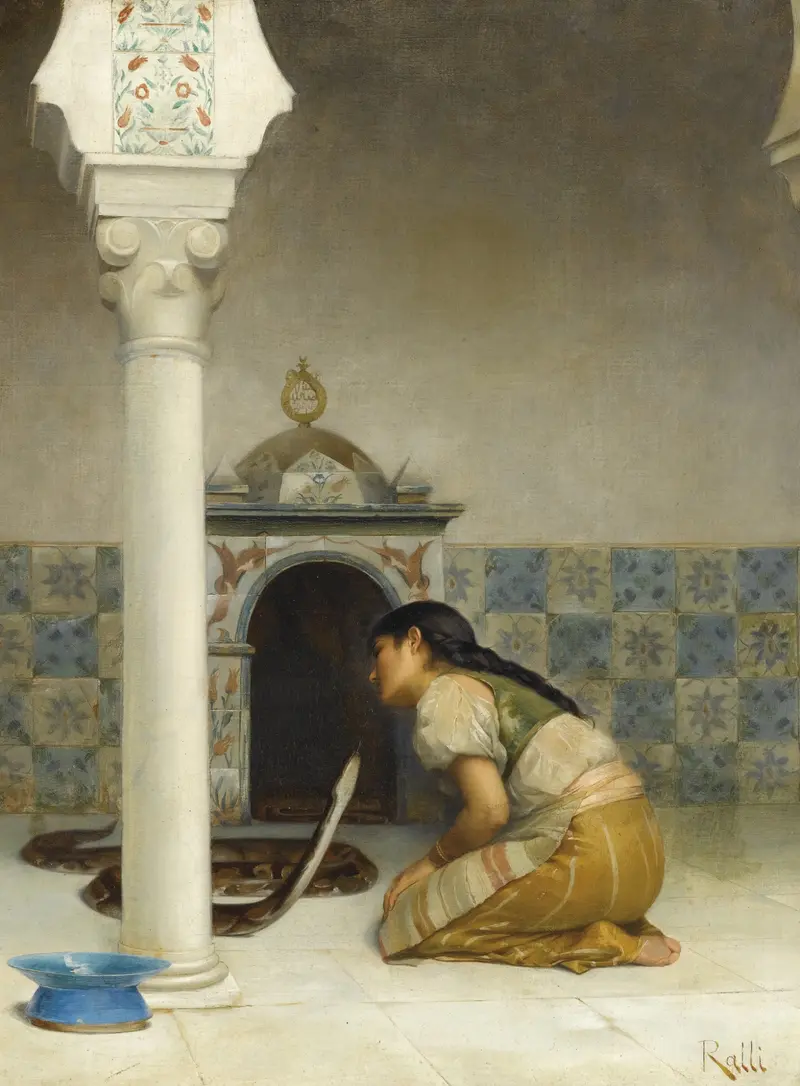
The Sacred Serpent
Theodoros Ralli
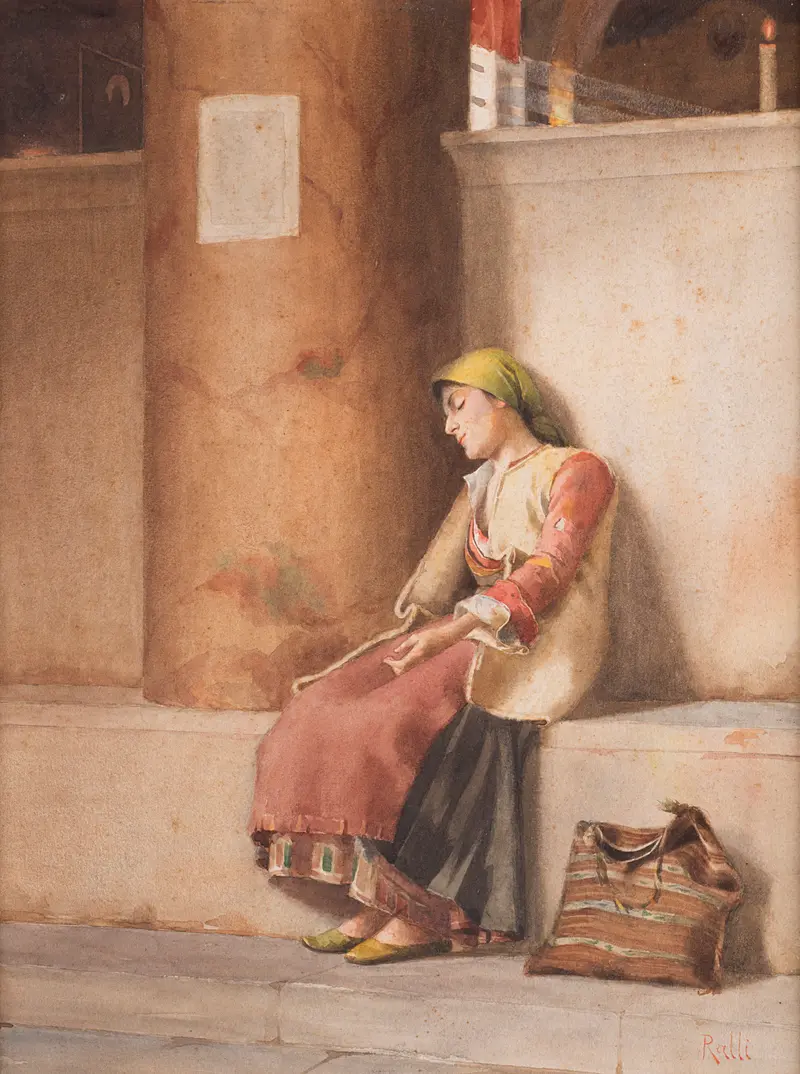
A Moment of Reflection
Theodoros Ralli
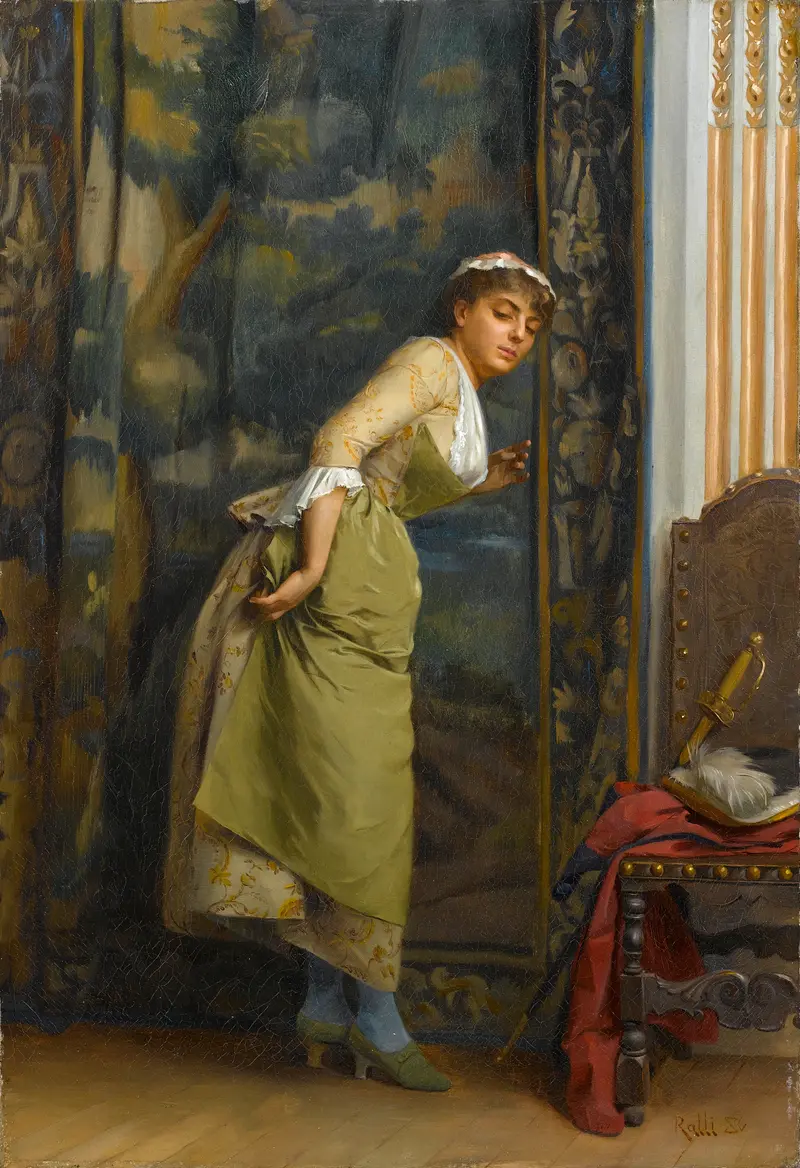
Eavesdropping (Ralli)
Theodoros Ralli
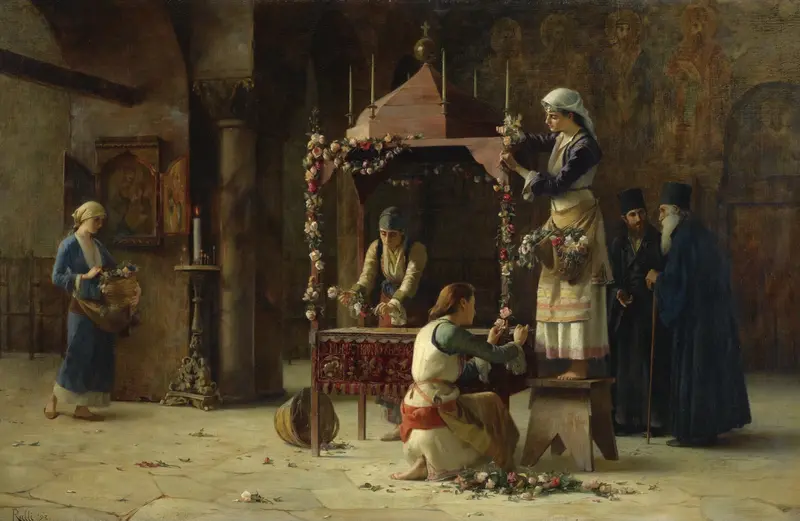
Holy Friday, Greece
Theodoros Ralli
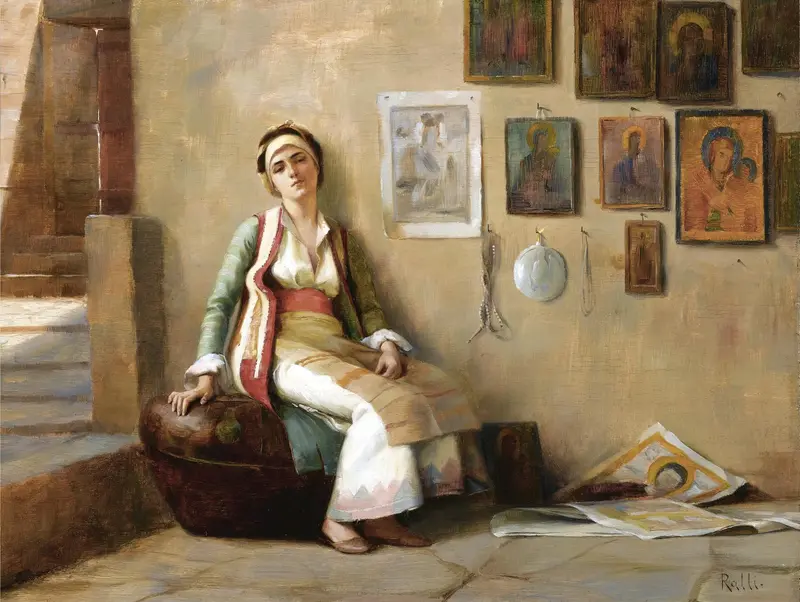
A Moment's Rest
Theodoros Ralli
More Genre Scene Art

Banquet of the Officers of the St George Civic Guard
Frans Hals

Rembrandt and Saskia in the Scene of the Prodigal Son
Rembrandt van Rijn

Bal du moulin de la Galette
Pierre-Auguste Renoir

Quadrille at the Moulin Rouge
Henri de Toulouse-Lautrec

A Burial at Ornans
Gustave Courbet

When Will You Marry?
Paul Gauguin