
Grizzly Bear — History & Facts
What first seizes the viewer in Grizzly Bear by John James Audubon is the sheer presence of these two animals, rendered with a precision that seems almost to breathe. The larger bear stands alert, its head low and mouth slightly open, as if catching a scent or guarding its companion. The smaller bear, crouched close to the earth, draws the eye with its contrasting posture—more cautious, almost wary.
The fur is rendered with such care that each strand seems to catch the light, and the subtle gradations of brown and gray invite the viewer to linger over the animal’s massive, muscular form. The distant mountains and lush trees recede softly, pushing the bears into the foreground and making them the undeniable protagonists of this quiet drama. This image belongs to the world of the early 1840s, when natural history illustration was both science and spectacle. Audubon—already famed for his birds—turned his attention to North America’s mammals, collaborating with his son to produce a series of folio plates that would become The Viviparous Quadrupeds of North America.
These works were not mere catalogues; they were meant to awe and to educate, bringing the wild into the parlors of an increasingly urban public. The grizzly, a creature of mythic reputation, is here given both dignity and specificity, its anatomy and attitude captured for posterity. History has kept few traces of the individual journeys of these plates, but this one, preserved in the John James Audubon Center at Mill Grove, still asks us to look closely—and perhaps to imagine the world as it once was, wild and immense.
More Artworks by John James Audubon
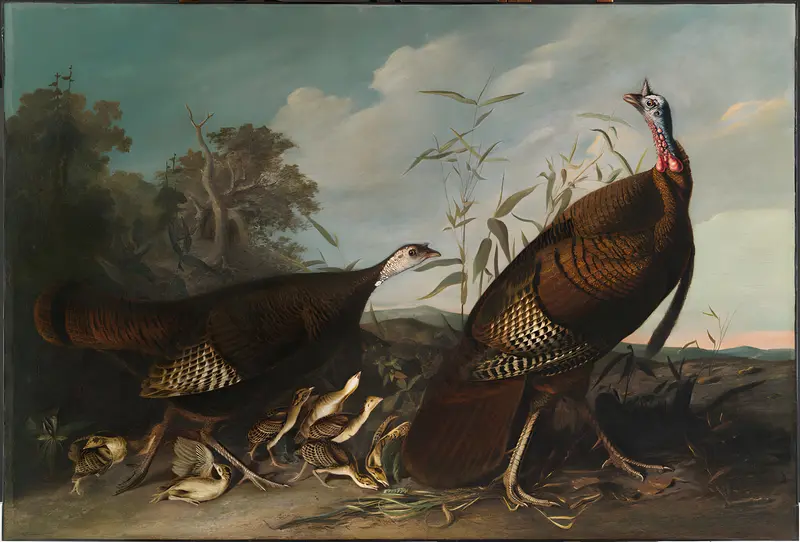
Wild Turkey Cock, Hen, and Chicks
John James Audubon
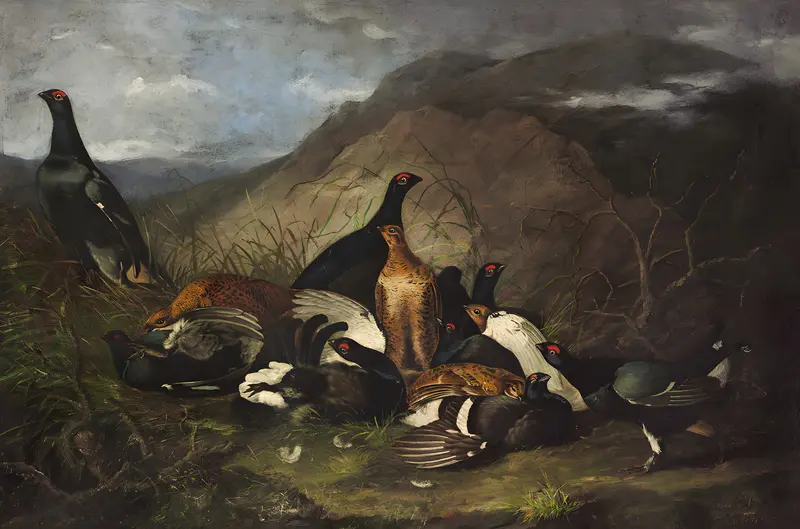
Scottish Black Grouse, Cocks and Hens
John James Audubon
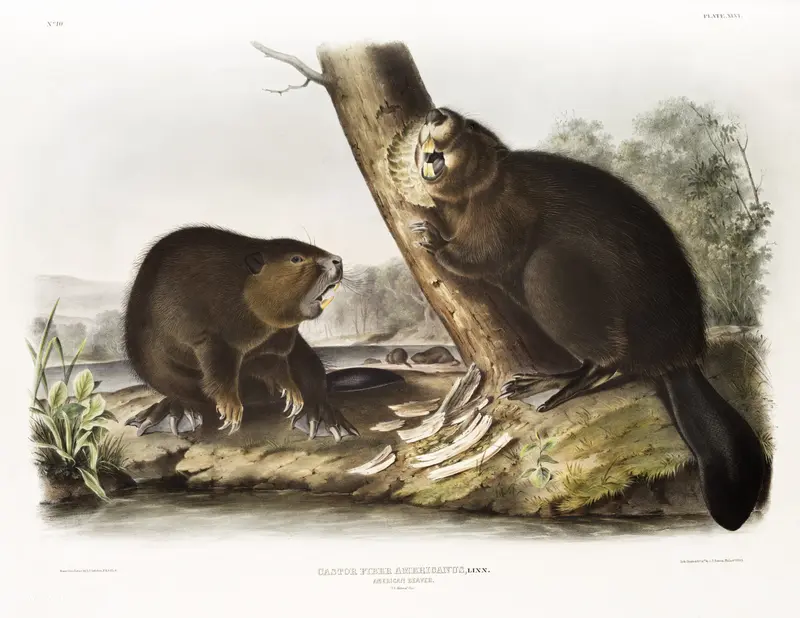
American Beaver
John James Audubon
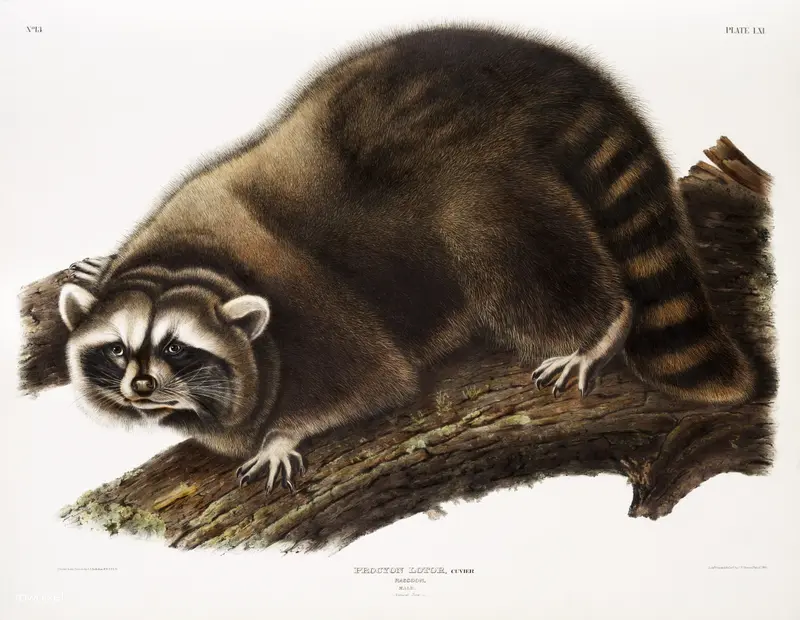
Raccoon
John James Audubon

Magnificent Frigatebird
John James Audubon
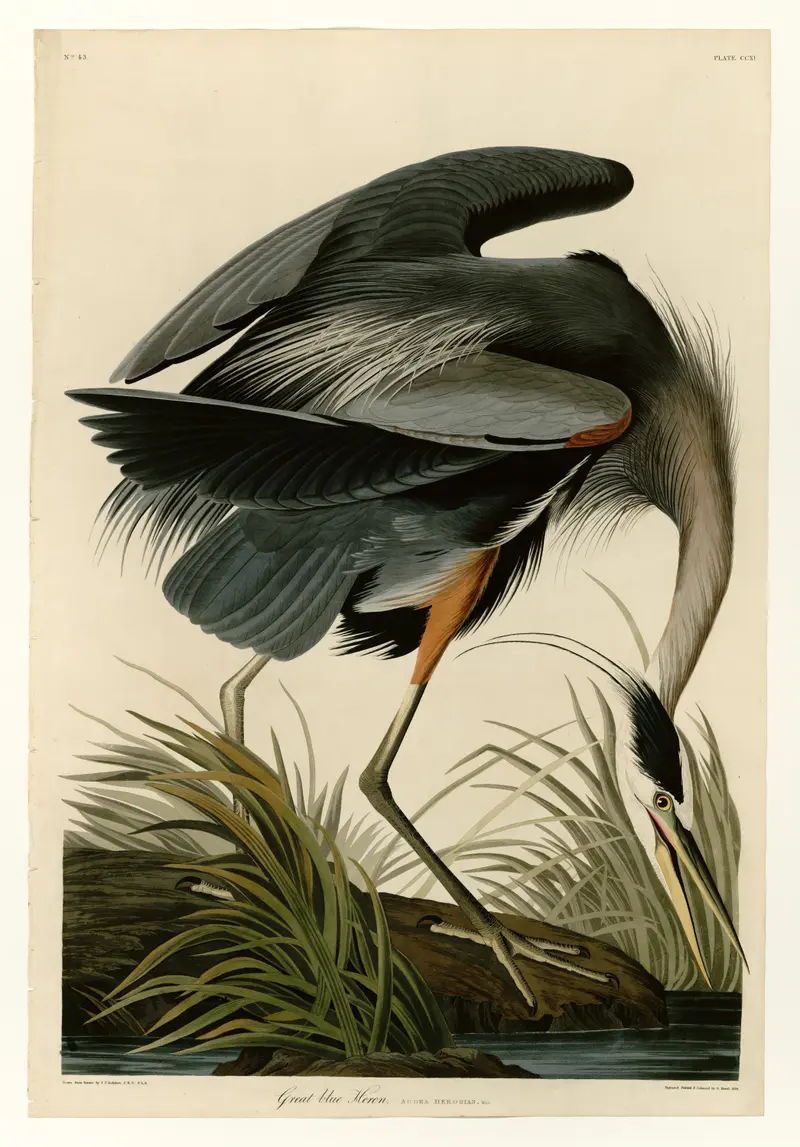
Great Blue Heron
John James Audubon
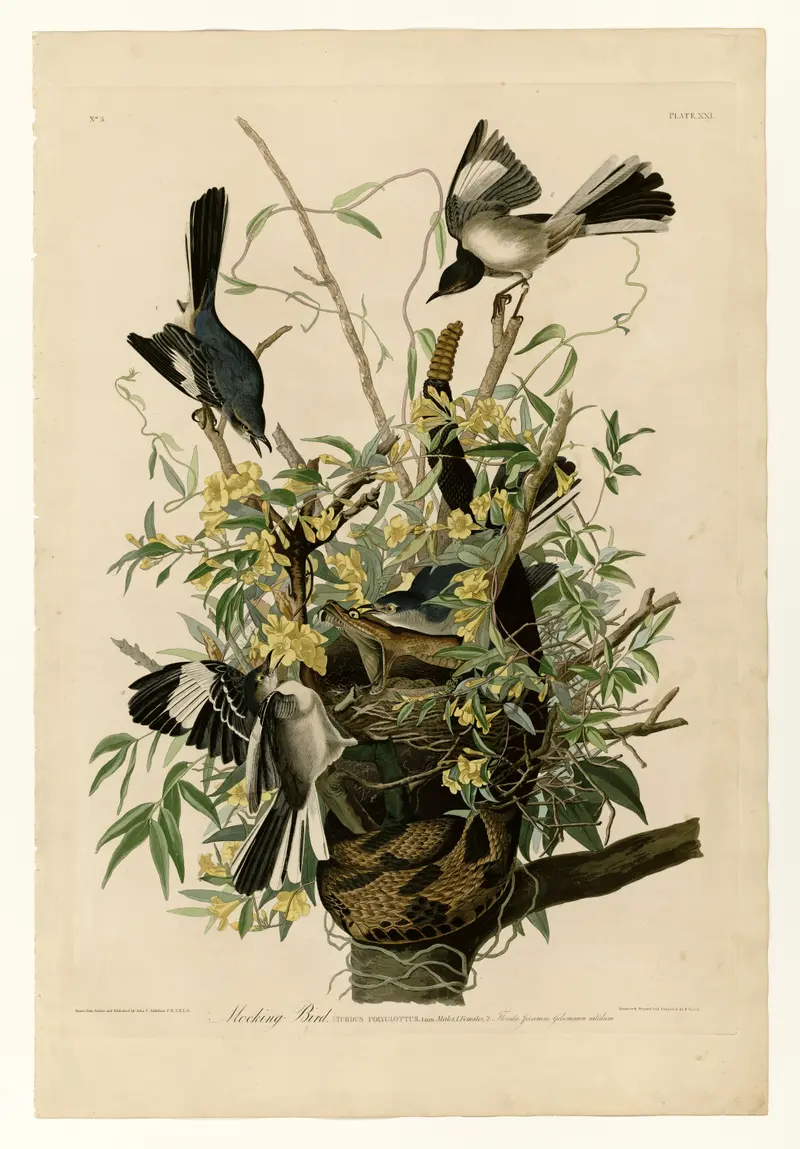
Northern Mockingbird
John James Audubon
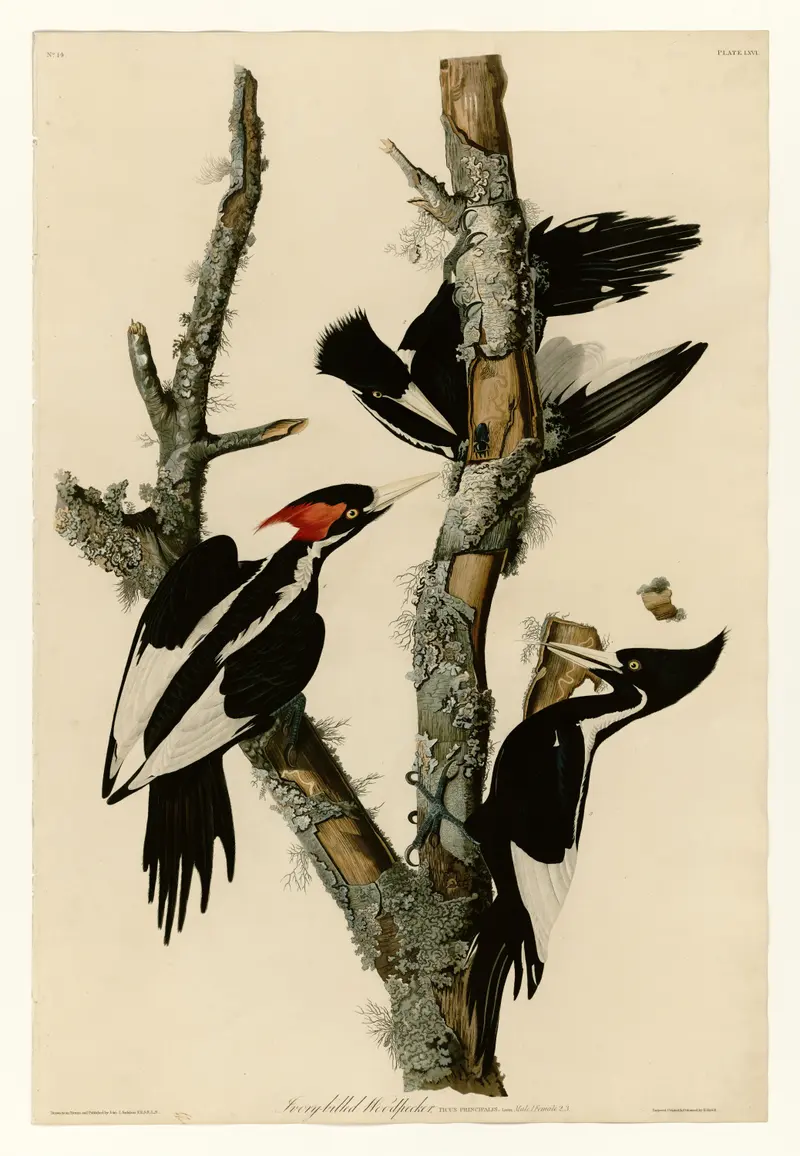
Ivory-billed Woodpecker
John James Audubon
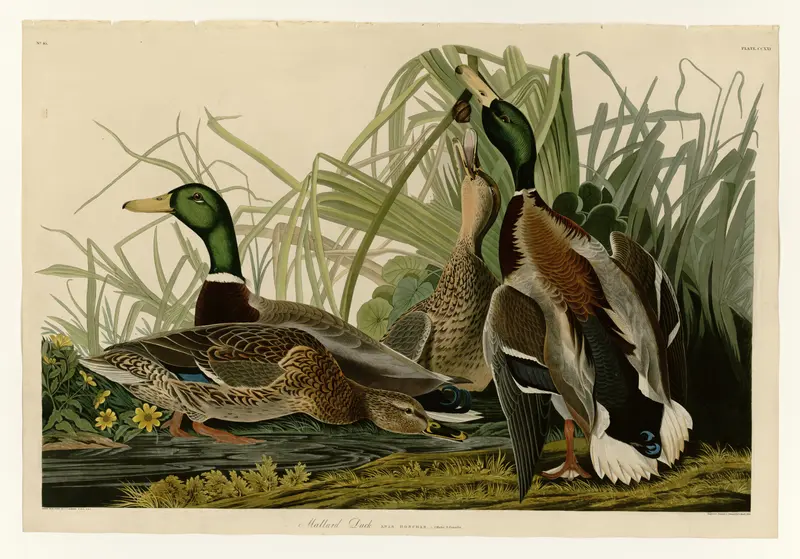
Mallard
John James Audubon
Ruby-throated Hummingbird
John James Audubon





