
Hendrik Weymans and his Family — History & Facts
What first draws the eye in Hendrik Weymans and his Family is the way sunlight pours through tall windows, illuminating the family at the heart of their elegant, lived-in interior. The painter, Abraham van Strij (I), chooses a moment of gentle domesticity: a tea service is underway, the children are gathered in close, and a dog sleeps undisturbed at the open threshold between house and garden. Every gesture and object is carefully staged—the upright posture of the adults, the playful curiosity of the children, the glint of porcelain and the sheen of polished wood—each detail inviting us to imagine the rhythms and rituals of a prosperous Dutch household in the early nineteenth century.
The open doors and distant avenue beyond suggest both the security of home and the wider world just outside, a subtle tension between private life and public aspiration. Painted in 1816, this work belongs to a tradition of family portraiture that flourished among the Dutch bourgeoisie, who sought to commemorate their status and unity through art. By the early nineteenth century, such paintings were often commissioned to mark significant moments—marriages, births, or the acquisition of a new home—and were displayed in salons as both personal mementos and social statements. The careful attention to costume, furnishings, and even the scientific curiosity hinted at by the glass apparatus on the mantelpiece speaks to an age fascinated by progress and refinement.
Now in the Dordrechts Museum, Hendrik Weymans and his Family stands as a vivid window into a world where domestic harmony and material comfort were ideals to be celebrated—and where every detail, from the folded drapery to the distant garden path, rewards a closer look.
More Artworks by Abraham van Strij (I)

Abraham van (I) Strij Portret van Petronella van der Koogh (1788 89 1878), echtgenote van Jr. DM 017 1190 Dordrechts Museum
Abraham van Strij (I)

Abraham van (I) Strij Binnenhuis met vrouw en kind DM 847 42 Dordrechts Museum
Abraham van Strij (I)
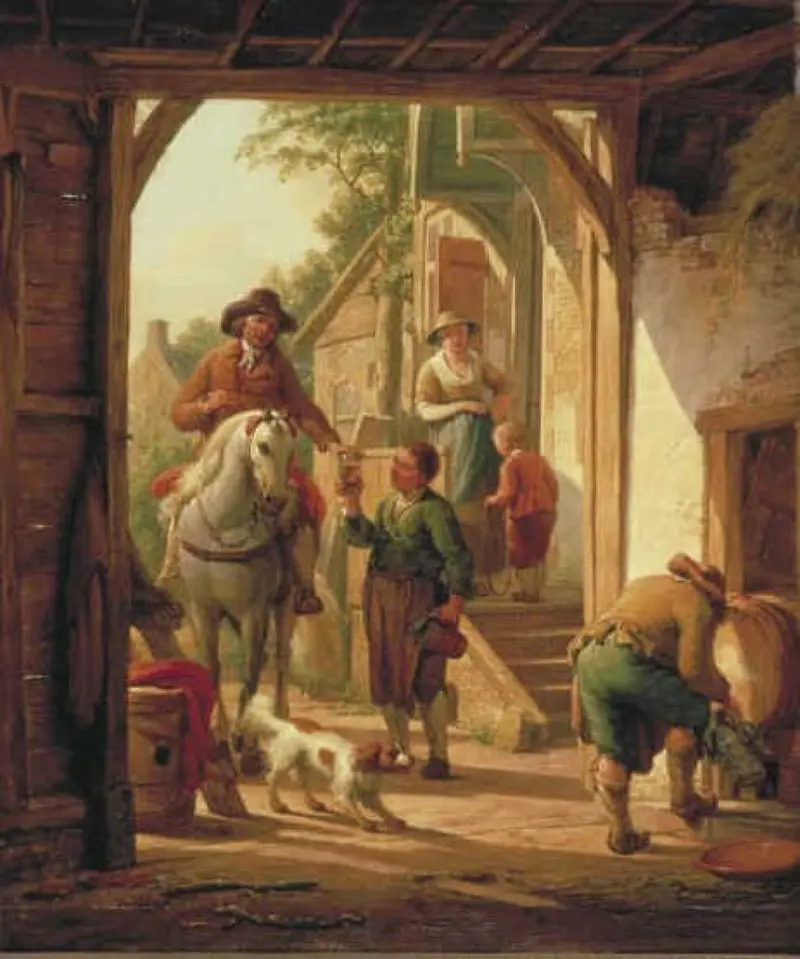
Horseman Resting near a Village Inn
Abraham van Strij (I)
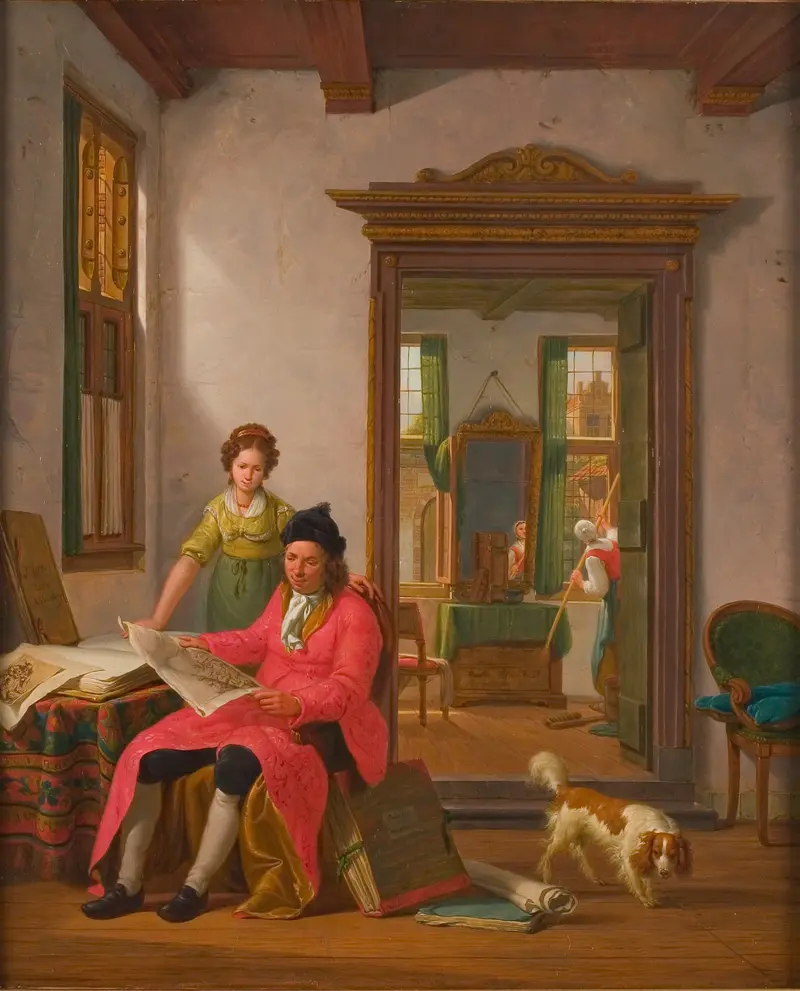
Portrait of an unknown man
Abraham van Strij (I)
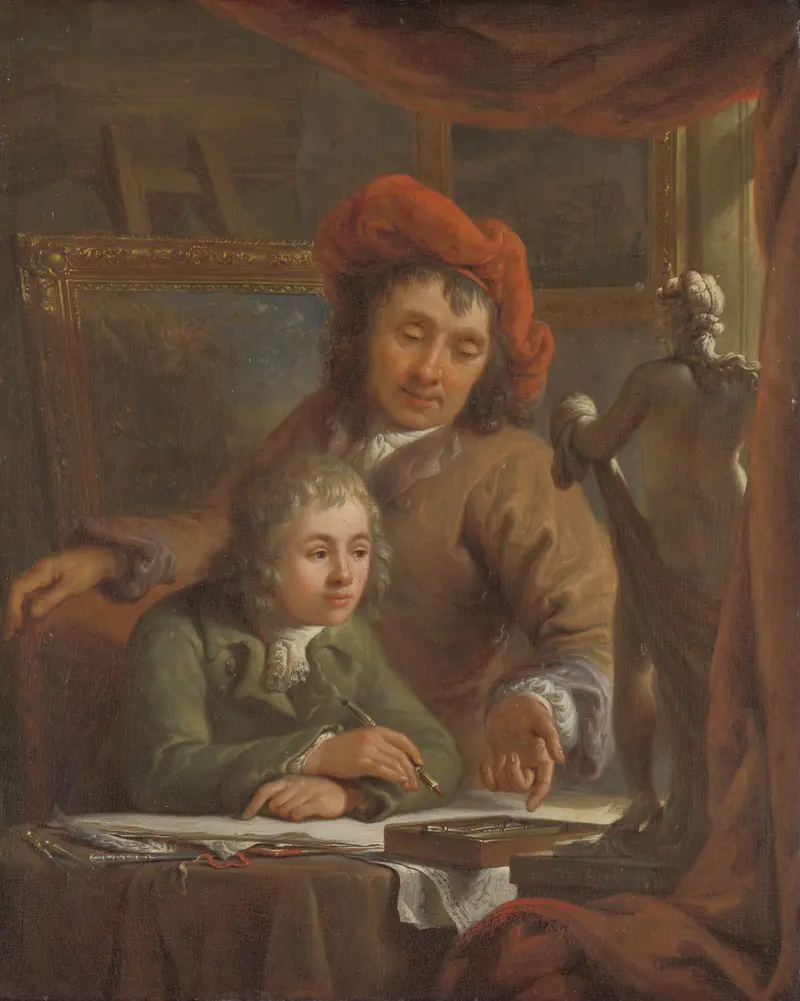
The Drawing Lesson
Abraham van Strij (I)
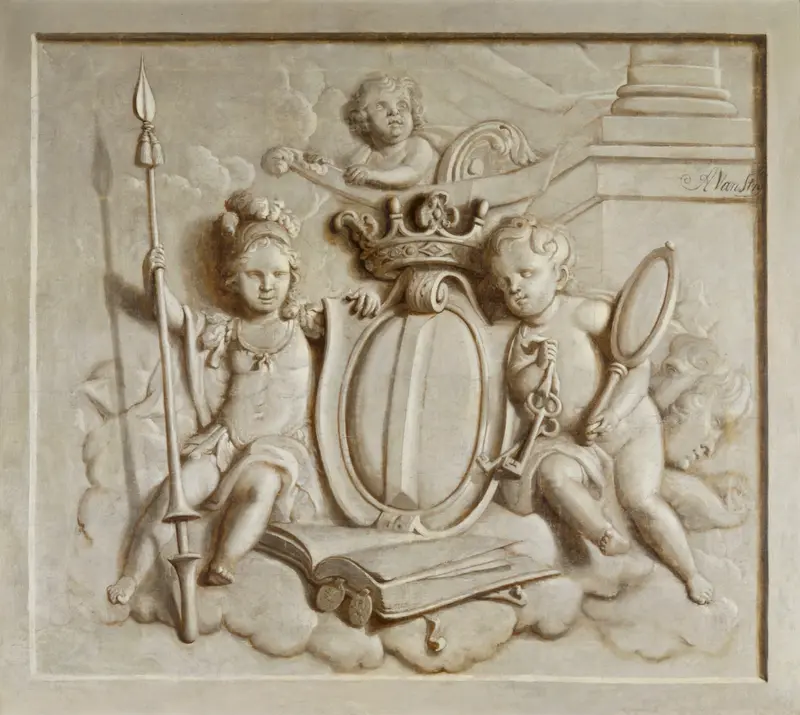
Abraham van (I) Strij Bovendeurstuk met allegorie op de stad Dordrecht DM 017 1188 Dordrechts Museum
Abraham van Strij (I)
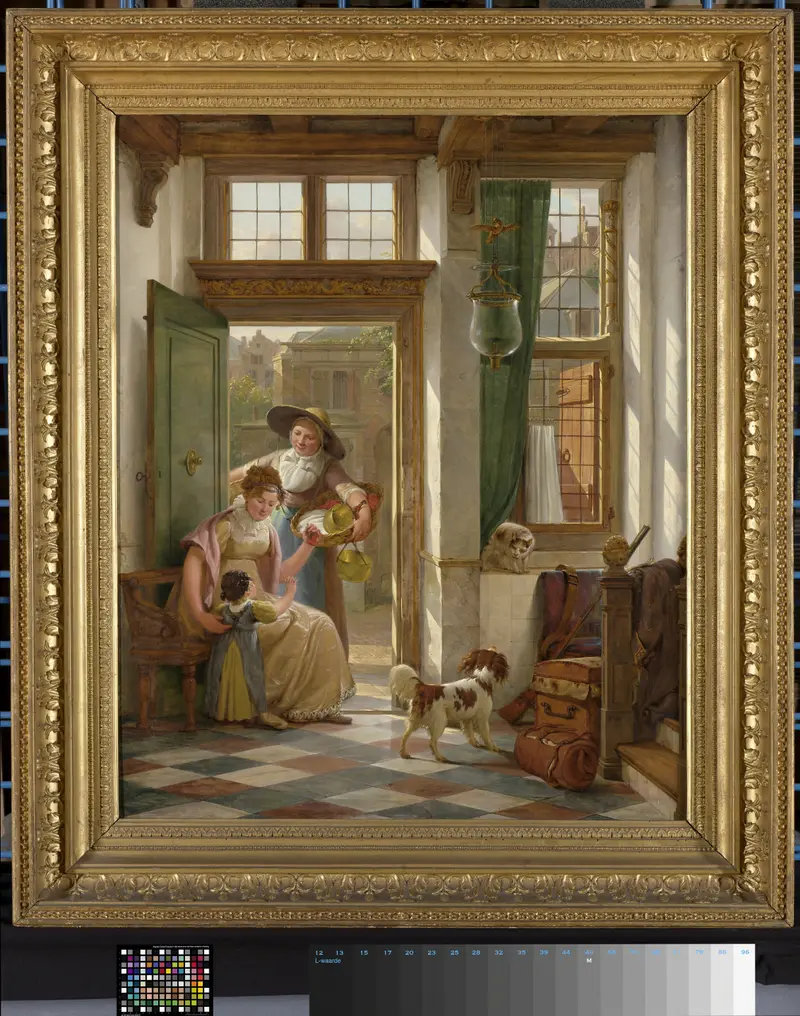
Een kersenverkoopster aan de deur
Abraham van Strij (I)
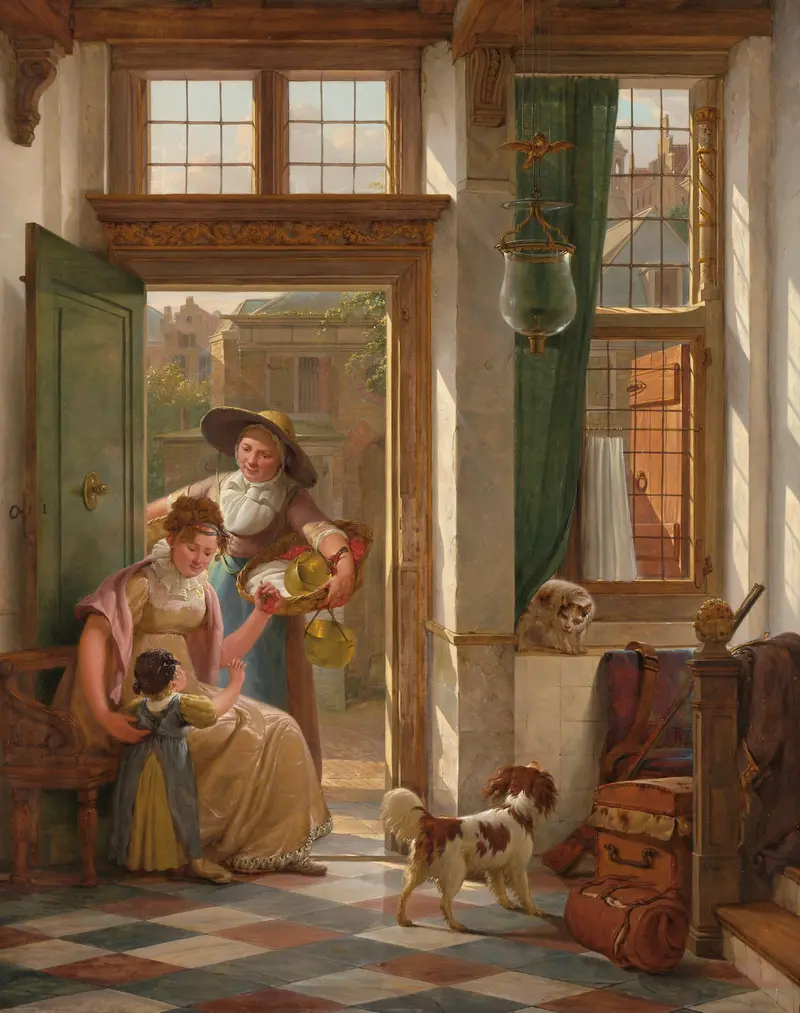
A Cherry Vendor at the Door
Abraham van Strij (I)
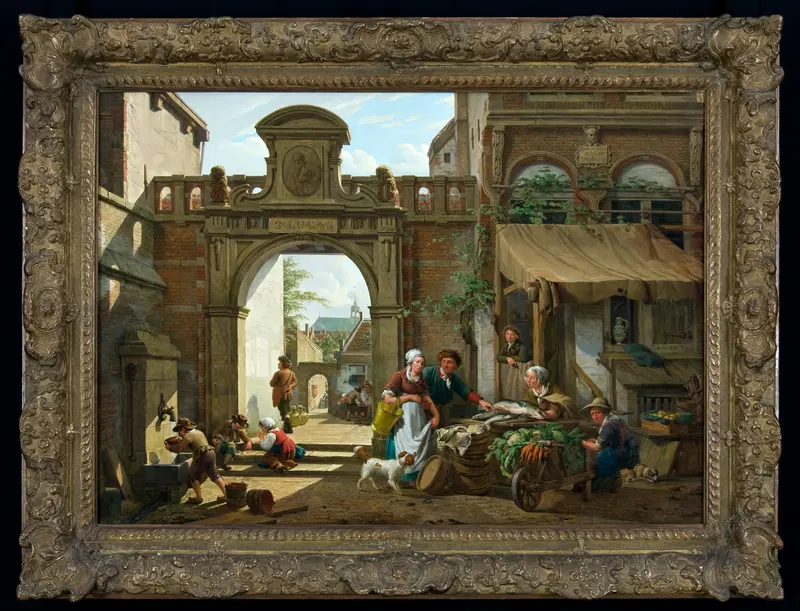
Abraham van (I) Strij Stadsgezicht met het gebouw van het St. Lucasgilde DM 010 950 Dordrechts Museum
Abraham van Strij (I)
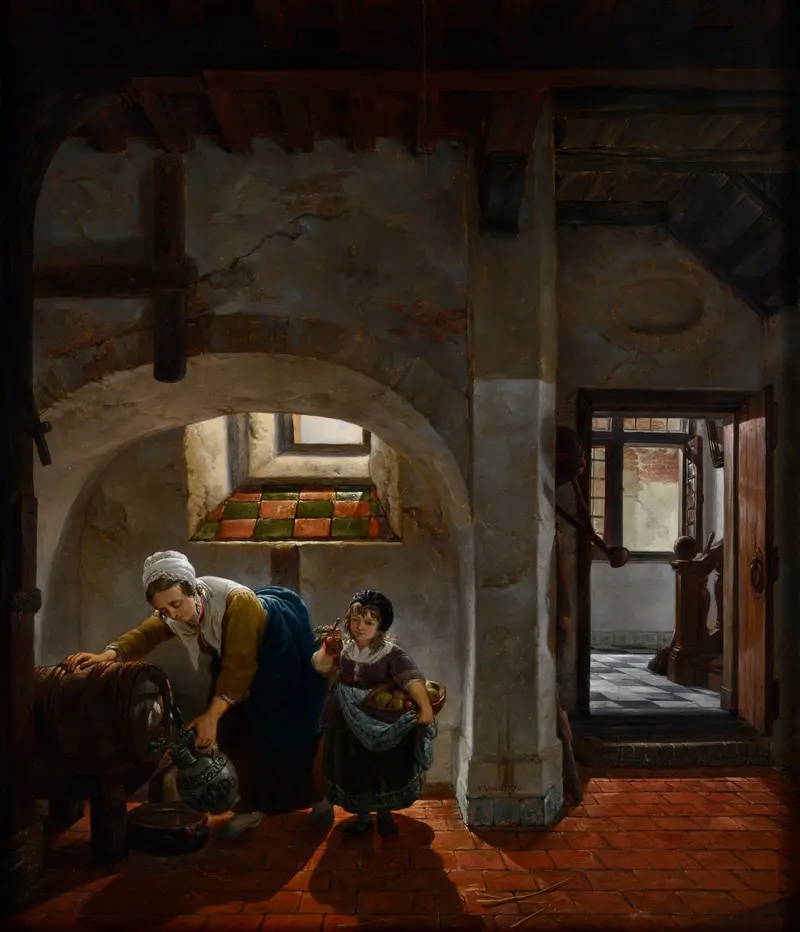
Abraham van (I) Strij Voorraadkelder met een vrouw die een stenen kruik vult en een kind DM 014 1088 Dordrechts Museum
Abraham van Strij (I)





